Bridge Pages That Actually Convert: The Pre-Sell Strategy Guide
Most affiliate marketers throw traffic directly at vendor sales pages and wonder why their conversion rates suck. I've watched countless campaigns burn through budgets because marketers skipped the most critical step in the affiliate funnel: the bridge page.
Here's what most people get wrong—they think a bridge page is just another landing page. It's not. A bridge page is your chance to warm up cold traffic, build micro-trust, and pre-sell the offer before sending visitors to the vendor's sales page. Done right, it can double or triple your conversion rates.
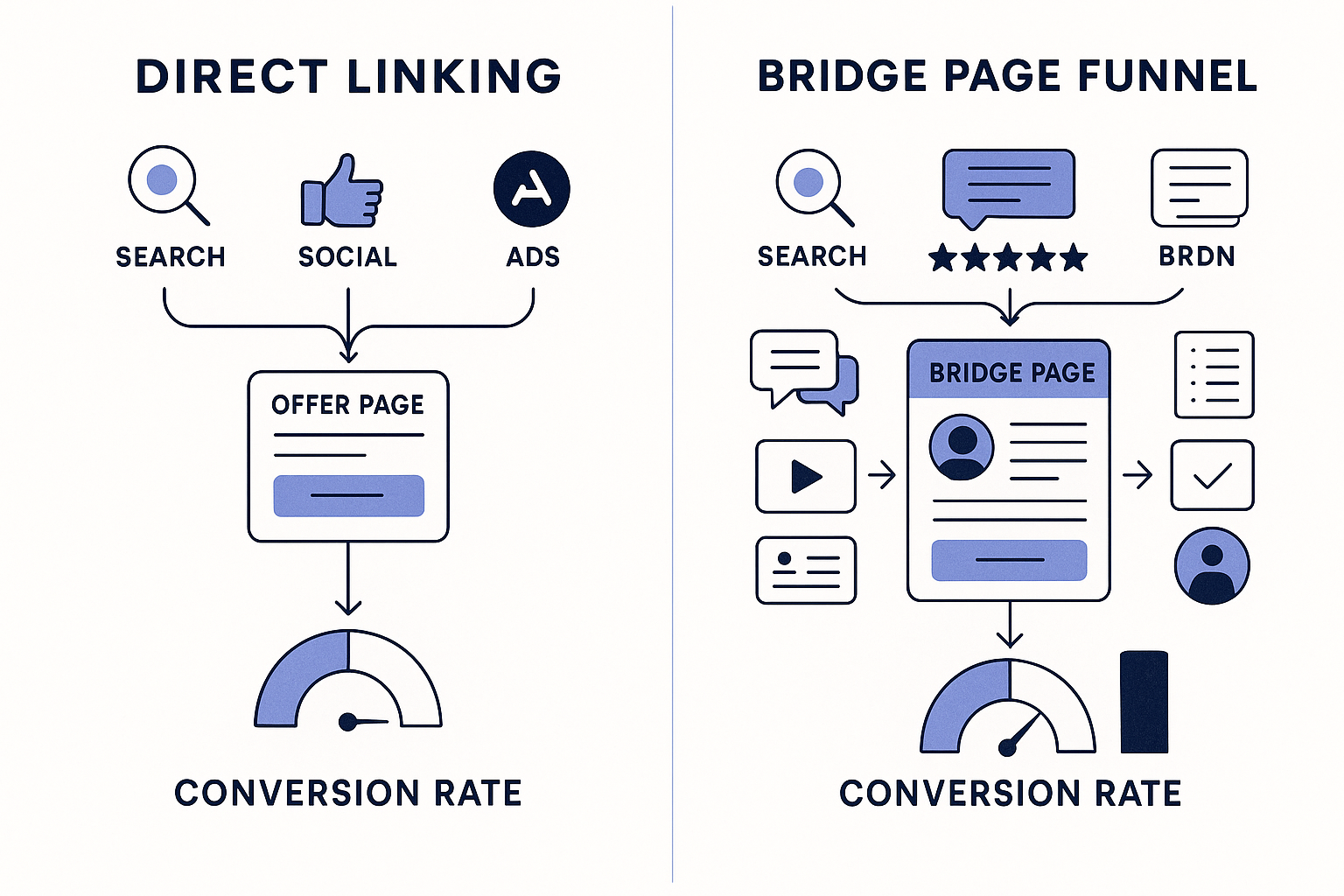
Why Bridge Pages Outperform Direct Linking Every Time
Direct linking works in exactly one scenario: when you have a massive audience that already trusts your recommendations. For everyone else running paid traffic or building new audiences, bridge pages are non-negotiable.
The psychology is straightforward. Someone clicks your ad on Facebook or finds your content through organic search—they don't know you from Adam. You immediately redirect them to a ClickBank sales page pushing a $97 weight loss supplement? That's a recipe for high bounce rates and wasted ad spend.
But here's where it gets interesting. Insert a bridge page that acknowledges their problem, shares a relatable story, and provides genuine value before the redirect—suddenly you're not just another affiliate pusher. You become a trusted recommender.
I've seen this play out across verticals. Take a recent campaign I analyzed in the make money online space. Direct linking to a $497 course was converting at 0.8%. Same traffic, same offer, but with a proper bridge page? 2.3% conversion rate. The bridge page didn't just improve conversions—it made the entire campaign profitable.
The Trust Gap Problem
Every affiliate faces the same challenge: you're asking someone to buy something you didn't create from a company they've never heard of. That's a massive trust gap.
Bridge pages solve this by positioning you as the filter. Instead of "here's a random product," your message becomes "I've tested dozens of solutions, and here's what actually works." That subtle shift in framing makes all the difference.
The Anatomy of High-Converting Bridge Pages
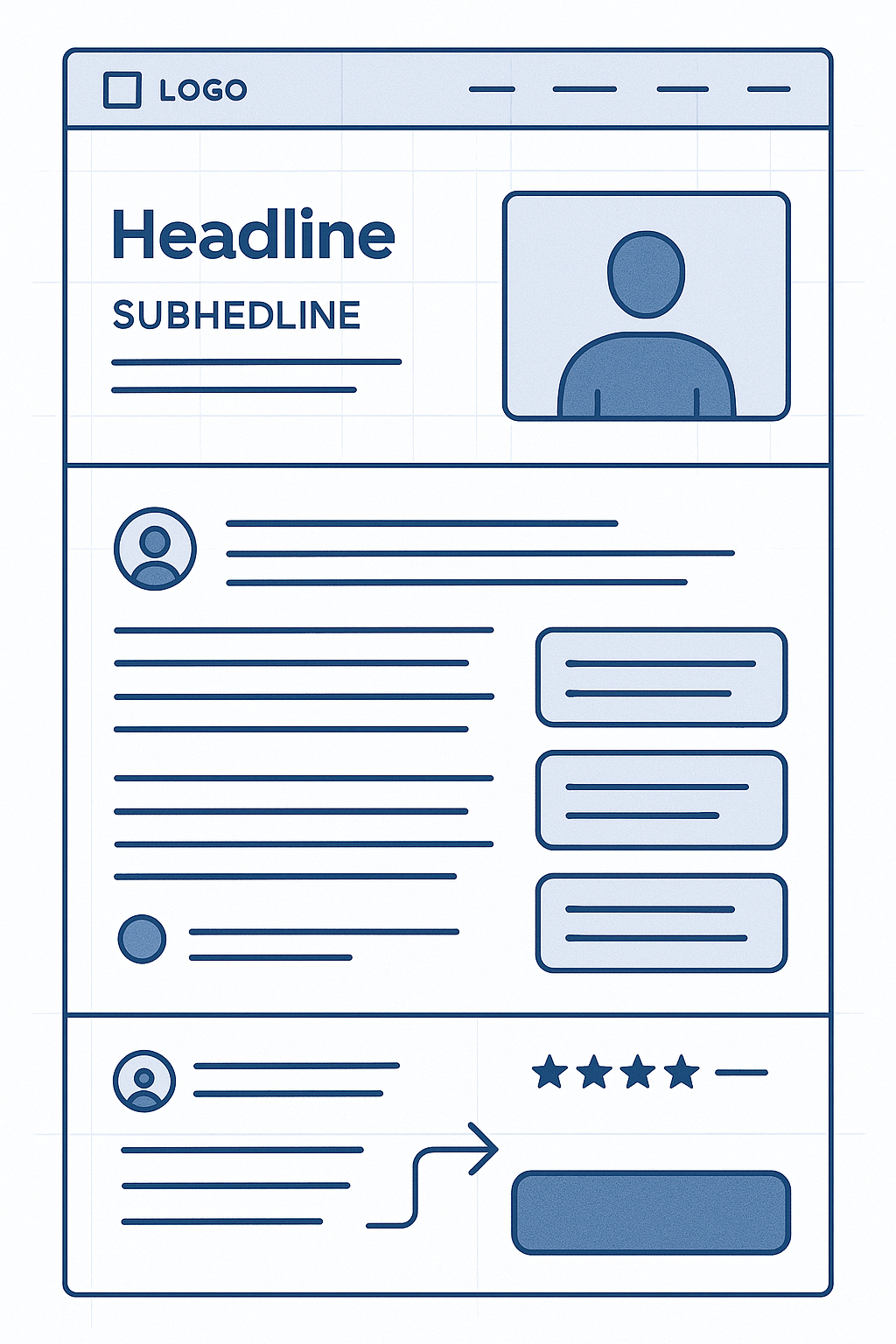
Not all bridge pages are created equal. I've tested hundreds of variations across different traffic sources and offers. The winners follow a specific structure that feels natural while hitting key psychological triggers.
The Hook That Stops the Scroll
Your headline needs to acknowledge the visitor's current state of mind. They just clicked an ad about losing belly fat or making money from home—they're in problem-aware mode, not solution-aware mode yet.
Weak bridge page headlines sound like sales copy: "Discover the Secret to Rapid Weight Loss." Strong headlines sound like helpful content: "Why Most Diets Fail (And What Actually Works Instead)."
The difference? The first feels like you're selling immediately. The second feels like you're about to teach them something valuable.
The Story That Builds Connection
Here's where most affiliates go wrong—they jump straight into product features. But people don't buy products; they buy better versions of themselves.
Your bridge page story should follow a simple arc: relatable struggle → moment of discovery → transformation. Keep it concise but specific. "I tried everything" is vague. "I spent $2,400 on supplements that didn't work and felt like giving up" creates a mental picture.
Say you're promoting a productivity course. Don't lead with "this course changed my life." Start with "I used to work 12-hour days and still felt behind on everything." That's a feeling your audience recognizes.
Value Before the Pitch
This is non-negotiable. Your bridge page must provide standalone value—something useful even if the visitor never clicks through to the offer.
For a fitness offer, share three specific mistakes that sabotage weight loss efforts. For a business opportunity, reveal the real reason most people fail at affiliate marketing. Give them an "aha moment" that positions you as someone worth listening to.
Traffic-Specific Bridge Page Strategies
Different traffic sources require different approaches. What converts Facebook traffic won't necessarily work for Google Ads or native advertising.
Facebook and Social Media Traffic
Social traffic is interruption-based. People weren't searching for your solution—your ad interrupted their scroll. Your bridge page needs to justify that interruption quickly.
Lead with curiosity or controversy. "The fitness industry doesn't want you to know this" or "I tried the morning routine that made my friend $10K last month." Social media users respond to stories that feel like insider information.
Keep the design clean and mobile-optimized. Most social traffic comes from mobile devices, and cluttered pages kill conversions on small screens.
Search Traffic Strategy
Search traffic is intent-based. Someone typed "how to lose weight after 40" or "legitimate work from home jobs"—they're actively seeking solutions.
Your bridge page should immediately confirm they're in the right place. Use the exact phrase they searched for in your headline. If they searched "best affiliate marketing course," your headline might be "I Tested 12 Affiliate Marketing Courses—Here's the Only One Worth Buying."
Search traffic tolerates longer-form content. You can include more detailed explanations, comparison charts, and in-depth analysis because these visitors came looking for comprehensive information.
Native and Content Discovery
Platforms like Taboola and Outbrain work differently. The traffic expects editorial-style content that doesn't feel like advertising.
Your bridge page should read like a blog post or news article. Use subheadings, include data points, and maintain a journalistic tone throughout. "New Study Reveals Why 89% of Diets Fail" works better than "Amazing Weight Loss Secret Discovered."
Technical Implementation and Platform Considerations
Building effective bridge pages isn't just about copywriting—the technical execution matters just as much.
Page Speed and Mobile Optimization
I've seen great bridge pages fail because they loaded slowly. Anything over 3 seconds on mobile kills your conversion rate before visitors even read your content.
Use lightweight themes if you're building on WordPress. Compress images aggressively. Consider using a dedicated landing page builder like Systeme.io or ConvertKit instead of adding pages to your main website.
Test your pages on actual mobile devices, not just browser dev tools. What looks good on your desktop might be unreadable on a phone.
Compliance and Disclosure Requirements
The FTC isn't messing around with affiliate disclosures anymore. Your bridge page needs clear, prominent disclosure that you earn commissions from recommendations.
Don't bury it in the footer. Include it near the top of the page: "This post contains affiliate links. I earn a commission if you purchase through these links at no extra cost to you."
Some traffic sources have additional requirements. Facebook's ad policies are particularly strict about income claims and before/after photos. Design your bridge pages with platform policies in mind from the start.
Testing and Optimization Strategies
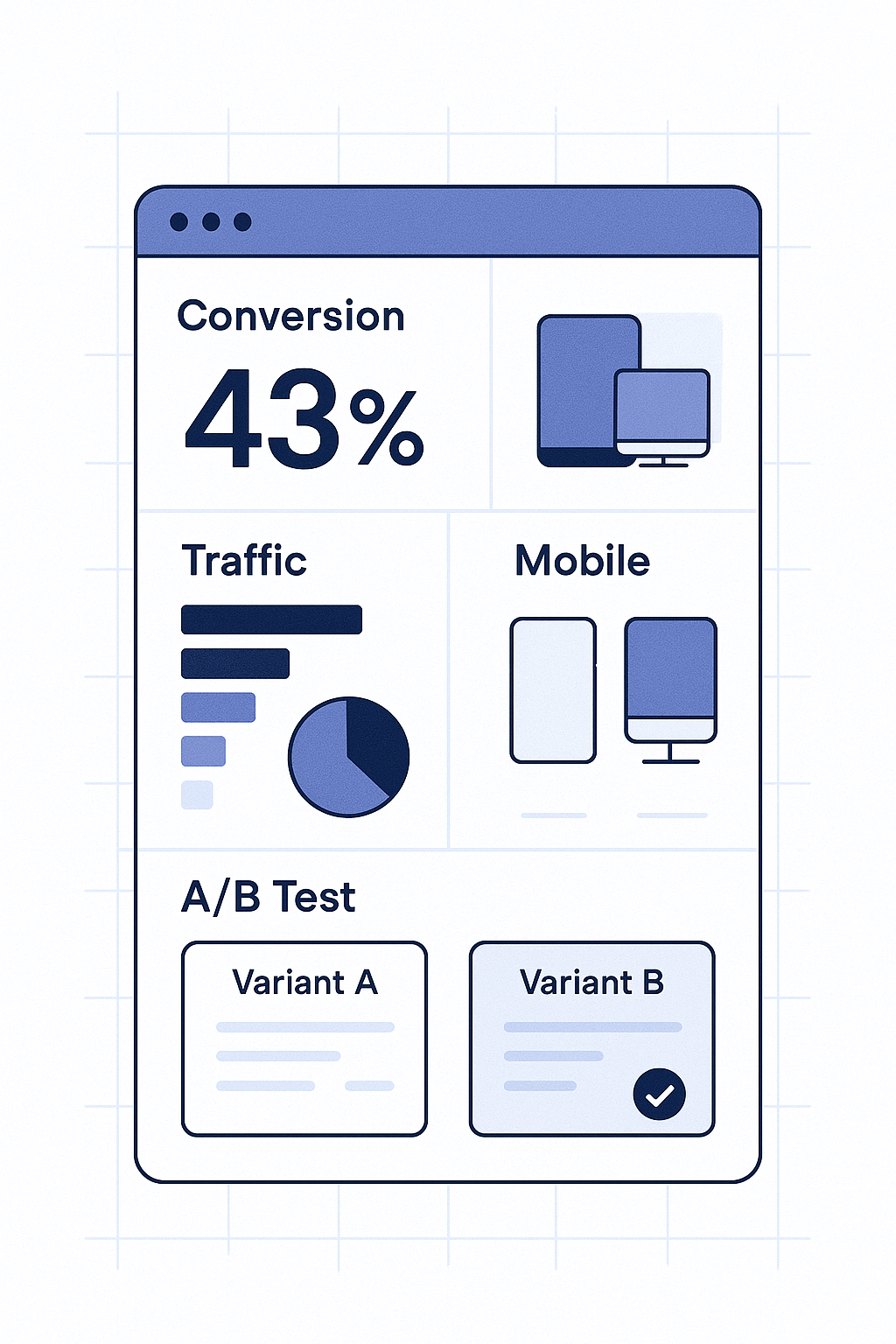
The biggest mistake I see affiliates make is building one bridge page and calling it done. High-converting bridge pages are the result of continuous testing and refinement.
What to Test First
Start with your headline—it has the biggest impact on performance. Test curiosity-driven headlines against benefit-focused ones. "The Morning Habit That Changed Everything" versus "How to Lose 20 Pounds in 8 Weeks."
Next, test your call-to-action buttons. "Check This Out" often outperforms "Buy Now" because it feels less pushy. The color matters too—orange and green typically convert better than blue or red.
Don't test everything at once. Change one element, gather statistical significance, then move to the next test. I typically run tests until I have at least 200 conversions per variation.
Advanced Optimization Tactics
Once you've optimized the basics, try these advanced strategies. Exit-intent popups can recover 10-15% of abandoning visitors. Offer a free report or email course related to your main offer.
Consider adding social proof specific to your traffic source. If most visitors come from Facebook, include testimonials from other Facebook users. Geographic social proof works well too—"Join 847 other [city name] residents who've transformed their finances."
Time-sensitive elements can boost conversions, but use them carefully. False scarcity backfires if visitors realize the "limited time" offer never expires.
The Future of Bridge Page Marketing
Privacy changes and AI are reshaping how bridge pages work. iOS tracking limitations mean you can't retarget as effectively, making your initial bridge page impression more critical.
AI tools like ChatGPT are making it easier to create bridge page copy, but they're also making generic content more common. The bridge pages that win in 2026 will be the ones that feel genuinely human and personally crafted.
Video bridge pages are gaining traction, especially for higher-ticket offers. A 2-3 minute video explaining your personal connection to the offer can build trust faster than text alone. Platforms like Loom make this accessible even for non-technical affiliates.
The fundamentals won't change though. People still buy from people they trust, and bridge pages remain the most effective way to build that trust with cold traffic. Master the psychology, test relentlessly, and stay compliant—your conversion rates will thank you.
This article contains affiliate links. We may earn a commission at no extra cost to you. Full disclosure.
Editorial Team
Senior Digital Marketing Strategist
The Prophet Visionary editorial team covers affiliate marketing, paid traffic, funnels, and digital product strategy with hands-on practitioner experience.
Learn more about our editorial team →Need One Platform to Run Your Entire Affiliate Business?
Funnels, email sequences, course hosting, affiliate management — Systeme.io replaces your entire tool stack at a fraction of the cost. Free plan included.
See How Systeme.io WorksThis page contains affiliate links — I may earn a commission at no extra cost to you.
Disclaimer: The information on this site is for educational purposes only and does not constitute financial, legal, or business advice. Results vary based on individual effort, market conditions, and other factors. Always do your own due diligence before making business or investment decisions.