Leads That Convert: The Performance Marketer's Guide to 2026
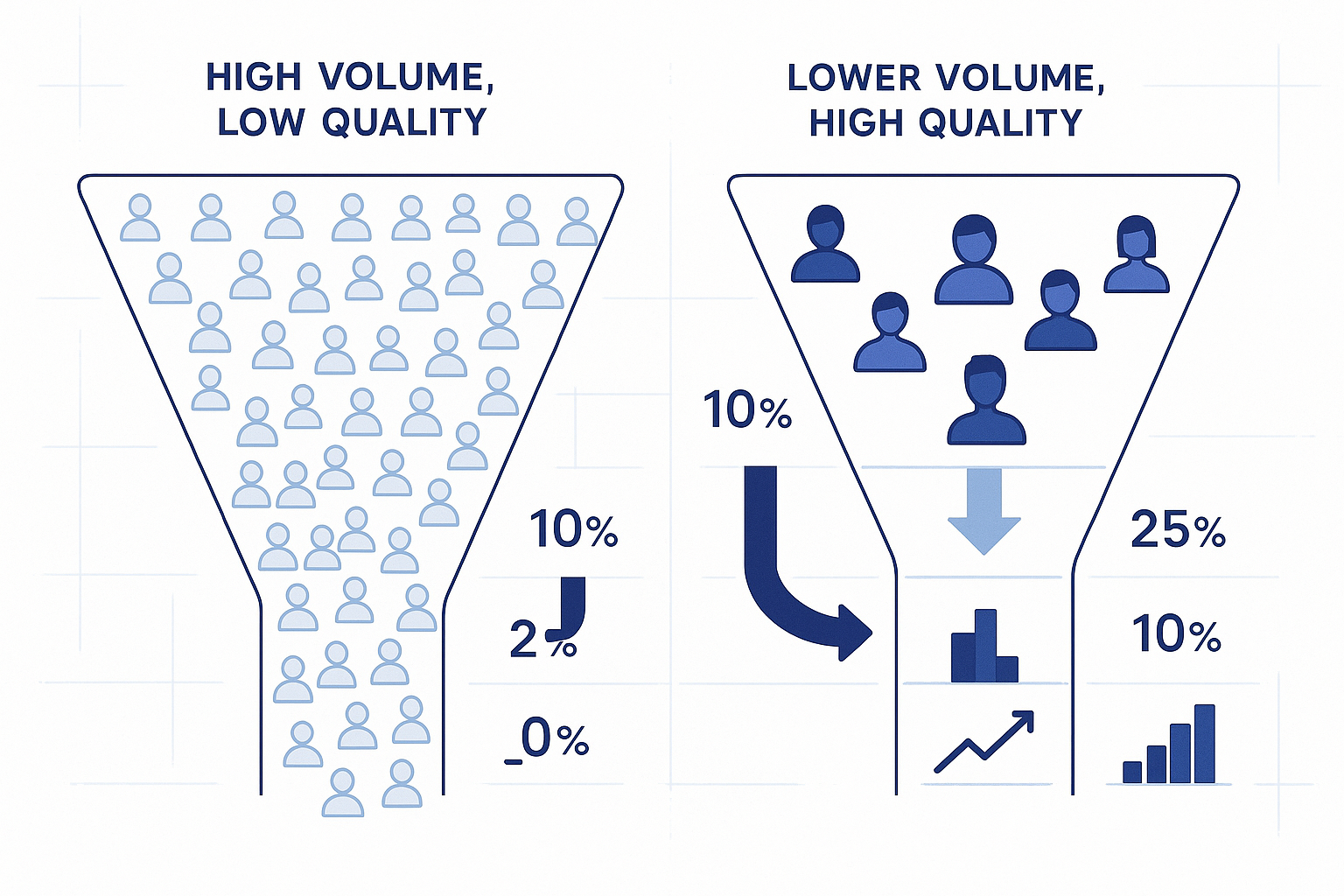
Most marketers obsess over lead volume when they should be fixated on lead intent. I've watched countless campaigns burn through budgets generating thousands of worthless email addresses while competitors with half the leads bank 10x the revenue.
The problem isn't your traffic source or landing page copy—it's that you're thinking about leads all wrong.
What most people get wrong is treating every lead the same. They'll celebrate hitting 1,000 subscribers this month without asking the hard question: how many of those people actually want what you're selling? In my experience, 100 qualified leads who opted in because they have a genuine problem you can solve will outperform 1,000 freebie seekers every single time.
The Lead Quality Revolution
Here's what changed everything for me: I stopped measuring success by cost per lead and started tracking cost per qualified action. That shift in thinking—from quantity to quality—transformed campaigns that were bleeding money into profit machines.
The best affiliates I know use what I call "friction-based qualification." Instead of making it easier to opt-in, they make it slightly harder. Ask for a phone number. Require a two-step confirmation. Use a survey to pre-qualify interest level.
Sure, your opt-in rate drops from 35% to 18%. But here's the counterintuitive part—your email open rates jump from 22% to 47%, and your click-through rates nearly double. You're not just getting more engaged subscribers; you're getting people who actually want to hear from you.
The Privacy-First Lead Game
iOS 14.5 and Google's privacy changes didn't kill lead generation—they just exposed who was doing it wrong. The marketers who were already focused on first-party data and owned audiences barely felt the impact.
What's working now is building what I call "permission-based micro-audiences." Instead of casting wide nets on Facebook and hoping for the best, smart affiliates are using platforms like ConvertKit's Creator Network and Systeme.io's affiliate marketplace to tap into pre-qualified audiences who've already shown buying intent.
Take NewsBreak, for example. While everyone's complaining about Facebook CPCs hitting $2-3 for competitive niches, you can still get quality clicks for $0.08-0.15 on NewsBreak if you know how to write native content that doesn't scream "affiliate offer."
Lead Magnets That Actually Magnetize
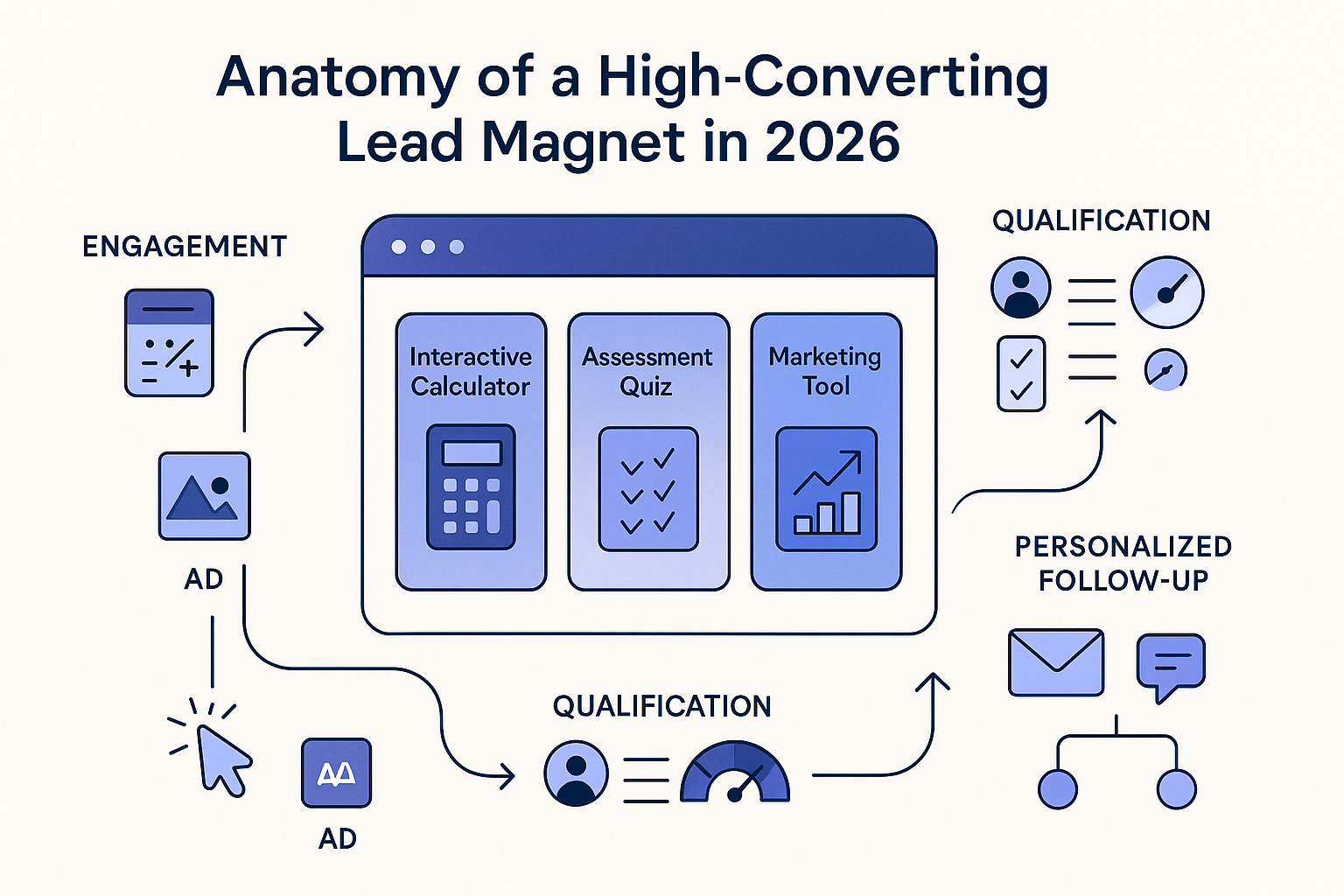
The "ultimate guide" and "free checklist" era is over. People are drowning in PDFs they'll never read. What's working in 2026 are interactive lead magnets that deliver immediate value.
I'm talking about tools, calculators, and assessments. Something they can use right now to get a result they care about. Say you're in the weight loss niche—instead of offering "7 Fat-Burning Foods," create a macro calculator that gives personalized daily targets based on their goals.
The Assessment Advantage
Assessments are pure gold because they do three things simultaneously: they qualify the lead, they deliver value, and they set up your sales sequence. Someone who takes a "What's Your Biggest Marketing Challenge?" quiz has just told you exactly how to sell to them.
The best part? Platforms like Typeform and ConvertFlow make it dead simple to build these experiences, and the data you collect becomes the foundation for hyper-personalized follow-up sequences.
But here's where most people mess it up—they make the assessment too long. Keep it to 5-7 questions maximum. People will abandon anything that feels like homework.
Traffic Sources That Still Deliver
Facebook and Google aren't dead, but they're not the easy buttons they used to be. The smart money is diversifying across platforms that still offer reasonable CPCs and less competition.
Pinterest is criminally underused for lead generation. If your offer appeals to women 25-45, Pinterest should be in your media mix. I'm seeing CPCs 60-70% lower than Facebook for the same demographics, and the traffic quality is surprisingly good because people are actively searching for solutions.
YouTube Shorts changed the game for video-based lead generation. A 60-second video that solves one specific problem, with a simple CTA to "get the full framework," can generate hundreds of qualified leads per month. The key is making content that's valuable even without the opt-in.
The Native Advertising Renaissance
While everyone's fighting over social media placements, native platforms like Taboola and Outbrain are seeing renewed interest from performance marketers. The secret sauce is writing headlines that sound like editorial content, not sales pitches.
"The Weird Trick That Doubled My Energy" performs better than "Amazing Supplement Boosts Energy 200%." People don't want to be sold to—they want to discover solutions that feel like insider secrets.
The approval process is more stringent now, but once you're running, the traffic is incredibly consistent. I know affiliates pulling 500+ qualified leads daily from native traffic that converts at 2-3x their social media campaigns.
Nurturing Sequences That Convert
Getting the lead is just the beginning. What separates the pros from the wannabes is what happens after someone joins your list.
The traditional "5-email welcome series" doesn't cut it anymore. People expect immediate value and ongoing relevance. I've found that a hybrid approach works best: deliver instant gratification, then build relationship over time.
Email 1 should deliver the promised lead magnet plus one unexpected bonus. Email 2 introduces a case study or success story. Email 3 addresses the biggest objection to your main offer. But here's the critical part—don't pitch until email 4 at the earliest.
Behavioral Triggers Beat Time-Based Sequences
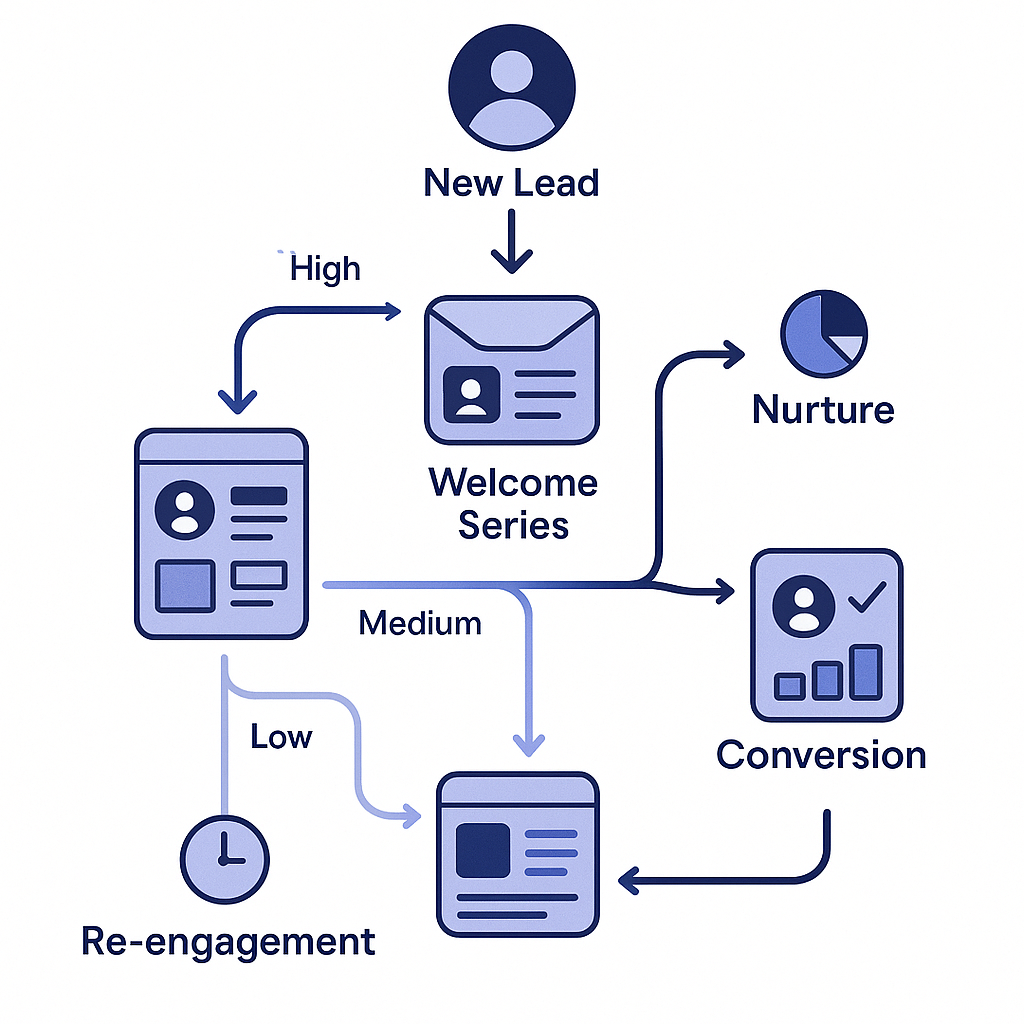
Static email sequences are so 2023. What's working now is behavioral-based automation that responds to what people actually do, not just when they subscribed.
Someone who clicks three links in your first email gets a different follow-up than someone who opens but doesn't click. ActiveCampaign and Klaviyo make this kind of sophisticated segmentation accessible to smaller operators, not just enterprise brands.
The most profitable sequence I've ever built had 23 different branches based on engagement patterns. Sounds complex, but the results speak for themselves—38% higher lifetime value compared to the linear sequence it replaced.
The Lead Generation Landscape Ahead
AI is reshaping how we think about lead qualification and nurturing. ChatGPT integrations are making real-time lead scoring possible at scales that were unimaginable just two years ago.
The marketers who win in 2026 and beyond won't be the ones with the biggest ad budgets—they'll be the ones who understand their audiences at the deepest level and can deliver personalized experiences at scale.
Voice search optimization is becoming critical for lead generation content. People aren't just typing "weight loss tips" anymore—they're asking "what should I eat for breakfast to lose belly fat?" Your content and lead magnets need to answer these conversational queries.
The biggest opportunity I see is in community-driven lead generation. Platforms like Circle and Mighty Networks are creating new ways to build owned audiences that don't depend on algorithm changes or platform policies.
But the fundamentals haven't changed: understand your audience, provide genuine value, and focus on quality over quantity. The tools and tactics evolve, but human psychology remains constant. The marketers who remember that will be the ones still standing when the next big platform shift happens.
This article contains affiliate links. We may earn a commission at no extra cost to you. Full disclosure.
Editorial Team
Senior Digital Marketing Strategist
The Prophet Visionary editorial team covers affiliate marketing, paid traffic, funnels, and digital product strategy with hands-on practitioner experience.
Learn more about our editorial team →Growing an Audience Without Email Is Playing on Hard Mode
Every piece of content should feed an email list. AWeber makes it easy to capture subscribers, automate nurture sequences, and monetize your audience with affiliate offers.
Start Building Your ListThis page contains affiliate links — I may earn a commission at no extra cost to you.
Disclaimer: The information on this site is for educational purposes only and does not constitute financial, legal, or business advice. Results vary based on individual effort, market conditions, and other factors. Always do your own due diligence before making business or investment decisions.