Email List Building: The Strategies That Actually Move the Needle
Most affiliate marketers approach email list building like they're collecting baseball cards—more is always better, right? Wrong. I've watched countless campaigns hemorrhage money chasing vanity metrics while missing the fundamentals that actually drive revenue.
The truth is, a targeted list of 1,000 engaged subscribers will outperform a bloated list of 10,000 freebie-seekers every single time. But here's what most people get wrong: they focus on the wrong metrics from day one.
The Foundation: Understanding Your List Economics
Before you spend a dime on traffic, you need to know your numbers. What's a subscriber worth to you over 90 days? Six months? A year?
Say you're promoting a high-ticket coaching program with a $2,000 commission. If your email sequence converts 2% of subscribers within 90 days, each subscriber is worth $40 to you. That means you can afford to spend up to $30-35 per subscriber and still maintain profitability—assuming your follow-up sequences are dialed in.
Most marketers never do this math. They set arbitrary cost-per-lead targets ($5, $10) without understanding the backend value. Then they wonder why their campaigns don't scale.
The counterintuitive part? Sometimes paying more per subscriber upfront leads to better long-term economics. Higher-intent traffic sources often deliver subscribers who are deeper in the buying cycle, even if they cost 2-3x more initially.
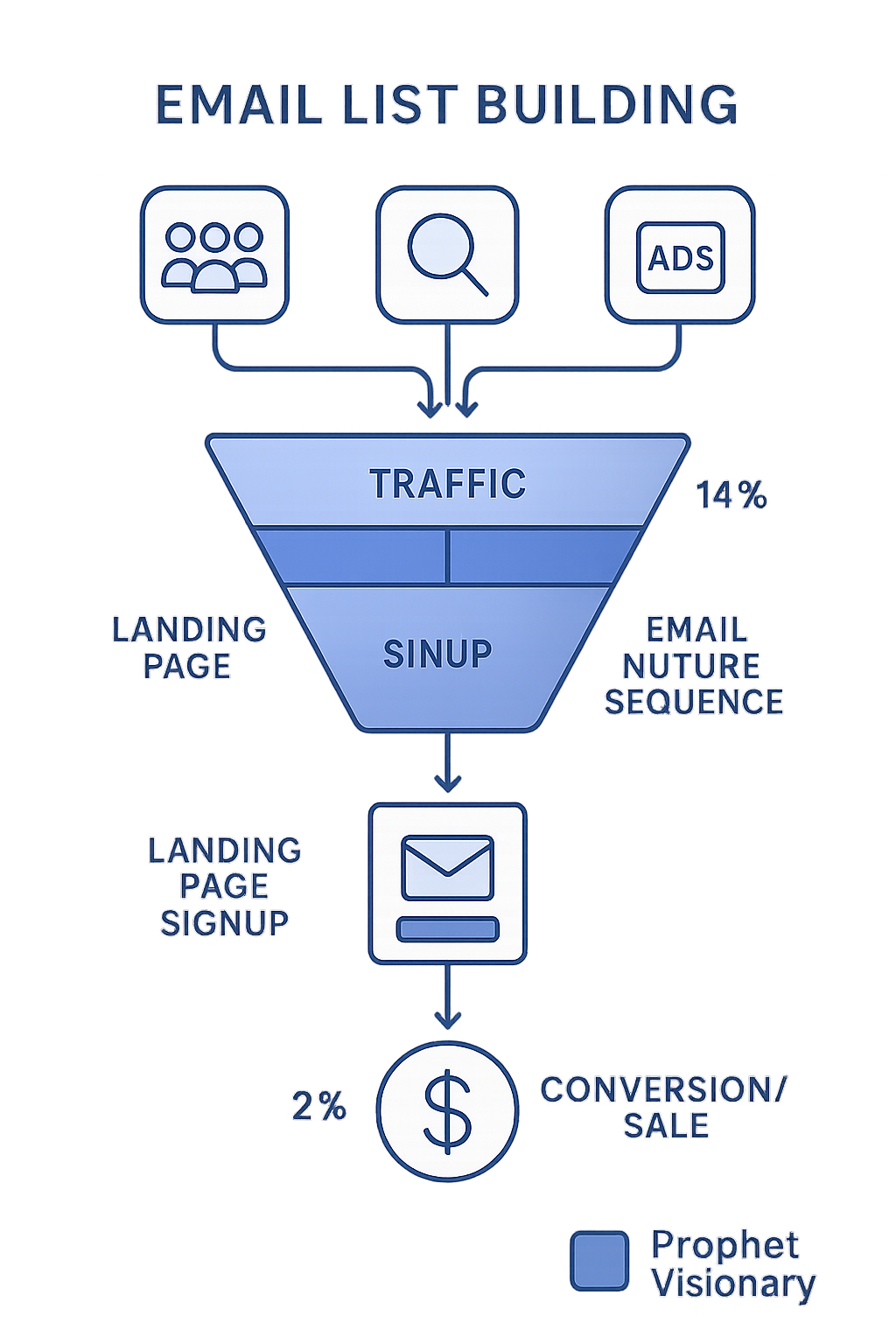
Traffic Sources That Actually Convert
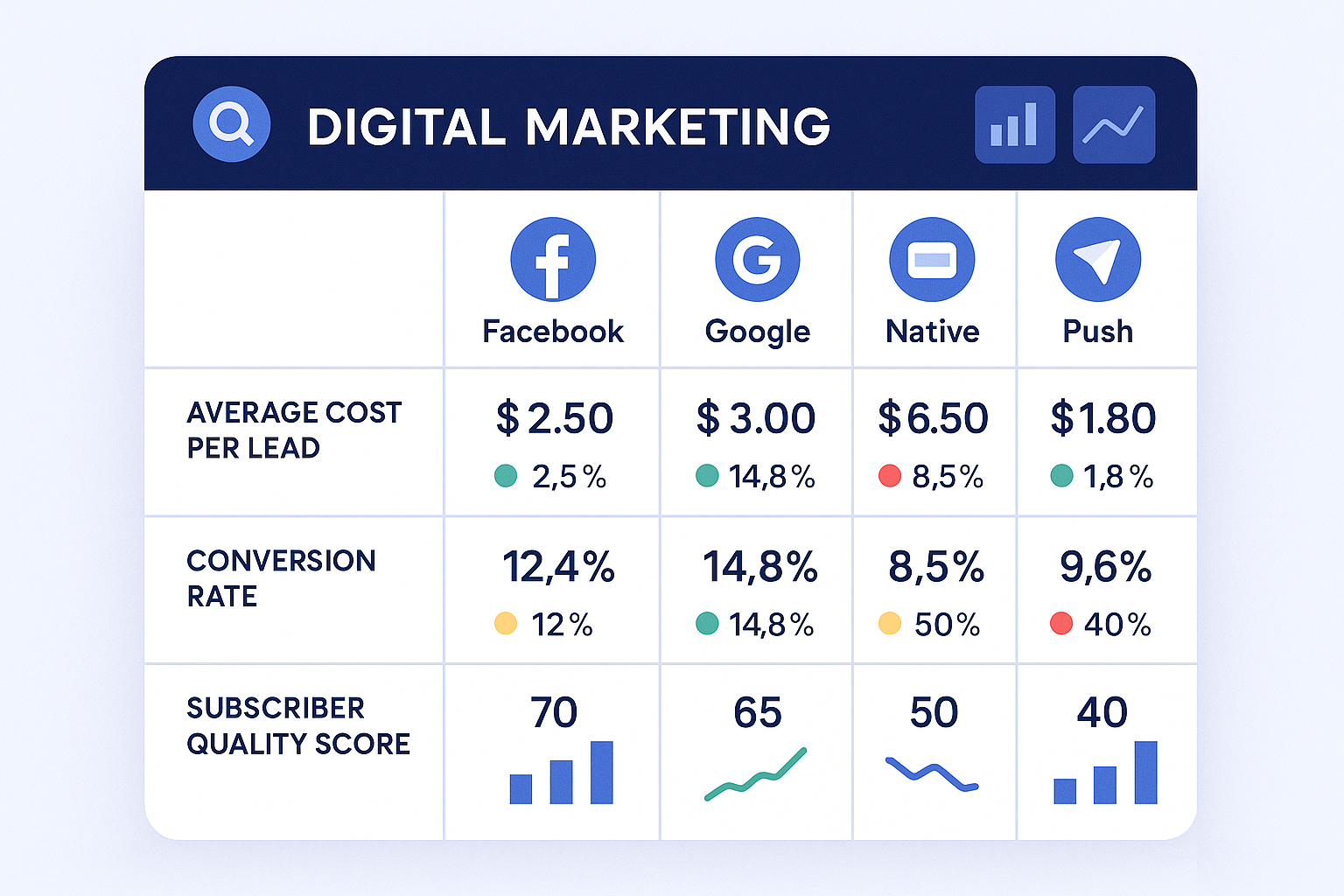
Facebook and Instagram: The Consistent Performers
Despite all the iOS changes and privacy updates, Facebook remains the most scalable traffic source for list building. The key is adapting to the new reality—broader targeting, creative-focused optimization, and longer attribution windows.
I've found that interest-based targeting still works, but you need to think bigger. Instead of targeting "weight loss supplements," go broader with "health and wellness" and let the algorithm find your people through creative testing. Facebook's machine learning has gotten scary good at this, especially when you feed it quality conversion data.
Video ads consistently outperform static images for list building campaigns. A simple talking-head video explaining your lead magnet will often beat a polished graphic by 30-40%. The algorithm favors video content, and people trust faces over fancy designs.
Google Ads: Quality Over Quantity
Google traffic converts differently than social traffic. These people are actively searching for solutions, which means they're typically further along in the buyer's journey.
Focus on long-tail keywords with commercial intent. "Best email marketing software for small business" beats "email marketing" every time. You'll pay less per click and attract subscribers who are closer to making a purchase decision.
The real opportunity in 2026 is YouTube ads. The targeting has improved dramatically, and you can reach people who are already consuming educational content in your niche. A well-crafted YouTube ad can deliver subscribers at 40-50% lower cost than traditional Google search campaigns.
Native and Push: The Underutilized Goldmines
Platforms like Taboola, Outbrain, and push networks like PropellerAds are where smart affiliates are finding cheap, converting traffic. These sources require a different approach—your lead magnets need to feel more editorial, less salesy.
A headline like "The 3 Foods Destroying Your Metabolism (Avoid #2)" performs better on native platforms than "Download My Free Weight Loss Guide." You're interrupting people's content consumption, so your offer needs to feel like valuable information, not another opt-in form.
Lead Magnets That People Actually Want
Here's where most people completely miss the mark. They create lead magnets they think people should want, not what people actually want.
The most effective lead magnets solve an immediate, specific problem. "5-Minute Morning Routine for Better Focus" beats "Complete Guide to Productivity" because it's actionable and time-specific. People can visualize implementing it immediately.
But here's the thing—your lead magnet needs to naturally lead toward your paid offer. If you're selling a $2,000 business coaching program, don't give away a generic "Start Your Business Checklist." Create something like "The 7 Costly Mistakes I Made Scaling to $100K (And How to Avoid Them)." It positions you as someone who's been there and done that.
The Psychology of Instant Gratification
PDF downloads are dead. People want immediate value, not another file cluttering their computer. Video trainings, email courses, and interactive tools consistently outperform static downloads.
I've seen simple quiz funnels ("What Type of Entrepreneur Are You?") generate subscribers at 60% lower cost than traditional PDF opt-ins. The quiz feels engaging rather than transactional, and you can segment subscribers based on their answers for more targeted follow-up.
Conversion Optimization: The Details That Matter
Your opt-in form isn't just a form—it's a sales page. Every element needs to be optimized for conversion.
The headline is everything. "Get My Free Report" converts terribly compared to "Discover the 3 Secrets Top Performers Use to Double Their Income." Be specific about the outcome, not just the deliverable.
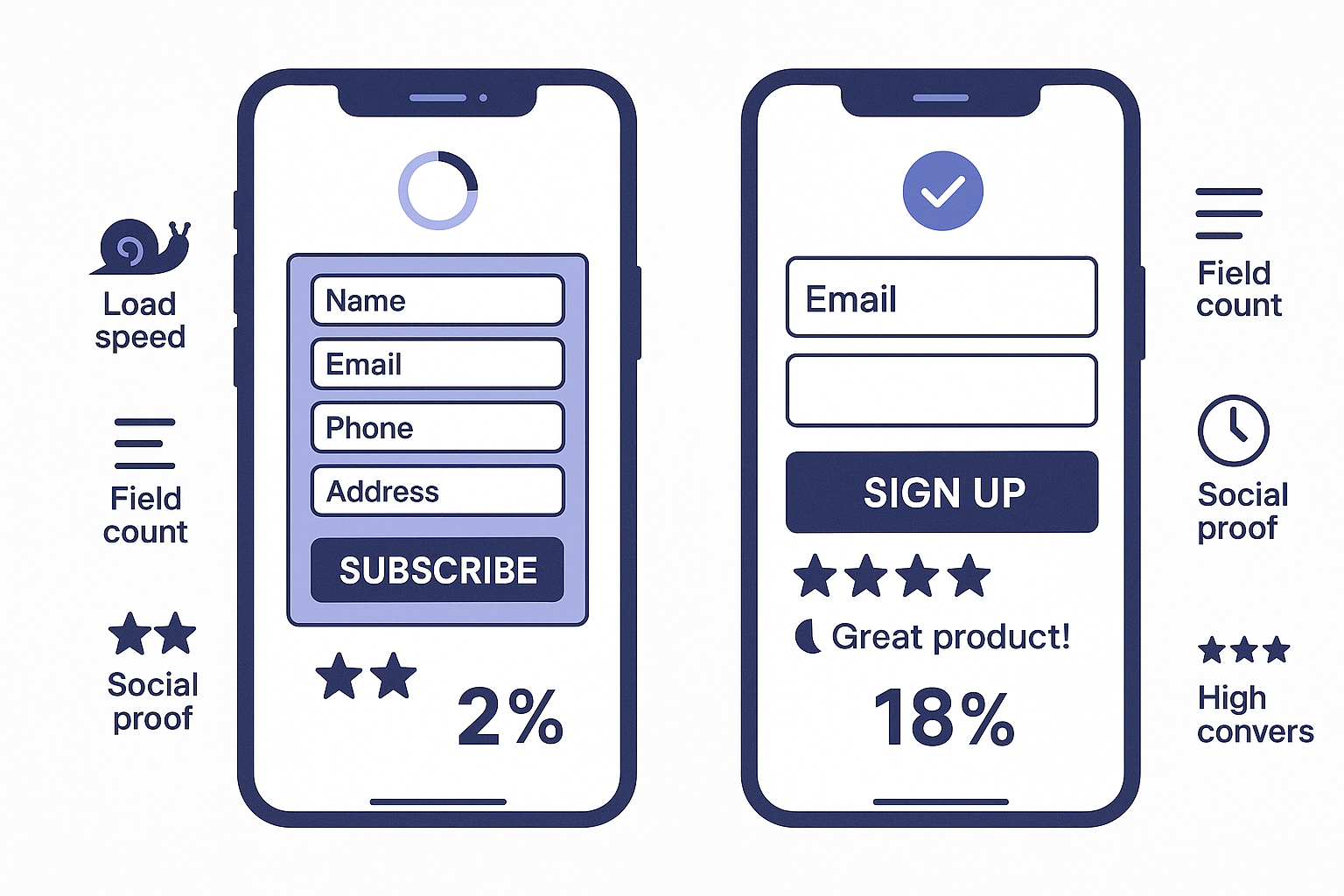
Social proof works, but it needs to be relevant. "Downloaded by 50,000+ entrepreneurs" is better than "50,000+ downloads" because it speaks to identity, not just popularity.
Mobile-First Design Principles
Over 70% of your traffic is coming from mobile devices, yet most opt-in forms are designed desktop-first. Your form should load in under 2 seconds, require minimal typing, and work perfectly with autofill.
Single-field opt-ins (email only) typically convert 25-30% higher than forms asking for name and email. Yes, you lose personalization in your follow-up sequences, but you gain volume. Test both approaches and let the data decide.
Follow-Up Sequences That Build Trust and Drive Sales
Getting the email address is just the beginning. Your welcome sequence determines whether that subscriber becomes a buyer or hits unsubscribe.
The first email should deliver on your promise immediately. If someone opted in for "5 Productivity Hacks," don't send a "welcome to the community" message. Send the productivity hacks. You can build rapport in email two.
I've found that a 5-7 email welcome sequence works best for most niches. Email one delivers the lead magnet, emails 2-4 provide additional value and build your story, and emails 5-7 introduce your paid offers with case studies and social proof.
Segmentation Based on Behavior
Not all subscribers are created equal. Someone who opens every email and clicks multiple links is showing higher engagement than someone who never opens anything.
Modern email platforms like ConvertKit and ActiveCampaign make behavioral segmentation simple. Create different paths for engaged subscribers (more frequent emails, higher-value content) versus less engaged ones (re-engagement campaigns, different messaging angles).
The engaged segment often represents 20-30% of your list but generates 60-70% of your revenue. Focus your best content and offers on these people first.
The Future of List Building
Privacy regulations aren't slowing down—they're accelerating. iOS updates, cookie deprecation, and GDPR-style laws spreading globally mean that owned media (your email list) becomes more valuable every year.
AI is changing how we create and optimize campaigns, but it's not replacing the fundamentals. Tools like ChatGPT can help you write better email subject lines or create lead magnet outlines, but they can't replace understanding your market or crafting compelling offers.
The biggest opportunity I see for 2026 is integration between email and other owned media channels. Building your email list while simultaneously growing your SMS subscribers, push notification lists, and social media followers creates multiple touchpoints with the same audience.
Smart marketers are also preparing for a cookieless future by focusing on zero-party data—information subscribers voluntarily provide through surveys, quizzes, and preference centers. This data is more valuable than anything you can track because people are explicitly telling you what they want.
The fundamentals haven't changed: provide massive value, understand your economics, and focus on quality over quantity. But the tactics and tools continue evolving. Stay flexible with your methods while remaining rigid about your principles, and you'll build lists that generate revenue for years to come.
Related reading: Backend Email Monetization: What Actually Works for Affiliate Lists
Related reading: Affiliate Email Marketing Questions, Answered Honestly
Frequently Asked Questions (Updated 2026)
How has AI changed email list building strategies in 2026?
AI has reshaped list building at almost every stage of the funnel. On the traffic side, platforms like Meta and Google now use machine learning to do audience discovery automatically—meaning your creative and landing page copy matter more than your targeting settings. On the content side, AI writing and video tools have dramatically reduced the cost of producing lead magnets, ad creatives, and email sequences, which means the bar for creative testing volume has risen. Affiliates who ran 3 ad variants in 2023 are running 10–15 in 2026.
Inside the list itself, AI-powered email platforms now offer predictive send-time optimization, automated list segmentation based on engagement behavior, and dynamic content personalization that adjusts offer messaging based on subscriber activity. If your ESP doesn't offer at least basic behavioral automation, you're leaving money on the table. The fundamentals—quality over quantity, strong lead magnets, dialed-in sequences—haven't changed. AI just executes them faster and at lower cost.
What lead magnet formats are converting best for affiliate list building right now?
In 2026, the oversaturation of generic PDF checklists and eBooks has pushed conversion rates for those formats down significantly. What's working now tends to be higher-perceived-value and more interactive:
- Short video trainings (15–30 minutes): A focused, problem-specific video training consistently outperforms static PDFs. The perceived value is higher and it pre-sells your authority before the first email lands.
- AI-powered tools and calculators: Simple interactive tools—a commission calculator, a niche profitability scorer, a quiz funnel—convert extremely well because they deliver personalized output. Subscribers feel like they're getting something built for them.
- Micro-courses (3–5 emails): Delivering the lead magnet as a short email course rather than a one-time download naturally warms subscribers into your sequence and improves engagement rates from day one.
- Templates and swipe files: Specific, immediately usable assets (ad copy templates, email subject line swipes, funnel frameworks) still convert well when they're genuinely useful—not padded filler.
The pattern across all of these: specificity wins. A lead magnet titled "The 7-Day Email Sequence for Promoting High-Ticket Coaching Programs" will outperform "Email Marketing Guide" every time.
Is email list building still worth it for affiliates when organic social and short-form video are so dominant?
Yes—arguably more than ever, precisely because social platforms have become more volatile. Algorithm changes, account restrictions, and organic reach compression on platforms like TikTok, Instagram, and YouTube Shorts mean that an audience you build on someone else's platform can disappear overnight. Your email list is an owned asset that no platform can take from you.
The economics also hold up. Email consistently delivers higher ROI per contact than social media for direct-response affiliate offers. A subscriber who opted in for a specific lead magnet and has received a calibrated email sequence is far more likely to convert on a targeted offer than a social follower who sees one post in a crowded feed.
The smart play in 2026 isn't email or social—it's using short-form video and organic social to drive opt-ins, then converting and monetizing through email. The two channels are complementary, not competing. Affiliates who treat social as a top-of-funnel list-building engine and email as the conversion and retention layer are seeing the strongest combined results.
This article contains affiliate links. We may earn a commission at no extra cost to you. Full disclosure.
Editorial Team
Senior Digital Marketing Strategist
The Prophet Visionary editorial team covers affiliate marketing, paid traffic, funnels, and digital product strategy with hands-on practitioner experience.
Learn more about our editorial team →Your List Is Only as Good as Your Email Platform
AWeber has 25+ years of inbox deliverability, drag-and-drop automation, and AI-powered copywriting built in. Free plan for up to 500 subscribers.
See Why Affiliates Use AWeberThis page contains affiliate links — I may earn a commission at no extra cost to you.
Disclaimer: The information on this site is for educational purposes only and does not constitute financial, legal, or business advice. Results vary based on individual effort, market conditions, and other factors. Always do your own due diligence before making business or investment decisions.