Email Marketing vs Paid Ads: Which Channel Wins for ROI?
Here's what most affiliate marketers get wrong: they think email marketing and paid ads are competing strategies. The truth is, they're complementary channels that serve entirely different purposes in your revenue engine—and understanding when to use each one will make or break your campaigns.
I've spent the better part of a decade testing both approaches across dozens of verticals, from ClickBank supplements to high-ticket coaching programs. What I've found consistently challenges the conventional wisdom you'll hear in most marketing circles.
The real question isn't which channel is "better"—it's which one fits your specific business model, traffic temperature, and profit margins. Let me break down exactly how these two powerhouses stack up.
The Economics: What Each Channel Actually Costs
Let's start with the numbers, because everything else is just theory without solid economics backing it up.
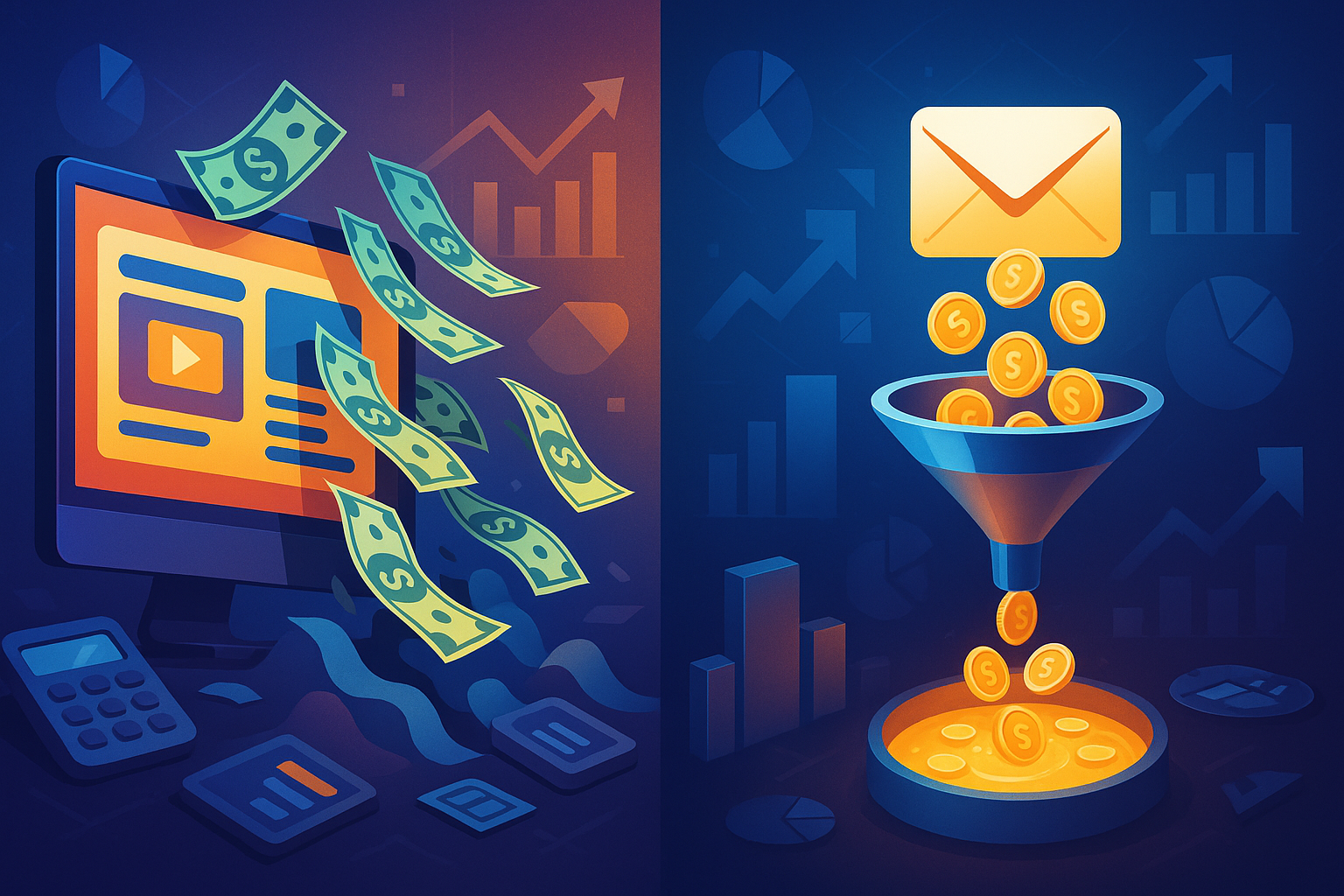
Paid ads hit your wallet immediately. You're looking at anywhere from $0.50 to $5+ per click depending on your vertical and platform. Facebook ads in the make money online space? Expect $2-4 per click minimum. Google Ads for competitive affiliate keywords can push $8-12 per click without breaking a sweat.
Email marketing operates on a completely different cost structure. You're paying monthly fees—ConvertKit runs $29/month for up to 1,000 subscribers, Systeme.io starts at $27/month—but each additional email costs essentially nothing to send.
Here's where it gets interesting: the breakeven math.
Say you're promoting a $47 ClickBank product with a 50% commission. That's $23.50 per sale. If your paid ads cost $3 per click and convert at 2%, you need 50 clicks to make one sale. That's $150 in ad spend for a $23.50 commission—you're hemorrhaging money.
But that same email list? Once you've acquired those subscribers (we'll get to acquisition costs), each email broadcast might generate $0.50-2.00 per subscriber. Send one email to 1,000 people, make $500-2,000. The math suddenly works.
The Hidden Costs Nobody Talks About
Paid ads come with invisible expenses that'll eat your margins alive if you're not careful. Creative fatigue means you're constantly producing new ad angles, images, and copy. Platform fees, payment processing, and the time cost of daily optimization add up fast.
Email marketing has its own hidden costs—deliverability issues, list cleaning services, and the significant time investment required to build sequences that actually convert. But here's the key difference: these are mostly one-time costs that pay dividends for months or years.
Speed vs Sustainability: The Time Factor
This is where paid ads absolutely demolish email marketing—if you're looking for immediate results.
Launch a Facebook campaign at 9 AM, and you could have sales rolling in by lunch. I've seen campaigns go from zero to four figures daily within 48 hours. There's something intoxicating about that immediate feedback loop.
Email marketing operates on geological time scales by comparison. Building a list of 10,000 engaged subscribers might take 6-12 months of consistent effort. Your welcome sequence needs time to marinate. Relationship building doesn't happen overnight.
But—and this is crucial—paid ads can disappear instantly. Platform policy changes, account bans, or algorithm shifts can vaporize your traffic source overnight. I've watched six-figure businesses crumble when Facebook decided their supplement ads violated some obscure policy.
Email lists don't vanish. They're yours. Platform-independent. Build it once, profit forever (assuming you don't abuse it).
The Compound Effect
Here's what changed my entire perspective on these channels: email marketing compounds, paid ads don't.
Every dollar you spend on paid ads today generates revenue today, then it's gone. You're essentially renting traffic. Stop spending, stop earning.
Every subscriber you add to your email list can generate revenue for years. I still make money from subscribers I added in 2019. That's compound interest applied to marketing.
Audience Temperature: When Each Channel Shines
The temperature of your audience completely changes which channel makes sense.
Cold traffic—people who've never heard of you—converts poorly via email initially. They don't know you, trust you, or care about your recommendations. Paid ads can work with cold traffic because you're intercepting them at the moment they're searching for a solution.
Warm traffic tells a different story entirely.
People on your email list have already raised their hand and said "yes, I want to hear from you." They've demonstrated interest. When you email them about a relevant offer, conversion rates of 5-15% aren't uncommon. Try getting those numbers with cold Facebook traffic.
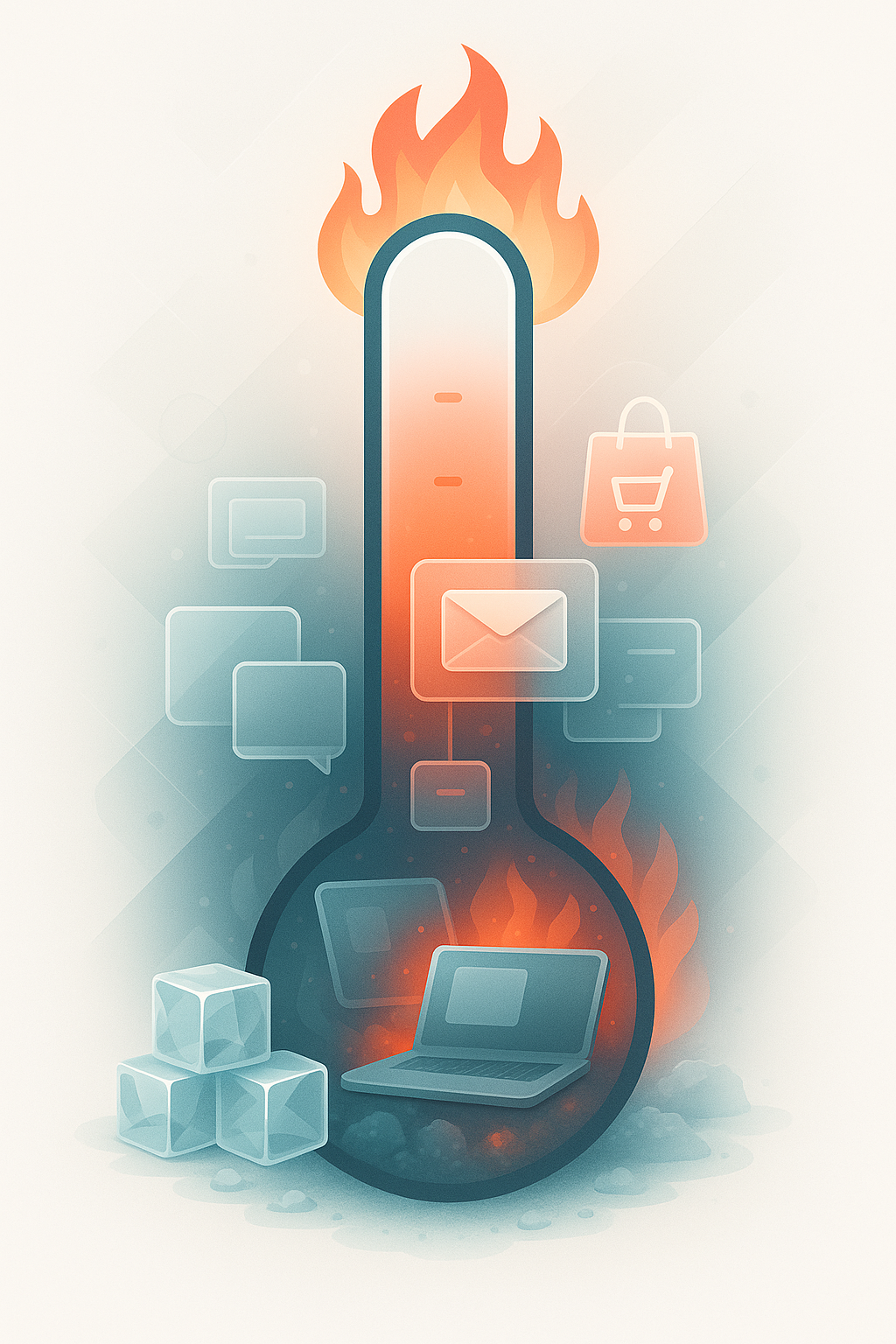
But here's the counterintuitive part: the best approach uses paid ads to build your email list, then monetizes through email marketing. You're essentially using paid traffic as a customer acquisition channel for your owned media.
The Trust Factor
Email marketing wins on trust, and it's not even close.
When someone sees your ad, they're encountering you for the first time in an environment designed for distraction. They're scrolling Facebook, checking Google for something else, or browsing YouTube. Your ad is an interruption.
When someone opens your email, they've made a conscious decision to engage with your content. They're in a different mindset entirely—more receptive, more focused, more likely to take action on your recommendations.
Control and Predictability: The Platform Risk
This might be the most important factor that doesn't get enough attention.
Paid advertising platforms are dictatorships. They can change their rules, ban your account, or shift their algorithms without warning or recourse. Facebook's iOS 14.5 update decimated tracking for countless advertisers. Google regularly updates their ad policies in ways that crush entire verticals overnight.
You're building your business on rented land.
Email marketing gives you direct access to your audience. No algorithm decides whether your subscribers see your message. No platform can ban you from reaching people who explicitly asked to hear from you.
The control factor becomes even more critical as privacy regulations tighten. Email addresses remain the most reliable way to maintain long-term customer relationships as third-party cookies disappear and attribution becomes murkier.
Scaling Considerations
Scaling paid ads requires exponentially more budget. Going from $100/day to $1,000/day in ad spend often decreases efficiency as you exhaust your best audiences and move into less targeted segments.
Scaling email marketing requires more content and better segmentation, but the marginal cost of reaching additional subscribers stays essentially flat. Sending an email to 10,000 people costs the same as sending it to 100,000.
The Integration Strategy: Why "Versus" Is the Wrong Question
After running this comparison for years across different business models, I've concluded that treating these channels as competitors misses the bigger opportunity.
The most successful affiliate marketers I know use paid ads as their customer acquisition engine and email marketing as their profit engine.
Here's how it works: Run targeted ads to capture subscribers with lead magnets relevant to your eventual offers. Use those ads to build your email list at a reasonable cost per subscriber—anywhere from $1-10 depending on your niche. Then monetize that list through strategic email sequences and periodic promotional campaigns.
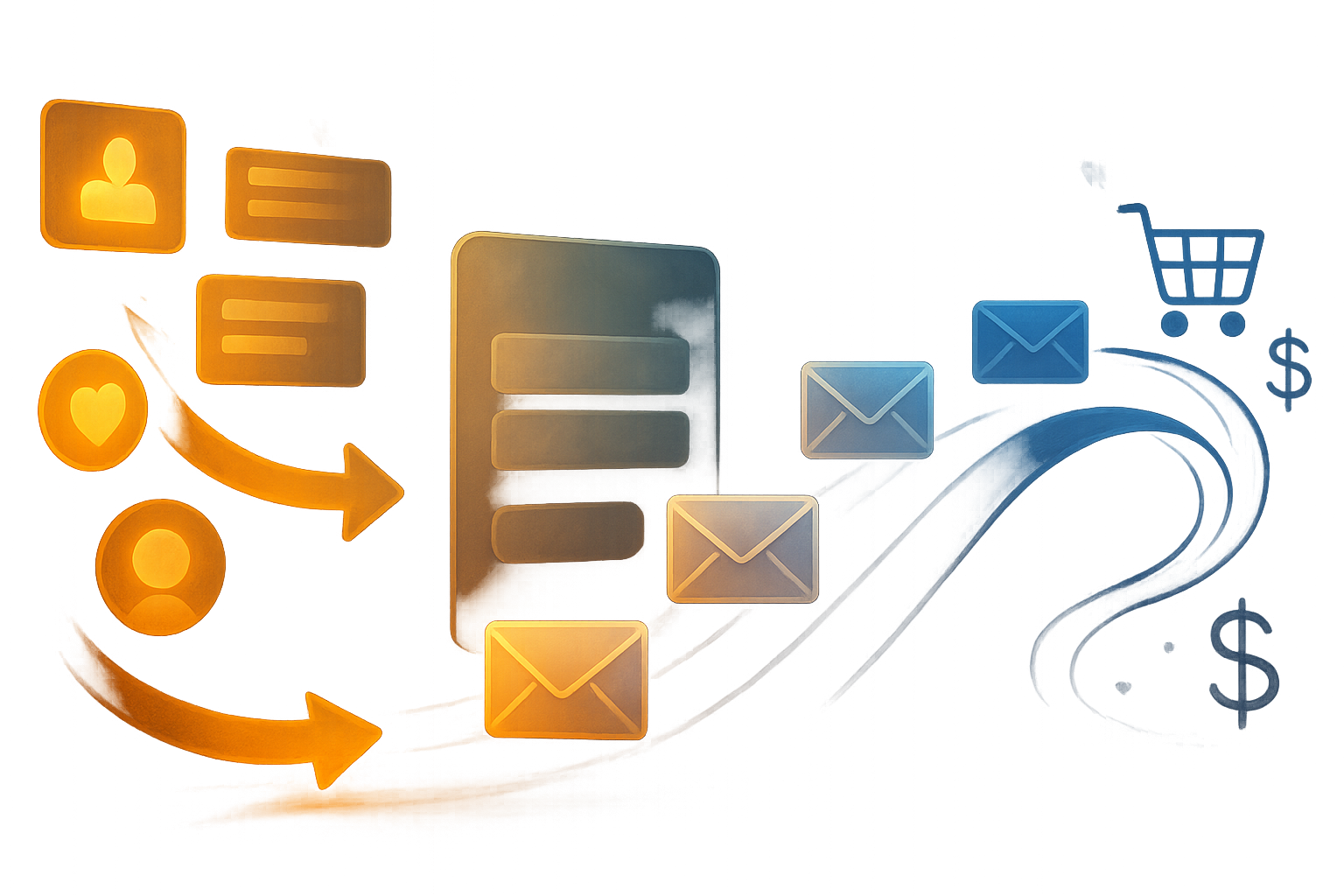
This approach gives you the speed of paid advertising for list building with the sustainability and higher conversion rates of email marketing for monetization.
The key is matching your traffic source to your funnel strategy. Cold Facebook traffic works great for free report opt-ins. Google searchers convert well on solution-focused lead magnets. YouTube viewers respond to educational content that builds authority.
Platform-Specific Strategies
Different paid platforms excel at different parts of the email acquisition funnel.
Facebook and Instagram work beautifully for broad interest targeting and lookalike audiences. You can test creative quickly and scale winners fast. Google Ads capture high-intent searchers but require more sophisticated keyword strategies. Native platforms like Taboola and Outbrain can work for certain verticals at lower costs but require different creative approaches.
The email side needs platform-specific optimization too. Your welcome sequence for Facebook subscribers should acknowledge how they found you. Google subscribers might need more education since they were searching for specific information. Native traffic often requires more trust-building since they clicked on what looked like editorial content.
Looking Forward: Privacy and Attribution Changes
The marketing landscape continues shifting toward privacy-first approaches, and this trend strongly favors email marketing over paid advertising.
iOS updates, cookie deprecation, and increasing privacy regulations make paid ad attribution less reliable each year. You might be generating sales through your Facebook ads, but proving it becomes increasingly difficult.
Email marketing attribution remains crystal clear. Someone clicks your email, buys your product—the connection is direct and trackable regardless of what Apple or Google decides to change.
AI tools are also changing both channels, but in different ways. AI makes it easier to generate email content and personalize messages at scale. But it also makes paid ad competition fiercer as more marketers can quickly produce and test creative variations.
The marketers who'll thrive are those who understand these channels complement each other rather than compete. Use paid ads to interrupt and capture attention, use email to build relationships and drive conversions. Master the handoff between channels, and you'll have a business that's both scalable and sustainable.
The future belongs to marketers who own their audiences, not rent them. Email marketing gives you that ownership in ways paid advertising simply cannot match.
This article contains affiliate links. We may earn a commission at no extra cost to you. Full disclosure.
Editorial Team
Senior Digital Marketing Strategist
The Prophet Visionary editorial team covers affiliate marketing, paid traffic, funnels, and digital product strategy with hands-on practitioner experience.
Learn more about our editorial team →Your List Is Only as Good as Your Email Platform
AWeber has 25+ years of inbox deliverability, drag-and-drop automation, and AI-powered copywriting built in. Free plan for up to 500 subscribers.
See Why Affiliates Use AWeberThis page contains affiliate links — I may earn a commission at no extra cost to you.
Disclaimer: The information on this site is for educational purposes only and does not constitute financial, legal, or business advice. Results vary based on individual effort, market conditions, and other factors. Always do your own due diligence before making business or investment decisions.