First Funnel Launch Checklist: 7 Steps to Avoid Costly Mistakes
I've watched hundreds of first-time funnel builders make the same expensive mistakes. They obsess over logo colors and fancy animations while completely ignoring conversion fundamentals. Then they wonder why their "perfect" funnel converts at 0.5% instead of the 8-12% they expected.
The truth is, launching your first funnel doesn't require perfection—it requires following a systematic process that covers the essentials without getting lost in the weeds.
Here's the checklist I wish someone had given me before I burned through $3,000 in Facebook ads on a funnel that was doomed from day one.
Pre-Launch Foundation: Market Research That Actually Matters
Most people skip this step entirely or do it wrong. They ask their friends what they think of their idea (useless) or spend weeks on surveys that don't predict buying behavior (also useless).
What works is finding evidence that people are already spending money on solutions to the problem you're solving.
The 48-Hour Market Validation Test
Before you build anything, spend exactly two days researching these three areas:
- ClickBank bestseller lists in your niche—if similar products are ranking, there's proven demand
- Facebook ad library searches for competitors running ads longer than 30 days (they wouldn't keep spending if it wasn't working)
- Amazon bestsellers and review analysis to understand what customers love and hate about existing solutions
I've found that if you can't find at least five direct competitors with active ad campaigns, you're either in a market that's too small or you haven't looked hard enough.
Offer Positioning That Converts
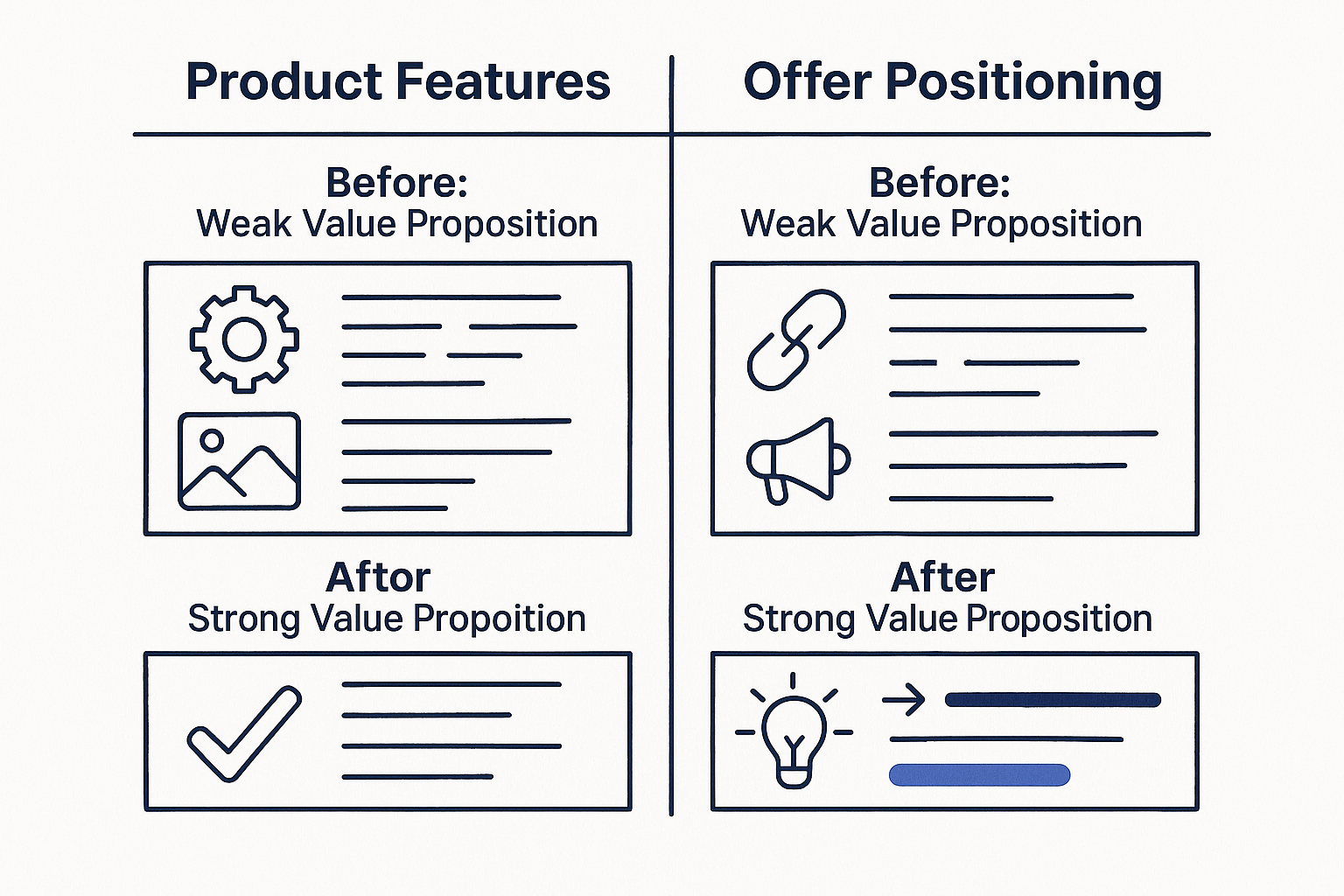
Your offer isn't your product—it's the complete value proposition wrapped around your product. Say you're selling a productivity course. Your product is video lessons and worksheets. Your offer might be:
"The 21-Day Focus Protocol: Get 3 Hours of Deep Work Done Before Lunch (Even If You've Never Meditated or Used a Planner)"
Notice the specificity: 21 days, 3 hours, deep work, before lunch. Plus the objection handling in parentheses.
Technical Setup: The Minimum Viable Funnel Stack
Here's where most beginners go wrong—they think they need the most sophisticated tech stack from day one. They sign up for $300/month tools when they haven't made their first sale.
Start simple. You can always upgrade later.
Essential Tools for Your First Funnel
For your first funnel, you need exactly four things:
- Landing page builder: Systeme.io covers pages, email, and payment processing for $27/month
- Email service: If you're not using Systeme.io, ConvertKit handles deliverability and automation well
- Payment processor: Stripe for digital products, PayPal for international customers
- Analytics: Google Analytics 4 (free) plus Facebook Pixel if you're running paid traffic
That's it. Don't get seduced by fancy membership site platforms or complex CRM systems until you're doing consistent five-figure months.
The 3-Page Funnel Structure
Your first funnel should have exactly three pages:
Opt-in page: One clear benefit, one email field, one button. I've tested dozens of variations and the highest converting opt-ins promise one specific outcome in a specific timeframe.
Thank you page: Confirm the opt-in and deliver the lead magnet immediately. No delays, no "check your email" messages that kill momentum.
Sales page: This can be a separate page or integrated into your email sequence. Start with email-based selling—it's more forgiving for beginners.
Anything more complex than this is premature optimization.
Content Creation: The 80/20 of High-Converting Assets
You don't need Hollywood production values or a thousand-page course. You need content that builds trust and demonstrates value quickly.
Lead Magnet That Actually Magnetizes
The best lead magnets solve a small, specific problem immediately. Think "Quick Start Guide to Setting Up Google Analytics 4 in 15 Minutes" rather than "The Complete Digital Marketing Handbook."
Format matters less than speed of value delivery. A well-designed PDF checklist often outperforms a 45-minute video tutorial because people can scan it and get value in 30 seconds.
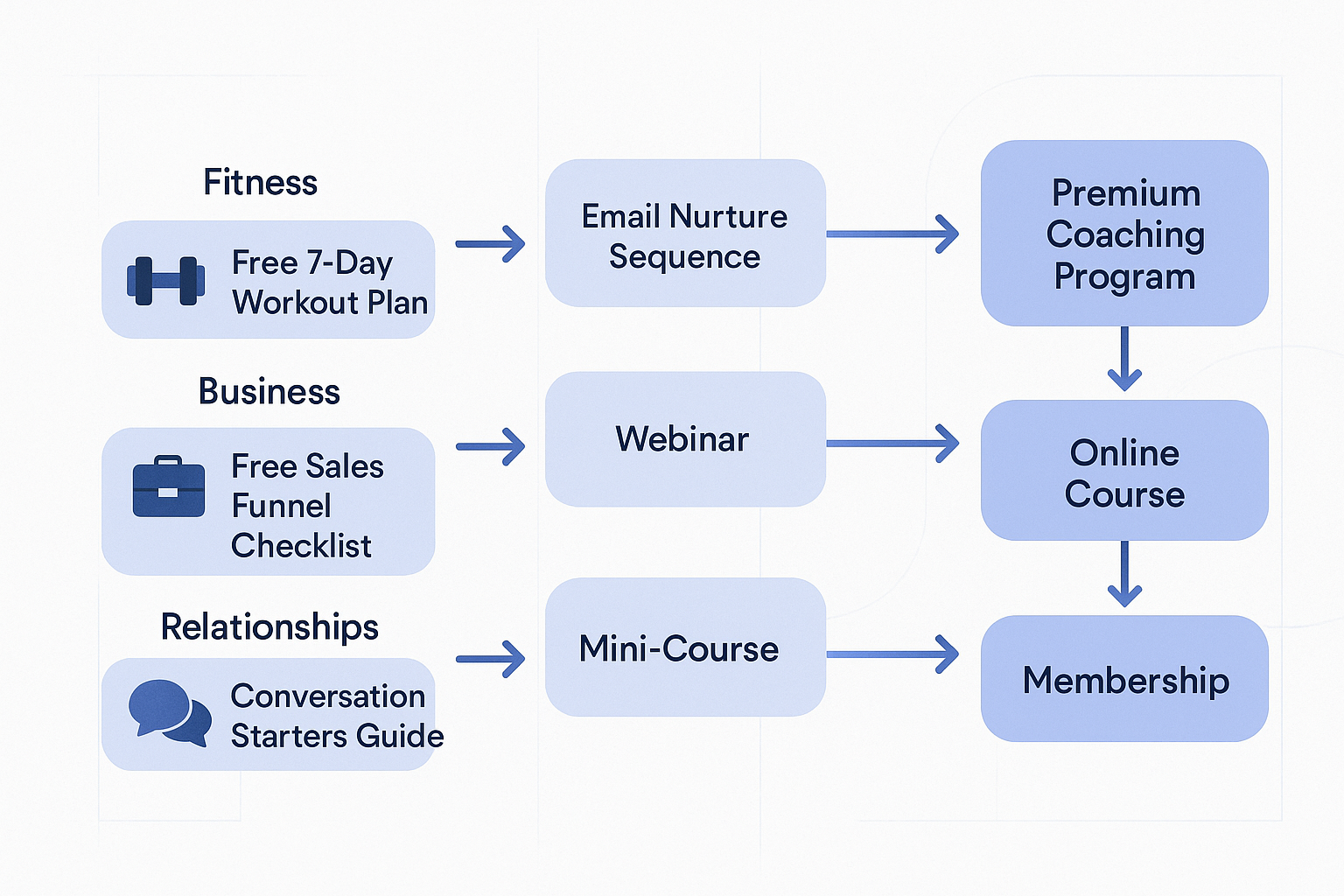
But here's the thing—your lead magnet should naturally lead to your paid offer. If you're selling a $497 Facebook ads course, don't give away a LinkedIn marketing checklist. Give away "The 5-Minute Facebook Pixel Setup" or "3 Audience Research Tools I Use for Every Campaign."
Email Sequence That Sells Without Being Sleazy
Your welcome sequence should be 5-7 emails over 10 days. Here's the formula I use:
- Email 1: Welcome + deliver the lead magnet (send immediately)
- Email 2: Your story + why you created this solution (next day)
- Email 3: Case study or client success story (day 3)
- Email 4: Soft pitch—mention your paid program without hard selling (day 5)
- Email 5: Address the biggest objection to buying (day 7)
- Email 6: Direct sales pitch with urgency or scarcity (day 9)
- Email 7: Last chance + future content preview (day 10)
The counterintuitive part? Don't make every email about selling. Mix in pure value—industry insights, tool recommendations, behind-the-scenes content. People buy from sources they trust, not from sources that only pitch.
Traffic Strategy: Start With One Channel and Master It
I see new funnel builders trying to be everywhere at once—Facebook ads, Google ads, SEO, influencer outreach, LinkedIn, TikTok. They spread themselves thin and master nothing.
Pick one traffic source and get profitable there before expanding.
Paid Traffic for Immediate Results
If you have budget ($500-1000 to test), start with Facebook or Google ads. Facebook is better for cold traffic and interest-based targeting. Google works when people are already searching for solutions.
Start with a daily budget of $20-30. Yes, that sounds small, but you'll learn faster with consistent small tests than sporadic large ones.
For Facebook, begin with interest targeting around your competitors and industry publications. If you're in the email marketing space, target people interested in ConvertKit, Mailchimp, and Email Marketing Magazine.
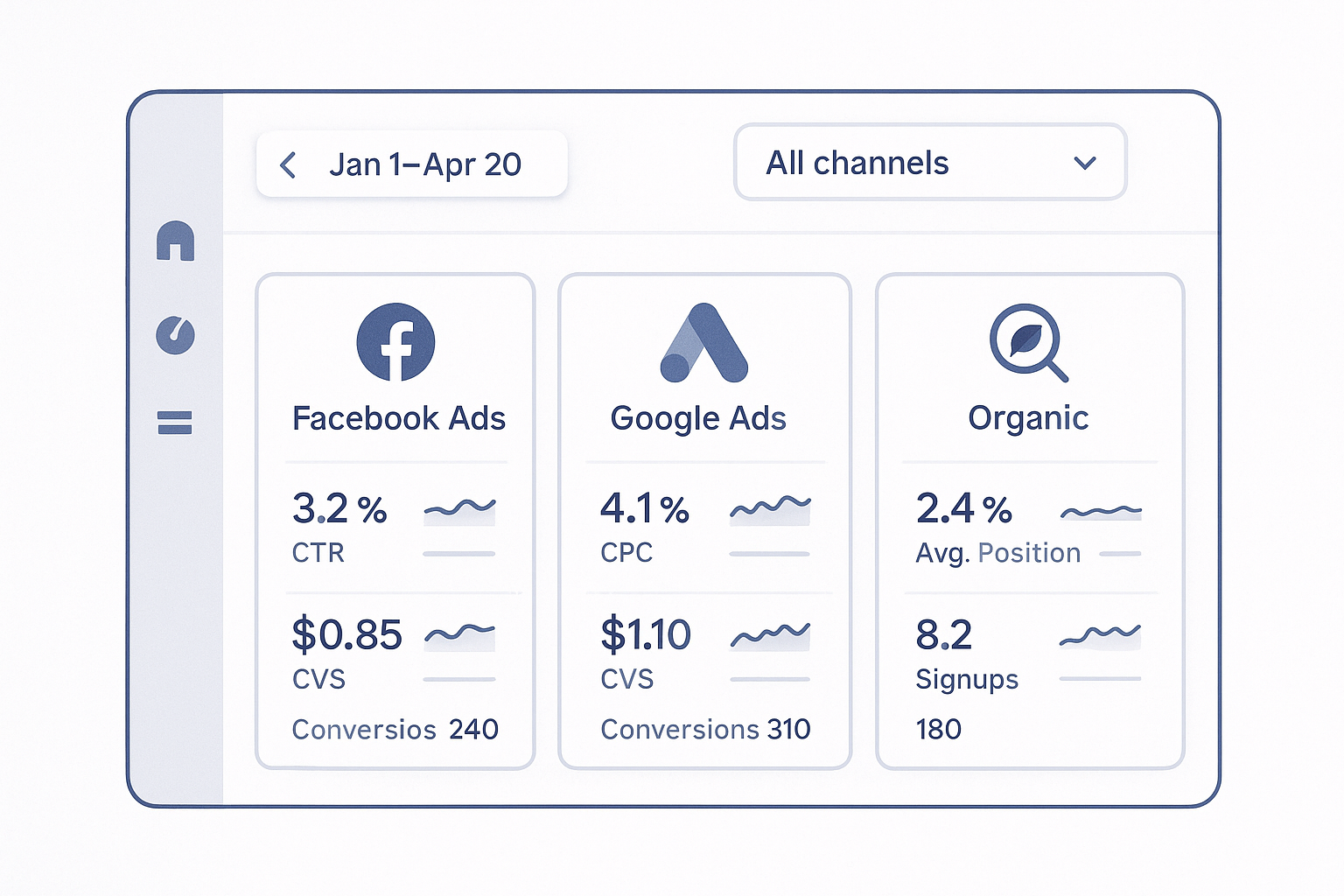
Track everything. Cost per click, cost per lead, lead-to-customer conversion rate, and customer lifetime value. You need these numbers to scale profitably.
Organic Traffic for Long-term Growth
If budget's tight, focus on one organic channel where your audience actually hangs out. Don't assume—research where your competitors are most active.
For B2B offers, LinkedIn content often works better than Instagram. For fitness and lifestyle, Instagram and TikTok dominate. For technical topics, YouTube tutorials and Twitter threads build authority.
The key is consistency over perfection. Better to post valuable content three times per week for six months than to post sporadically when inspiration strikes.
Testing and Optimization: What to Measure First
Analytics paralysis kills more funnels than bad traffic. You don't need to track 47 different metrics—focus on the ones that directly impact revenue.
The Big Three Metrics
Track these three numbers obsessively:
Opt-in conversion rate: Aim for 25-40% depending on traffic source. Cold Facebook traffic converting at 15% might be fine, but organic traffic from your content should hit 40%+.
Email-to-sales conversion rate: This varies wildly by price point and niche, but 2-5% is a reasonable starting target for products under $200.
Customer lifetime value: Include upsells, cross-sells, and repeat purchases. This number determines how much you can afford to spend acquiring customers.
Everything else is secondary until you optimize these core metrics.
When and What to Test
Don't test anything until you have at least 1000 visitors to your opt-in page. Before that, you're optimizing noise, not signal.
Your first test should always be your headline. It has the biggest impact on conversion rates. Test benefit-focused headlines against curiosity-driven ones. "How to Get 1000 Email Subscribers in 30 Days" vs "The Weird Email Trick That Got Me 1000 Subscribers."
After headlines, test your call-to-action buttons. Not just the color (though that matters), but the text. "Get My Free Guide" often beats "Download Now" because it emphasizes value over action.
Launch Day and Beyond: Avoiding the Perfectionism Trap
Your first funnel won't be perfect. It doesn't need to be. The goal is to get it live, start collecting data, and improve based on real user behavior rather than your assumptions.
Set a launch deadline and stick to it. I've seen too many entrepreneurs spend months perfecting a funnel that never sees real traffic. Better to launch at 80% perfect and improve based on actual feedback.
The market will teach you things no amount of planning can predict. Maybe your audience prefers video content over written guides. Maybe they respond better to urgency than scarcity. Maybe your pricing is too low and raising it actually increases conversions.
You'll only discover these insights by launching and measuring real results.
Plan for iteration, not perfection. Your first funnel is version 1.0, not the final product. Build in time for weekly optimization based on your data. Small improvements compound quickly—a 2% increase in opt-in rate plus a 3% improvement in email conversion can boost overall results by 15-20%.
The funnel builders who succeed long-term treat launch day as the beginning of optimization, not the end of development. Your best insights will come from real customers interacting with real pages, not from focus groups or surveys.
Start building, start testing, start learning. The market is waiting.
This article contains affiliate links. We may earn a commission at no extra cost to you. Full disclosure.
Editorial Team
Senior Digital Marketing Strategist
The Prophet Visionary editorial team covers affiliate marketing, paid traffic, funnels, and digital product strategy with hands-on practitioner experience.
Learn more about our editorial team →Monetize Smarter With Funnels + Email in One Place
Order bumps, upsells, automated email sequences, and your own affiliate program — Systeme.io gives you the full monetization stack without the bloated monthly spend.
See the Monetization StackThis page contains affiliate links — I may earn a commission at no extra cost to you.
Disclaimer: The information on this site is for educational purposes only and does not constitute financial, legal, or business advice. Results vary based on individual effort, market conditions, and other factors. Always do your own due diligence before making business or investment decisions.