Offers & Monetization: The Art of Turning Traffic Into Profit
Here's what most marketers get wrong about monetization: they focus on traffic volume instead of offer alignment. I've watched countless campaigns burn through budgets because the operator grabbed the highest-paying offer without considering audience fit or conversion mechanics.
The truth is, successful monetization isn't about finding the perfect offer—it's about creating the perfect match between your traffic source, audience intent, and offer structure. Get this triangle right, and you'll see conversion rates that make other affiliates scratch their heads.
Understanding Modern Offer Landscapes
The offer ecosystem has evolved dramatically since iOS 14.5 and the cookieless future we're heading into. What worked in 2020 won't cut it now.
High-Intent vs. Discovery Traffic
Your monetization strategy hinges on understanding traffic temperature. High-intent traffic—people searching "best protein powder for weight loss"—converts differently than discovery traffic from TikTok or Taboola.
For high-intent traffic, direct offer promotion works. A simple bridge page highlighting benefits and addressing objections can convert at 8-15% on quality supplements or software offers.
Discovery traffic? That's where the real skill shows. These users didn't wake up planning to buy anything. You need to warm them up, create desire, then guide them toward a purchase decision.
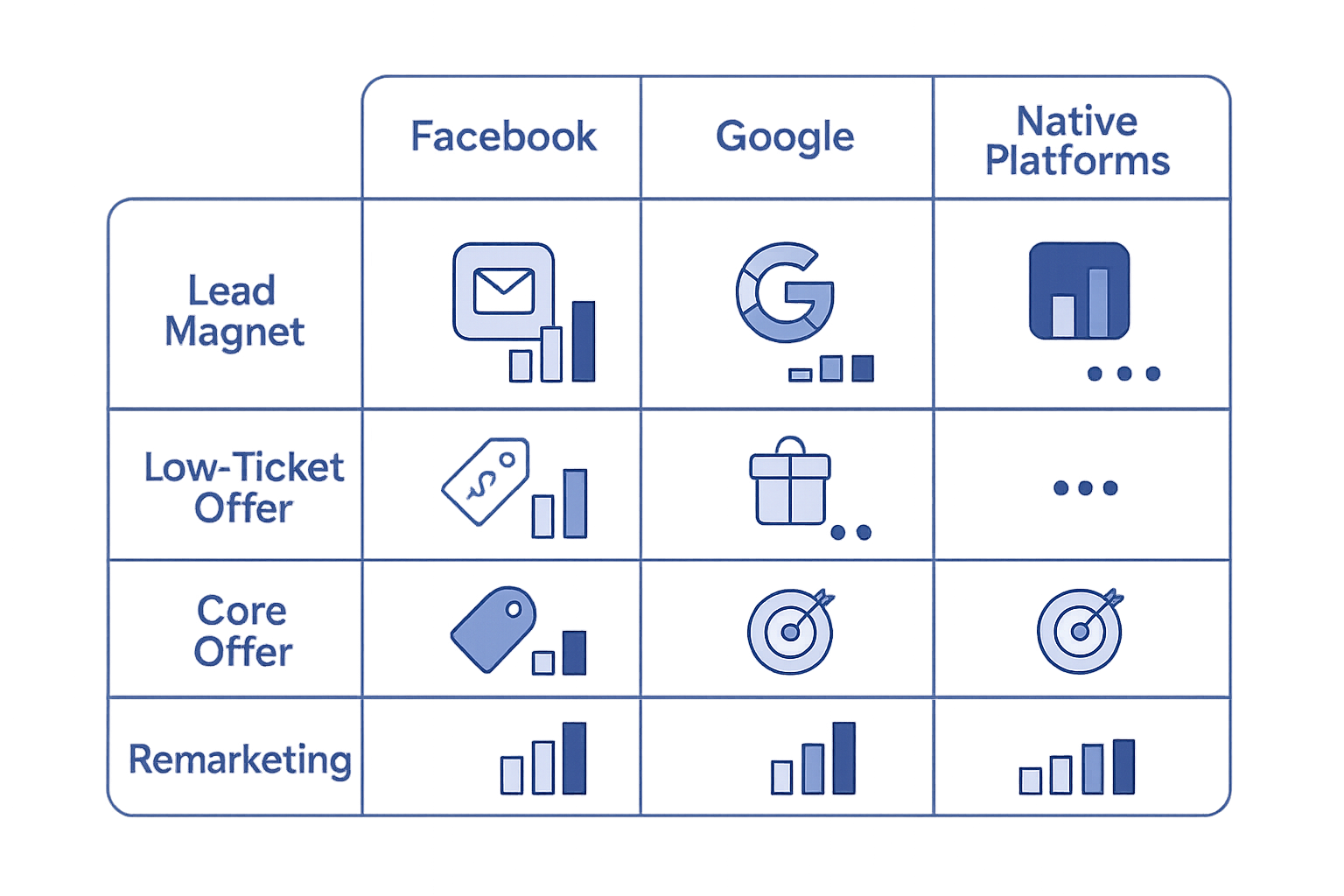
The Platform-Offer Matrix
Each traffic source has offer types that just work better. Facebook loves visual transformation offers—weight loss, skincare, home improvement. The platform's algorithm favors engagement, and before/after content drives comments and shares.
Google Ads thrives on problem-solution offers. Someone searching "how to fix credit score" is ready for credit repair services or financial education products. The intent is crystal clear.
Native platforms like Outbrain and Taboola excel with curiosity-driven offers. "This weird trick" angles that lead to supplements, financial opportunities, or educational products perform consistently well.
Offer Selection Fundamentals
Not all offers are created equal, and commission rates can be deceiving.
The Real Metrics That Matter
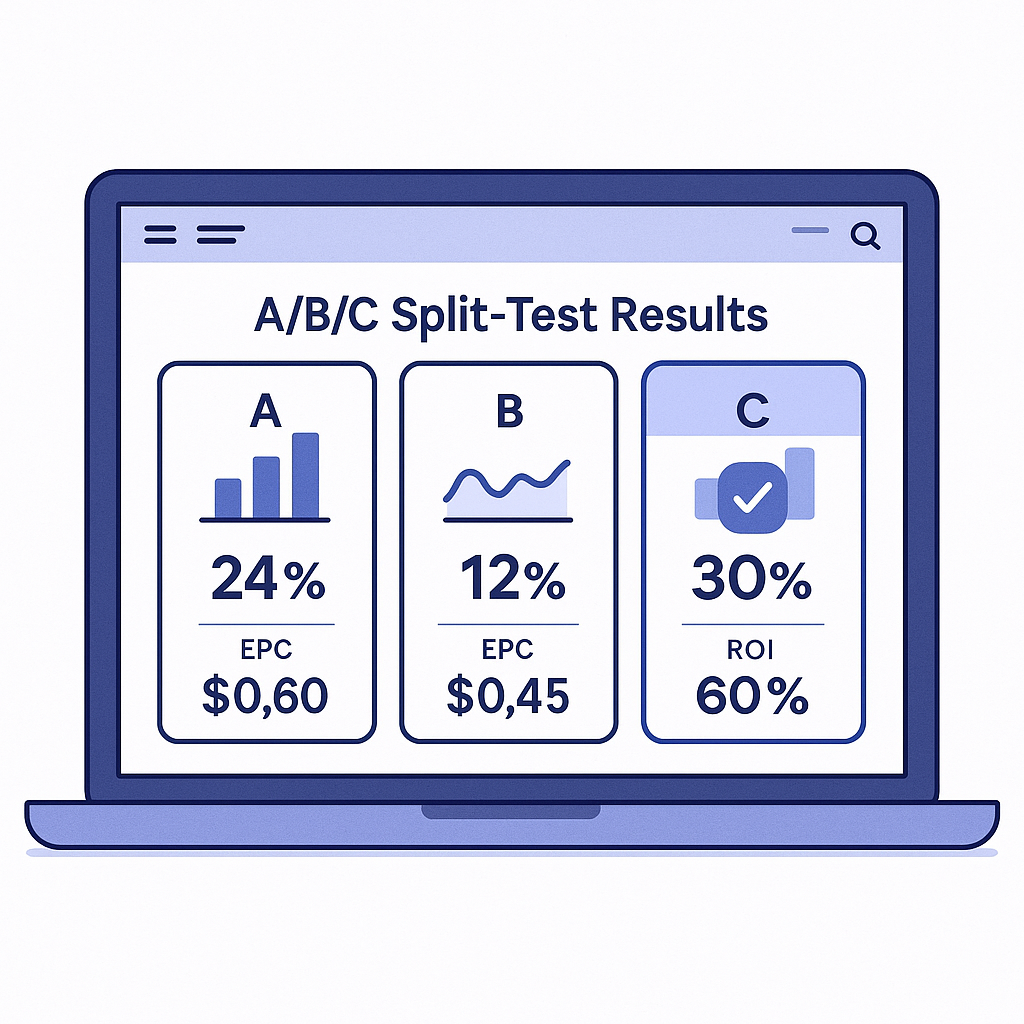
Earnings per click (EPC) tells the whole story. A $200 commission offer with a 0.5% conversion rate gives you the same EPC as a $50 offer converting at 2%. But here's the kicker—the lower-priced offer is usually easier to scale because you can bid higher on traffic while maintaining profitability.
I've found that offers in the $47-97 range often provide the best balance of conversion rate and commission size for most verticals. High enough to generate meaningful revenue, low enough that the purchase decision doesn't require extensive deliberation.
Recurring vs. One-Time Commissions
Software and membership offers with recurring commissions are goldmines if you can crack them. A $39/month SaaS product paying 30% recurring commission will outperform most one-time offers over a 12-month period.
The challenge? These offers typically require more sophisticated nurturing sequences. You're not just selling a product—you're selling a subscription. The messaging needs to emphasize ongoing value, not just immediate gratification.
Say you're promoting ConvertKit at $29/month with 30% recurring. One customer worth $8.70 monthly becomes a $104 annual value. That changes how much you can spend on acquisition completely.
Testing Offer Variations
Smart affiliates test multiple offers in the same vertical simultaneously. Run three different weight loss supplements from ClickBank, each with different price points and angles. The data will tell you what your audience prefers—and it's often not what you'd expect.
Monetization Models That Scale
Single-offer promotion is leaving money on the table. The real profits come from strategic monetization sequences.
The Tripwire-to-Core Strategy
Start with a low-priced offer to identify buyers, then promote higher-ticket items to that segment. A $7 report about affiliate marketing can identify people willing to spend money on business education. Follow up with a $297 course or $2,000 mastermind.
This model works because you're segmenting based on behavior, not demographics. Someone who buys a $7 product is infinitely more likely to buy a $300 product than someone who just downloaded a free lead magnet.
Email List Monetization
Your email list is a monetization machine if you treat it right. But the "promote everything to everyone" approach kills long-term value faster than anything.
Segment based on engagement and purchase history. New subscribers get nurture sequences with soft offers. Engaged subscribers who haven't purchased get stronger calls-to-action. Previous buyers get premium offers and early access to new products.
The numbers don't lie: a segmented email campaign generates 760% more revenue than broadcast campaigns. Yet most affiliates still blast the same message to their entire list.
Multi-Channel Revenue Streams
Don't put all your eggs in one basket. If you're crushing it with Facebook ads, great—but what happens when your ad account gets restricted? Diversification isn't just smart; it's survival.
Combine paid traffic with SEO content, email marketing, and organic social. Each channel feeds the others. Your SEO content captures long-tail traffic and builds your email list. Your email list provides a warm audience for social media engagement. Your social presence builds trust that improves your paid campaign conversion rates.
Advanced Monetization Tactics
Once you've mastered the basics, these tactics separate the professionals from the amateurs.
Dynamic Offer Optimization
Use tools like Voluum or RedTrack to automatically optimize traffic distribution across multiple offers. Set up rules that send more traffic to higher-converting offers and pause underperformers automatically.
But here's the thing most people miss: seasonal optimization. That supplement offer crushing it in January might tank in July. Smart affiliates track seasonal patterns and adjust their offer mix accordingly.
Retargeting Sequences
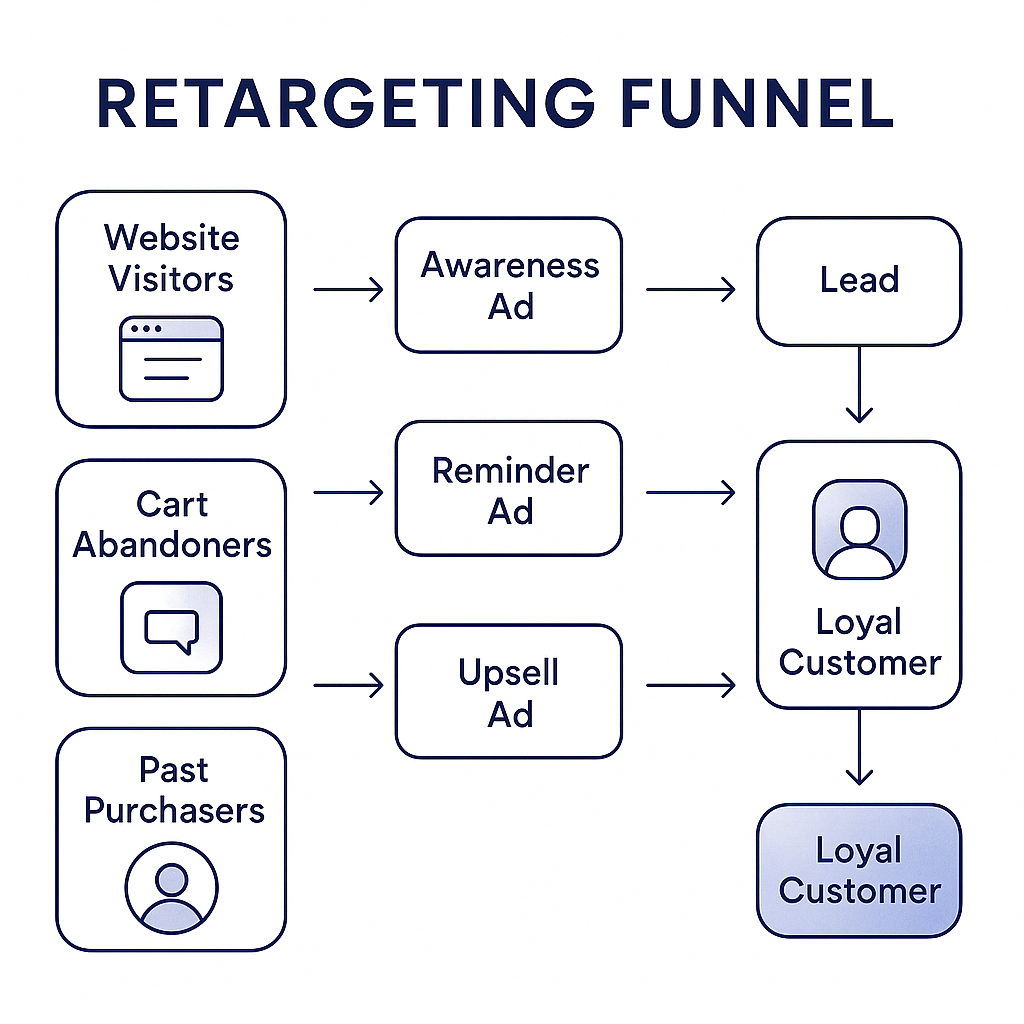
Only 2% of visitors convert on their first visit. The other 98% need multiple touchpoints before they're ready to buy. Set up retargeting campaigns that show different messages based on how far someone progressed through your funnel.
Someone who visited your landing page but didn't click through gets awareness-focused retargeting. Someone who clicked through to the offer but didn't purchase gets objection-handling ads with social proof and urgency.
Value-First Content Marketing
The most sustainable monetization comes from providing genuine value first. Create content that solves real problems, then naturally introduce relevant offers as solutions.
This approach takes longer to generate revenue, but it builds an audience that trusts your recommendations. When you do promote something, conversion rates are significantly higher because you've established credibility.
Measuring and Optimizing Performance
You can't optimize what you don't measure accurately.
Beyond Basic Conversion Tracking
Track lifetime value, not just front-end conversions. That customer who bought a $47 product might purchase $500 worth of additional products over six months. Your acquisition costs and optimization decisions should reflect this reality.
Set up proper attribution tracking that accounts for multi-touch journeys. Someone might see your Facebook ad, visit your website, leave, see a retargeting ad, subscribe to your email list, then purchase three weeks later after receiving your newsletter. Give credit where it's due.
Cohort Analysis for Long-Term Success
Analyze customer behavior by acquisition cohorts. Do customers acquired in January have higher lifetime values than those acquired in March? Do Facebook customers behave differently than Google customers over time?
This data reveals seasonal patterns and channel quality that aren't obvious from surface-level metrics. It might show that Google traffic converts at lower rates initially but has much higher long-term value—changing your entire bidding strategy.
The Future of Affiliate Monetization
Privacy changes and AI integration are reshaping how monetization works. First-party data collection is becoming crucial as third-party cookies disappear. The affiliates who build direct relationships with their audiences will thrive while those depending on platform tracking struggle.
AI tools are also changing content creation and personalization. Smart affiliates are using AI to create personalized email sequences, dynamic landing pages, and custom offer recommendations based on user behavior patterns.
The opportunity has never been bigger, but the execution bar keeps rising. Focus on building genuine value, diversifying your traffic sources, and creating systems that work without constant manual intervention. The affiliates who master these fundamentals while adapting to new technologies will dominate the next decade of digital marketing.
Related reading: backend email monetization strategies for affiliate lists
Frequently Asked Questions (Updated 2026)
How do AI tool offers compare to traditional supplement or finance offers for affiliate marketers in 2026?
AI tool and SaaS offers have become one of the most competitive affiliate verticals in 2026, and for good reason. The category combines strong consumer demand, recurring commission structures, and relatively low compliance friction compared to health or financial verticals. Many AI tool programs pay 20–40% recurring commissions on monthly subscriptions, meaning a single converted customer can generate 12–24x the value of a one-time payout over their lifetime.
That said, competition has intensified. EPC benchmarks in the AI tools category vary widely by sub-niche—productivity tools, AI writing assistants, and AI video generators each have different audience profiles and conversion dynamics. The best approach is to treat AI offers the same way you'd evaluate any other vertical: test EPC on your specific traffic source, evaluate refund and churn rates, and confirm the network or program has reliable tracking. Recurring commission affiliate programs in the AI space are worth prioritizing if you're building for long-term revenue stability rather than short-term volume.
What's the best way to monetize affiliate traffic now that third-party cookies are gone?
The death of third-party cookies has accelerated a shift that smart affiliates were already making: building owned audiences rather than relying entirely on pixel-based retargeting. In 2026, the most resilient monetization setups share a few common traits.
First, they capture first-party data early—usually an email address or SMS opt-in—before sending traffic to an offer. This gives you a retargeting asset that isn't dependent on any platform's tracking infrastructure. Second, they use server-side tracking (via Conversion APIs on Meta and Google's enhanced conversions) to maintain attribution accuracy despite browser-level restrictions. Third, they diversify offer exposure across an email backend rather than betting everything on the initial click-to-offer conversion.
The practical playbook: drive traffic to a lead capture page, deliver immediate value (a quiz result, a free resource, a comparison guide), then monetize through both a front-end offer and a structured email sequence. Backend email monetization has become the primary profit center for many affiliates who built their model around front-end offer commissions alone. The affiliates winning in the post-cookie landscape aren't chasing the highest-paying offer—they're building the most durable audience relationship.
How should I structure offers in a funnel to maximize revenue per visitor in 2026?
The highest-performing affiliate funnels in 2026 follow a layered offer structure designed to capture revenue at multiple price points and intent levels. The core framework: a low-ticket or free front-end offer to maximize opt-ins and initial conversions, an immediate upsell or order bump that increases average order value, and a backend email sequence that promotes higher-ticket offers over time.
The front-end offer's job isn't necessarily to be profitable on its own—it's to qualify buyers and build a list of people who have demonstrated willingness to transact. Designing a low-ticket front-end offer that attracts the right buyer profile is one of the highest-leverage decisions in your funnel architecture. From there, the real monetization happens in the backend: a well-structured email sequence promoting complementary mid-ticket and high-ticket offers can generate 2–4x the revenue of the initial front-end conversion alone. For advanced strategies on this approach, see our guide on high-ticket offer stacking through email sequences.
This article contains affiliate links. We may earn a commission at no extra cost to you. Full disclosure.
Editorial Team
Senior Digital Marketing Strategist
The Prophet Visionary editorial team covers affiliate marketing, paid traffic, funnels, and digital product strategy with hands-on practitioner experience.
Learn more about our editorial team →Monetize Smarter With Funnels + Email in One Place
Order bumps, upsells, automated email sequences, and your own affiliate program — Systeme.io gives you the full monetization stack without the bloated monthly spend.
See the Monetization StackThis page contains affiliate links — I may earn a commission at no extra cost to you.
Disclaimer: The information on this site is for educational purposes only and does not constitute financial, legal, or business advice. Results vary based on individual effort, market conditions, and other factors. Always do your own due diligence before making business or investment decisions.