Slow Build vs Fast Launch: Which Income Strategy Wins in 2026?
The affiliate marketing world splits into two distinct camps when it comes to income generation: the methodical slow builders and the aggressive fast launchers. I've watched countless marketers debate which approach delivers better results, and honestly, most miss the nuanced reality of when each strategy actually works.
The fundamental difference isn't just about speed—it's about risk tolerance, capital requirements, and what you're ultimately trying to build. A slow build approach prioritizes sustainable systems over quick wins. Fast launch strategies bet big on immediate market validation and rapid scaling.
Both can generate serious income. But they require completely different mindsets, skill sets, and financial backing.
The Slow Build Philosophy: Systems Over Speed
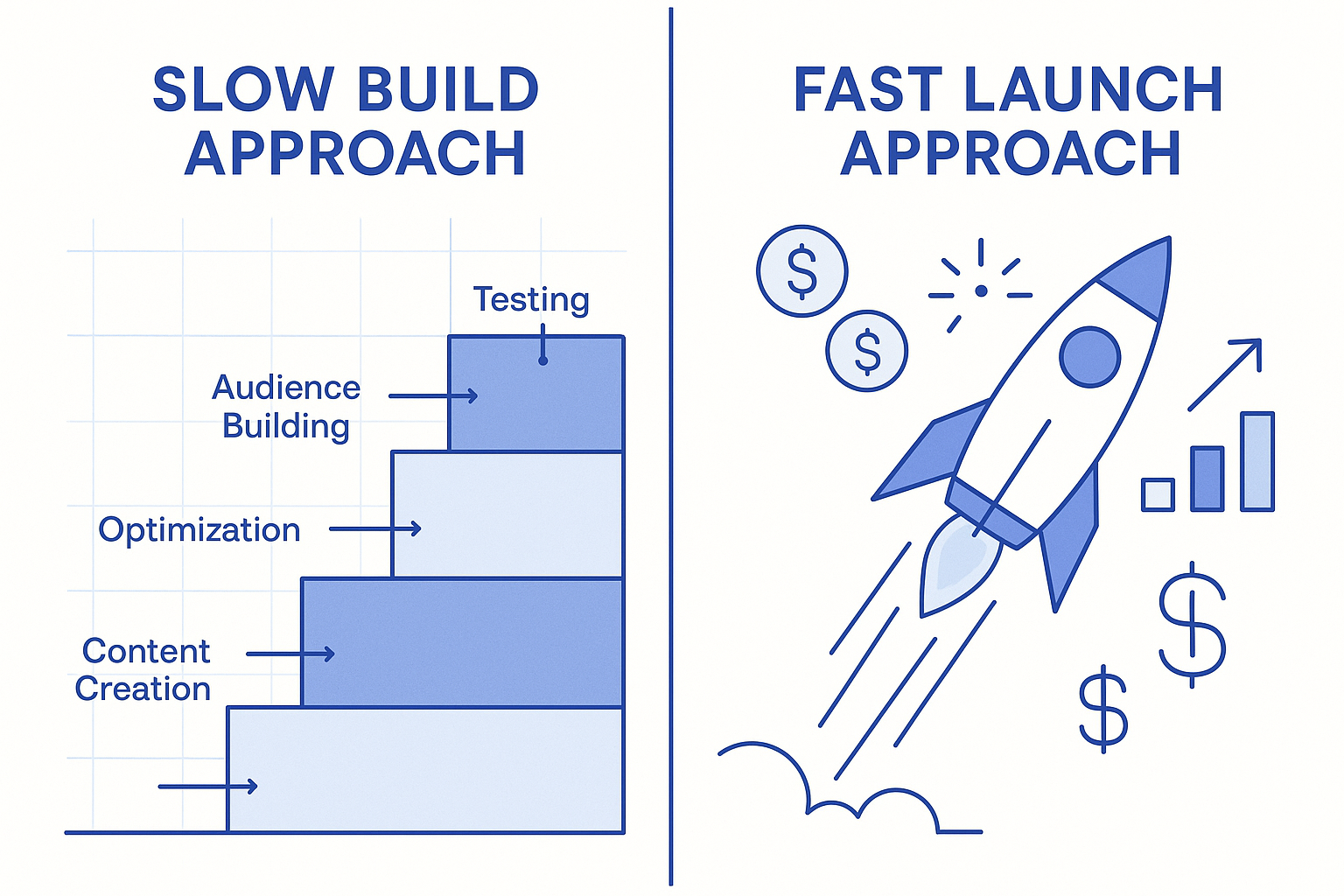
Slow builders treat their business like a brick-and-mortar establishment. Every piece gets constructed deliberately, tested thoroughly, and optimized before moving to the next component.
This approach typically starts with content creation—blog posts, YouTube videos, or social media presence—to establish authority before monetizing. You're looking at 6-12 months before seeing meaningful revenue, but the foundation becomes increasingly solid over time.
The Slow Build Advantage
What most people get wrong about slow building is thinking it's the "safe" option. It's not safer—it just carries different risks. The primary advantage is compound growth. Each piece you build reinforces the others.
Say you're in the personal finance niche. Month one, you launch a blog and start publishing twice weekly. Month three, you add a newsletter using ConvertKit. Month six, you introduce affiliate partnerships with established brands. By month twelve, your organic traffic, email list, and affiliate relationships create multiple revenue streams that support each other.
The slow build also gives you time to understand your audience deeply. You can test different messaging, identify what resonates, and adjust your monetization strategy based on actual data rather than assumptions.
The Hidden Costs of Going Slow
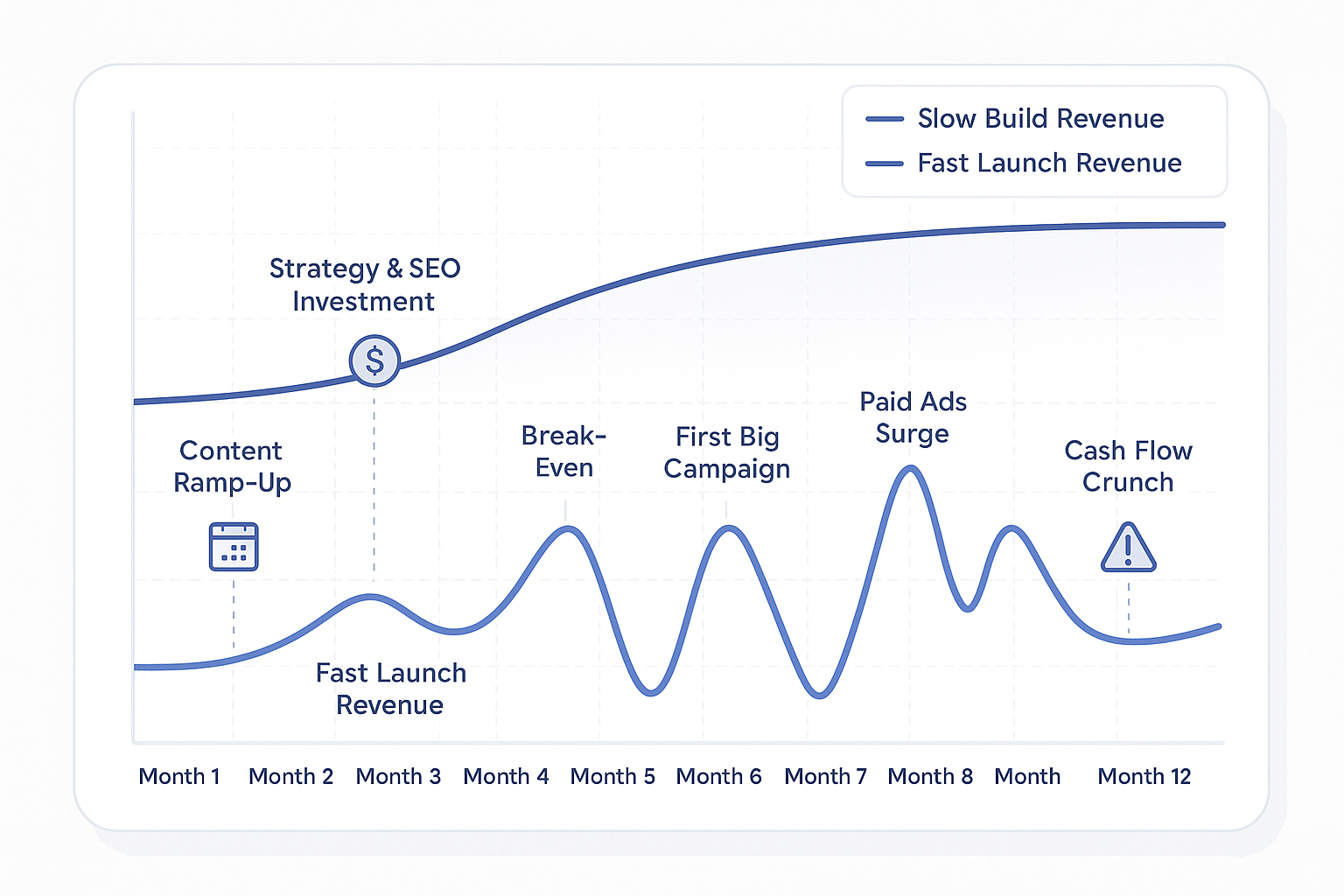
But here's what slow build advocates don't always acknowledge: opportunity cost can be massive. While you're methodically building your email list of 500 subscribers, a fast launcher might capture a trending offer and generate more revenue in two weeks than your slow build produces in six months.
There's also the motivation factor. Humans need feedback loops. Going months without significant income can kill momentum, especially when you're seeing others succeed quickly with different approaches.
Fast Launch Strategy: Market Validation Through Fire
Fast launchers operate on a completely different philosophy: get to market quickly, validate with real money, then optimize or pivot based on results.
This typically means identifying trending offers, creating quick campaigns, and driving paid traffic immediately. You might spend $500 on native ads through Taboola in your first week, testing a ClickBank offer with a $67 commission.
When Fast Launch Actually Works
The counterintuitive part about fast launching is that it often requires more skill, not less. You need to quickly identify winning offers, create compelling ad creative, and optimize campaigns in real-time.
I've seen marketers take a trending supplement offer, create three different advertorials, and test them across NewsBreak and Outbrain within 72 hours. The successful approach: one advertorial hit 2.3x ROI at $0.12 CPC, generating $3,400 profit in the first week.
Fast launch works best when you can spot market timing. New product launches, seasonal trends, or emerging niches create windows where aggressive action beats methodical planning.
The Fast Launch Reality Check
The brutal truth about fast launching: most attempts fail. You need capital to test, emotional resilience for quick pivots, and systems to scale what works before the opportunity disappears.
Many fast launchers burn through their budget testing offers that don't convert, or they find a winner but can't scale it profitably. Without proper tracking and optimization skills, fast launching becomes expensive gambling.
Capital Requirements: The Real Differentiator
The biggest factor in choosing between approaches isn't personality—it's available capital and cash flow needs.
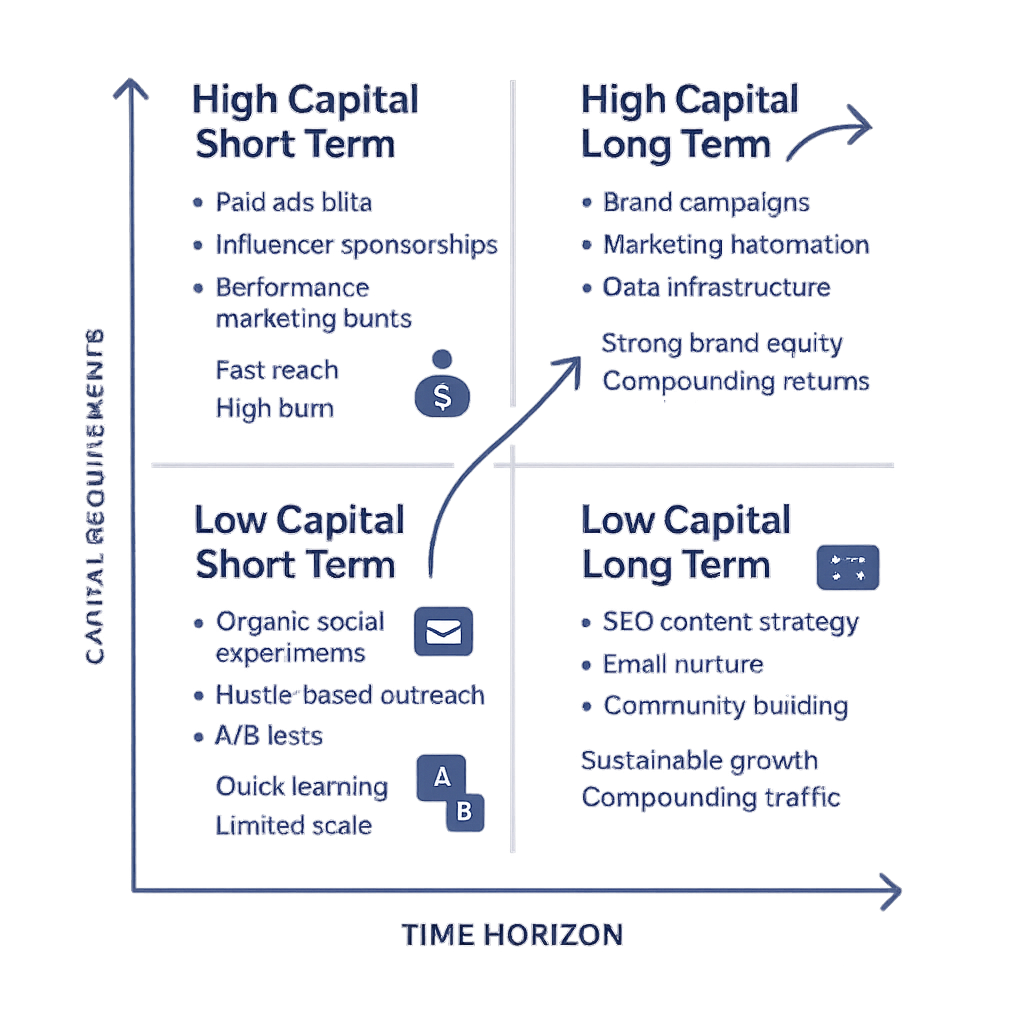
Slow build can start with minimal investment. A WordPress site, basic email service, and content creation tools might cost $50 monthly. Your primary investment is time, which makes it accessible but also means you can't accelerate results by throwing money at problems.
Fast launch demands testing capital. You need enough budget to test multiple angles, traffic sources, and offers before finding winners. A realistic fast launch budget starts around $2,000-5,000 for meaningful testing.
The Cash Flow Equation
But here's where it gets interesting: fast launch can actually be more conservative for people with steady income from other sources. If you have a day job covering expenses, you can afford the volatility of fast launch testing because you're not dependent on immediate results for survival.
Slow build becomes riskier when you need income quickly. Going six months without meaningful revenue while building an audience isn't conservative—it's potentially catastrophic if you have bills to pay.
Platform Dependencies and Risk Management
Both approaches carry platform risks, but they manifest differently.
Slow builders often become overly dependent on organic traffic from Google or social media platforms. Algorithm changes can devastate years of work overnight. The 2023 Google core updates wiped out traffic for many content-focused affiliate sites.
Fast launchers face different platform risks. Ad account shutdowns, policy changes, or increased competition can kill profitable campaigns instantly. Facebook's iOS 14.5 tracking changes eliminated many fast launch strategies that relied on detailed retargeting.
Diversification Strategies
Smart operators in both camps build redundancy. Slow builders create multiple traffic sources—organic search, email, social media, and eventually paid traffic. Fast launchers test across multiple ad platforms and maintain backup accounts.
The real risk management comes from combining approaches over time. Start with one strategy, then layer in elements from the other as you gain experience and capital.
Hybrid Approaches: The Best of Both Worlds
The most successful marketers I know don't stick rigidly to one approach. They adapt based on opportunities, resources, and market conditions.
One effective hybrid: use fast launch tactics to validate niches and offers, then build slow-build assets around what works. Test a weight loss offer with paid traffic to prove demand, then create content and email sequences to reduce customer acquisition costs over time.
Another angle: build slow-build assets that enable better fast launch campaigns. A targeted email list of 2,000 subscribers in a specific niche can make testing new offers much more cost-effective than cold traffic.
The Evolution Path
Most successful businesses evolve from one approach toward the other. Fast launchers who find consistent winners start building sustainable systems around them. Slow builders who develop steady income begin testing paid traffic to accelerate growth.
The key is recognizing when to make the transition and having systems in place to support the new approach.
Making the Choice: Your Situation Determines Strategy
Your optimal approach depends on specific circumstances, not general preferences.
Choose slow build when you have limited capital, steady income from other sources, and can commit to consistent content creation for 6-12 months without meaningful revenue. This works well for people with day jobs who want to build side income gradually.
Choose fast launch when you have testing capital ($2,000+ you can afford to lose), need to validate business ideas quickly, or can spot timing opportunities in trending markets. This fits people with business experience who can handle volatility.
The wrong choice isn't about the strategy itself—it's about mismatching strategy to situation. A slow build approach without consistent execution becomes a hobby. A fast launch approach without sufficient capital becomes expensive education.
Both approaches will continue evolving as platforms change, privacy regulations tighten, and AI tools reshape content creation and ad targeting. The fundamentals remain: understand your resources, match strategy to situation, and build systems that can adapt as markets shift.
The marketers thriving in 2026 aren't the ones who picked the "right" approach—they're the ones who executed their chosen strategy consistently while remaining flexible enough to evolve when circumstances changed.
Related reading: offer stacking in your email sequences
Frequently Asked Questions (Updated 2026)
Can AI tools shortcut the slow build timeline in 2026?
AI tools can compress certain tasks—drafting outlines, generating first-draft content, A/B testing email subject lines—but they haven't meaningfully shortened the trust-building timeline that slow builds depend on. In fact, because AI-generated content is now ubiquitous, search engines and audiences have raised the bar for what earns authority signals like backlinks, email engagement, and repeat visitors.
Where AI genuinely helps slow builders in 2026 is in operational efficiency: you can publish at a higher quality cadence without burning out, and tools like automated segmentation inside platforms such as Kit or other affiliate-friendly email platforms let you personalize at scale earlier in your build. Think of AI as a multiplier on your effort, not a replacement for the months of audience relationship-building the strategy requires.
What's the best hybrid strategy between slow build and fast launch in 2026?
The hybrid approach gaining traction in 2026 is what practitioners are calling the "paid seed, organic scale" model. You run a focused fast launch—typically a paid traffic campaign lasting 30-60 days—to validate your offer and build an initial email list. Then you immediately pivot to slow-build content and organic strategies to reduce your cost-per-acquisition over time.
The fast launch gives you real market data fast: you know which hooks convert, which audience segments respond, and whether your offer economics actually work. The slow build phase then compounds on a proven foundation rather than guessing in the dark for 12 months. For the funnel infrastructure side of this, understanding which funnel platform fits your launch style before you start will save you costly mid-campaign migrations. The key risk to manage: don't let the paid phase drain capital you need to sustain the organic build that follows.
How do you monetize a slow build affiliate site before hitting 12 months?
Most slow builders leave early money on the table by waiting too long to introduce monetization. By month 2-3, you should have enough content to start building an email list, even if it's small. A well-structured follow-up email sequence can generate affiliate commissions from a list of just a few hundred subscribers if the targeting is tight and the offer matches what you've been teaching.
In 2026, low-friction monetization options for early-stage slow builds include: digital product affiliate offers with instant commission payouts, newsletter sponsorships (even micro-newsletters with under 1,000 engaged subscribers attract sponsors in specific niches), and consulting or done-for-you services that leverage the expertise you're demonstrating publicly. The goal isn't to maximize revenue before month 12—it's to generate enough proof-of-concept income to stay motivated and fund the continued build without needing outside capital.
This article contains affiliate links. We may earn a commission at no extra cost to you. Full disclosure.
Editorial Team
Senior Digital Marketing Strategist
The Prophet Visionary editorial team covers affiliate marketing, paid traffic, funnels, and digital product strategy with hands-on practitioner experience.
Learn more about our editorial team →Monetize Smarter With Funnels + Email in One Place
Order bumps, upsells, automated email sequences, and your own affiliate program — Systeme.io gives you the full monetization stack without the bloated monthly spend.
See the Monetization StackThis page contains affiliate links — I may earn a commission at no extra cost to you.
Disclaimer: The information on this site is for educational purposes only and does not constitute financial, legal, or business advice. Results vary based on individual effort, market conditions, and other factors. Always do your own due diligence before making business or investment decisions.