Native Ads for Affiliates: NewsBreak, Taboola & Outbrain Budget Guide
Most affiliates approach native advertising like they're throwing darts blindfolded. They dump $500 into Taboola, watch it disappear faster than free pizza at a marketing conference, then declare native ads "don't work."
The truth is, native advertising works incredibly well for affiliates—but only if you understand the nuances of each platform and resist the urge to treat them like Facebook.
I've burned through my fair share of budgets learning these platforms. More importantly, I've figured out how to make them profitable. Here's what most people get wrong, and how you can avoid the same expensive mistakes.
Why Native Ads Hit Different for Affiliates
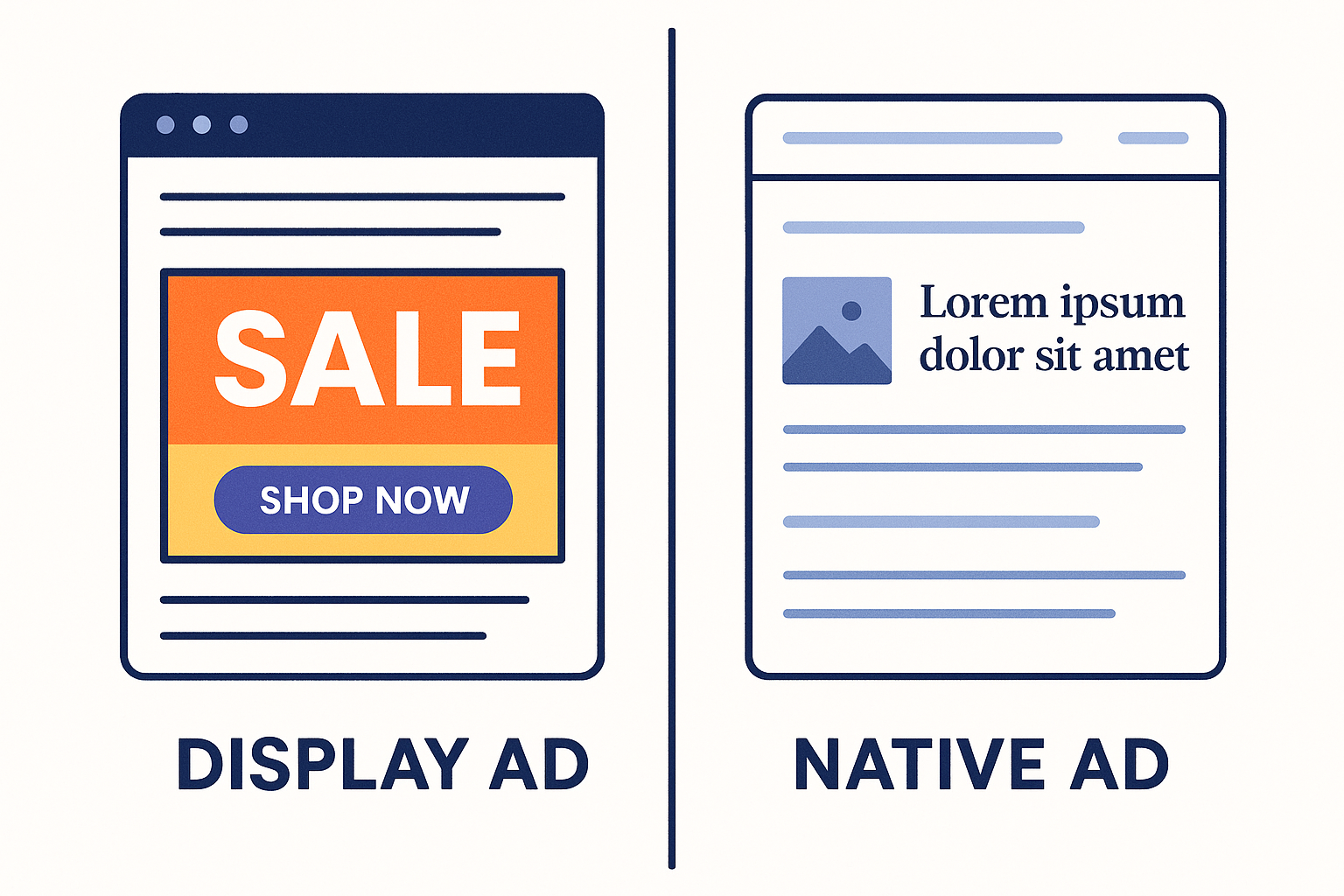
Native advertising operates on a fundamentally different psychology than social media ads. Users aren't scrolling to be entertained—they're consuming content. Your ad needs to feel like editorial content, not a sales pitch.
The big three platforms—NewsBreak, Taboola, and Outbrain—each have their own personality. NewsBreak users skew older and are highly engaged with local news. Taboola dominates mainstream publisher sites like CNN and NBC. Outbrain owns premium placements on sites like The Guardian and Washington Post.
But here's where most affiliates mess up: they create one creative and blast it across all three platforms. That's like wearing the same outfit to a beach party and a board meeting.
The Content-First Mindset
Your native ad isn't an ad—it's a content recommendation that happens to lead to an affiliate offer. This shift in thinking changes everything about how you approach creative development.
Say you're promoting a weight loss supplement from ClickBank. Instead of "Lose 30 Pounds Fast!", your native headline might read "Scientists Discover Why Some People Can't Lose Weight (It's Not What You Think)." Same offer, completely different approach.
NewsBreak: The Underestimated Goldmine
NewsBreak consistently delivers some of the cheapest traffic I've found for certain verticals. CPCs often range from $0.08-0.15, which sounds too good to be true until you understand the platform's limitations.
The user base skews heavily toward people 45+ who are genuinely interested in news content. This makes it fantastic for health, finance, and "discovery" type offers, but terrible for anything targeting millennials or Gen Z.
NewsBreak Campaign Structure
Start with their "Automatic" targeting and let the algorithm find your audience. I know that sounds lazy, but NewsBreak's manual targeting options are primitive compared to Facebook or Google.
Your daily budget should start at $50 minimum. Anything less and you won't get enough data to optimize. The platform needs volume to learn, and learning happens faster than you'd expect if you feed it enough traffic.
Creative-wise, focus on curiosity-driven headlines that could legitimately appear in a local news feed. "Local Woman's Trick to Lower Blood Pressure Surprises Doctors" performs better than "Amazing Blood Pressure Solution!"
The NewsBreak Optimization Process
Give campaigns 48 hours before making any major changes. NewsBreak's algorithm is slower to adapt than Facebook's, but it's also more stable once it finds its groove.
Watch your cost per click, but pay more attention to your click-through rate. If your CTR drops below 0.8%, your ad is getting stale and needs refreshing. The platform will start showing it to lower-quality traffic, and your conversion rates will tank.
Taboola: Volume and Scale Done Right
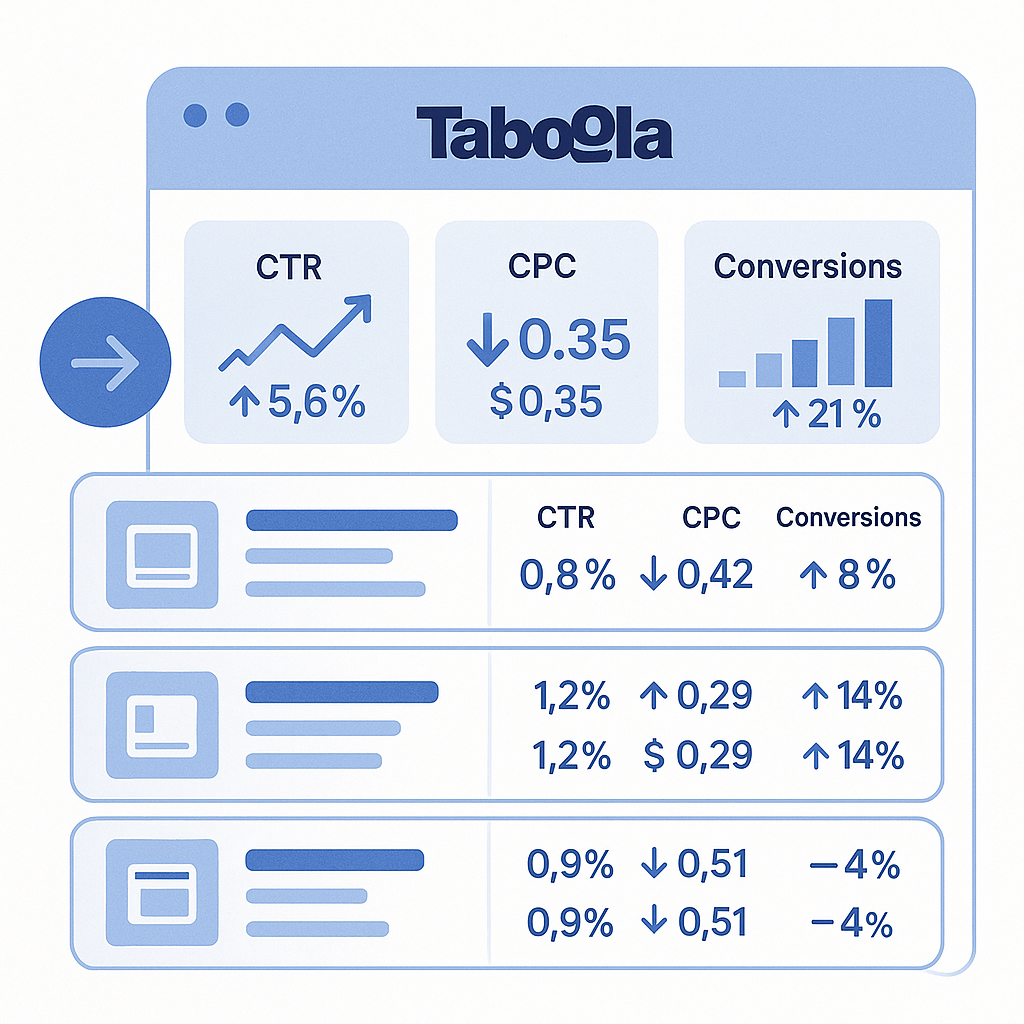
Taboola is where you go when you've proven an offer works and want to scale. The traffic volume is massive, but so is the competition. Your cost per click will be higher than NewsBreak—typically $0.25-0.60—but the audience quality can be exceptional.
The key with Taboola is understanding that you're competing against major brands with serious creative budgets. Your affiliate offer for a $47 course is sitting next to ads from Nike and Netflix.
Taboola's Bidding Strategy
Start with CPC bidding, not CPA. I've seen too many affiliates jump straight to CPA bidding without understanding their funnel metrics. You need to know your actual conversion rate before you let Taboola optimize for conversions.
Begin with a bid that's roughly 50% of your target CPC. If you can afford $0.40 clicks based on your funnel math, start bidding $0.20. Taboola will tell you this bid is too low. Ignore them and let the campaign run for 24 hours.
This strategy accomplishes two things: it forces you to create compelling creative (since you need high CTRs to win auctions at low bids), and it prevents you from overpaying during the learning phase.
Creative Testing on Taboola
Test 5-7 different headlines per campaign, but keep your image consistent initially. Taboola users make split-second decisions, and headline testing gives you the fastest feedback loop.
The counterintuitive part? Your best-performing headlines often sound almost boring. "How to Lower Your Electric Bill" outperforms "This Weird Trick Cuts Electric Bills in Half" because Taboola traffic expects legitimate content recommendations.
Outbrain: Premium Traffic at Premium Prices
Outbrain is the most expensive of the three platforms, but it's also the highest quality. Users are typically more educated and have higher incomes. If you're promoting business opportunities, investment education, or premium health offers, the higher CPCs ($0.40-1.20) can still be profitable.
What most people get wrong about Outbrain is trying to run the same creative that works on Taboola. Outbrain users expect a more sophisticated approach. Your headlines need to sound like they belong in Harvard Business Review, not a tabloid.
Outbrain's Approval Process
Outbrain has the strictest approval process of the three platforms. They'll reject ads for reasons that seem arbitrary, especially if you're promoting affiliate offers.
The workaround? Build a legitimate content bridge page that provides actual value before pitching your offer. Don't just create a thin review page—write genuinely helpful content that happens to recommend your affiliate product.
This approach takes more work upfront, but it pays dividends. Your approval rates improve, your conversion rates increase (because you're pre-selling), and you build an asset you can use across multiple campaigns.
Budget Allocation and Risk Management
Here's how I allocate budgets across the three platforms when testing a new offer:
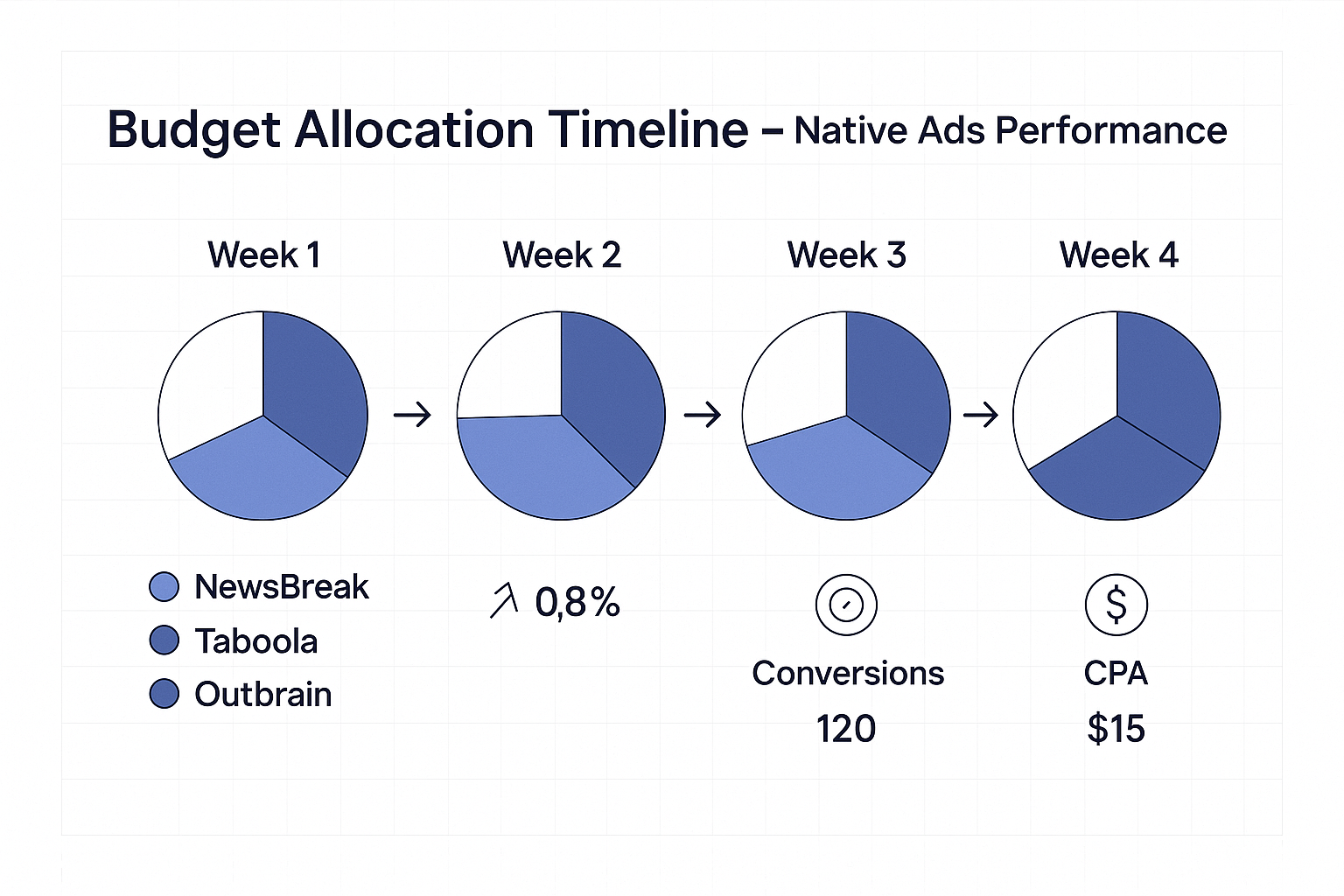
Week 1: 60% NewsBreak, 30% Taboola, 10% Outbrain
Week 2-3: Shift budget toward whichever platform showed profitability first
Week 4+: Go all-in on the winner while maintaining small test budgets on the others
The biggest budget killer is running campaigns too long without profitability. If a campaign isn't showing promise after spending 3x your target cost per acquisition, kill it. Don't fall into the "just needs more data" trap.
Setting Realistic Expectations
Native advertising isn't a get-rich-quick scheme. Expect to spend 2-4 weeks finding profitable campaigns, and budget accordingly. I typically allocate $2,000-3,000 for the initial testing phase across all three platforms.
Your first profitable campaign might only generate $50/day in profit. That's not life-changing money, but it's a foundation you can build on. Scale what works, test variations, and expand to related offers.
The 2026 Native Advertising Landscape
Privacy changes have actually benefited native advertising. As tracking becomes more difficult on social platforms, the intent-based nature of native traffic becomes more valuable. Users clicking on native ads are actively seeking information, making them easier to convert even without perfect tracking.
AI tools are also changing creative development. I'm using Claude and ChatGPT to generate headline variations faster than ever before, but the fundamentals remain the same—you still need to understand each platform's audience and match your message accordingly.
The platforms themselves are evolving too. NewsBreak is expanding beyond local news, Taboola is improving its targeting capabilities, and Outbrain is becoming more affiliate-friendly. The opportunities are growing, not shrinking.
What hasn't changed is the need for patience and systematic testing. Native advertising rewards marketers who think like publishers, not like direct response advertisers. Master that mindset, respect each platform's unique characteristics, and you'll find native ads can be incredibly profitable—without burning through your budget in the process.
Related reading: ClickFunnels vs GoHighLevel: Which Wins for Affiliate Funnel Builders?
Related reading: GoHighLevel vs ClickFunnels: Which Actually Builds Better Affiliate Funnels?
Frequently Asked Questions (Updated 2026)
How has Outbrain's merger with Teads changed things for affiliate advertisers in 2026?
The Outbrain-Teads merger, fully integrated by early 2026, is one of the bigger structural shifts in native advertising this year. For affiliates, the practical impact is twofold. First, you now have access to Teads' premium in-read video and connected TV placements through the Outbrain dashboard—inventory that was previously only available direct. Second, the combined platform's audience targeting has improved, pulling in Teads' cookieless contextual signals alongside Outbrain's behavioral data.
The catch: minimum budgets and editorial quality standards have moved upmarket. Outbrain-Teads is increasingly positioning itself as a premium brand environment, which means thin affiliate bridge pages face tougher review. Affiliates who invest in genuine long-form pre-sell content—real articles, not thinly disguised sales pages—are reporting stronger approval rates and lower CPCs due to better relevance scoring. If you're serious about the platform, treat your landing page like editorial content first and a conversion asset second.
What's the minimum realistic budget to test native ads on Taboola or Outbrain in 2026?
This is the question that saves affiliates the most money when answered honestly. In 2026, with CPCs where they are, you need to budget for statistical significance—not just a few days of spend.
For Taboola, plan a minimum of $500–$800 per creative variation before drawing conclusions. With average CPCs around $0.50–$0.70 on mid-tier placements, that buys you roughly 700–1,600 clicks per creative—enough to see whether your offer and angle have legs. Launch with 3–5 creative variations and one landing page, not 10 creatives and 5 pages. You'll run out of budget before the data means anything.
For Outbrain, the higher CPCs mean your minimum meaningful test is closer to $800–$1,200 per creative on US premium placements. Some affiliates reduce this by starting with lower-cost geos (UK, CA, AU) to validate creative angles before scaling to US traffic.
For NewsBreak, lower CPCs mean you can get directional data for $150–$300, though the platform's smaller scale means you'll hit volume ceilings faster. Use it for vertical validation before committing budget to Taboola or Outbrain.
The universal rule: never kill a campaign before it has enough data, and never scale a campaign before it's proven. Native rewards patience more than almost any other paid channel.
Can you still run affiliate offers directly on native ad platforms in 2026, or do you need a funnel?
Direct linking to affiliate offers is effectively dead on all three major native platforms as of 2026. NewsBreak, Taboola, and Outbrain have all tightened policies to require that your destination URL be a domain you own and control—not a raw affiliate link or a redirect to a network offer page.
What this means practically: you need at minimum a bridge page or pre-sell article that sits between your native ad and the affiliate offer. The good news is that a well-built pre-sell page almost always outperforms direct linking anyway, because it warms the reader and frames the offer before they hit the sales page.
The best-performing structure in 2026 looks like this: Native ad → Editorial pre-sell article (your domain) → Affiliate offer. If you're capturing leads rather than sending direct to an offer, you'll want an email follow-up sequence in place—because native traffic rarely converts on the first visit. High-Ticket Offer Stacking: Maximize Revenue Per Subscriber covers how to structure your backend so that native traffic becomes more profitable over time, not just on the initial click.
This article contains affiliate links. We may earn a commission at no extra cost to you. Full disclosure.
Editorial Team
Senior Digital Marketing Strategist
The Prophet Visionary editorial team covers affiliate marketing, paid traffic, funnels, and digital product strategy with hands-on practitioner experience.
Learn more about our editorial team →Your Traffic Is Only as Good as Your Follow-Up
You're paying for clicks — but are you capturing emails and automating sequences? AWeber makes it dead simple to turn paid traffic into a monetized email list.
See How AWeber WorksThis page contains affiliate links — I may earn a commission at no extra cost to you.
Disclaimer: The information on this site is for educational purposes only and does not constitute financial, legal, or business advice. Results vary based on individual effort, market conditions, and other factors. Always do your own due diligence before making business or investment decisions.