Micro-Influencers, UGC & Affiliate Deals: Small Creators, Big ROI
The influencer marketing playbook most brands follow is fundamentally broken. They chase follower counts, throw money at celebrities with millions of fans, and wonder why their affiliate campaigns tank harder than a lead balloon.
I've seen companies burn through $50K budgets working with macro-influencers who deliver engagement rates under 2%—while a micro-influencer with 15,000 engaged followers drives more actual sales for a $500 collaboration fee.
The secret isn't in the numbers game. It's in understanding how micro-influencers, user-generated content, and smart affiliate structures create a perfect storm of authenticity and conversion power that big-budget campaigns can't touch.
Why Micro-Influencers Outperform Celebrity Partnerships
Here's what most marketers get wrong: they confuse reach with influence. A celebrity Instagram post might get 100K likes, but how many of those people actually trust that recommendation enough to pull out their credit card?
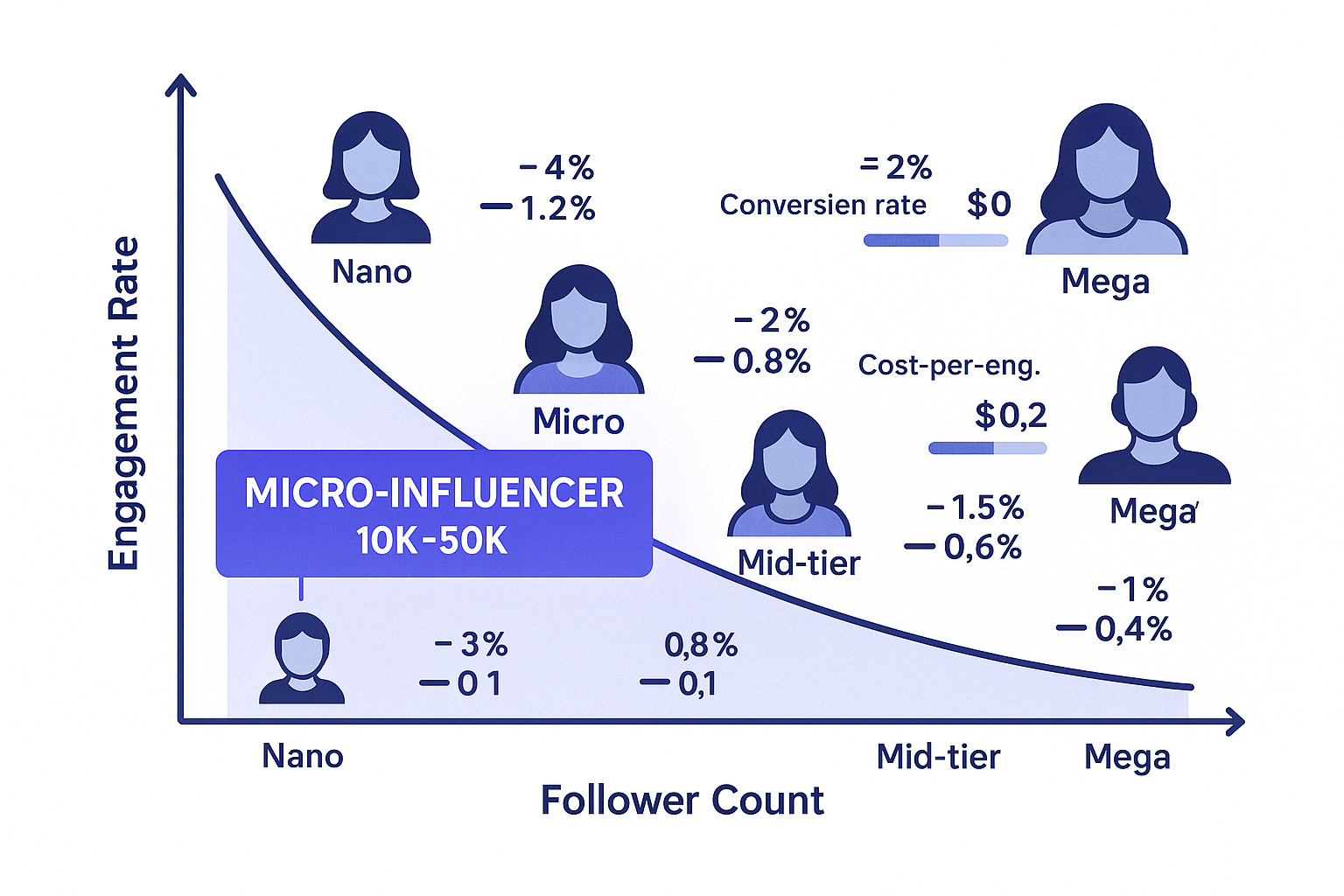
Micro-influencers—those with roughly 1,000 to 100,000 followers—consistently deliver engagement rates between 3-7%. Compare that to mega-influencers who typically see 1-3% engagement, and the math starts making sense.
But engagement rates only tell part of the story.
The real power lies in audience relationship quality. When someone with 25K followers recommends a product, their audience knows this person actually uses it. There's no PR team filtering every post, no brand manager demanding script approval. It feels real because it usually is.
I've tracked affiliate campaigns where micro-influencers generated 40% higher conversion rates than their macro counterparts—despite driving less total traffic. The traffic they do send converts at rates that would make any performance marketer weep with joy.
The Sweet Spot: 10K-50K Followers
Through testing dozens of campaigns, I've found the optimal range sits between 10,000 and 50,000 followers. Below 10K, you're often dealing with inconsistent content quality and limited reach. Above 50K, you start losing that intimate community feel that makes micro-influencers so effective.
Say you're running a supplement offer on ClickBank with a $45 commission. A fitness micro-influencer with 30K followers might charge $300-600 for a sponsored post. If they drive just 20 conversions—totally achievable with good creative and offer alignment—you're looking at $900 in commissions against a $600 ad spend.
Try getting those numbers with a celebrity endorsement.
User-Generated Content: The Authenticity Multiplier
UGC isn't just a buzzword—it's the secret weapon that transforms one-off influencer posts into scalable content machines. When micro-influencers create content that feels native to their platform and audience, magic happens.
The best UGC doesn't look like advertising. It looks like someone sharing a genuine discovery with friends. That's the difference between content that gets scrolled past and content that stops thumbs dead in their tracks.
UGC That Actually Converts
Not all user-generated content is created equal. I've seen brands collect hundreds of posts with their hashtag, only to find that 90% of it is unusable for performance marketing.
The UGC that drives affiliate results has three characteristics:
- Problem-solution narrative—Shows a clear before/after or addresses a specific pain point
- Social proof integration—Includes natural mentions of results, timeframes, or comparisons
- Soft call-to-action—Provides next steps without feeling pushy or salesy
Here's a framework that works: Ask micro-influencers to document their actual experience over 7-30 days. Not a single "unboxing" post, but a mini-series showing real usage and results.
For a skincare affiliate offer, this might mean Day 1 application, Day 7 check-in, and Day 21 results. Each post can include your affiliate link naturally—"linking the products I'm using" rather than "buy this now."
Repurposing UGC Across Channels
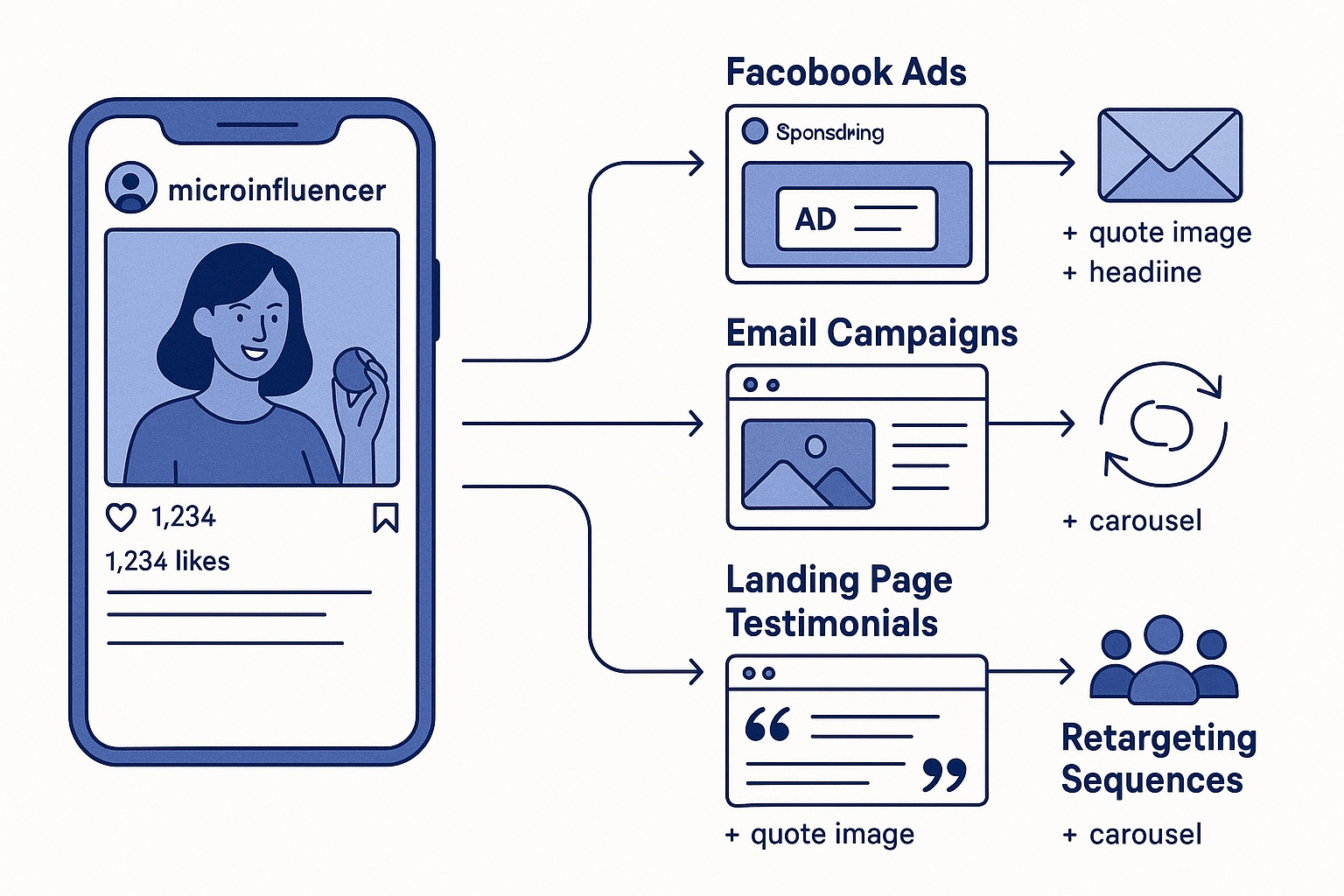
Smart affiliate marketers don't just use influencer content once. They negotiate rights to repurpose that content across paid channels, email sequences, and landing pages.
That authentic video testimonial from a micro-influencer becomes your Facebook ad creative. Those before/after photos become social proof on your sales page. The genuine product reviews get woven into your email nurture sequences.
Structuring Affiliate Deals That Motivate Results
Most affiliate partnerships with influencers fail because the compensation structure doesn't align with actual business goals. Paying a flat fee for a post might get you content, but it won't guarantee sales.
The influencers who consistently drive results want skin in the game. They want to be rewarded for performance, not just posting.
Hybrid Compensation Models
Here's the deal structure I've found works best: Base fee + performance bonus + long-term incentives.
Start with a modest base fee—maybe 30-50% of their usual sponsored post rate. This covers their time and guarantees them something for participating. Then add a performance layer: $10-25 per conversion, depending on your margins.
But here's where it gets interesting: Build in volume bonuses. If they drive 10+ sales in 30 days, their per-conversion rate increases. If they hit 25+ sales, it jumps again.
Suddenly, you've got micro-influencers thinking like performance marketers. They're testing different angles, posting multiple times, engaging with comments to drive action. Because their income depends on your success.
Long-Term Partnership Incentives
One-off campaigns are expensive and inefficient. The real money comes from building ongoing relationships with micro-influencers who become genuine brand advocates.
I structure quarterly bonuses for influencers who maintain consistent performance. Hit your monthly targets for three straight months? Here's an extra $500 and early access to new products.
This approach creates a stable of micro-influencers who prioritize your offers because you've made it worth their while to stick around.
Platform-Specific Strategies for Maximum Impact
Each platform rewards different types of content and engagement. Cookie-cutter approaches fail because they ignore these nuances.
Instagram: Stories vs. Feed Strategy
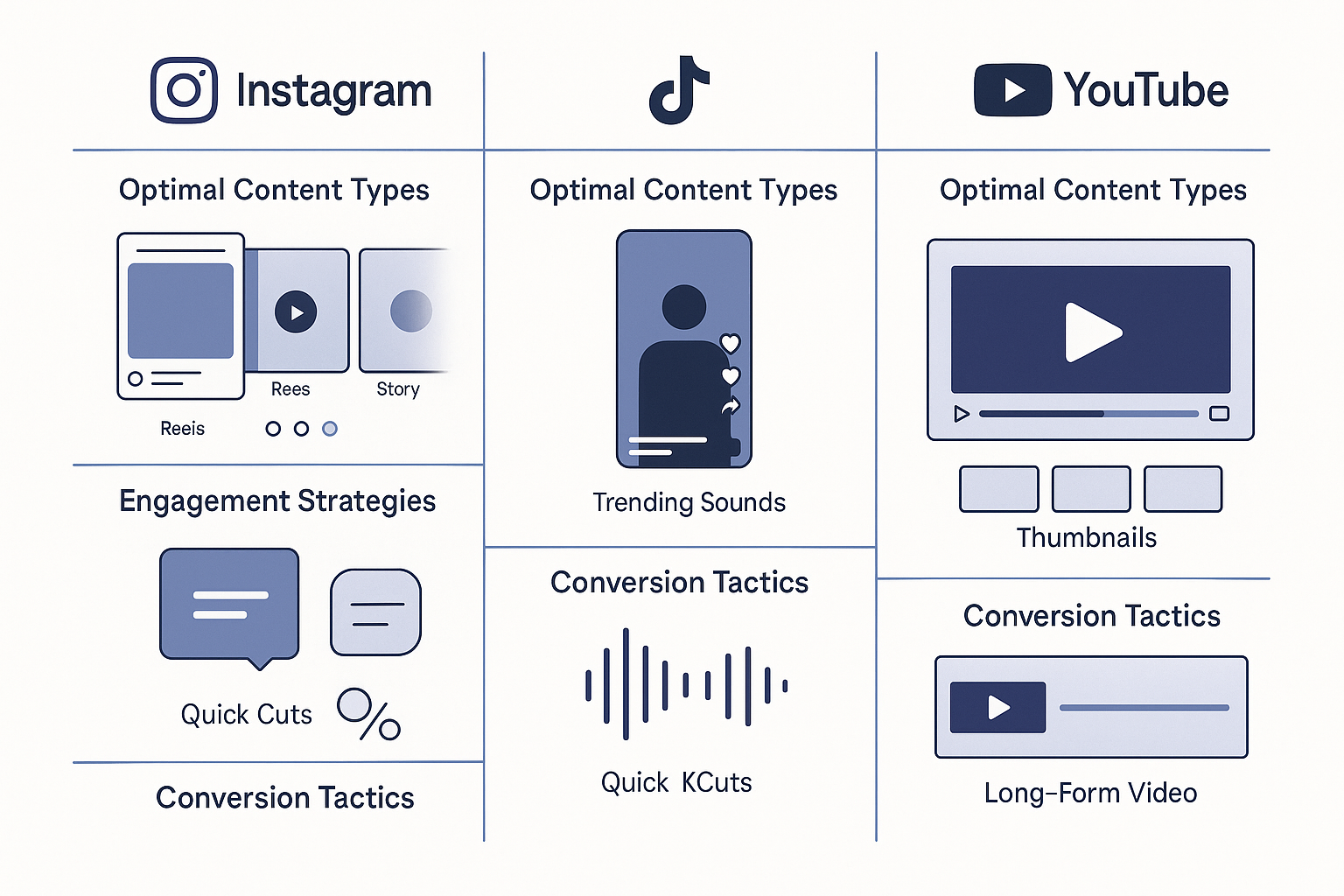
Instagram feed posts get the reach, but Stories drive the action. I've found the most effective campaigns use feed posts for awareness and social proof, while Stories handle the direct response elements.
Have your micro-influencer post a lifestyle shot featuring your product in their feed—this builds credibility and creates content you can repurpose. Then use Stories for the direct pitch: swipe-ups (if they're eligible), discount codes, limited-time offers.
Stories feel more intimate and temporary, which reduces sales resistance. People are more likely to act on a Story recommendation because it feels like insider information.
TikTok: The Authenticity Algorithm
TikTok's algorithm punishes content that feels too polished or promotional. This actually works in favor of micro-influencer partnerships because their content naturally fits the platform's preference for authentic, unfiltered content.
The key is giving micro-influencers complete creative control while providing clear outcome guidelines. Don't script their videos—give them talking points and let their personality shine through.
TikTok micro-influencers often drive the highest conversion rates because the platform's format encourages longer-form storytelling. A 60-second video can cover the problem, solution, results, and call-to-action in a way that feels natural and compelling.
Measuring What Actually Matters
Vanity metrics will kill your micro-influencer campaigns faster than bad creative. Likes, shares, and comments feel good, but they don't pay the bills.
Focus on three core metrics: Click-through rates, conversion rates, and customer lifetime value. Everything else is noise.
Attribution Challenges and Solutions
Tracking micro-influencer performance gets tricky when customers don't convert immediately. Someone might see an Instagram post, research the product later, and buy through a Google search.
Smart affiliate marketers use unique discount codes for each influencer, combined with UTM parameters and retargeting pixels. This creates multiple touchpoints for attribution while providing backup tracking methods.
I also track branded search volume increases following influencer campaigns. If searches for your brand + product spike after a micro-influencer posts, that's often a leading indicator of conversions to come.
The Future of Micro-Influencer Affiliate Marketing
Platform algorithms continue evolving toward authentic content that generates genuine engagement. This trend favors micro-influencers who've built real relationships with their audiences over time.
The brands that will dominate affiliate marketing in 2026 and beyond are those building networks of micro-influencer partners rather than chasing one-hit celebrity endorsements.
AI tools are making it easier to identify high-potential micro-influencers and predict which partnerships will drive results. But the human element—that authentic connection between creator and audience—remains irreplaceable.
The opportunity window is still wide open. Most brands haven't figured out how to systematically identify, recruit, and manage micro-influencer partnerships at scale. Those who crack this code first will own their niches.
Related reading: Email Platforms That Actually Work for Affiliate Marketers
Frequently Asked Questions (Updated 2026)
How does TikTok Shop change the micro-influencer affiliate model in 2026?
TikTok Shop has fundamentally shifted how micro-influencer affiliate deals are structured. Instead of relying on bio links or promo codes that require users to leave the app, creators can now tag shoppable products directly in videos, Shorts-style content, and live streams—with commission attribution tracked natively inside TikTok's ecosystem.
For affiliate marketers, this means three things: (1) conversion friction drops dramatically because the purchase path is in-app, (2) commission rates on TikTok Shop tend to run 5-20% of sale price, which for higher-ticket products competes favorably with traditional affiliate networks, and (3) micro-influencers with highly engaged niche audiences—fitness, beauty, home goods, supplements—are now commanding premium rates because their live-stream conversion data is verifiable and impressive.
The practical takeaway: if you're building a micro-influencer affiliate program in 2026 and ignoring TikTok Shop, you're leaving your highest-converting channel on the table. Pair TikTok Shop integrations with traditional affiliate links on Instagram and YouTube for a multi-platform attribution stack that captures buyers at every stage of intent.
What's the difference between UGC creators and micro-influencers, and which delivers better affiliate ROI?
This is one of the most searched questions in the creator marketing space right now—and the confusion is understandable because the lines have blurred significantly in 2026.
Micro-influencers own and publish to their own audience. You pay for access to their community, their trust, and their creative voice. Affiliate ROI is tied directly to how well their audience converts on your offer.
UGC (User-Generated Content) creators produce content you own and deploy across your own paid channels, organic social, email, or landing pages. They don't post to their own audience—they're essentially creative contractors. You pay for the asset, not the distribution.
For affiliate ROI specifically, micro-influencers still win when offer-audience alignment is tight, because you're borrowing earned trust. But UGC creators have become a powerful complement: brands use UGC video testimonials as ad creatives in Meta and TikTok paid campaigns, often achieving 30-50% lower CPAs than studio-produced ads because they feel authentic.
The smartest 2026 playbook combines both: micro-influencers for warm-audience affiliate conversions, UGC creators for scalable paid traffic that feeds your affiliate funnel top. If you want to maximize revenue per lead once they're in your funnel, pair this with a strong email follow-up strategy—see Offer Stacking for High-Ticket Affiliate Email Sequences for how to structure the back-end.
How do you structure an affiliate deal with a micro-influencer in 2026 to protect your ROI?
Flat-fee-only deals are increasingly risky as micro-influencer rates rise. The smartest affiliate deal structures in 2026 use a hybrid model: a reduced flat fee (covering the creator's baseline production cost) combined with a performance-based commission on tracked sales.
Here's a practical framework:
- Base fee: 40-60% of their standard rate, paid upfront. This ensures content quality and commitment.
- Performance commission: 15-25% of affiliate revenue generated, tracked via unique promo code or UTM-tagged affiliate link through your preferred network (Impact, PartnerStack, or ClickBank all support this natively).
- Content usage rights: Negotiate a 90-180 day license to repurpose their content as UGC ad creative—this alone can double the value of the collaboration.
- Deliverable clarity: Specify format (Reel vs. static vs. Story vs. TikTok), posting window, required disclosures (#ad or #sponsored per FTC guidelines, which were updated in 2025), and whether they'll pin the post or add it to a highlight.
Track everything through a proper affiliate dashboard rather than relying on creator-reported screenshots. Tools like Grin or Modash now integrate directly with Shopify, ClickBank, and custom affiliate setups so you have first-party attribution data regardless of what the creator reports.
This article contains affiliate links. We may earn a commission at no extra cost to you. Full disclosure.
Editorial Team
Senior Digital Marketing Strategist
The Prophet Visionary editorial team covers affiliate marketing, paid traffic, funnels, and digital product strategy with hands-on practitioner experience.
Learn more about our editorial team →Turn Social Followers Into Subscribers You Own
Social reach is rented. Email subscribers are yours. AWeber gives you landing pages, sign-up forms, and automated sequences to convert social engagement into revenue.
See How AWeber ConvertsThis page contains affiliate links — I may earn a commission at no extra cost to you.
Disclaimer: The information on this site is for educational purposes only and does not constitute financial, legal, or business advice. Results vary based on individual effort, market conditions, and other factors. Always do your own due diligence before making business or investment decisions.