OpenClaw for Affiliate Marketing: Real Testing & Optimization
Most affiliate marketers are flying blind when it comes to optimization. They'll throw up a landing page, send some traffic from Facebook or Google, and make tweaks based on gut feeling rather than data. That's where OpenClaw comes in—and honestly, it's about time someone built something like this.
OpenClaw isn't just another split-testing tool. It's an automated optimization platform that actually learns from your traffic patterns and makes intelligent decisions about what to test next. I've been watching this space for years, and the traditional approach of manual A/B testing is painfully slow when you're running multiple offers across different traffic sources.
The real power here isn't in the testing itself—it's in how OpenClaw handles the complexity of modern affiliate campaigns where you might be running the same offer on native ads through Taboola, Facebook campaigns, and Google Ads simultaneously. Each traffic source behaves differently, and what converts on native might bomb on social.
What Makes OpenClaw Different from Standard Testing Tools
Here's what most people get wrong about testing in affiliate marketing: they think more tests equal better results. Wrong. Smart testing beats volume every time.
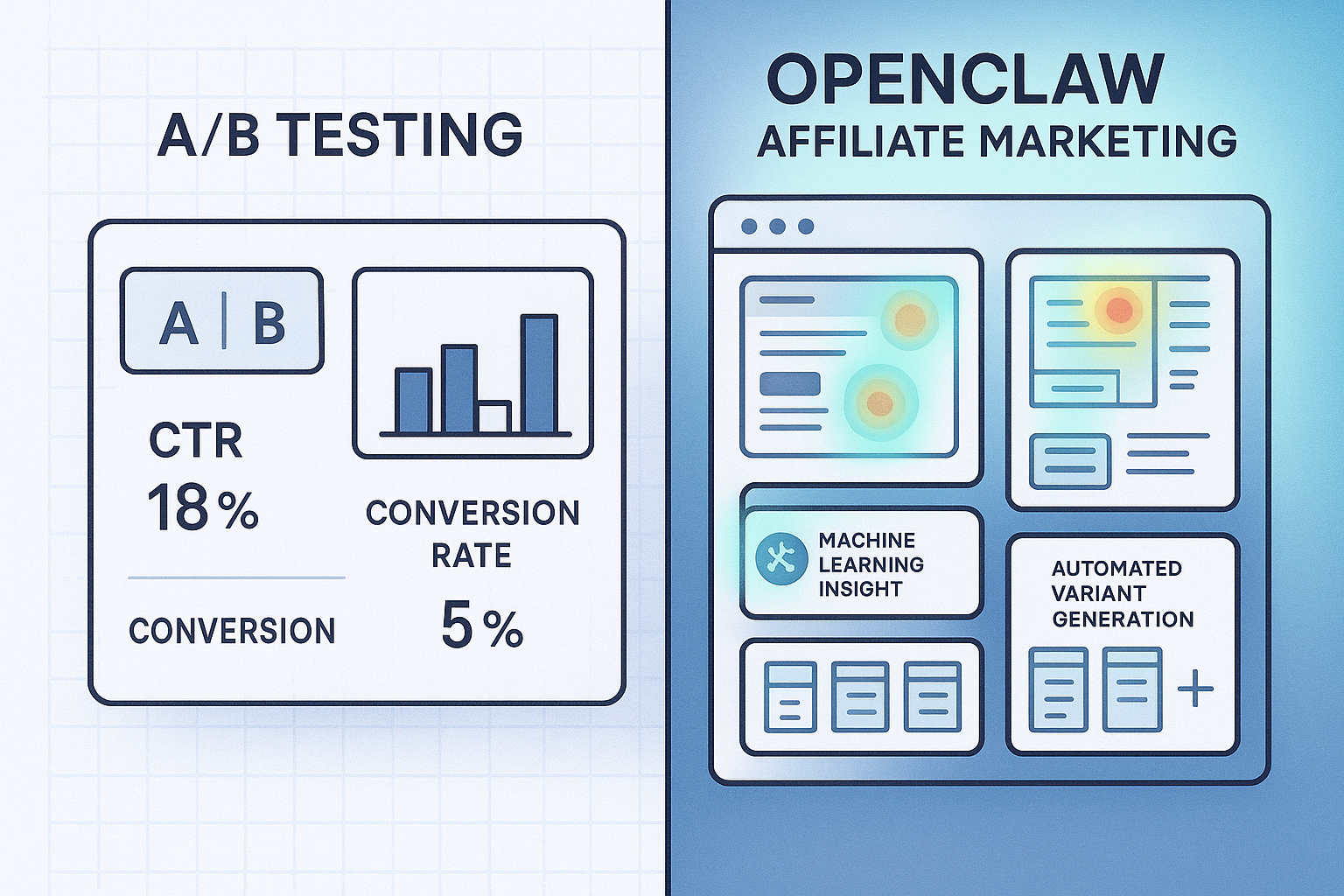
OpenClaw uses machine learning to identify which elements actually move the needle. Instead of testing button colors (seriously, stop doing this), it focuses on high-impact variables like headlines, offers, and page flow. The platform analyzes visitor behavior patterns and automatically creates variants that address specific drop-off points.
Say you're promoting a weight loss supplement from ClickBank with a $47 commission. Traditional testing might have you manually creating 5-6 landing page variants and waiting weeks for statistical significance. OpenClaw watches how visitors interact with your page—where they scroll, how long they stay, what they click—and generates new variants targeting those specific behaviors.
The counterintuitive part? It often finds winning combinations you'd never think to test manually. I've seen campaigns where the winning variant combined a long-form sales letter (which conventional wisdom says is dead) with a simplified checkout process, beating short-form pages by 40%.
Setting Up OpenClaw for Affiliate Campaigns
Traffic Source Integration
The setup process isn't plug-and-play, but it's not rocket science either. You'll need to properly tag your traffic sources so OpenClaw can segment performance data correctly.
For Facebook campaigns, use UTM parameters that identify not just the campaign, but the ad set and creative combination. Something like utm_campaign=keto-supplement-fb&utm_content=video-ad-variant-2. This granular tracking lets OpenClaw optimize for specific traffic segments rather than treating all visitors the same.
Native traffic from platforms like Outbrain or RevContent needs different handling. These visitors have different intent levels and browsing patterns. OpenClaw's smart segmentation picks up on this—native traffic might see longer-form content while search traffic gets straight to the point.
Pixel and Conversion Tracking
This is where things get technical, but it's crucial for OpenClaw's optimization algorithms. You need proper event tracking beyond just the final conversion.
Set up micro-conversions: email signups, video completion rates, time on page thresholds. OpenClaw uses this data to understand the customer journey and optimize for quality traffic, not just volume. If you're running a high-ticket coaching offer, someone who watches 80% of your sales video is infinitely more valuable than someone who bounces after 10 seconds—even if neither converts immediately.
Advanced Optimization Strategies with OpenClaw
Here's where OpenClaw really shines compared to basic testing tools. The platform doesn't just test variations—it predicts which traffic segments will respond to specific messaging angles.
Dynamic Content Personalization
OpenClaw can serve different page variants based on traffic source, device type, and even time of day. Mobile traffic from TikTok gets a different experience than desktop traffic from Google search. Makes sense when you think about it—someone scrolling TikTok at 11 PM is in a completely different mindset than someone actively searching for a solution during work hours.
The personalization goes deeper than just swapping images or headlines. OpenClaw adjusts the entire page flow. Social traffic might see social proof elements first, while search traffic jumps straight to problem/solution messaging.
Funnel-Wide Optimization
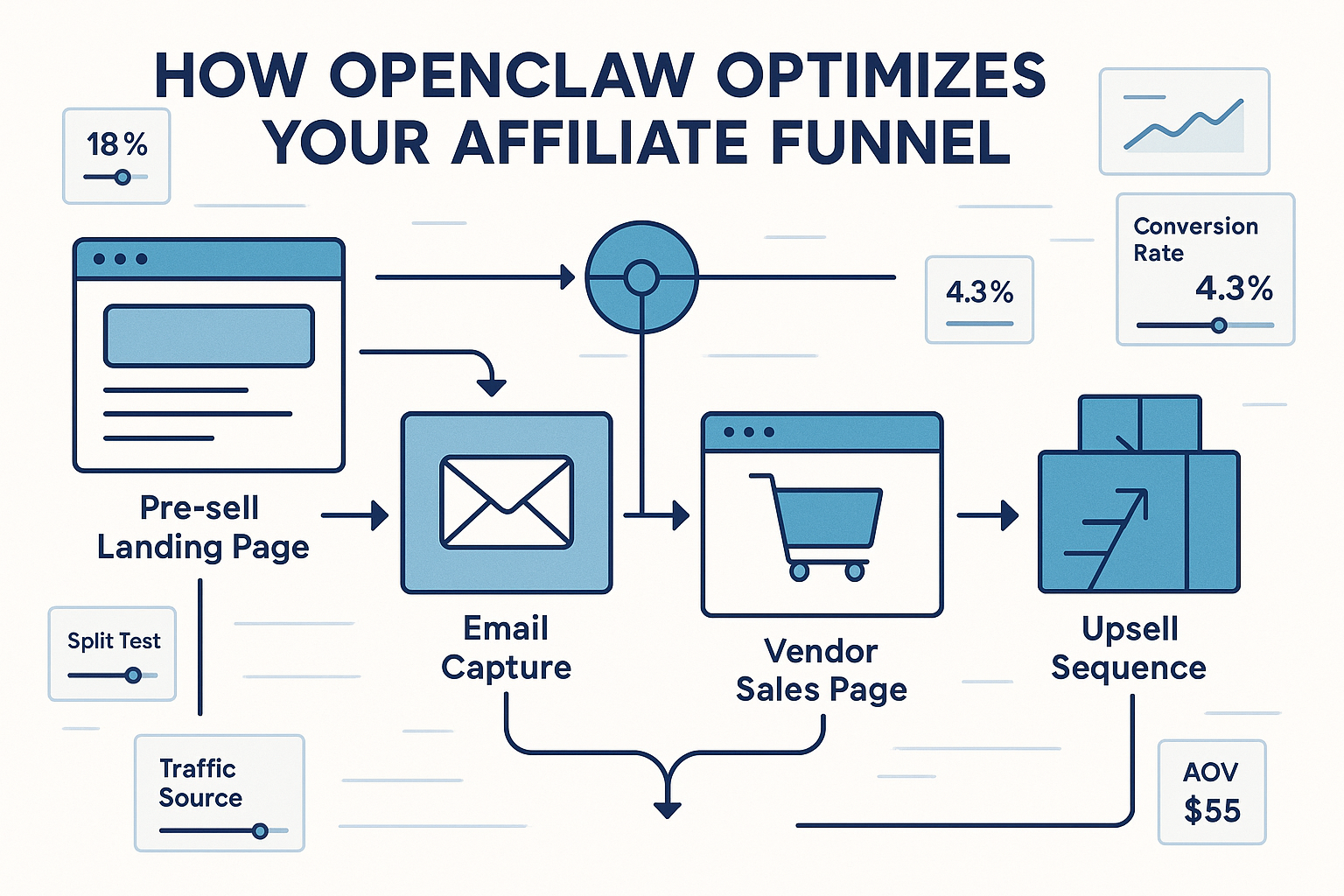
Most affiliate marketers optimize individual pages in isolation. Big mistake. OpenClaw looks at the entire funnel performance and makes adjustments that improve overall conversion rates, even if it means one page performs slightly worse.
For example, you might have a pre-sell page that sends traffic to a vendor's sales page. OpenClaw might determine that adding friction to the pre-sell page (like an email capture) actually improves final conversion rates because it qualifies traffic better. The pre-sell conversion rate drops, but overall campaign ROI increases by 25%.
Real-World Performance Data and Results
Let me break down what you can realistically expect when implementing OpenClaw in your affiliate campaigns.
The learning phase typically takes 7-14 days depending on your traffic volume. During this period, OpenClaw is gathering data and might actually hurt your conversion rates slightly. Don't panic and don't make manual adjustments. The algorithm needs clean data to work properly.
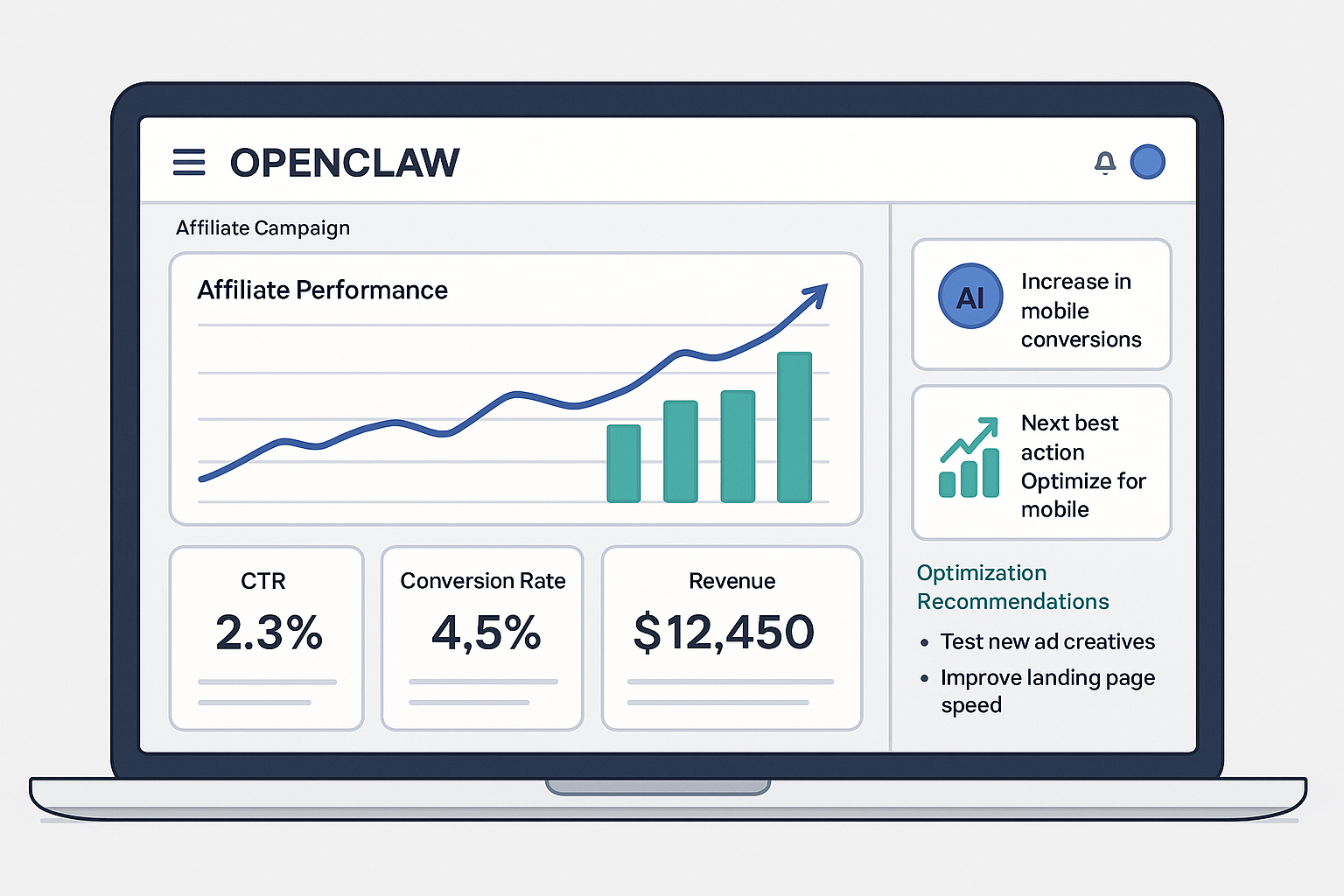
After the learning phase, I consistently see 15-30% improvements in conversion rates across different verticals. Health offers tend to see bigger improvements (25-40%) because there's more emotional messaging to optimize. Tech and business offers see smaller but still significant gains (10-20%).
But here's the thing—improved conversion rates don't always mean better campaign performance. If OpenClaw optimizes for conversions but attracts lower-quality traffic, your refund rates might spike. Always monitor backend metrics like customer lifetime value and refund rates, especially in the first 30 days.
Traffic Source Performance Variations
Different traffic sources respond differently to OpenClaw's optimizations. Facebook traffic sees the biggest improvements because there's so much behavioral data to work with. Google search traffic improvements are more modest because that traffic is already fairly qualified.
Native advertising shows interesting patterns. OpenClaw often discovers that controversial or contrarian angles perform better on native platforms, while straightforward benefit-focused messaging works better on search. This makes sense when you consider the browsing mindset on each platform.
Common Mistakes and How to Avoid Them
The biggest mistake I see is trying to micro-manage OpenClaw's decisions. The platform works best when you set proper goals and let it run. Constantly pausing campaigns or making manual adjustments disrupts the learning algorithm.
Another common error is not setting up proper conversion tracking from day one. OpenClaw's optimization is only as good as the data it receives. If you're only tracking final conversions and ignoring micro-conversions, you're missing huge optimization opportunities.
Don't expect immediate results, either. I've seen marketers give up after 3-4 days because performance initially drops. The algorithm needs time to learn and optimize. Plan for at least a 14-day testing period before making any major decisions.
Integration with Popular Affiliate Tools
OpenClaw plays well with most affiliate marketing tools, but some integrations are smoother than others.
ClickFunnels integration is straightforward—you can embed OpenClaw's optimization code directly into your funnels. WordPress sites need a bit more technical setup, but nothing a decent developer can't handle in an hour.
Email marketing platforms like ConvertKit and ActiveCampaign integrate nicely for lead magnet optimization. OpenClaw can optimize not just the opt-in page, but also the lead magnet delivery process to improve engagement rates.
For tracking and analytics, OpenClaw works alongside tools like Voluum and RedTrack. You're not replacing your existing tracking—you're adding an optimization layer on top.
The Future of AI-Driven Affiliate Optimization
OpenClaw represents where affiliate marketing is heading—toward intelligent automation that handles the tedious optimization work while marketers focus on strategy and scaling.
The next evolution will likely include predictive traffic quality scoring, where the platform can identify high-value visitors before they convert and adjust bidding strategies accordingly. Imagine being able to bid more aggressively on Facebook when OpenClaw detects incoming traffic that matches your highest-converting visitor profiles.
Privacy changes from iOS 15+ and Google's cookie deprecation actually make tools like OpenClaw more valuable, not less. When third-party tracking becomes unreliable, first-party optimization data becomes crucial. OpenClaw's on-site behavioral analysis doesn't rely on cross-site tracking, making it future-proof against privacy changes.
The smart money in affiliate marketing is moving toward these AI-driven optimization tools. Manual testing and gut-feeling adjustments won't cut it when you're competing against marketers using intelligent automation. OpenClaw isn't just a nice-to-have tool—it's becoming table stakes for serious affiliate marketers who want to stay competitive.
This article contains affiliate links. We may earn a commission at no extra cost to you. Full disclosure.
Editorial Team
Senior Digital Marketing Strategist
The Prophet Visionary editorial team covers affiliate marketing, paid traffic, funnels, and digital product strategy with hands-on practitioner experience.
Learn more about our editorial team →Tired of Paying for 5 Tools That Don't Talk to Each Other?
Systeme.io replaces your funnel builder, email tool, course platform, and affiliate manager — one login, one bill, zero integration headaches. Free plan available.
See the All-in-One PlatformThis page contains affiliate links — I may earn a commission at no extra cost to you.
Disclaimer: The information on this site is for educational purposes only and does not constitute financial, legal, or business advice. Results vary based on individual effort, market conditions, and other factors. Always do your own due diligence before making business or investment decisions.