Affiliate Fundamentals: The Real Foundation Every Marketer Needs
Most affiliate marketing advice starts with the wrong premise. People jump straight into traffic generation or funnel building without understanding the fundamental mechanics that make this business work—or fail spectacularly.
I've watched countless marketers burn through budgets because they skipped the basics. They'll obsess over ad creatives while completely misunderstanding commission structures. Or they'll chase the latest traffic source without grasping how merchant relationships actually function.
The fundamentals aren't sexy, but they're the difference between sustainable profit and expensive lessons.
Commission Structures: The Math That Matters
Your commission structure determines everything else in your campaign. Not understanding this is like trying to calculate ROI without knowing your costs.
Revenue Share vs. CPA: Know Your Numbers
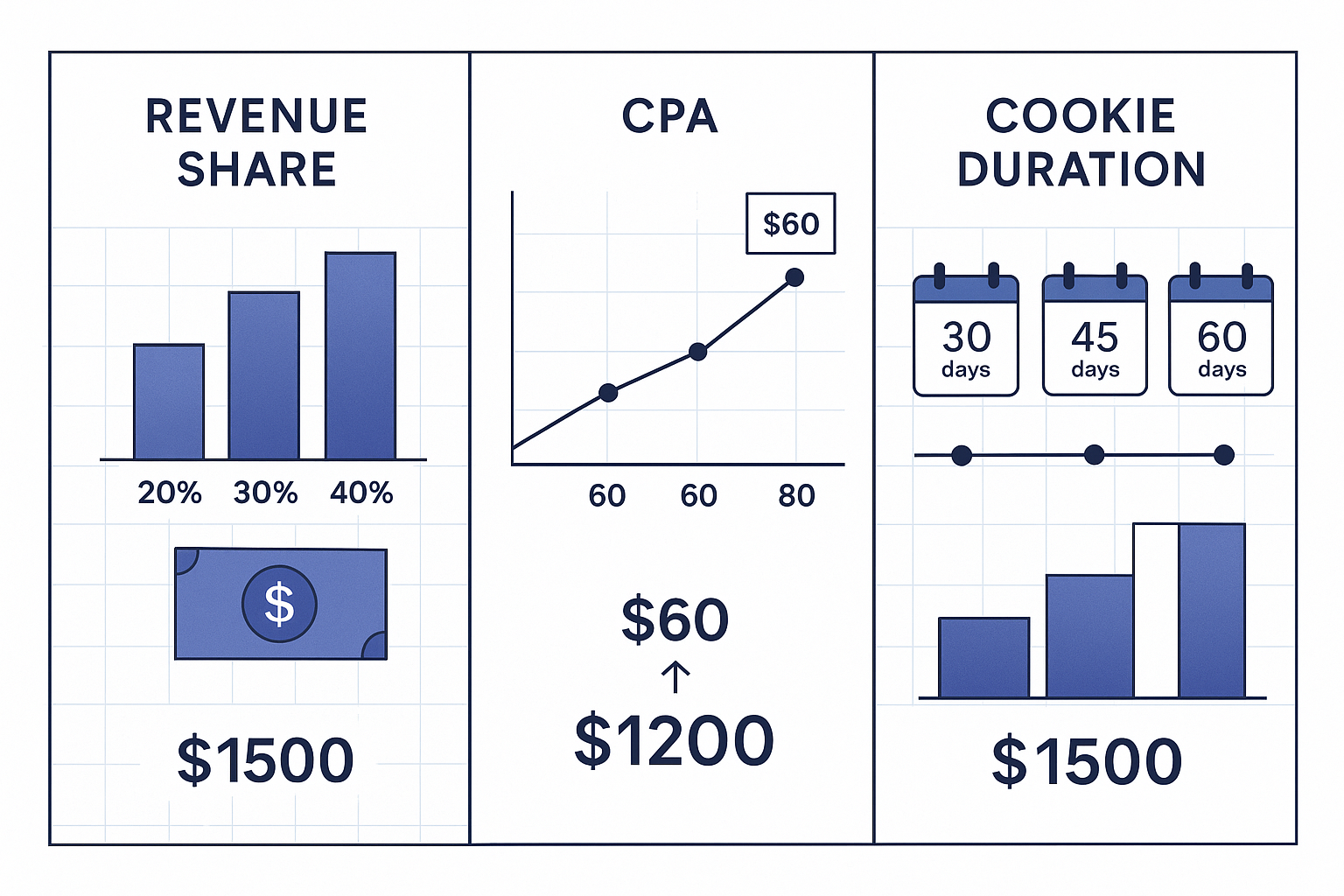
Revenue share sounds appealing—especially those 40-50% rates you see on networks like ShareASale or Commission Junction. But here's what most people miss: you're betting on conversion rates and average order values you don't control.
Say you're promoting a $97 software tool with 45% revenue share. Sounds great until you realize their trial-to-paid conversion rate is 8%, and you're paying $2.50 per trial signup. Your effective commission just dropped to $3.49 per signup ($97 × 0.45 × 0.08), while you're spending $2.50 in traffic costs.
CPA offers give you certainty. That same software company might offer $35 per trial signup. Lower headline number, but you know exactly what each conversion pays.
Cookie Duration Reality Check
Cookie duration isn't just about attribution windows—it's about competitive positioning. Amazon's 24-hour cookie seems terrible until you factor in their conversion rates and brand recognition. Meanwhile, ClickBank's 60-day cookies work because people often need multiple touchpoints before buying a $197 info product.
The counterintuitive part? Shorter cookies can actually be better for paid traffic campaigns. You're not competing with organic touchpoints or other affiliates' remarketing efforts.
Traffic Source Fundamentals: Beyond the Platform Hype
Every traffic source has personality quirks that determine what offers work. Ignoring these fundamentals is like trying to sell retirement planning to college students—wrong message, wrong audience.
Platform Demographics vs. Offer Alignment
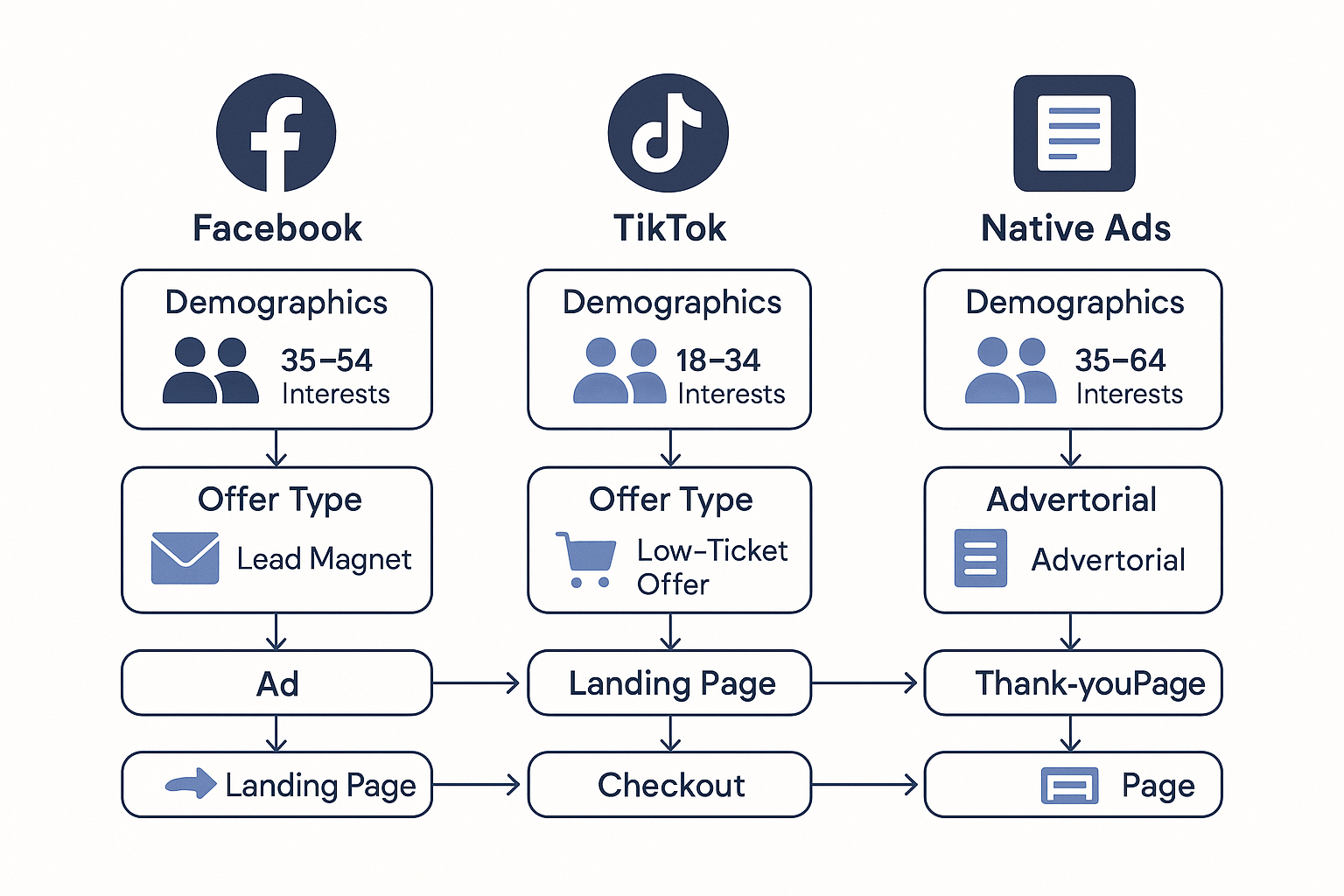
Facebook's average user age keeps climbing (now around 40), which makes it perfect for insurance, financial services, and health offers targeting established adults. But I still see affiliates trying to push gaming apps or crypto courses to this demographic.
TikTok's audience skews younger, but here's what most miss: the platform's algorithm rewards educational content. Those "day in the life" style videos promoting productivity tools or online courses often outperform flashy lifestyle content.
NewsBreak delivers fantastic CPCs ($0.08-0.15) for local and news-adjacent offers, but the traffic doesn't convert well for high-ticket items. Perfect for lead generation, terrible for direct sales campaigns.
Traffic Temperature and Offer Matching
Cold traffic from native ads needs different offers than warm traffic from email lists. This seems obvious, but I constantly see affiliates running the same creative to both audiences.
Cold traffic converts better on problem-focused angles ("Why your joints hurt every morning"), while warm traffic responds to solution-focused messaging ("The 5-minute routine that eliminated my joint pain").
Compliance: The Foundation That Prevents Disasters
Compliance isn't just about following rules—it's about building sustainable business relationships. One violation can kill your access to an entire network or traffic source.
FTC Disclosure Requirements in Practice
The FTC's disclosure requirements are clearer than most affiliates think. "#ad" works for social media, but longer-form content needs explicit statements like "I earn a commission if you purchase through my links."
But here's what the regulations don't tell you: different merchants have different standards. Some require specific disclosure language. Others prohibit certain claims entirely, even if they're technically legal.
I always check merchant terms before writing any promotional content. Those extra five minutes prevent account suspensions that can cost thousands in lost commissions.
Platform Policy Evolution
Platform policies change constantly, and staying compliant means monitoring updates across multiple channels. Google's recent crackdown on "miracle cure" health claims affected thousands of affiliate campaigns, even those promoting legitimate supplements.
Facebook's "social issues" policy now captures financial education content, requiring special authorization for campaigns about debt relief or investment strategies.
The smart play? Subscribe to policy update notifications and join affiliate communities where people share compliance changes in real-time.
Relationship Management: The Human Element
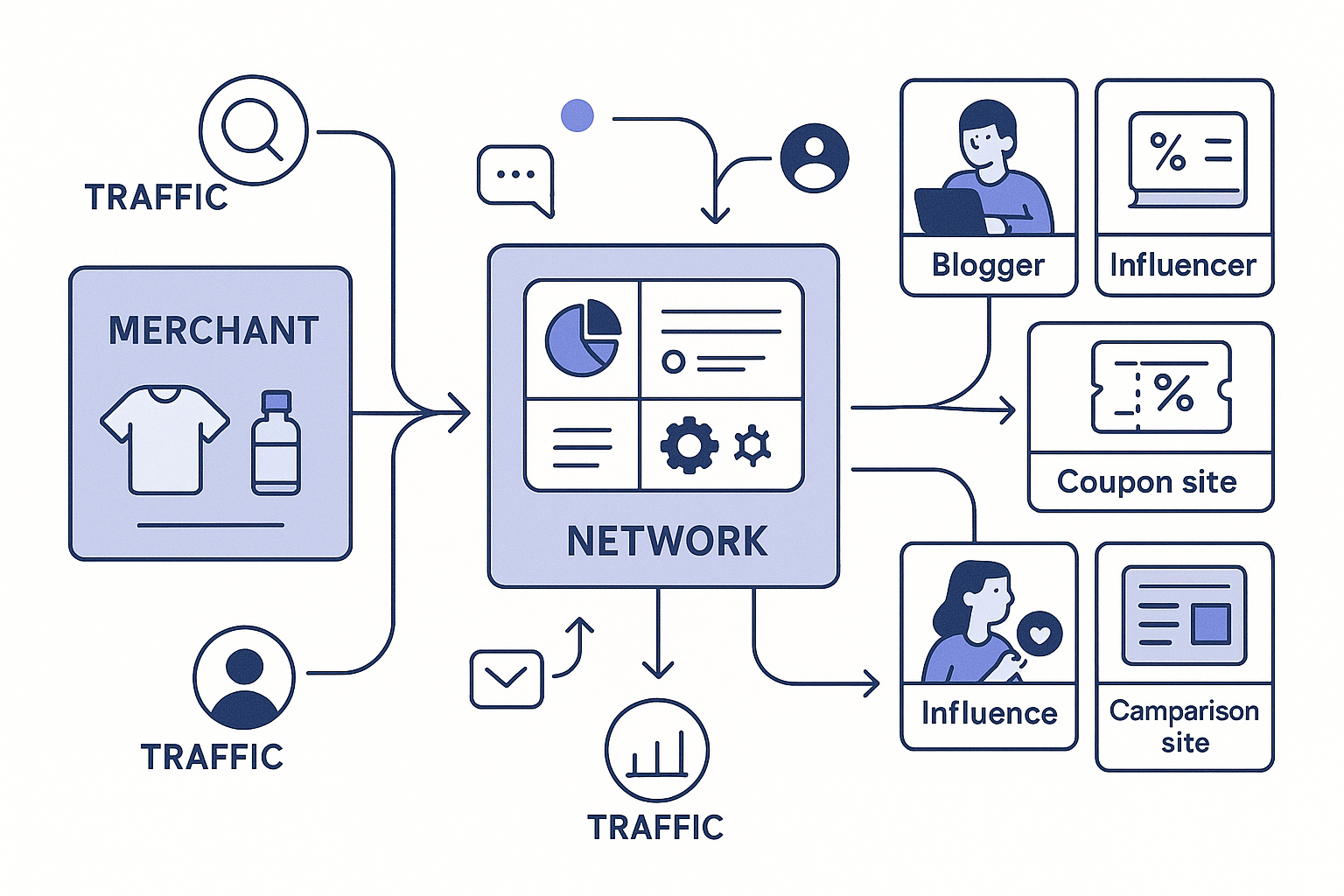
Affiliate marketing is still relationship business, despite all the automation tools. Your affiliate manager can make or break your campaigns.
Communication That Gets Results
Most affiliates treat their managers like customer service reps. Wrong approach. These people control your commission rates, offer access, and payment terms.
When I start with a new network, I always ask specific questions: What's your top-performing creative for this offer? Which traffic sources convert best? Are there any compliance issues I should know about?
Good managers will share data that isn't publicly available. They'll warn you about offer changes before they happen. Some will even negotiate higher payouts for consistent volume.
Performance-Based Relationship Building
Relationships matter, but results matter more. I've seen affiliates try to schmooze their way to better terms without delivering volume. Doesn't work.
But consistent performance opens doors. When you're driving 50+ conversions per week, managers start returning your calls faster. They'll give you first access to new offers and exclusive promotional materials.
Technology Stack Essentials
Your technology choices affect everything from tracking accuracy to scalability. But most affiliates either over-engineer their setup or use completely inadequate tools.
Tracking and Attribution
Third-party tracking isn't optional anymore—it's essential for accurate attribution. Network tracking often misses conversions due to technical issues or user behavior (like clearing cookies).
Tools like RedTrack or Voluum cost money upfront but pay for themselves by catching conversions that network tracking misses. I typically see 10-15% more conversions with proper third-party tracking.
The real value comes from optimization data. Network dashboards show you conversions, but tracking platforms show you which specific keywords, ad placements, and audience segments drive results.
Landing Page Infrastructure
Your landing page setup affects compliance, loading speed, and conversion rates. WordPress with a caching plugin works for most affiliates, but high-volume campaigns need more robust solutions.
I prefer dedicated landing page builders like ClickFunnels or Systeme.io for paid traffic campaigns. They're optimized for speed and include built-in split testing tools.
But here's the thing most people miss: mobile optimization isn't just about responsive design anymore. Page loading speed on mobile affects both ad platform quality scores and conversion rates.
Looking Forward: Fundamentals in an AI-Driven Market
The fundamentals remain constant even as the tools evolve. AI can help with creative generation and audience targeting, but it can't replace understanding commission structures or building merchant relationships.
What's changing is the speed of optimization cycles. AI-powered bid management and creative testing means campaigns that used to take weeks to optimize now reach peak performance in days.
The affiliates who thrive will be those who understand the fundamentals well enough to direct AI tools effectively—not those who try to automate everything without understanding the underlying mechanics.
Privacy changes and tracking limitations make direct merchant relationships more valuable than ever. When iOS updates break attribution, having a direct line to your affiliate manager becomes the difference between campaign death and quick pivots to new tracking methods.
Master these fundamentals first. The tactics and tools will keep changing, but understanding how affiliate marketing actually works—at the relationship, financial, and technical levels—gives you the foundation to adapt to whatever comes next.
This article contains affiliate links. We may earn a commission at no extra cost to you. Full disclosure.
Editorial Team
Senior Digital Marketing Strategist
The Prophet Visionary editorial team covers affiliate marketing, paid traffic, funnels, and digital product strategy with hands-on practitioner experience.
Learn more about our editorial team →Need One Platform to Run Your Entire Affiliate Business?
Funnels, email sequences, course hosting, affiliate management — Systeme.io replaces your entire tool stack at a fraction of the cost. Free plan included.
See How Systeme.io WorksThis page contains affiliate links — I may earn a commission at no extra cost to you.
Disclaimer: The information on this site is for educational purposes only and does not constitute financial, legal, or business advice. Results vary based on individual effort, market conditions, and other factors. Always do your own due diligence before making business or investment decisions.