How Long Should Your Affiliate Email Follow-Up Sequence Be?
The honest answer: for most digital product affiliate offers, a 7-to-12 email follow-up sequence is the sweet spot—but the right length depends on the offer's price point, the lead's entry point, and how warm they were when they opted in. A cold lead from a paid traffic campaign on Taboola needs more nurturing than someone who clicked your YouTube link and already knows you. That's the core of it. Everything else is context.
If you're here because your sequences feel too short and aren't converting, or too long and people keep unsubscribing—you're not alone. This is one of the most common sources of confusion I see among affiliate marketers who are doing everything else right. Good traffic, decent landing pages, solid offer selection on ClickBank or digistore24—and then the email side just... doesn't close. It's genuinely frustrating, and the frustration usually comes from the fact that there's no universal answer anyone's willing to commit to. So let me commit to one.
Why Does Sequence Length Feel So Arbitrary?
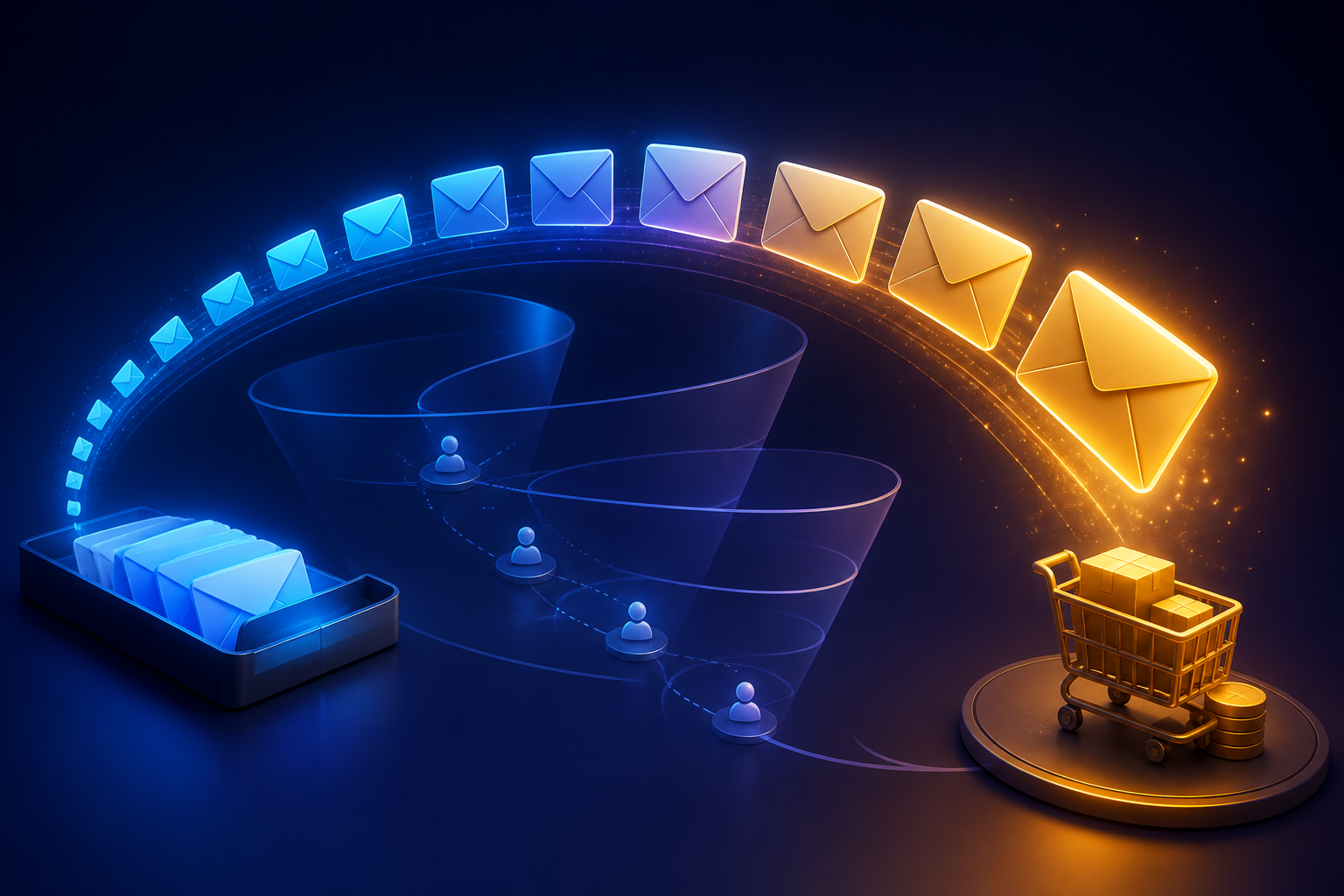
Because most of the advice you've read was written by people selling email courses, not people running affiliate campaigns at scale. There's a massive difference. Course creators who sell their own products can afford a 30-day nurture sequence because every email builds brand equity for them. You're an affiliate. You don't own the product. You're essentially renting attention and trying to redirect it—which means your window is tighter and your sequence structure has to work differently.
What most people get wrong is treating affiliate email sequences like they're lead nurture sequences for SaaS products. They're not. Digital product affiliate offers—think ClickBank health and fitness offers, make-money-online courses, trading tools, software bundles—have a specific buyer psychology. The buyer is often emotionally motivated, they want a solution fast, and they're comparison shopping between your affiliate recommendation and three other things they saw this week. A 30-email sequence doesn't serve that. A tight 7-12 email sequence with a clear arc does.
Why Do Short Sequences Fail to Convert?
Three or four emails isn't enough—not because more emails are always better, but because buyer decisions rarely happen on the first or second touch. I've run sequences on ConvertKit and ActiveCampaign where email 7 or email 9 was the top performer by a wide margin. Not email 1. Not email 3. Email 9. That's because by email 9, the people still on your list are qualified. They've self-selected. They haven't unsubscribed, they've opened multiple times, and they just needed one more angle to tip them over.
Short sequences also fail because they don't give you room to handle objections properly. A good affiliate sequence needs to hit the core promise, address the skepticism (especially for anything in the biz-op or health space), show social proof, create urgency, and then follow up on that urgency. That's already five distinct jobs. Trying to do all of that in three emails means each email is doing too much—which usually means none of it lands cleanly.
See also: Why Your Welcome Sequence Isn't Selling Affiliate Offers — if your early emails are under-performing, the problem often starts before email 3.
Why Do Long Sequences Kill Deliverability?
This is the counterintuitive part. You'd think more emails means more chances to convert. And technically, yes—but practically, no. When you run sequences past 14-16 emails without behavioral segmentation, you're sending to people who've already decided they're not buying. They're not opening. They're not clicking. And Gmail, Outlook, and Apple Mail are watching. Low engagement signals tank your sender reputation, which means your emails for everyone start landing in promotions or spam.
I've seen this kill campaigns that were otherwise profitable. An affiliate running a ClickBank weight loss offer extended their sequence to 21 emails because they read somewhere that "longer sequences make more money." Their open rates dropped from 28% to 11% by week three. Not because the emails were bad—because the unengaged tail of the list was dragging the whole thing down.
The fix isn't always a shorter sequence. Sometimes it's a smarter one. Suppressing non-openers after day 10, or splitting the sequence based on click behavior, can let you run 15+ emails without deliverability damage. But that requires a platform that supports behavioral automation—something like ActiveCampaign, ConvertKit, or even a platform built specifically for affiliate marketers with automation depth.
Why Does Offer Price Point Change Everything?
Low-ticket offers ($17–$97) have a shorter decision window. The buyer's risk is low, the emotional impulse is high, and if you haven't converted them in 7-9 emails, you probably won't—at least not on that offer. Move on, or pivot to a related upsell.
Mid-ticket offers ($197–$497) need more room. You're asking someone to spend real money on something they found through an affiliate link. That requires more trust-building, more objection handling, and often a longer value demonstration arc. 10-14 emails is reasonable here. Include case studies, address the "is this legit" question directly (especially for anything in the IM or trading niche), and build in at least two urgency windows—not just one at the end.
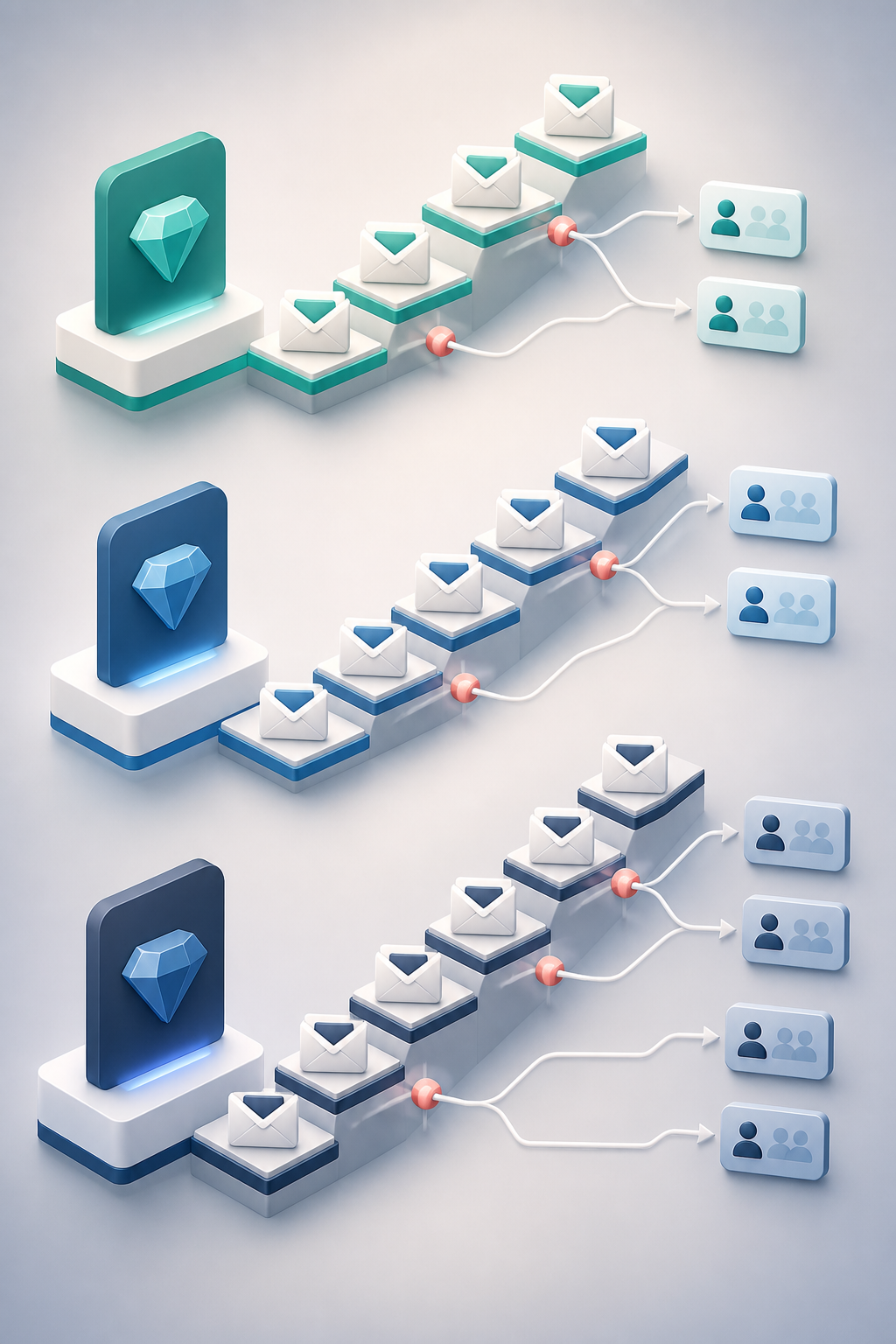
High-ticket offers ($997+) are a different animal entirely. Email alone rarely closes these. What email does is qualify and warm the lead enough that they'll book a call or watch a VSL. Your sequence for a high-ticket affiliate offer should be oriented around getting a specific action—a call booking, a webinar registration, a long-form sales page view—not closing directly in the inbox. For a deeper look at how sequencing works in that context, this breakdown on high-ticket offer stacking and email sequences is worth reading.
Why Isn't There a Single "Best Practice" Number?
Because the industry keeps pretending context doesn't matter. You'll see blog posts that say "7 emails is the magic number" and others that say "email every day for 30 days." Both can be right. Both can be catastrophically wrong. It depends on your traffic source, your niche, your list's expectations, and your offer's conversion window.
Traffic source matters more than most people admit. A subscriber who came in from a Facebook lead ad in the personal finance niche has different expectations than someone who opted in through an organic search landing page about productivity software. The Facebook lead might need more trust-building because they gave their email somewhat impulsively. The organic search lead already knows what they want—you just need to confirm you have it and get out of the way.
Here's a rough framework I actually use:
- Cold paid traffic (Taboola, native, Meta cold audiences): 10-14 emails, heavier on education and trust in the first half
- Warm organic traffic (SEO, YouTube, podcast): 7-10 emails, can move to offer positioning faster
- Retargeted or abandoned funnel leads: 5-7 emails, direct and urgency-focused—they already know the offer
- Referral or co-reg leads: 12+ emails, they need the most warming before any pitch
Why Do Most Affiliates Send Emails at the Wrong Frequency?
Daily emails during an active launch window work. Daily emails as a permanent evergreen sequence strategy usually don't—at least not for affiliate offers where you don't have the relationship capital to justify that frequency. The truth is, most affiliates either email too infrequently (once a week for 8 weeks, which loses momentum) or too aggressively (every day forever, which trains subscribers to ignore you).
What I've found works: front-load the sequence. Email daily or every other day for the first 5-7 days. That's when engagement is highest, deliverability signals are strongest (because new subscribers are most likely to open), and buyer intent is freshest. Then taper. Drop to every 2-3 days for the middle of the sequence. Save a final urgency cluster—2-3 emails in 48 hours—for the close window.
This mirrors how good direct response copywriters have structured campaigns for decades. It's not arbitrary. The front-loading captures the buyers who were already close to the decision. The middle builds for the fence-sitters. The urgency cluster catches the procrastinators.
Why Do Behavioral Triggers Matter More Than Sequence Length?
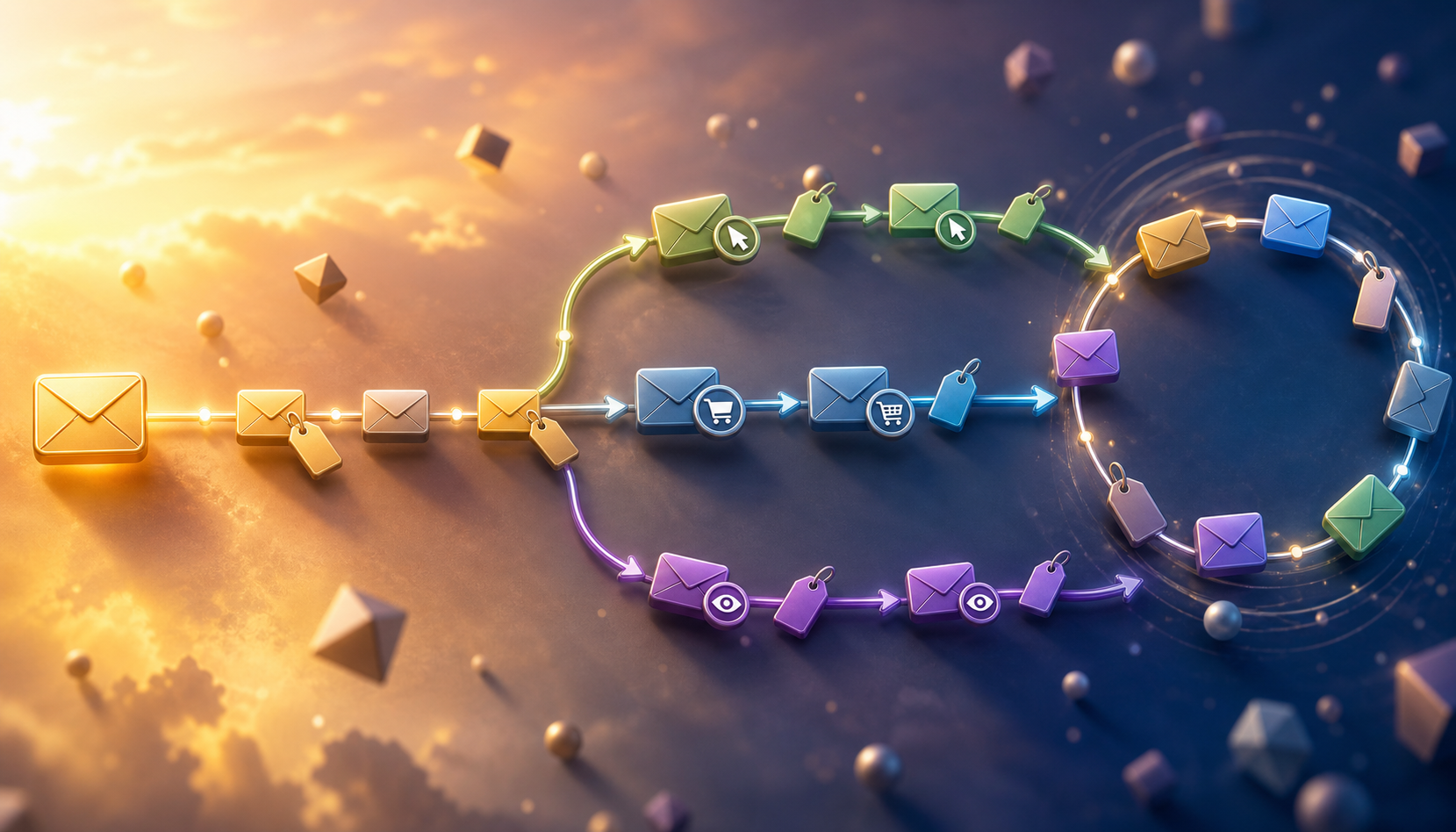
Because a 10-email sequence sent blindly to everyone performs worse than a 10-email sequence that adapts based on what subscribers actually do. If someone clicks your affiliate link in email 3 but doesn't buy, that's a signal. They're interested—something stopped them. Your email 4 should not be the next scheduled nurture email. It should be an objection-handling email specifically for people who clicked but didn't convert.
This is where platforms like ActiveCampaign, Drip, or even Systeme.io's automation builder earn their keep. You can tag clickers, branch sequences, and send targeted follow-ups that address the specific friction point. This kind of behavioral branching effectively extends your sequence's intelligence without extending its length—which is exactly what you want.
For a practical look at how this plays out in real campaigns, this piece on behavioral triggers in affiliate launch sequences gets into the mechanics.
Why Do Subscribers Ghost After Email 5?
Usually one of three reasons. First: the early emails over-promised and under-delivered—the content felt like filler, and they stopped trusting that the next email would be worth opening. Second: the pitch came too early and too hard, which signals to the subscriber that you're just there to sell them something, not help them. Third—and this one's underappreciated—the emails all sound the same. Same tone, same structure, same CTA. Subscribers pattern-match. If every email feels like a slight variation of the last one, they stop opening.
Vary your email formats. Use a story-based email. Then a direct Q&A format. Then a short punchy one that's three sentences and a link. Then a longer deep-dive. The variation itself signals that there's something worth reading in each send—which keeps open rates up through the back half of your sequence.
Frequently Asked Questions
Q: Should I promote the same offer in every email?
Not necessarily. For a focused launch sequence, yes—stay on-offer and don't confuse the subscriber with competing promotions. But for an evergreen sequence, it's fine to promote a primary offer in most emails while occasionally referencing related resources or tools. Just don't mix two competing affiliate offers in the same sequence. That's a conversion killer.
Q: What's the right number of emails before the first pitch?
For cold traffic: 2-3 value emails before any soft pitch, 4-5 before a hard pitch. For warm traffic: you can introduce the offer as early as email 2 if it's framed as a recommendation, not a hard sell. The first email should almost never be a pitch—it should confirm the lead made a good decision opting in and set expectations for what's coming.
Q: How do I know when to end a sequence?
When you've exhausted your primary angles for the offer and still have non-buyers, either move them to a re-engagement sequence with a different offer, or send a direct "is this still relevant for you?" email and let them self-select. Dragging out a sequence past its natural close just burns list health.
Q: Does sending more emails hurt my affiliate relationship with vendors?
Generally, no—vendors care about sales, not how many emails you sent. What can create friction is if your email content misrepresents the offer, makes claims the sales page doesn't support, or drives refund-heavy buyers. Keep your email copy aligned with the offer's actual positioning and you're fine.
Q: Should my sequence length change for different traffic temperatures?
Yes—see the framework above. But also consider the lead magnet they opted in through. If they opted in for a free checklist on "how to start a dropshipping business" and your affiliate offer is a dropshipping course, they're warm on the topic. If your lead magnet was generic and your offer is niche-specific, you need more bridging emails to connect the dots before pitching.
Q: Can I reuse sequences across multiple affiliate offers?
With significant edits, yes. The structure (hook → value → social proof → objection → urgency) transfers. The specific copy, examples, and CTAs need to be rebuilt for each offer. Lazy sequence repurposing is obvious to subscribers and tanks conversions.
From the Field: Practical Implementation Notes
Here's what an actual working sequence structure looks like for a mid-ticket digital product affiliate offer ($197-$297 price point), sourced from cold native traffic:
- Email 1 (Day 0): Welcome + deliver lead magnet + set expectations. No pitch.
- Email 2 (Day 1): Core problem framing. Agitate the pain point. Soft mention of the solution category (not the specific offer yet).
- Email 3 (Day 2): Story-based email. Personal or third-party story that illustrates the transformation. End with a bridge to the offer.
- Email 4 (Day 3): First direct offer introduction. Frame it as a recommendation, not a pitch. Link to sales page.
- Email 5 (Day 5): Objection handler. Address the #1 reason people don't buy (price, skepticism, "I'll do it later").
- Email 6 (Day 7): Social proof or case study email. Real results, real specificity—don't fabricate, use what the vendor provides.
- Email 7 (Day 9): FAQ format. Answer 3-4 common questions about the offer. Very high click-through on this format in my experience.
- Email 8 (Day 11): Urgency introduction. Bonus stack, limited-time discount (if available through the vendor), or enrollment deadline.
- Email 9 (Day 12): Urgency reminder. Shorter email. "24 hours left" type framing.
- Email 10 (Day 13): Final close. Last chance. Direct, no fluff.
After email 10, non-buyers get tagged and moved to a separate list for a different offer or a re-engagement campaign 30 days later. That's it. Clean, contained, trackable.
One thing worth noting: if you're running this on a platform like Systeme.io or ConvertKit, set up a purchase tag from the vendor's thank-you page (via webhook or Zapier) so buyers automatically exit the sequence. Nothing kills goodwill faster than pitching someone on an offer they already bought.
Still Have Questions?
Sequence length is ultimately a proxy question. What you're really asking is: how do I get more conversions from my email list without burning it out? That's a question about strategy, not just numbers. The length matters, but the architecture of what happens inside that length matters more.
If your sequences are technically correct but still underperforming, the problem is usually one of three things: weak early emails that fail to establish trust, a mismatch between what the lead opted in for and what you're selling, or deliverability issues that mean your emails aren't even being seen. Each of those has a different fix—and none of them is "add more emails."
For a broader look at how abandoned funnel leads can be recovered through smart sequencing, this case study on rescuing abandoned funnel leads with a 6-email sequence shows what a tight, purposeful structure can actually do in a real campaign context.
The best sequence is the one your subscribers actually read. Build for that first, and the conversions follow.
This article contains affiliate links. We may earn a commission at no extra cost to you. Full disclosure.
Editorial Team
Senior Digital Marketing Strategist
The Prophet Visionary editorial team covers affiliate marketing, paid traffic, funnels, and digital product strategy with hands-on practitioner experience.
Learn more about our editorial team →Your List Is Only as Good as Your Email Platform
AWeber has 25+ years of inbox deliverability, drag-and-drop automation, and AI-powered copywriting built in. Free plan for up to 500 subscribers.
See Why Affiliates Use AWeberThis page contains affiliate links — I may earn a commission at no extra cost to you.
Disclaimer: The information on this site is for educational purposes only and does not constitute financial, legal, or business advice. Results vary based on individual effort, market conditions, and other factors. Always do your own due diligence before making business or investment decisions.