Email Platforms That Actually Work for Affiliate Marketers
Most affiliate marketers pick an email platform the wrong way. They Google a comparison, click the first result, see a $9/month plan, and sign up. Three months later they're hitting broadcast limits, getting flagged for affiliate links, or realizing the automation they actually need costs three times what they budgeted. I've watched this happen repeatedly—and I've done it myself early on.
Here's what the comparison roundups usually skip: the price you see on the homepage is almost never the price you'll actually pay. There are list-size thresholds, feature gates, deliverability add-ons, and—critically for affiliates—terms of service quirks that can get your account nuked without warning. So before you hand over a credit card, let's get into what these platforms actually cost, who they're built for, and how to make a smart decision based on your current situation and where you're headed.
What Affiliate Marketers Actually Need From an Email Platform
Before the tool rankings, a quick framework—because not every marketer needs the same things. The non-negotiables for affiliate-focused email work are: reliable broadcast sending (bulk sends to your full list or segments), multi-step automation sequences, affiliate-link-friendly terms of service, and deliverability that doesn't tank when you're promoting third-party offers.
Nice-to-haves: behavioral triggers, tagging and segmentation, landing page builders, and integrations with traffic tools or funnel builders. If you're running paid traffic from sources like Facebook, native, or even lower-CPM channels like NewsBreak (where you might be pulling leads at $0.08–0.15 CPC), you need a platform that can handle sudden list growth without penalizing you mid-campaign.
The platforms below are ranked with all of that in mind. Not just features—but realistic cost, affiliate friendliness, and practical workflow fit.

The Platforms: Ranked and Priced Honestly
1. GetResponse — Best Overall for Affiliate Broadcast + Automation
GetResponse has been quietly one of the most affiliate-tolerant platforms in the space for years. They don't outright ban affiliate marketing (unlike some competitors), their automation builder is genuinely capable, and their broadcast functionality is solid even at lower tiers.
Pricing reality: The email marketing plan starts at $19/month for up to 1,000 contacts. That sounds reasonable until you hit 5,000 contacts—then you're at $54/month. At 10,000 contacts, you're looking at $79/month. The Marketing Automation tier (which you'll want for behavioral triggers and advanced sequences) starts at $59/month for 1,000 contacts and scales similarly. Annual billing saves roughly 18%.
Hidden cost alert: The free plan (500 contacts) doesn't include automation or full broadcast features. Many affiliates start free, build their list, then discover the upgrade is steeper than expected. Budget for the Marketing Automation tier from day one if sequences are part of your strategy.
Best for: Affiliates running mid-volume lists (2,000–25,000 subscribers) who want a single platform for email, basic landing pages, and automation without piecing together a stack.
2. ActiveCampaign — Best for Behavioral Automation Depth
If your affiliate strategy involves anything beyond basic drip sequences—think link-click-based segmentation, lead scoring, conditional content, or multi-offer sequences—ActiveCampaign is the platform most practitioners end up on eventually. The automation builder is genuinely the most flexible in this tier.
Pricing reality: The Starter plan runs $15/month (1,000 contacts, annual billing) but is stripped down—no CRM, limited automation steps. The Plus plan, which is where most affiliate marketers actually need to be, starts at $49/month for 1,000 contacts. At 10,000 contacts, Plus is around $139/month. At 25,000 contacts, you're clearing $200+/month.
Hidden costs: ActiveCampaign charges for contacts, not emails sent—so if you're running re-engagement campaigns and keeping cold subscribers around, you're paying for dead weight. They also have a one-time onboarding fee for some plans. And their affiliate marketing policy is nuanced: they allow it but scrutinize accounts that send primarily to affiliate offers without owned content. Worth reading their AUP before committing.
Best for: Affiliates who've outgrown basic tools and need serious behavioral triggers. If you're running behavioral trigger sequences for affiliate launches, ActiveCampaign gives you the most granular control.
3. AWeber — Best for Beginners Who Want Reliability Over Bells and Whistles
AWeber doesn't get much love from the "advanced marketer" crowd, but that reputation is partly outdated. They're affiliate-friendly by policy, their deliverability is consistently above average, and their broadcast interface is genuinely simple. For someone just building their first list off a lead magnet funnel, AWeber removes friction.
Pricing reality: The free plan covers up to 500 subscribers with most core features included—including basic automation. Paid plans start at $15/month (up to 500 contacts) and scale to $30/month at 2,500 contacts, $65/month at 10,000 contacts. The Plus plan (unlimited email lists, advanced reporting, split testing) runs $30/month to start.
Hidden costs: AWeber counts unsubscribed contacts toward your billing tier until you manually remove them. This is a known gotcha—if you're not pruning your list regularly, you'll pay for subscribers who've already left. Their automation is also more limited compared to ActiveCampaign; if you need complex branching logic, you'll hit walls.
Best for: Affiliates under 5,000 subscribers who want a stable, no-drama platform with solid deliverability and straightforward broadcast tools.
4. Klaviyo — Best for E-commerce Affiliate Hybrid Models
Klaviyo is primarily an e-commerce platform, and I'll be honest—it's not the default recommendation for pure-play affiliate marketers. But if your affiliate model involves physical product promotions, Shopify-integrated offers, or you're running affiliate partnerships alongside your own product line, Klaviyo's segmentation and revenue attribution are genuinely impressive.
Pricing reality: Free up to 250 contacts (500 email sends/month). Paid starts at $45/month for 1,001–1,500 contacts. At 5,000 contacts, you're around $100/month. At 10,000 contacts, roughly $175/month. These are among the higher per-contact rates in the market.
Hidden costs: Klaviyo's pricing includes SMS as a separate add-on. If you're not running SMS, ignore that—but if you are, budget for it separately. Also, the platform's learning curve is real; onboarding without e-commerce context can be disorienting.
Best for: Affiliates promoting physical products or operating a hybrid model. Not the right fit if you're purely promoting digital offers on ClickBank or similar networks.
5. Systeme.io — Cheapest Legitimate Entry Point for Affiliates
Systeme.io deserves a serious look if you're starting out and budget is the primary constraint. Their free plan is genuinely functional—not a stripped-down teaser. You get up to 2,000 contacts, unlimited emails, basic automation, a funnel builder, and course hosting. All free.
Pricing reality: Free tier is real. Paid plans start at $27/month (Startup: 5,000 contacts), $47/month (Webinar: 10,000 contacts), and $97/month (Unlimited: no contact cap). These are flat rates—not per-contact scaling—which is a meaningful structural advantage as your list grows.
Hidden costs: The automation is functional but not deep. You won't get the behavioral complexity of ActiveCampaign. Deliverability is decent but not best-in-class—some affiliates report needing to warm lists more carefully when migrating from Systeme. Also, their broadcast editor is basic; if design matters to your brand, it shows.
Best for: New affiliates or those on tight budgets who need a functional all-in-one without monthly fees eating into early revenue. The cheapest legitimate way to start with both broadcast and automation.
6. ConvertKit (Now Kit) — Best for Content-First Affiliate Marketers
ConvertKit rebranded to Kit and has been doubling down on the creator economy angle. That's both their strength and their limitation for affiliates. If your affiliate traffic comes from a blog, YouTube, or newsletter—and you're promoting offers contextually within content—Kit's subscriber-centric model fits well. If you're running cold traffic to squeeze pages, it feels like the wrong tool.
Pricing reality: Free plan up to 10,000 subscribers (limited features—no automation, no sequences). The Creator plan starts at $29/month for up to 1,000 subscribers, scaling to $79/month at 5,000 and $111/month at 10,000. Creator Pro (advanced reporting, newsletter referral system) adds roughly $20–30/month on top.
Hidden costs: Kit's affiliate policy has historically been selective—they've terminated accounts for aggressive affiliate promotion, particularly around make-money-online offers. This is the biggest risk factor. Read their terms carefully before migrating a monetized list there. Also, their automation (called "sequences" and "automations") is solid but less visually intuitive than ActiveCampaign.
Best for: Content affiliates—bloggers, newsletter writers, YouTubers—who promote offers as recommendations within owned content rather than pure promotional email campaigns.
7. Brevo (Formerly Sendinblue) — Best for High-Volume Senders on a Budget
Brevo's pricing model is different from most: they charge by emails sent per month, not by contacts stored. That's a significant structural advantage if you have a large list but send infrequently—or if you want to store cold subscribers without paying for them.
Pricing reality: Free plan: unlimited contacts, 300 emails/day. Starter plan: $25/month for 20,000 emails/month. Business plan: $65/month for 20,000 emails/month (adds automation, A/B testing, advanced reporting). At 100,000 emails/month, you're around $69/month on Starter—which is a fraction of what contact-based platforms would charge for an equivalent list size.
Hidden costs: The free plan has Brevo branding on emails. Automation features are gated behind the Business plan. Their affiliate marketing stance is generally permissive, but deliverability from shared IPs on lower plans can be inconsistent—dedicated IPs are available but add cost (around $145/month).
Best for: Affiliates with large, segmented lists who send to different segments at different frequencies. Also solid for anyone who wants to store a big list cheaply while only actively mailing engaged segments.
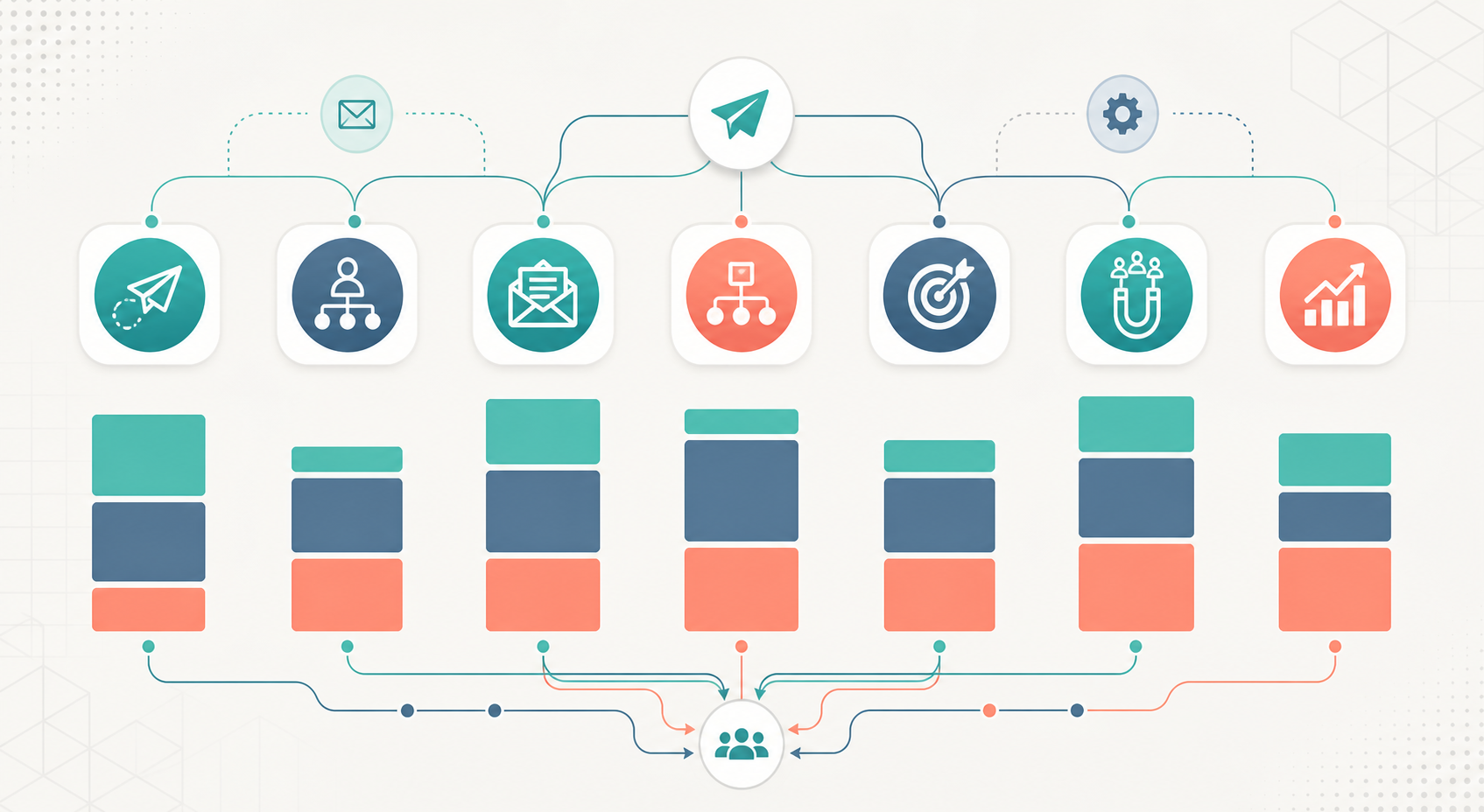
Price Ranges and Tiers: The Honest Summary
| Platform | Free Tier | Entry Paid | At 10K Contacts | Affiliate Friendly? |
|---|---|---|---|---|
| GetResponse | 500 contacts (limited) | ~$19/mo | ~$79/mo | Yes |
| ActiveCampaign | No | ~$15/mo (Starter) | ~$139/mo (Plus) | Conditional |
| AWeber | 500 contacts | ~$15/mo | ~$65/mo | Yes |
| Klaviyo | 250 contacts | ~$45/mo | ~$175/mo | Partial |
| Systeme.io | 2,000 contacts | ~$27/mo | ~$47/mo | Yes |
| Kit (ConvertKit) | 10,000 contacts (limited) | ~$29/mo | ~$111/mo | Selective |
| Brevo | Unlimited contacts | ~$25/mo | Depends on send volume | Generally yes |
The Cheapest Way to Actually Start
If budget is the binding constraint right now, here's the honest path: start on Systeme.io's free plan. Two thousand contacts, basic automation, broadcast capability, and a funnel builder—all at zero cost. It's not glamorous, and you'll outgrow it, but it's a legitimate starting point that won't limit your affiliate activity or cost you money before you're generating revenue.
The second-cheapest real option is AWeber's free plan (500 contacts) or Brevo's free tier (unlimited contacts, 300 emails/day). Brevo's free tier is particularly underrated for affiliates who want to build a large list early and mail selectively—you can store thousands of subscribers without paying anything until your send volume justifies an upgrade.
What most people get wrong at this stage: they optimize for cheapest entry price instead of cheapest path to the features they'll actually need. A $9/month plan that gates automation behind a $49/month tier isn't cheap—it's a bait-and-switch. Map out the features you need in 90 days, not just today, before you commit.
What Premium Actually Gets You
Spending $100–200/month on email isn't irrational if your list is monetized. Here's what the premium tier actually delivers that entry plans don't:
- Behavioral automation depth: Link-click triggers, conditional branching, lead scoring. This is what separates a 3-email welcome sequence from a full automated welcome sequence that sells affiliate offers on autopilot.
- Deliverability infrastructure: Dedicated IPs, better shared IP pool management, and in some cases dedicated deliverability support. This matters enormously when you're broadcasting promotional emails at scale.
- Advanced segmentation: Tagging, custom fields, engagement scoring. If you're running multiple offers across different niches or promoting high-ticket offers to segmented buyer segments, this is where revenue per subscriber meaningfully improves.
- A/B testing at scale: Subject line testing, send-time optimization, content variants. The ROI on this compounds over time in ways that are hard to quantify upfront but very real.
- Priority support: When a broadcast fails 20 minutes before a launch window closes, support response time is not an abstract benefit.
Hidden Costs Nobody Puts in the Comparison Table
A few things that routinely catch affiliates off guard:
Overage charges. Most platforms charge automatically when you cross a contact threshold—sometimes at rates that are disproportionately high. Set billing alerts and prune your list aggressively.
Dedicated IP costs. If you're sending 50,000+ emails/month, shared IPs start becoming a deliverability liability. Dedicated IPs run $10–30/month extra depending on platform, and they require a warmup period before they're useful.
Integration costs. Zapier connections, webhook setups, or native integrations with your funnel builder might require higher plan tiers. If you're connecting your email platform to a funnel tool—and if you're comparing options there, our breakdown of ClickFunnels vs GoHighLevel for affiliate funnel builders covers the integration layer in detail—check whether the integration you need is available on your target plan before signing up.
List cleaning services. Dirty lists kill deliverability. Tools like NeverBounce or ZeroBounce run $0.003–0.008 per email verified. On a 20,000-contact list, that's $60–160 for a one-time clean—not a recurring cost, but one to factor in when migrating or after aggressive lead gen campaigns.
What to Budget: A Realistic Framework
Here's how I'd think about this depending on where you are:
Starting out (0–1,000 subscribers, no revenue yet): $0–$27/month. Systeme.io free or Brevo free. Don't pay for email until email is generating revenue.
Early traction (1,000–5,000 subscribers, first affiliate commissions): $20–$55/month. GetResponse Email Marketing plan or AWeber paid. Start building proper automation sequences at this stage.
Growth phase (5,000–25,000 subscribers, consistent revenue): $60–$150/month. GetResponse Marketing Automation or ActiveCampaign Plus. This is where behavioral automation starts paying for itself in measurable ways.
Scale (25,000+ subscribers, multi-offer operation): $150–$300+/month. ActiveCampaign Professional or GetResponse MAX. At this scale, the cost of a bad platform decision—deliverability issues, automation failures, list loss—far exceeds the price difference between tiers.
Practical Implementation Notes
A few things from actual use that don't show up in feature lists:
GetResponse's automation builder uses a visual canvas that's genuinely intuitive for setting up multi-branch sequences. I've built full 14-email affiliate launch sequences with conditional paths (clicked link → tag → branch to buyer sequence vs. non-buyer follow-up) in under two hours. ActiveCampaign is more powerful but takes longer to set up correctly—the first time you use it, budget extra time.
Systeme.io's broadcast editor is functional but basic. If you're sending plain-text-style emails (which often outperform designed emails for affiliate offers anyway), this doesn't matter. If you need HTML templates with heavy branding, it'll frustrate you.
AWeber's deliverability has been consistently solid in my experience across multiple niches—including health and finance offers, which are higher-scrutiny categories. That reliability has value that's hard to quantify until you've had a broadcast fail on a competitor platform during a live promotion.
Brevo's volume-based model makes it genuinely excellent for affiliates who maintain large lists but mail only engaged segments. Storing 40,000 contacts and mailing 8,000 of them weekly costs a fraction of what contact-based platforms would charge. The tradeoff is that automation depth on Brevo's lower tiers is limited—plan for the Business tier if sequences are central to your strategy.
One stack combination worth considering if you're serious about automation depth but cost-conscious: Systeme.io for funnel and landing page infrastructure, paired with Brevo for email broadcast and basic automation. Total cost under $50/month for a functional affiliate email operation up to moderate scale. Not forever—but a smart bridge while you're building toward a single-platform solution.

Frequently Asked Questions
Can I use any of these platforms to promote ClickBank offers?
GetResponse, AWeber, Systeme.io, and Brevo are generally fine with ClickBank promotions. ActiveCampaign and Kit are more restrictive—they'll allow it in some contexts but have terminated accounts for aggressive affiliate-only email strategies. Always read the acceptable use policy before migrating a monetized list.
What's the minimum setup for broadcast + automation on a $30/month budget?
AWeber's paid plan or Systeme.io's Startup plan both fit this budget and include both broadcast and basic automation. For most affiliates under 5,000 subscribers, either is sufficient to run a proper welcome sequence plus weekly broadcast campaigns.
Does deliverability actually differ between platforms at this price range?
Yes, meaningfully. AWeber and GetResponse consistently score well in independent deliverability tests. Brevo on shared IPs can be inconsistent. ActiveCampaign's deliverability is strong but partly depends on your list hygiene and sending patterns. Klaviyo tends to be excellent for e-commerce senders. No platform delivers 100% inbox placement—list quality and sender reputation matter more than the platform itself at moderate scale.
Should I start with an all-in-one platform or a dedicated email tool?
Depends on your stack. If you're building funnels separately (ClickFunnels, GoHighLevel, etc.), a dedicated email platform with strong API integrations makes more sense. If you're starting from scratch with no existing tools, an all-in-one like Systeme.io reduces setup complexity and cost significantly in the early stages.
How many contacts before I should upgrade from a free plan?
The trigger isn't usually contacts—it's features. When you need automation sequences beyond basic drips, when you want behavioral segmentation, or when broadcast limits start affecting your send schedule, that's when upgrading pays off. For most affiliates, that's somewhere between 1,000 and 3,000 active subscribers.
Is email marketing still worth the investment for affiliates in 2026?
Owned lists remain one of the few traffic assets affiliates actually control. Ad accounts get banned, organic reach shifts, platforms change algorithms—but an email list you built and maintain is yours. The ROI on email for affiliate marketers who build it intentionally is consistently higher than most paid traffic channels, particularly when you're running multi-email sequences rather than one-shot broadcasts.
What's the best platform if I'm promoting high-ticket offers?
For high-ticket affiliate promotions—think $1,000+ programs—you want the behavioral automation depth to identify engaged subscribers and route them into tailored sequences. ActiveCampaign Plus or GetResponse Marketing Automation are the two I'd recommend for this use case. The segmentation capability is what makes the difference when you're trying to identify buyers vs. browsers and sequence accordingly.
This article contains affiliate links. We may earn a commission at no extra cost to you. Full disclosure.
Editorial Team
Senior Digital Marketing Strategist
The Prophet Visionary editorial team covers affiliate marketing, paid traffic, funnels, and digital product strategy with hands-on practitioner experience.
Learn more about our editorial team →Tired of Paying for 5 Tools That Don't Talk to Each Other?
Systeme.io replaces your funnel builder, email tool, course platform, and affiliate manager — one login, one bill, zero integration headaches. Free plan available.
See the All-in-One PlatformThis page contains affiliate links — I may earn a commission at no extra cost to you.
Disclaimer: The information on this site is for educational purposes only and does not constitute financial, legal, or business advice. Results vary based on individual effort, market conditions, and other factors. Always do your own due diligence before making business or investment decisions.