Why Your Welcome Sequence Isn't Selling Affiliate Offers (And How to Fix It)
You set up the opt-in. You connected the autoresponder. You wrote the emails—maybe five of them, maybe seven—and you hit publish feeling pretty good about it. Then the clicks came in, the opens looked decent, and the commissions... didn't move. Not really. Maybe a trickle. Definitely not what you expected after watching the case studies and reading the threads.
That's a specific kind of frustration. Not beginner frustration. The frustrated-at-the-process kind, where you've done the work and still can't figure out what's broken.
Here's what I've found after working with affiliate email systems for years: the welcome sequence is almost always the culprit—and not for the reasons most people think. It's not the subject lines. It's not the send frequency. The problem goes deeper, and fixing it is surprisingly mechanical once you know where to look.
The Real Bottleneck Nobody Talks About
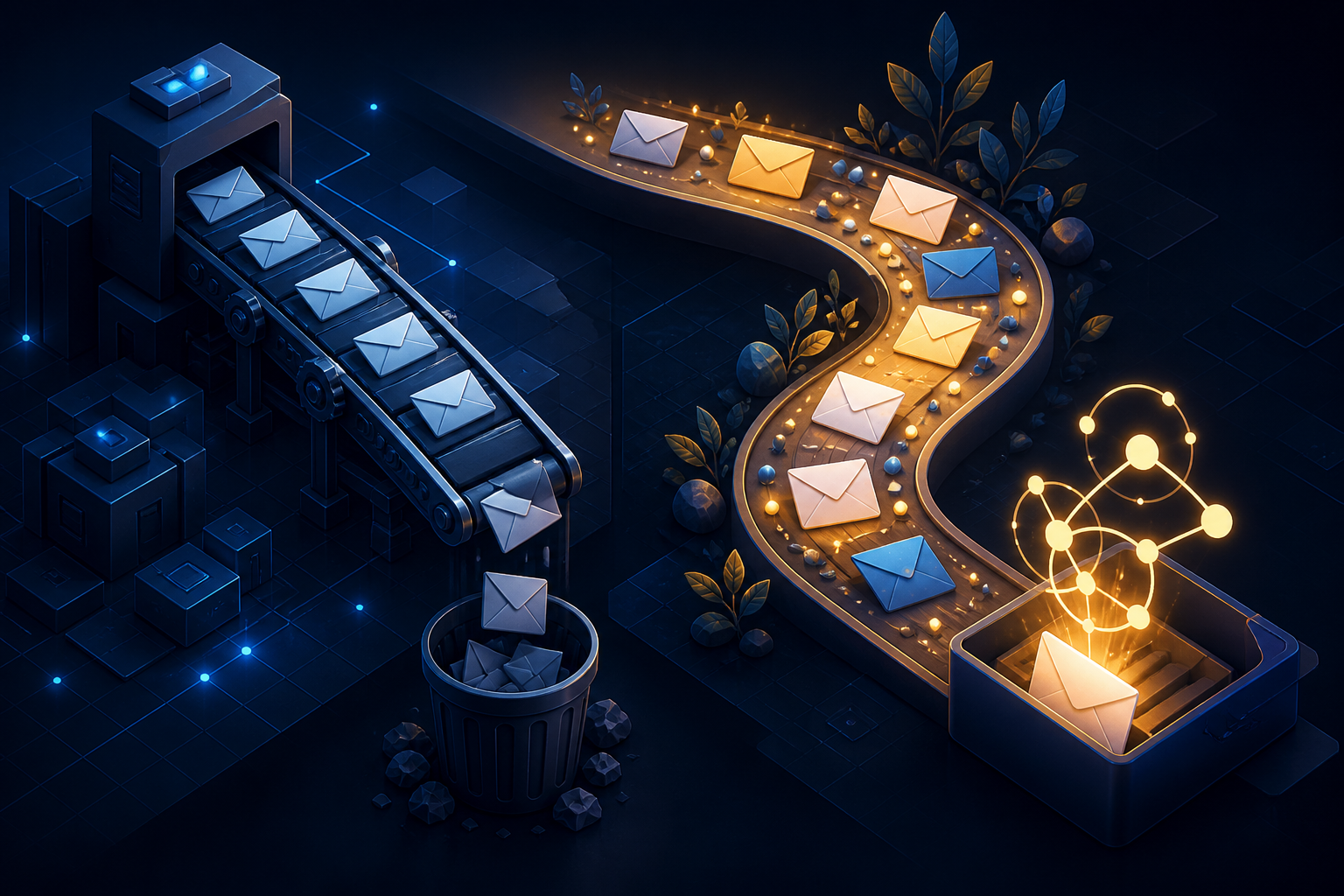
Most welcome sequences for affiliate offers are built backwards. The affiliate writes emails that mirror what a product launch sequence looks like—social proof, urgency, testimonials—without establishing any reason for the subscriber to care about their opinion specifically. The result is a sequence that reads like a brochure. Technically complete. Emotionally inert.
The welcome sequence has one job before it has any other job: close the trust gap. Your subscriber opted in because of a lead magnet, a content upgrade, or a paid traffic funnel. They don't know you yet. They're evaluating whether you're worth listening to. If your first three emails feel like a pitch parade, they've already mentally unsubscribed—even if they haven't clicked the link yet.
What most people get wrong is treating the welcome sequence as a sales sequence with a different name. It's not. It's a relationship sequence that earns the right to sell.
Step 1 — Nail the Transition Email (Most People Skip This Entirely)
Email one in your welcome sequence isn't a welcome email. Or it shouldn't be. It's a transition email—its entire purpose is to bridge the gap between what they just opted in for and what's coming next.
If someone downloaded your free guide on intermittent fasting and you're promoting a ClickBank offer like a metabolic health program, that first email needs to acknowledge the download, deliver any promised value, and then plant a seed about the broader problem the affiliate offer solves. Not pitch it. Seed it.
Something like: "Now that you have the guide, I want to share something I learned after going deeper on this—most people fix the eating window but miss the metabolic piece entirely. More on that in the next couple of days."
That's a curiosity hook. It creates a reason to open email two. And it costs you nothing to write it.
Pro tip: Set this email to send immediately on opt-in. Not after a 30-minute delay. Immediately. The subscriber's attention is highest in the first 10 minutes after opting in—don't waste it with a delay that serves your automation schedule instead of their engagement window.
Step 2 — The Authority Email Nobody Writes Well
Email two is where most affiliates either brag awkwardly or disappear entirely. Both are mistakes.
You need an authority email—but authority in affiliate email doesn't mean credentials. It means demonstrated understanding. The fastest way to establish yourself as someone worth listening to is to articulate the subscriber's problem better than they can articulate it themselves. That's it. That's the whole trick.
Write an email that describes the exact frustration, the exact failed attempts, the exact emotional state of the person you're writing to. When a subscriber reads that email and thinks "how did they know that?"—you've won the trust battle. From that point forward, when you recommend something, they're predisposed to believe you.
Don't mention the affiliate offer in this email at all. I know that sounds counterintuitive. Do it anyway. The restraint itself signals confidence, and confidence is what authority looks like in an inbox.
Step 3 — Introduce the Mechanism, Not the Product
By email three, you've delivered value, established trust, and created curiosity. Now you introduce what I call the mechanism—the specific concept, method, or approach that the affiliate product is built around.
If you're promoting a ConvertKit competitor through an affiliate program, the mechanism might be "visual automation mapping." If you're promoting a systeme.io offer, the mechanism might be "all-in-one funnel simplicity for solopreneurs." You're not selling the product yet. You're selling the idea that this type of solution exists and matters.
This is the email where you can say something like: "I've been testing a specific approach to [problem] that most people in this space overlook. I'll share the full breakdown tomorrow—including the tool I've been using that makes it actually manageable."
See how that works? You've introduced the concept, created anticipation, and set up email four without a single hard pitch.
For a deeper look at how full automation sequences are structured beyond the welcome window, this breakdown of email automation sequences that actually sell affiliate offers covers the post-welcome phase in detail.
Step 4 — The Soft Pitch Email (Done Right)
Email four is your first real ask. And the framing matters enormously.
The mistake here is going from "here's a concept I find interesting" to "buy this thing through my link." The gap between those two positions is too wide. What bridges it is a personal recommendation framed around the subscriber's specific situation.
Structure it like this:
- Acknowledge where they are: Briefly restate the problem from email two.
- Connect the mechanism: Reference what you introduced in email three.
- Make the recommendation: Explain why this specific product solves it—not features, outcomes.
- Remove friction: Tell them exactly what to expect when they click. No surprises.
- Single CTA: One link. Not three. One.
The "remove friction" piece gets ignored constantly. If someone clicks your affiliate link and lands on a sales page they weren't prepared for, the disconnect kills conversions. A simple line like "the page walks you through [X] and gives you a free [Y] before asking for anything" dramatically improves click-to-sale rates because you've pre-framed the experience.
Step 5 — The Follow-Up Sequence (Where the Real Money Is)
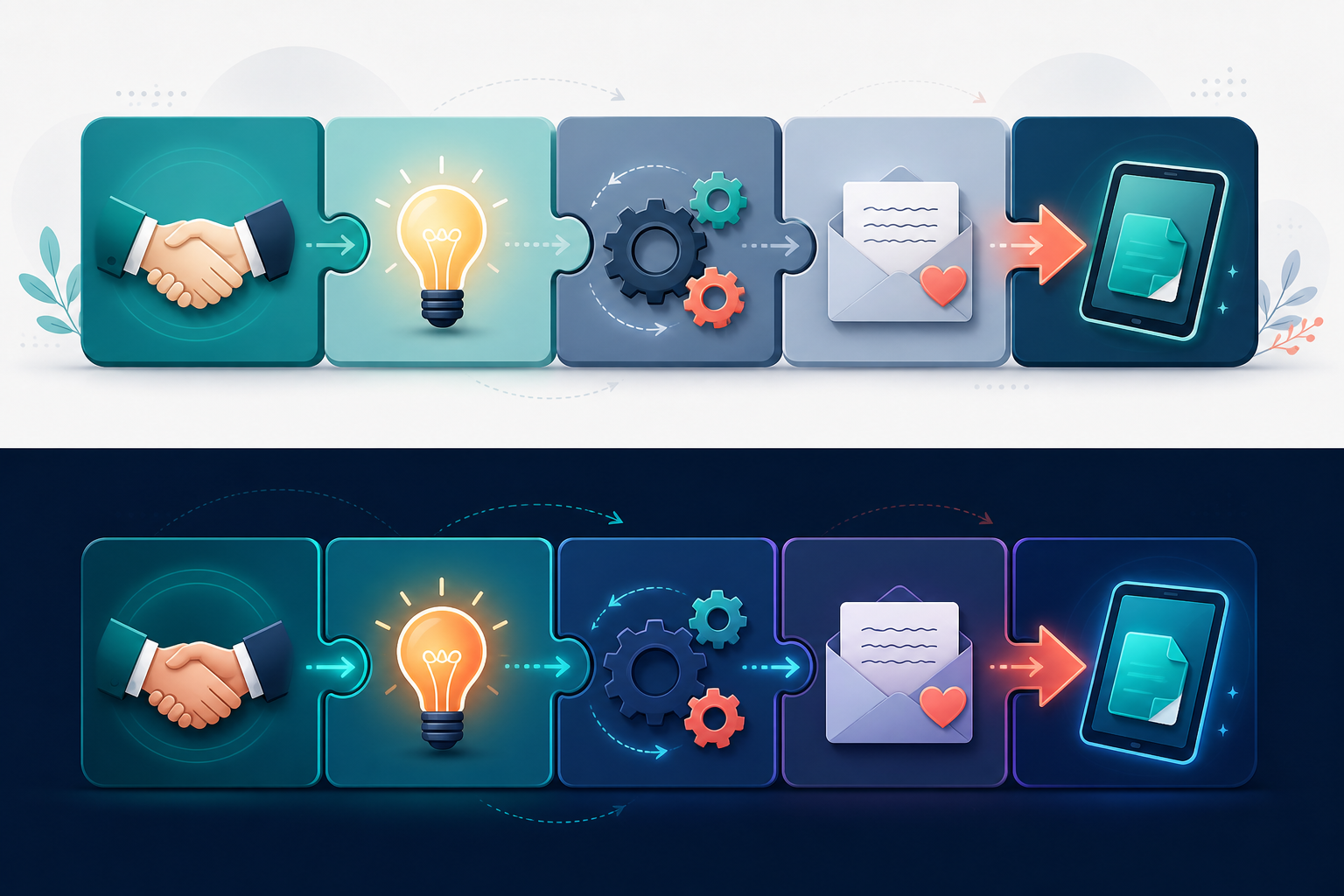
Here's the counterintuitive part: most of your affiliate commissions won't come from the welcome sequence itself. They'll come from what happens after it—the broadcast emails, the evergreen follow-up sequence, the re-engagement campaigns that most affiliates never build.
The welcome sequence's real job is to create a subscriber who trusts you enough to open your next email. That's the metric that matters. If your open rates on emails five through ten are higher than email one, your welcome sequence is working. If they drop off a cliff, something in the trust-building phase failed.
A 5-7 email welcome sequence is typically enough for most digital product affiliate offers. Beyond that, you're usually better served by transitioning to a regular broadcast cadence or a longer evergreen nurture sequence for high-ticket offers. Backend email monetization strategies for affiliate lists covers how to structure that longer-term monetization layer without burning your list.
Step 6 — Automation Setup That Doesn't Sabotage You
The technical side of welcome sequence automation trips people up more than the copy does. A few things I've seen break sequences repeatedly:
Tag-based triggering vs. list-based triggering. If you're on ConvertKit or ActiveCampaign, use tags to trigger sequences rather than list membership. It gives you more control and prevents subscribers from entering the same sequence twice if they opt in through a different lead magnet. On Systeme.io, the automation rules work slightly differently—map them out before you build, or you'll end up with subscribers receiving emails out of order.
Send-time optimization. Most platforms now offer this—use it. The difference between sending at 9am your time versus 9am the subscriber's time is measurable, especially across large lists. On ConvertKit specifically, the "send in subscriber's timezone" option is buried in the sequence settings. Find it.
Confirmation email vs. welcome email. If you're running double opt-in (which I'd recommend for traffic from native ad networks like Taboola or MGID, where list quality varies), your confirmation email is separate from email one of your sequence. Don't conflate them. The confirmation email should be plain-text, functional, and fast. Save the relationship-building for after they confirm.
For a comparison of platforms that handle affiliate funnel automation well, the ClickFunnels vs GoHighLevel breakdown for affiliate paid traffic is worth reading if you're deciding where to build.
Step 7 — Diagnosing What's Actually Broken in Your Current Sequence
Before you rebuild anything, run this diagnostic. Pull your sequence stats and answer these four questions:
- What's your email one open rate? Below 30% on a fresh list suggests a deliverability or subject line problem—not a content problem.
- Where does your open rate fall off fastest? A sharp drop between emails two and three usually means email two failed to create a reason to open email three. A drop after email four almost always means the pitch felt disconnected from what came before.
- What's your click-to-open rate on your pitch email? Below 8% usually means the offer isn't resonating with the audience segment—not that your copy is bad. The audience-offer fit might be wrong.
- Are subscribers who click converting at the vendor's stated conversion rate? If the offer converts at 3% for other affiliates but you're seeing 0.5%, the problem is pre-click expectation setting, not the offer itself.
That last one is important. Most affiliates blame the offer when the real issue is the mismatch between what the email promises and what the sales page delivers. Fix the transition, not the offer.
Practical Implementation Notes
When I've rebuilt welcome sequences for affiliate promotions—particularly in the health, business opportunity, and personal finance niches that dominate ClickBank and similar networks—a few patterns show up consistently.
The sequences that perform best tend to be shorter than people expect. Five emails over seven days outperforms seven emails over ten days in most of my testing, because the momentum of the relationship is higher when you're not leaving three-day gaps between touchpoints early on. After day seven, spacing out is fine. In the first week, stay present.
Plain-text emails consistently outperform HTML-designed emails in the welcome phase for affiliate offers. Not because design is bad—it's because heavily designed emails signal "newsletter" and welcome sequences need to feel like personal communication. Save the templates for your broadcast emails.
One thing that surprises people: the unsubscribe rate on email four (the soft pitch) is often your highest in the sequence. That's normal and healthy. The subscribers who leave at the first sign of a recommendation were never going to convert anyway. Don't optimize to reduce that unsubscribe rate—optimize to ensure the people who stay are more qualified.
Finally, on deliverability: if you're driving paid traffic (especially from native networks) into your welcome sequence, warm your sending domain before scaling. Sending 500 emails a day to a cold domain will tank your inbox placement within two weeks. Start at 50-100 per day, increase by 20-30% weekly, and monitor your spam placement rates with a tool like GlockApps or MailReach before you scale spend.
Troubleshooting the Most Common Failures
Low open rates across the whole sequence: Check your sender name first. "[email protected]" or a brand name nobody recognizes will kill opens. Use a real person's name. Then check your subject lines—are they curiosity-driven or descriptive? Descriptive subject lines ("Welcome to the list + your free guide") have their place in email one, but after that, curiosity wins.
Good opens, terrible clicks: The CTA is either buried, unclear, or there are too many of them. One link per email in a welcome sequence. One. If you're linking to your blog post AND the affiliate offer AND your social profile, you're splitting attention and getting none of it.
Clicks but no conversions: This is a bridge page or pre-sell problem more than an email problem. If you're sending traffic directly to a vendor sales page without any intermediate context, you're leaving conversion rate on the table. A simple bridge page—even a 300-word blog post that pre-frames the offer—can double your effective conversion rate on cold traffic.
High unsubscribes early: Usually a lead magnet mismatch. If your lead magnet promised one thing and your email sequence is about something adjacent, the subscriber feels misled even if you didn't intend it. Audit the promise-to-sequence alignment before anything else.
Your 10-Minute Action Plan Right Now
Stop optimizing the sequence you have. Do this instead:
- Minutes 1-2: Pull your sequence stats. Write down open rates for each email and where the sharpest drop-off occurs. That's your problem email.
- Minutes 3-4: Read your problem email out loud. If it sounds like a brochure or a pitch, rewrite the opening two sentences to sound like you're talking to one specific person about one specific problem.
- Minutes 5-6: Check your email one send timing. Is it delayed? Remove the delay. Set it to send immediately on opt-in confirmation.
- Minutes 7-8: Find your pitch email. Count the number of links. If there's more than one, remove all but the primary affiliate CTA. Add one sentence above the CTA that tells the subscriber exactly what they'll see when they click.
- Minutes 9-10: Check your sender name. If it's a brand name or a generic address, change it to a first name (or first + last). Then schedule a review of your sequence open rates in 14 days to measure the impact of these changes.
That's it. Ten minutes. Not a full rebuild—a targeted intervention on the highest-leverage points. Do that first. Then come back and refine the rest.
The sequences that work aren't complicated. They're just built in the right order, with the right priorities, by someone who actually understands what a new subscriber needs before they're ready to buy. Get that right, and the commissions follow.
This article contains affiliate links. We may earn a commission at no extra cost to you. Full disclosure.
Editorial Team
Senior Digital Marketing Strategist
The Prophet Visionary editorial team covers affiliate marketing, paid traffic, funnels, and digital product strategy with hands-on practitioner experience.
Learn more about our editorial team →Your List Is Only as Good as Your Email Platform
AWeber has 25+ years of inbox deliverability, drag-and-drop automation, and AI-powered copywriting built in. Free plan for up to 500 subscribers.
See Why Affiliates Use AWeberThis page contains affiliate links — I may earn a commission at no extra cost to you.
Disclaimer: The information on this site is for educational purposes only and does not constitute financial, legal, or business advice. Results vary based on individual effort, market conditions, and other factors. Always do your own due diligence before making business or investment decisions.