Backend Email Monetization: What Actually Works for Affiliate Lists
What Fails First (And Why Most Affiliate Email Lists Are Basically Dead Weight)
Here's something nobody in the affiliate space wants to say out loud: most email lists don't make money after the initial conversion. They collect subscribers, fire off a welcome sequence, maybe land one or two affiliate commissions in the first 30 days—then flatline. The list just sits there, costing you ESP fees every month while producing diminishing returns.
I've seen this pattern repeat across niches. Health and wellness lists. Make-money-online lists. Personal finance. The story is almost always the same: aggressive front-end acquisition, a 3-email welcome sequence that burns through the best offers immediately, then a slow bleed of unsubscribes and inbox placement decay.
The failure mode isn't the list itself. It's the strategy—or rather, the total absence of one for what happens after the opt-in.
What most people get wrong is treating email like a broadcast channel instead of a relationship asset. They send offers. Subscribers buy or they don't. Rinse and repeat until open rates crater. That's not backend monetization—that's just hammering a list until it breaks.
So before we get into what actually works, let's be clear about what consistently doesn't:
- Daily promotional blasts with no segmentation — Destroys deliverability fast. Gmail's promotions tab becomes your permanent address.
- Promoting every ClickBank offer with a pulse — Subscribers learn quickly that your recommendations are random, not curated. Trust evaporates.
- Single-sequence-and-done architecture — If your automation ends after 7 emails, you're leaving months of monetization potential completely untouched.
- No re-engagement strategy — Cold subscribers who haven't opened in 90+ days drag your sender reputation down, but most operators just ignore them.

The Real Architecture of Backend Email Monetization
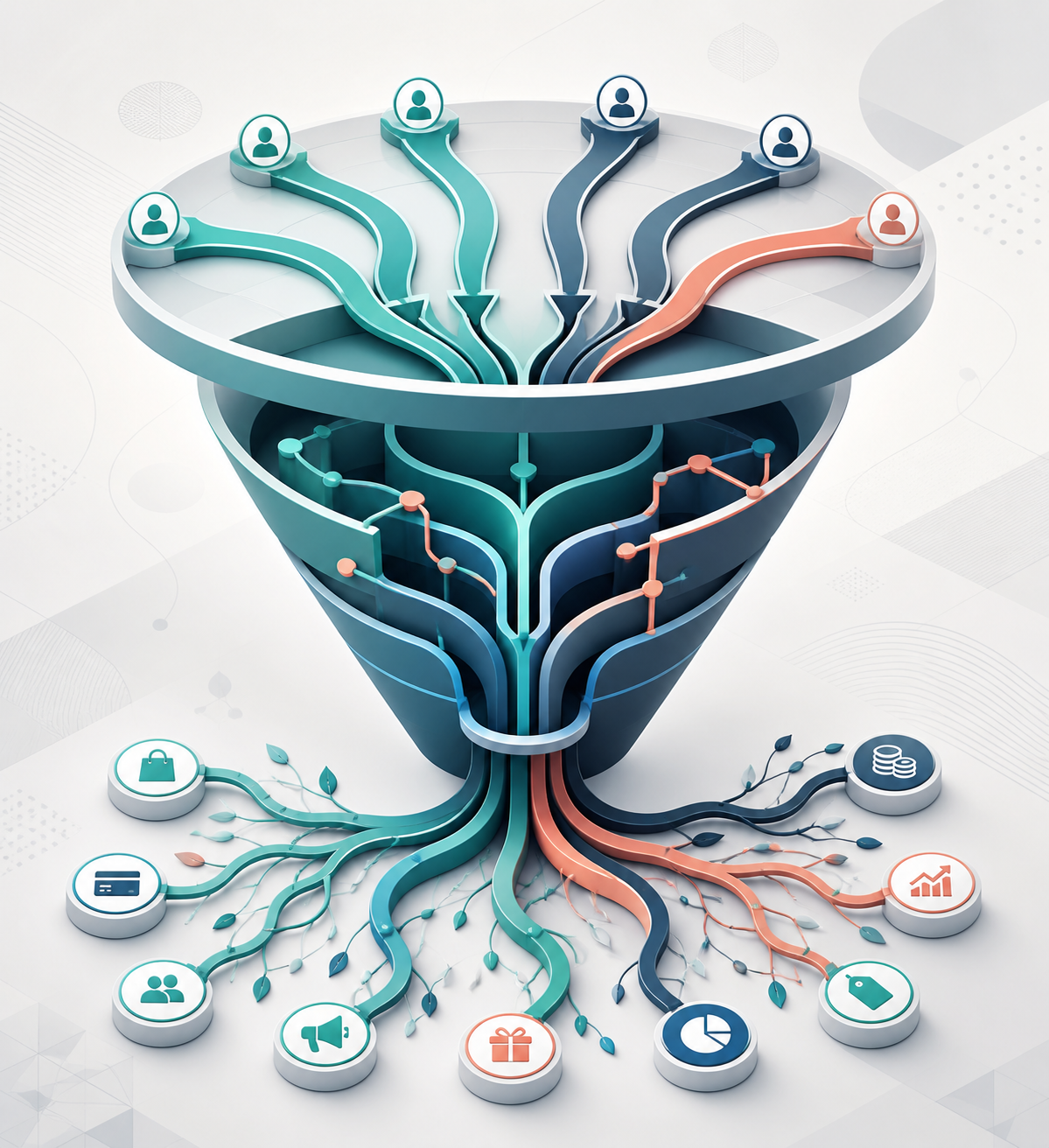
Backend monetization isn't a tactic. It's a system. And systems require intentional design across three layers: segmentation infrastructure, offer sequencing, and monetization diversification.
Layer 1: Segmentation Infrastructure
You cannot monetize a list you don't understand. This sounds obvious, but the execution is where most affiliates skip steps.
The baseline: tag subscribers based on behavior, not just acquisition source. In ConvertKit (now Kit) or ActiveCampaign, this means setting up link triggers so that when someone clicks a link about, say, email marketing tools, they get tagged accordingly—and routed into a relevant nurture sequence. Systeme.io does this reasonably well at a much lower price point if you're budget-conscious, though its tagging logic is less granular.
Behavioral segmentation unlocks something that broadcast-only operators never access: intent-based monetization. A subscriber who clicked three links about recurring revenue programs is a completely different monetization target than someone who only opened your free content emails. Treating them the same is money left on the table.
For a practical starting point, I'd recommend building at minimum four behavioral segments: buyers, active clickers (non-buyers), passive openers, and cold subscribers. Each segment needs a different monetization approach and a different email cadence.
Layer 2: Offer Sequencing That Doesn't Cannibalize Itself
The counterintuitive part of backend email monetization is that more offers doesn't mean more revenue. In fact, the most profitable email lists I've observed tend to promote fewer offers—but promote them more strategically.
Here's a framework that holds up: lead with value content (tutorials, case studies, honest reviews), then introduce an offer contextually. Not as an interruption. As a natural continuation of the conversation. If you just wrote three emails about why list segmentation matters, the fourth email promoting an ActiveCampaign trial or a course on email architecture isn't a pitch—it's a recommendation that follows logically.
Offer sequencing also means thinking about price points across time. Low-ticket offers early in the sequence (a $27-$47 tool or mini-course) establish buying behavior. Mid-ticket promotions ($97-$297) come after trust is established. High-ticket offers—coaching programs, premium software suites, anything north of $500—should only hit subscribers who've already demonstrated engagement and purchase intent.
This is where recurring commission affiliate programs become genuinely powerful as backend assets. A single subscriber converting to a $99/month SaaS tool you earn 30% on is worth dramatically more over 12 months than a one-time $100 commission. Building recurring offers into your mid-to-late sequence is one of the highest-leverage moves in affiliate email monetization.
Layer 3: Monetization Diversification
Most affiliate email operators are leaving significant revenue on the floor by relying exclusively on direct affiliate promotions. The list is an asset—and assets can generate income in multiple ways simultaneously.
Consider what a well-segmented list of 10,000 engaged subscribers in the digital marketing niche can actually support:
- Direct affiliate promotions — The obvious one. But even here, promoting tools like Systeme.io, ConvertKit, or clickfunnels through affiliate links inside contextual content beats raw promotional blasts.
- Newsletter ad placements — Platforms like Beehiiv's Boosts program or direct ad sales to relevant vendors. A 10K list with 35%+ open rates can command $150-$400 per dedicated placement depending on niche.
- Paid content partnerships — Sponsored deep-dive reviews or tutorials. This works particularly well in the tools and tech stack space where vendors actively seek editorial coverage.
- Your own offers — Even a simple $37 swipe file or template pack promoted to your list costs you nothing in commissions and builds an actual customer base you own.
- List rental or co-registration deals — More advanced, and requires careful vetting, but legitimate in certain niches.
The honest truth is that diversification protects you when one revenue stream dries up. ClickBank offer pulled? Affiliate program shuts down? If your entire backend depends on one promotional relationship, that's a business risk, not just an inconvenience.
Tool Breakdown: What the Tech Stack Actually Needs to Support
This is a high-intent tool review, so let me be direct about what the platform choices actually mean for backend monetization capability.
ActiveCampaign
Best for: Complex automation, deep behavioral tagging, serious segmentation work.
Pros: Genuinely powerful automation builder. Conditional logic that actually works. CRM integration that makes sense for affiliate operators managing multiple relationship tracks. Deliverability is solid when you're not abusing it.
Cons: Pricing scales aggressively. At 10K contacts you're looking at $139-$174/month on the Plus plan. The interface has a learning curve that's steeper than their marketing suggests. And their affiliate program (for promoting AC itself) has tightened terms in recent years.
Honest assessment: If backend monetization complexity is your priority—multiple sequences, deep segmentation, behavioral triggers—ActiveCampaign is worth the price. If you're under 5K subscribers, it's overkill.
ConvertKit / Kit
Best for: Creator-focused affiliate marketers, newsletter operators, anyone who values deliverability and simplicity over raw automation depth.
Pros: Excellent deliverability reputation. Tag-based subscriber management is intuitive. The commerce features (for selling your own products) are underrated. Solid Beehiiv-adjacent features now with their newsletter tooling.
Cons: Automation logic is more limited than ActiveCampaign. No native CRM. At 10K subscribers, you're at $100/month on Creator Pro. The visual automation builder is cleaner but less powerful.
Honest assessment: My go-to recommendation for affiliate operators who want reliable deliverability and a clean interface without enterprise-level complexity. The trade-off is ceiling on automation sophistication. For deeper dives into what this platform actually costs at scale, this breakdown of email sequence tools and real costs is worth your time.
Systeme.io
Best for: Budget-conscious operators who want an all-in-one solution without stitching together five tools.
Pros: Free plan includes up to 2,000 contacts and unlimited emails—genuinely useful for early-stage list building. Funnel builder, membership site, affiliate management, and email automation all in one platform. Pricing stays reasonable at scale compared to ActiveCampaign.
Cons: Automation depth is noticeably shallower. Tagging and segmentation logic works, but you'll hit walls that ConvertKit or ActiveCampaign wouldn't create. Deliverability is adequate but not exceptional—something to monitor actively.
Honest assessment: Systeme.io is a legitimate option for operators who are building the machine from scratch and need to keep overhead low. Don't expect it to replace a dedicated ESP once you're serious about segmentation complexity.
Beehiiv
Worth a specific mention for newsletter-centric affiliate operators. The ad network built into Beehiiv—where you can monetize your newsletter through their partner marketplace—is a legitimate backend revenue layer that most traditional ESPs can't replicate. If your affiliate list is structured as a newsletter property, the real monetization numbers from Beehiiv are worth reviewing before committing to a platform.
Practical Implementation Notes
These are observations from actually building and managing affiliate email sequences—not theoretical frameworks.
The 90-day rule: Any subscriber who hasn't opened or clicked in 90 days needs to enter a re-engagement sequence immediately, not stay in your main broadcast list. A 5-email re-engagement flow (subject lines that are curiosity-driven, not promotional) typically recovers 8-15% of cold subscribers. The rest should be sunset. Keeping dead weight hurts your sender score and your ESP bills.
Broadcast vs. automation ratio: In my experience, the most profitable affiliate lists run roughly 60% automated sequences and 40% broadcast sends. Pure broadcast operators are at the mercy of their sending schedule. Pure automation operators miss the real-time relevance that broadcast allows. The hybrid approach captures both.
Promotion frequency reality check: Three to four promotional emails per week is the ceiling for most niches before open rates start declining meaningfully. Two to three is the sustainable sweet spot for lists that are also getting value content. This isn't a rule—it's an observation. Test your own list, but don't ignore the signal when open rates drop below 20%.
The pitch-to-value ratio: For every direct promotional email, send at least two value-first emails. This isn't altruism—it's list maintenance. Subscribers who feel consistently educated or entertained tolerate promotional content far better than subscribers who feel like they're on a pitch list.
Deliverability as a monetization lever: This one gets underestimated. A list with 35% open rates earns dramatically more than the same list at 18% open rates—not just proportionally, but because higher engagement improves inbox placement, which further increases opens, which compounds. Deliverability work (authentication setup, list hygiene, sending patterns) is backend monetization work. They're not separate disciplines.
If you're building your email strategy alongside a broader funnel architecture, the mechanics of email versus paid ads for sustained ROI is a comparison worth running through before you decide where to allocate time and budget.
Pricing Reality Check
| Platform | 10K Contacts / Month | Automation Depth | Best Use Case |
|---|---|---|---|
| ActiveCampaign Plus | ~$149-$174 | High | Complex segmentation, serious operators |
| ConvertKit Creator Pro | ~$100 | Medium | Newsletter affiliates, deliverability priority |
| Systeme.io Unlimited | $97 flat | Low-Medium | All-in-one, budget-conscious builders |
| Beehiiv Scale | ~$99 | Low | Newsletter monetization, ad network access |
| Klaviyo (ecomm-adjacent) | ~$150 | High | Product-adjacent affiliate niches |
These prices shift. Verify current pricing directly on each platform before committing.

The Measured Verdict
Backend email monetization for affiliate lists isn't complicated in theory. Execute it poorly in practice and you'll spend money on ESP fees while watching your list slowly die. Execute it well and you have a compounding asset that generates revenue from subscribers who opted in months or even years ago.
The honest assessment: most affiliate operators are at maybe 20-30% of their email list's actual monetization potential. The gap isn't usually the offer selection or the copy—it's the absence of intentional backend architecture. No segmentation. No behavioral triggers. No diversified revenue streams. Just broadcasting until the list burns out.
The fix isn't buying a better ESP. It's building a real system. Segmentation that routes subscribers based on behavior. Offer sequences that respect the buyer journey. Multiple monetization layers so one program shutting down doesn't crater your revenue. And consistent list hygiene so the asset actually stays healthy.
Pick the platform that matches your current complexity needs—not the one with the most features you'll never use. Systeme.io if you're starting out and need to keep costs tight. ConvertKit if deliverability and clean UX matter most. ActiveCampaign if you're ready to build genuinely sophisticated automation logic and the budget supports it.
The list you already have is probably worth more than you're extracting from it. The question is whether you're willing to do the architecture work to find out.
This article contains affiliate links. We may earn a commission at no extra cost to you. Full disclosure.
Editorial Team
Senior Digital Marketing Strategist
The Prophet Visionary editorial team covers affiliate marketing, paid traffic, funnels, and digital product strategy with hands-on practitioner experience.
Learn more about our editorial team →Tired of Paying for 5 Tools That Don't Talk to Each Other?
Systeme.io replaces your funnel builder, email tool, course platform, and affiliate manager — one login, one bill, zero integration headaches. Free plan available.
See the All-in-One PlatformThis page contains affiliate links — I may earn a commission at no extra cost to you.
Disclaimer: The information on this site is for educational purposes only and does not constitute financial, legal, or business advice. Results vary based on individual effort, market conditions, and other factors. Always do your own due diligence before making business or investment decisions.