Beehiiv Review: Real Affiliate Newsletter Monetization Test 2026
I've been testing Beehiiv for affiliate newsletter monetization for the past eight months, and the results have been... interesting. Not groundbreaking, but definitely worth discussing.
Most affiliate marketers still think newsletters are just glorified email sequences. They're missing the bigger picture—newsletters have become content platforms with built-in audience development and multiple revenue streams. Beehiiv positions itself as the "newsletter platform for growth," but does it actually deliver for affiliate campaigns?
Here's what I've discovered after running three different affiliate newsletters on their platform, testing everything from their referral system to ad network integrations.
Who Beehiiv Actually Serves (And Who It Doesn't)
Beehiiv works best for affiliate marketers who want to build authority-based newsletters around specific niches. Think finance newsletters promoting trading courses, health newsletters pushing supplement offers, or business newsletters monetizing with SaaS affiliate programs.
It's not designed for quick-hit affiliate campaigns or those "make money online" newsletters that cycle through random ClickBank offers weekly. The platform's strength lies in audience building and retention—which means you need to think long-term.
I've found it particularly effective for:
- Content creators transitioning from blogs to newsletters
- Affiliates promoting high-ticket recurring offers ($100+ monthly commissions)
- Marketers who want to build email lists while monetizing immediately
- Anyone serious about newsletter SEO and discoverability
The counterintuitive part? Beehiiv works better for newer affiliate marketers than you'd expect. Their growth tools can compensate for lack of existing audience—something ConvertKit or Mailchimp don't really address.
Core Affiliate Monetization Features
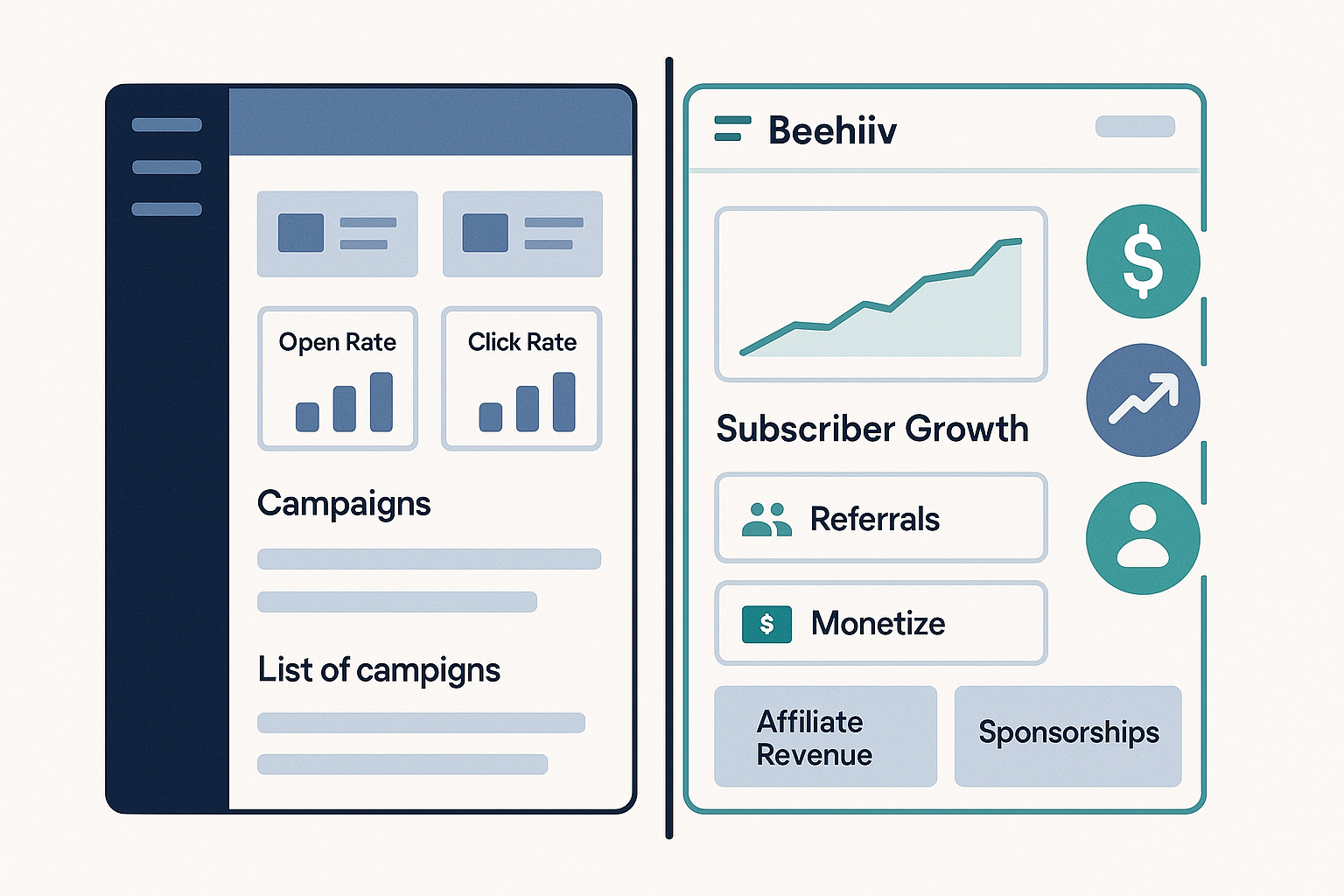
Beehiiv's monetization approach differs significantly from traditional email service providers. Instead of just sending emails, you're publishing newsletter issues that can be discovered, shared, and monetized in multiple ways.
Native Ad Network Integration
Their biggest differentiator is the built-in ad network. Once you hit 2,500+ subscribers, you can apply to serve ads directly in your newsletter issues. I'm seeing $2-8 CPM rates depending on niche and engagement.
But here's the thing—this actually complements affiliate marketing rather than competing with it. You can run sponsored ads in your header while promoting your own affiliate offers in the main content. Double monetization on every send.
Referral Program Builder
Every Beehiiv newsletter gets an automatic referral system. Subscribers can share your newsletter and unlock rewards based on how many people they bring in. I've used this to promote affiliate products as rewards—subscribers refer 5 people, they get my affiliate bonus package.
The tracking is solid. Better than most affiliate networks, honestly.
Newsletter Website & SEO
Each newsletter gets its own website with all your issues archived and indexed. This is huge for affiliate SEO. Your newsletter content becomes discoverable through search, creating additional traffic sources for your affiliate offers.
I've seen individual newsletter issues ranking for long-tail keywords and driving organic traffic months after publication. That doesn't happen with traditional email campaigns.
Detailed Pros for Affiliate Marketers
1. Built-in Growth Mechanics
The referral system and recommendation engine help newsletters grow organically. I've seen 15-20% monthly growth rates without paid advertising, purely through their built-in viral mechanics.
2. Multiple Revenue Streams
You're not limited to affiliate commissions. Ad revenue, premium subscriptions, and referral rewards create multiple income sources from the same audience. Monetization stacking becomes natural rather than forced.
3. Professional Presentation
Beehiiv newsletters look like real publications, not promotional emails. This builds trust and authority—crucial for promoting high-ticket affiliate offers. Subscribers treat your content like media rather than marketing.
4. Advanced Analytics
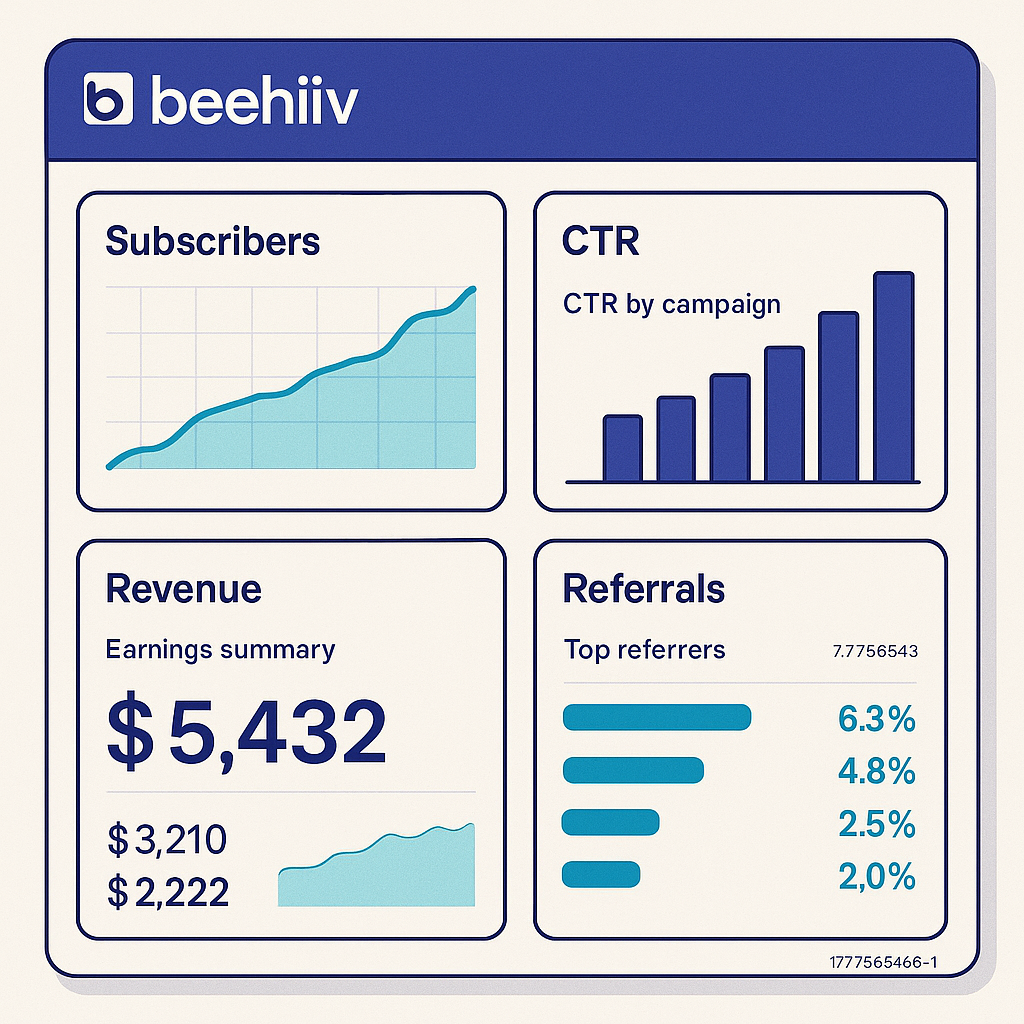
Open rates, click rates, referral tracking, revenue per subscriber—everything you need to optimize affiliate campaigns. The cohort analysis helps identify which content types drive the best affiliate conversions.
5. Easy A/B Testing
Subject lines, send times, content variations—all testable without complex setups. I regularly test different affiliate offer presentations and track performance differences.
6. Deliverability Focus
Their infrastructure prioritizes inbox delivery. I'm consistently seeing 45-55% open rates, significantly higher than my previous ESP. Better deliverability means more affiliate clicks.
7. Content Repurposing
Newsletter issues automatically become blog posts, social media content, and SEO assets. One piece of affiliate content works across multiple channels.
The Honest Drawbacks
1. Limited Email Automation
Beehiiv focuses on newsletter publishing, not complex email sequences. If your affiliate strategy relies heavily on automated funnels and behavioral triggers, you'll find it limiting. No advanced segmentation based on affiliate link clicks or purchase behavior.
2. Higher Cost at Scale
Once you pass 10,000 subscribers, pricing jumps significantly. At 50,000+ subscribers, you're paying more than most traditional ESPs. The additional features justify it, but it's still a consideration for high-volume affiliate marketers.
3. Learning Curve for Email Marketers
If you're used to Mailchimp or ConvertKit's approach, Beehiiv feels different. The newsletter-first mindset requires rethinking your content strategy and affiliate promotion tactics.
4. Ad Network Requirements
The built-in monetization requires 2,500+ engaged subscribers. New affiliate marketers can't access this revenue stream immediately, making the platform less attractive for beginners.
5. Limited Integration Options
Fewer third-party integrations compared to established ESPs. If your affiliate workflow depends on specific tools or platforms, check compatibility first.
Pricing Breakdown for Affiliates
Beehiiv's pricing is straightforward but scales quickly:
| Plan | Subscribers | Monthly Cost | Key Features |
|---|---|---|---|
| Launch | 0-2,500 | Free | Basic newsletter, website, analytics |
| Grow | 0-10,000 | $39 | Custom domains, advanced analytics, A/B testing |
| Scale | 0-100,000 | $99 | Ad network, premium subscriptions, priority support |
The free plan works for testing affiliate newsletter concepts. Most serious affiliate marketers will need the Grow plan for proper branding and analytics. The Scale plan becomes worthwhile once ad revenue kicks in.
Compared to ConvertKit ($29-79) or Mailchimp ($20-350), Beehiiv sits in the middle but offers unique monetization features that justify the cost.
Top Alternatives for Affiliate Newsletters
ConvertKit
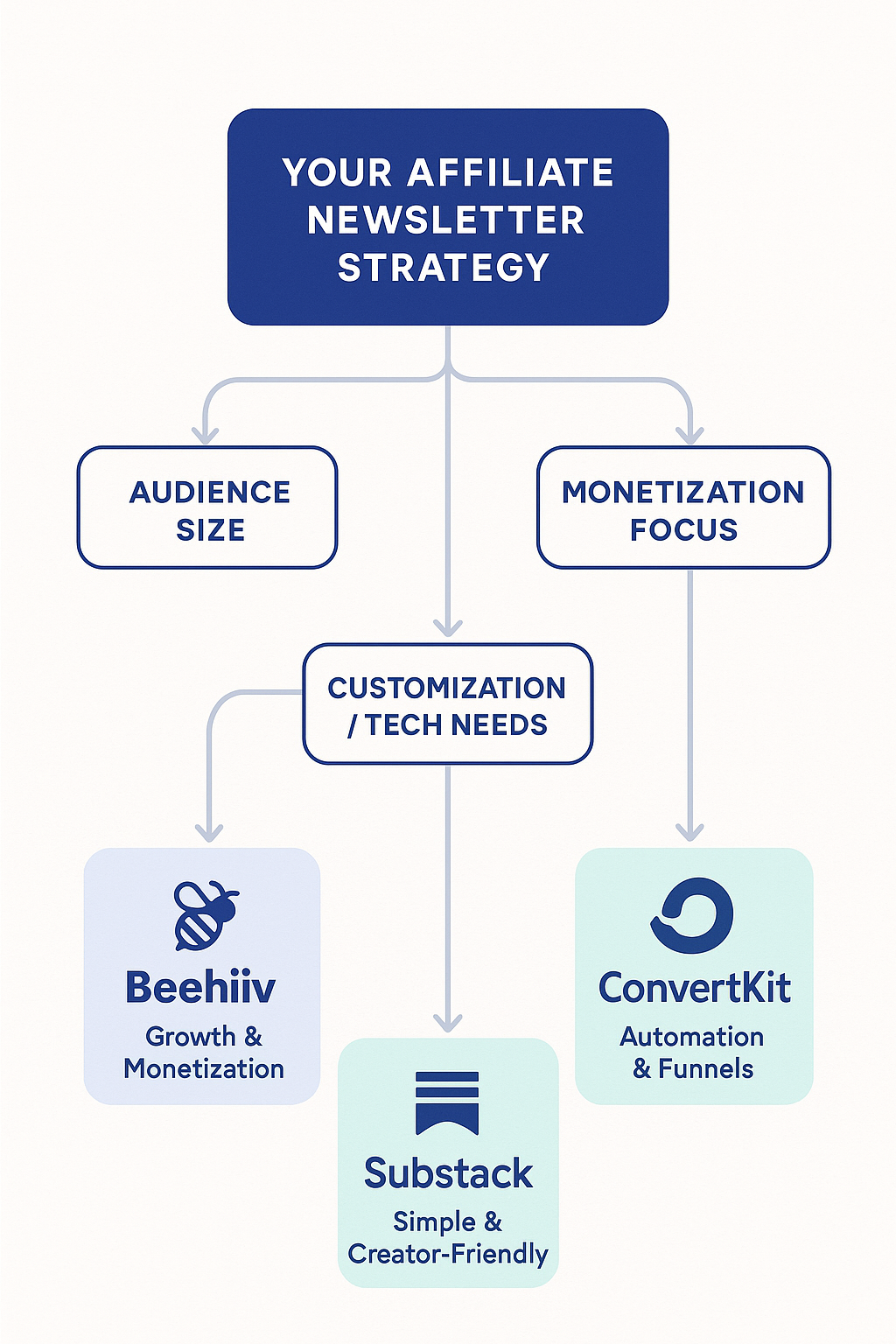
Better for complex affiliate funnels and automation sequences. Stronger integration ecosystem. Less focus on newsletter growth mechanics. Choose ConvertKit if your affiliate strategy relies heavily on behavioral triggers and segmentation.
Substack
Easier to start, built-in audience discovery, strong SEO benefits. Limited customization and monetization options. Good for content-heavy affiliate strategies but lacks advanced marketing features.
Ghost
More control, better SEO, flexible design options. Requires more technical setup. Best for affiliate marketers who want complete control over their newsletter platform and don't mind managing hosting.
Real-World Implementation Notes
After running multiple affiliate newsletters on Beehiiv, here are the tactical insights that actually matter:
Content Strategy That Works
The 70/20/10 rule works well: 70% valuable content, 20% soft affiliate mentions, 10% direct promotions. Beehiiv's format encourages this balance naturally since subscribers expect newsletter-style content rather than sales emails.
I structure each issue with: news/updates, main content piece (often containing affiliate mentions), quick tips section (good for product recommendations), and a clear call-to-action for one primary affiliate offer.
Growth Optimization
The referral system performs best when rewards are valuable but not overwhelming. I offer affiliate bonuses, exclusive content, or early access rather than cash rewards. Subscribers refer more people for exclusive value than monetary incentives.
Cross-promotion with other Beehiiv newsletters in similar niches has been surprisingly effective. The platform makes these partnerships easy to track and manage.
Monetization Mixing
Running both affiliate offers and Beehiiv's ad network requires careful balance. I place ads in the header/footer and keep affiliate content in the main body. This prevents competing messages and maximizes both revenue streams.
The key insight: treat ad revenue as bonus income while focusing affiliate strategy on the main content. Don't let ad placement interfere with your primary affiliate promotions.
Analytics and Optimization
Beehiiv's analytics help identify which content types drive affiliate clicks, but you still need external tracking for conversion data. I use UTM parameters extensively and maintain a separate spreadsheet tracking affiliate performance by newsletter issue.
The subscriber cohort data is particularly useful for understanding which acquisition sources produce the best affiliate customers. Referral-acquired subscribers typically have higher lifetime value and affiliate conversion rates.
The Bottom Line
Beehiiv excels for affiliate marketers who think beyond email blasts. If you want to build a sustainable, authority-based newsletter that monetizes through multiple channels, it's genuinely useful.
The platform works best for patient marketers focused on audience building rather than quick affiliate wins. The built-in growth tools and professional presentation help establish credibility—crucial for promoting high-value affiliate offers.
But it's not magic. You still need good content, strategic affiliate selection, and consistent publishing. Beehiiv provides better tools for newsletter-based affiliate marketing, but it won't fix fundamental strategy problems.
Worth testing if you're serious about newsletter monetization and want tools specifically designed for growth. Skip it if you need complex automation or prefer traditional email marketing approaches.
Visit Beehiiv to explore their features and current pricing.
This article contains affiliate links. We may earn a commission at no extra cost to you. Full disclosure.
Editorial Team
Senior Digital Marketing Strategist
The Prophet Visionary editorial team covers affiliate marketing, paid traffic, funnels, and digital product strategy with hands-on practitioner experience.
Learn more about our editorial team →Need One Platform to Run Your Entire Affiliate Business?
Funnels, email sequences, course hosting, affiliate management — Systeme.io replaces your entire tool stack at a fraction of the cost. Free plan included.
See How Systeme.io WorksThis page contains affiliate links — I may earn a commission at no extra cost to you.
Disclaimer: The information on this site is for educational purposes only and does not constitute financial, legal, or business advice. Results vary based on individual effort, market conditions, and other factors. Always do your own due diligence before making business or investment decisions.