Monetization Stacking: How to Combine Affiliate Offers with Products
Most affiliate marketers think they have to choose: promote other people's products or create their own. That's backwards thinking that leaves serious money on the table.
I've found that the most profitable affiliates don't pick sides—they stack monetization methods. They promote affiliate offers while simultaneously building and selling their own products. The key is understanding how these revenue streams complement rather than compete with each other.
What most people get wrong is assuming their audience will only buy one thing. In reality, different products serve different needs at different times. Your job is mapping those needs to the right offers.
The Monetization Stack Framework
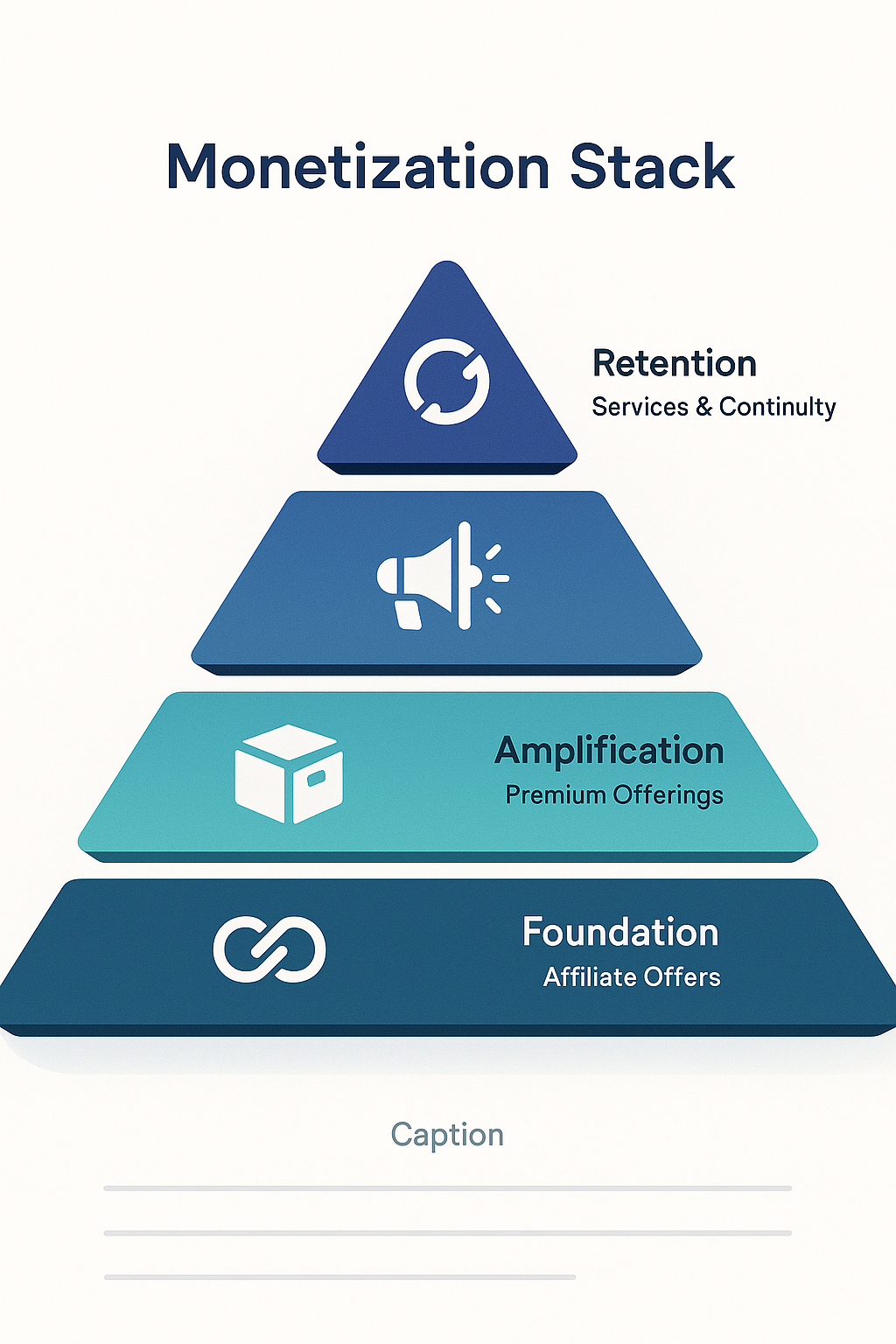
Think of monetization stacking like building a revenue pyramid. Your affiliate offers form the base—they're easier to implement and start generating income quickly. Your own products sit at the top, offering higher margins but requiring more investment.
The middle layer? That's where the magic happens. This is where you create simple, complementary products that enhance the affiliate offers you're already promoting.
Here's how I structure it:
- Foundation: High-converting affiliate offers in your niche
- Enhancement: Your own bonus products, templates, or guides
- Amplification: Premium courses or coaching that expand on affiliate topics
- Retention: Recurring services or memberships
The counterintuitive part is that your own products often increase affiliate sales rather than cannibalize them. When you demonstrate expertise through your own content, people trust your affiliate recommendations more.
Strategic Product Positioning
Don't compete with your affiliate offers. Complement them.
If you're promoting a $997 trading course through clickbank, don't create your own $997 trading course. Instead, create a $47 "Pre-Trading Checklist" or a $197 "Post-Course Implementation Guide." You're filling gaps, not duplicating.
I've seen affiliates successfully stack monetization by positioning their products as:
Pre-purchase education: Help people understand if they're ready for the affiliate offer. A "Is Real Estate Investing Right for You?" assessment before promoting property courses.
Implementation support: The affiliate course teaches strategy; your product handles tactics. Think templates, checklists, or done-for-you materials.
Advanced applications: Your affiliate offer gets people started; your product takes them further. This works especially well in business and marketing niches.
The truth is, you're not stealing from your affiliate commissions—you're creating an ecosystem where everything sells better.
Revenue Stream Orchestration
Timing matters more than most people realize. You can't just throw affiliate links and product pitches at people randomly.
Here's the sequence that works:
Week 1-2: Pure value content that establishes expertise
Week 3: Introduce affiliate offer with genuine recommendation
Week 4: Present your complementary product as "what I use personally"
Week 5-6: Case studies showing both products in action
Week 7: Advanced strategy content leading to your premium offer
But here's the thing—this isn't a rigid formula. Some audiences respond better to immediate product introductions. Others need months of relationship building.
The key is watching your metrics. If affiliate conversions drop when you introduce your products, you're positioning wrong. If both revenue streams grow together, you've found the sweet spot.
Platform Integration Strategies
Your tech stack needs to support multiple revenue streams without creating confusion.
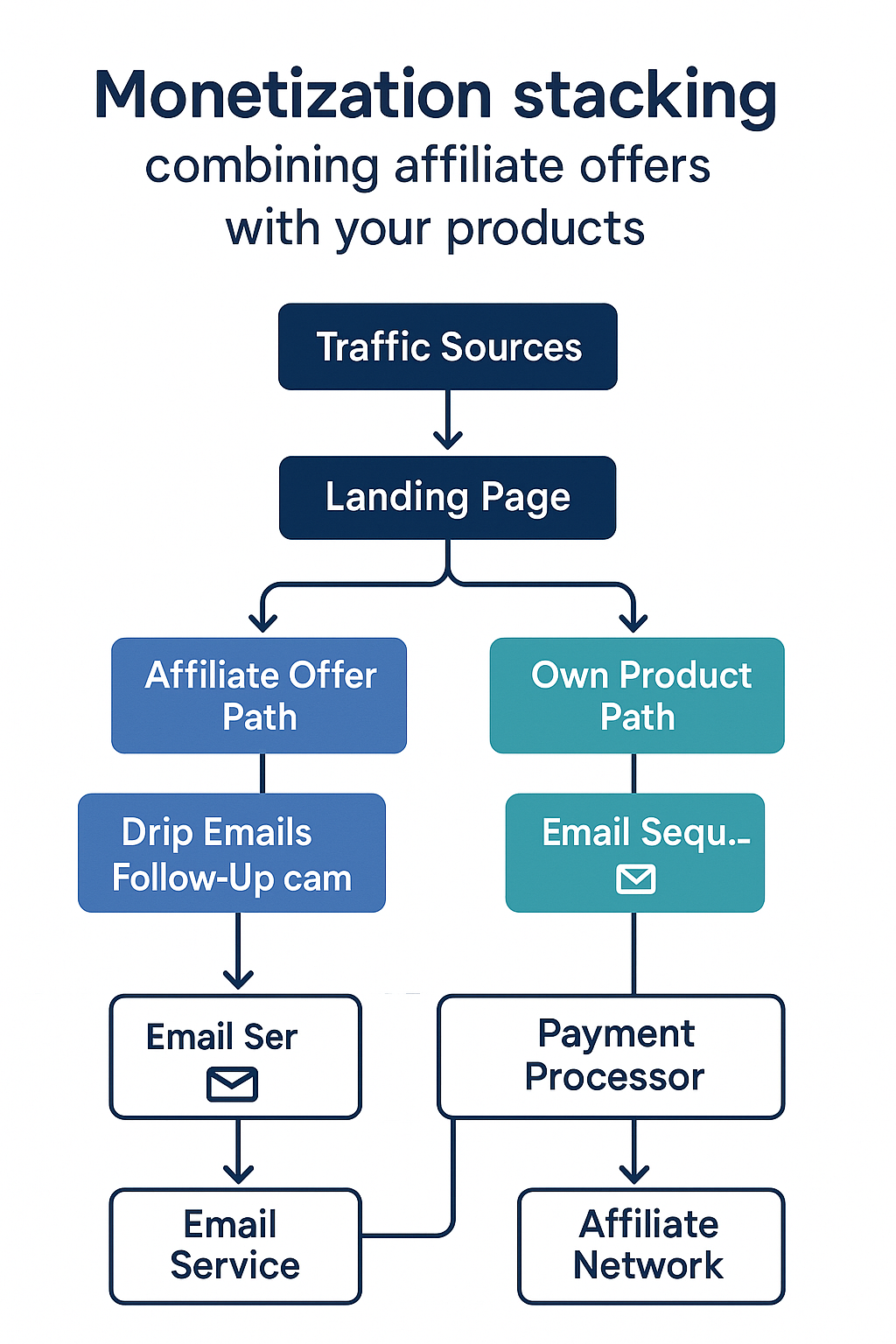
For email marketing, I recommend ConvertKit for its tagging and automation capabilities. You can segment subscribers based on what they've purchased and deliver relevant offers accordingly.
Someone who bought your $47 starter guide but didn't purchase the $997 affiliate course? Tag them for a middle-tier product sequence.
For product delivery, ThriveCart handles both affiliate link management and your own product sales. The unified dashboard makes tracking easier than juggling multiple platforms.
Payment processing gets tricky with mixed revenue streams. I use Stripe for my own products and track affiliate commissions separately. Don't try to run everything through one system—you'll create accounting headaches.
Avoiding Revenue Cannibalization
The biggest fear with monetization stacking is that your products will kill affiliate sales. It happens, but only when you position products as direct substitutes.
Smart positioning means different price points serve different commitment levels:
$27-47: Low-risk entry products that build trust
$97-197: Your mid-tier products for engaged subscribers
$497+: Affiliate offers for people ready to invest seriously
$997+: Your premium products for your most committed followers
Notice the gaps? That's intentional. You're not competing at every price point—you're creating a logical progression.
I've found that people who buy your smaller products are actually more likely to purchase high-ticket affiliate offers. You've proven you understand their problems and deliver solutions.
Content Strategy for Multiple Offers
Your content calendar needs to support both revenue streams without feeling schizophrenic.
The 60/30/10 rule works well:
- 60%: Pure value content (no pitches)
- 30%: Content that naturally leads to affiliate offers
- 10%: Content promoting your own products
But don't compartmentalize completely. Some of my best-performing content mentions both affiliate tools and my own products in the same piece. The key is natural integration based on what genuinely helps the reader.
Case studies work exceptionally well for stacked monetization. "How I Used [Affiliate Product] Plus My [Own Product] to Achieve [Result]" gives you permission to mention both without seeming pushy.
Email Sequence Architecture
Your email sequences need to acknowledge that subscribers might be at different buying stages.
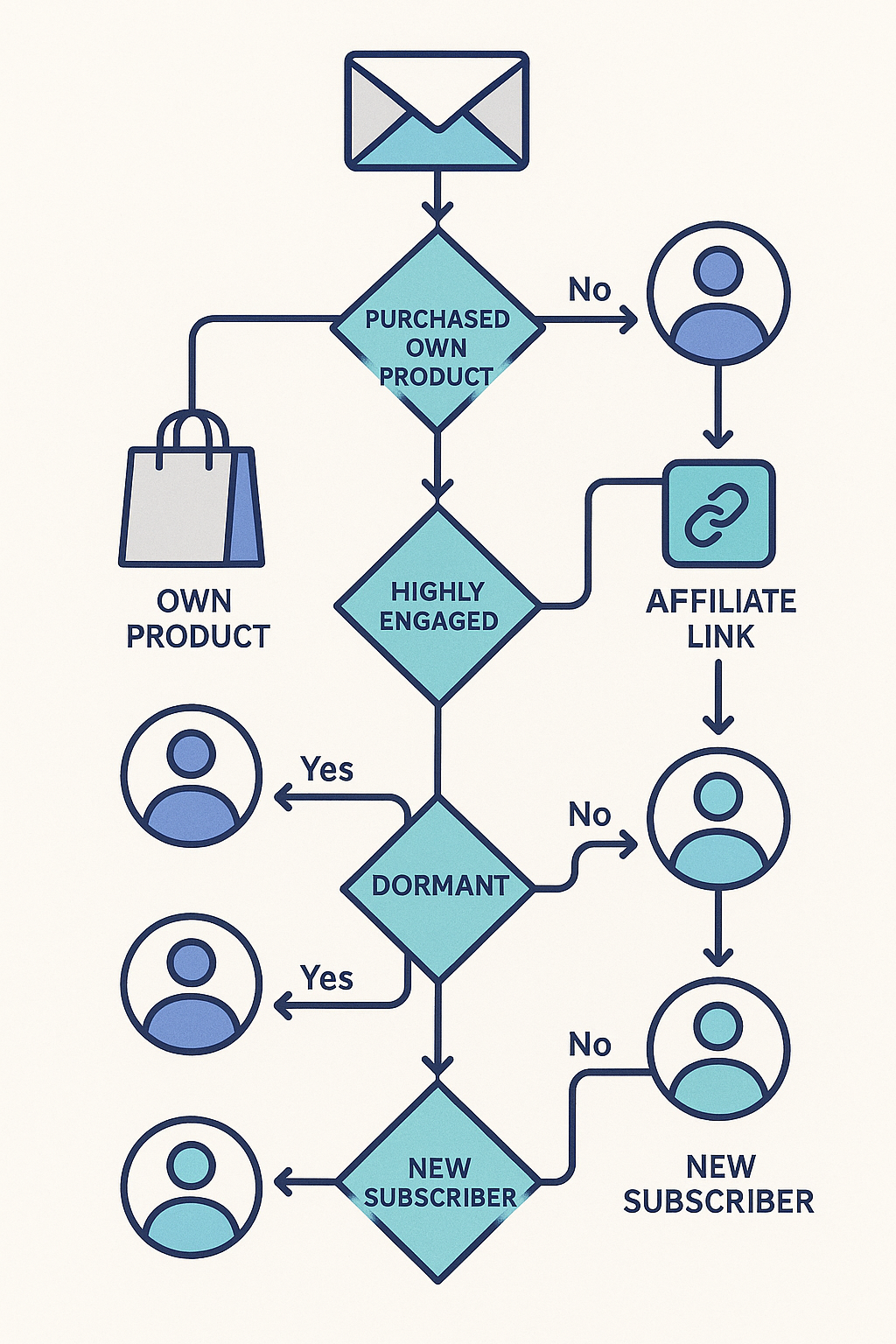
Instead of linear sequences that assume everyone starts from zero, create branching sequences based on purchase behavior:
New subscriber path: Value → Small product → Affiliate offer
Product customer path: Implementation tips → Advanced affiliate tools
Affiliate customer path: Advanced strategies → Your premium products
The goal is making each email feel personally relevant, not like broadcast spam.
Practical Implementation Notes
After running monetization stacks across multiple niches, here's what actually matters in practice:
Start with one strong affiliate offer. Don't try to stack everything at once. Get one affiliate revenue stream profitable, then add your first complementary product.
Track everything separately. Your GA4 setup needs to distinguish between affiliate and product revenue. Use different UTM parameters and conversion goals.
Price your products based on affiliate commissions. If you earn $200 commissions on affiliate sales, your competing products should be priced where you earn similar margins. Don't undercut yourself.
Test product introductions gradually. I add new products to 25% of my list first. If affiliate sales stay stable or increase, I roll out to everyone. If they drop, I adjust positioning.
Create obvious upgrade paths. Your $47 product should naturally lead people to want the $497 affiliate offer. Design the progression intentionally.
The biggest operational challenge is customer support. People will email you about affiliate products you don't control. Set clear boundaries about what support you provide versus directing them to the actual vendor.
Advanced Monetization Combinations
Once you master basic stacking, you can get creative with revenue stream combinations.
Affiliate product + your implementation service: Promote software through affiliate links, then offer setup/optimization services. The software company gets customers; you get service revenue.
Your course + affiliate tools: Create courses that require specific tools, then earn affiliate commissions when students purchase those tools. Just ensure the tools genuinely serve the curriculum.
Affiliate offers + your community: Use affiliate products to attract customers, then monetize through membership communities or coaching programs.
The most sophisticated operators create entire ecosystems where affiliate offers and owned products reinforce each other at multiple touchpoints.
Revenue Optimization Over Time
Monetization stacking isn't set-and-forget. The optimal mix changes as your audience grows and matures.
Early stage (0-1K subscribers): Focus heavily on affiliate offers while building your first simple product.
Growth stage (1K-10K subscribers): Balance affiliate and owned products, testing what resonates.
Maturity stage (10K+ subscribers): Owned products should generate 40-60% of revenue, with affiliate offers complementing rather than driving your business.
Your audience's sophistication increases over time. They'll want more advanced solutions, which creates opportunities for higher-priced products and more specialized affiliate offers.
I've found that successful monetization stacking requires constant optimization. What works in month one might fail in month twelve as your audience and market evolve.
The key is building systems that can adapt rather than rigid structures that break when circumstances change. Your revenue streams should be interconnected but not interdependent—if one fails, the others continue generating income while you fix or replace the broken component.
That's the real power of monetization stacking: resilience through diversification, amplified by strategic integration.
This article contains affiliate links. We may earn a commission at no extra cost to you. Full disclosure.
Editorial Team
Senior Digital Marketing Strategist
The Prophet Visionary editorial team covers affiliate marketing, paid traffic, funnels, and digital product strategy with hands-on practitioner experience.
Learn more about our editorial team →Need One Platform to Run Your Entire Affiliate Business?
Funnels, email sequences, course hosting, affiliate management — Systeme.io replaces your entire tool stack at a fraction of the cost. Free plan included.
See How Systeme.io WorksThis page contains affiliate links — I may earn a commission at no extra cost to you.
Disclaimer: The information on this site is for educational purposes only and does not constitute financial, legal, or business advice. Results vary based on individual effort, market conditions, and other factors. Always do your own due diligence before making business or investment decisions.