High-Ticket Offer Stacking: Maximize Revenue Per Subscriber
The Outcome You're Actually Chasing
Most affiliate marketers obsess over list size. Wrong metric. The number that actually determines whether your business survives—or scales—is revenue per subscriber (RPS). Specifically, your 30-day and 90-day RPS after someone joins your list.
Here's what good looks like: a well-structured high-ticket offer stack can realistically push your 90-day RPS from $3–8 (the average for most general affiliate lists) to $35–80+. That's not a fantasy number. That's what happens when you stop treating every subscriber like a single transaction and start treating them like a relationship with compounding value.
This article is about the specific mechanics of offer stacking—how to sequence high-ticket affiliate products across your funnel so that each offer builds on the last, trust compounds, and your RPS climbs without burning your list.

What Offer Stacking Actually Means (And What It Doesn't)
Offer stacking isn't blasting three affiliate links in one email. That's just spam with extra steps. Real offer stacking is a deliberate sequencing strategy where each product you promote is chosen and timed to match where your subscriber is psychologically and practically in their journey.
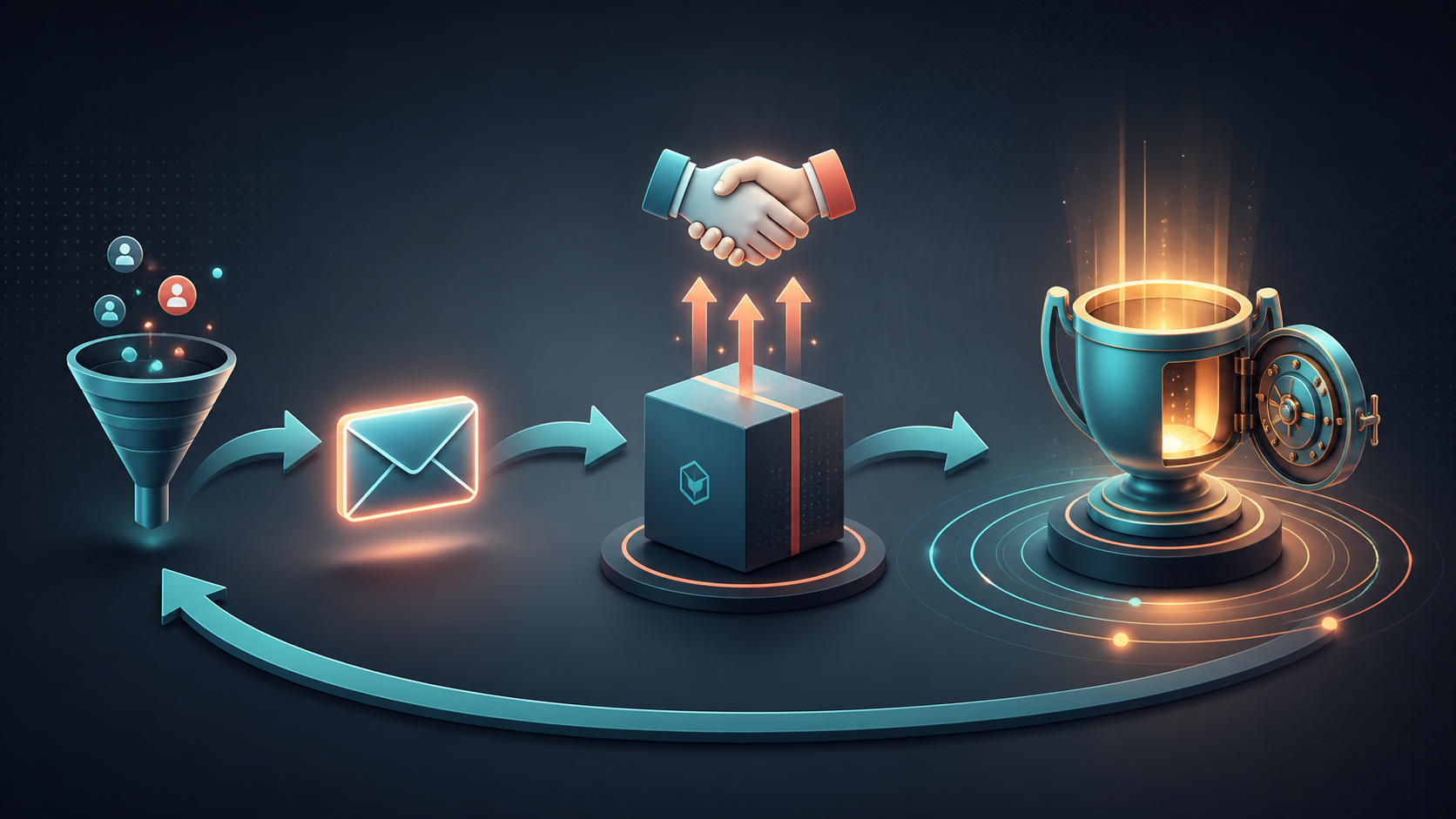
The framework has three layers:
- Entry offer — Low-to-mid ticket ($27–$197). Converts cold-to-warm leads. Establishes buying behavior. Think ClickBank products in the make-money-online or health space, or SaaS trials with affiliate commissions.
- Core offer — Mid-to-high ticket ($500–$2,000). Promoted after trust is established, usually days 7–21 in your sequence. This is where a meaningful chunk of your RPS comes from.
- Premium offer — High-ticket ($2,000–$10,000+). Masterminds, done-for-you services, high-end coaching programs. Promoted to buyers only, or highly engaged non-buyers, typically after day 30.
The counterintuitive part? Promoting a $97 offer first actually increases your conversion rate on the $2,000 offer later. Buyer psychology is real. Someone who has paid you once—even a small amount—is statistically far more likely to pay you again at a higher price point. This is why your entry offer selection matters more than most people realize.
The Milestone Timeline: From Opt-In to High-Ticket Buyer
I want to give you a concrete timeline because "it depends" is the most useless answer in affiliate marketing. Here's a realistic progression based on what I've seen work across multiple niches:
| Days Post Opt-In | Sequence Stage | Offer Type | Goal |
|---|---|---|---|
| Days 1–3 | Welcome & Orientation | Entry offer ($27–$197) | First purchase, establish trust |
| Days 4–7 | Value delivery | No pitch or soft pitch | Build credibility, reduce churn |
| Days 8–14 | Core offer introduction | Mid-ticket ($500–$1,500) | Upgrade buyers, convert warm leads |
| Days 15–21 | Core offer follow-up | Same mid-ticket + bonuses | Close fence-sitters |
| Days 22–30 | Segmentation & re-engagement | Alternate mid-ticket | Monetize non-buyers differently |
| Days 31–60 | Premium offer sequence | High-ticket ($2,000+) | Maximize buyer LTV |
| Days 60+ | Recurring & continuity | SaaS, memberships | Predictable monthly revenue |
That 60-day window is where the real money lives for most serious affiliates. The problem is most people abandon their sequences at day 10 because "nobody's buying." They're leaving the high-ticket money on the table entirely.
If you want to go deeper on sequence length strategy, this breakdown on how long your affiliate email sequence should actually be is worth reading before you build anything.
Choosing Offers That Stack (Not Just Offers That Pay Well)
This is where most affiliates get it wrong. They pick offers based on commission percentage alone. A 50% commission on a $2,000 product sounds great—until you realize it has nothing to do with what your subscriber just bought or what problem they're trying to solve next.
Good offer stacking follows a problem progression logic. Each offer should solve the next problem that naturally emerges after the previous one is solved.
Here's a real example from the business-building niche:
- Entry offer: A $67 course on writing high-converting landing pages (solves the "I don't know how to get people to opt in" problem)
- Core offer: A $997 traffic program or done-with-you paid ads coaching (solves the "now I need traffic" problem)
- Premium offer: A $5,000 mastermind or done-for-you funnel build (solves the "I need someone to do this faster and better" problem)
See how each offer makes the previous one feel incomplete without the next? That's intentional. You're not manipulating anyone—you're genuinely helping them take the next logical step.
Platforms to source these stacked offers: ClickBank for entry-level digital products, JVZoo for software and tools, Impact or PartnerStack for SaaS mid-ticket programs, and private affiliate programs run directly by coaches and agencies for high-ticket. Don't sleep on private programs—they often have the highest commissions and the least competition.
The Email Architecture That Makes Stacking Work
You can have perfect offer selection and still blow it with bad email structure. The sequencing mechanism—your actual autoresponder flow—is what determines whether subscribers move through the stack or fall off.
Here's the architecture I'd build today:
Welcome Sequence (Emails 1–4)
The first email delivers your lead magnet and sets expectations. Email 2 tells your origin story—why you're in this space, what you've figured out. Email 3 delivers a genuine insight or quick win. Email 4 introduces the entry offer, framed as a natural next step. This is a 3-to-4 day sequence, not 7. People's attention drops hard after day 4 if you haven't given them a reason to stay engaged.
Most welcome sequences I audit are either too short (one email) or too long and too preachy. If your welcome sequence isn't converting on affiliate offers, here's a detailed fix that addresses the specific structural problems I see most often.
Core Offer Sequence (Emails 5–14)
This is a 10-email block, but don't think of it as 10 separate pitches. Structure it as: 3 value emails, 1 soft intro to the core offer, 2 direct promotion emails, 2 objection-handling emails, 1 urgency email, 1 pivot email (for non-buyers). The pivot email is critical—it's where you introduce a second mid-ticket offer to people who didn't convert on the first. Different products appeal to different buying triggers.
High-Ticket Sequence (Emails 15–30+)
This is buyer-only territory, or highly segmented engaged non-buyers. The tone shifts. Less hype, more depth. Case study driven. Application-focused. High-ticket buyers need to feel like they discovered the offer, not that they were sold it. Use longer-form emails here—800–1,200 words isn't crazy for a $5,000 offer. The email is doing the work of a sales call.
For the behavioral triggers that move people through these stages automatically, this piece on behavioral triggers in affiliate launch sequences covers the click-based and purchase-based segmentation logic in detail.
Segmentation: The Engine That Keeps the Stack Clean
Without segmentation, offer stacking becomes offer spamming. The whole point is that different subscribers get different offers based on what they've already bought and how they've behaved.
Minimum segmentation tags you need:
- Entry buyer / non-buyer — Did they purchase the entry offer?
- Link clicker / non-clicker — Did they click the core offer sales page link?
- Core buyer / non-buyer — Did they purchase the mid-ticket?
- Engagement score — Are they opening consistently or going cold?
ConvertKit handles this well with its tag-based system. ActiveCampaign is stronger if you want deep conditional automation. For budget-conscious operators, Systeme.io actually does surprisingly capable segmentation for the price point—I've seen affiliates run clean 5-tag stacks on it without issue.
The rule: buyers never see pitches for offers they've already purchased. Non-buyers of a $997 program shouldn't keep receiving the same pitch after email 4 of that sequence—pivot them to an alternate path or a lower-ticket entry to the same ecosystem.
Practical Implementation Notes
A few things I've noticed that don't usually make it into the theoretical breakdowns:
The 48-hour buyer window is real. When someone purchases your entry offer, they're in an elevated buying state for roughly 48 hours. Your OTO (one-time offer) or immediate upsell should hit within that window. If you're relying solely on email to catch that moment, you're late. Build the upsell into the funnel itself—on the thank-you page or via a bridge page redirect.
High-ticket offers need phone or video touchpoints. Email alone rarely closes $3,000+ offers. The email sequence's job at the premium tier is to get them to book a call or watch a VSL. Don't try to close a $5,000 mastermind in a 300-word email. It won't work.
Your offer stack needs a logical vendor ecosystem. Promoting five unrelated products from five different vendors creates a fragmented experience. Where possible, build your stack around one or two vendor ecosystems—one vendor's entry product, mid-ticket, and high-ticket—so the brand familiarity compounds. Some vendors on ClickBank and JVZoo have exactly this structure built out. Find them.
Recurring offers change the math entirely. A $97/month SaaS affiliate commission stacked into your sequence at day 45 can add $30–50 in annual RPS per converted subscriber without any additional promotion work. That's why continuity offers deserve their own dedicated slot in your stack architecture, not just a casual mention in a broadcast.
Revenue Model Analysis: What the Numbers Can Look Like
I want to be clear: these are illustrative ranges based on realistic market conditions, not guarantees. Your results depend on your niche, traffic quality, list hygiene, and offer alignment.
A list of 5,000 subscribers with a well-executed 90-day offer stack might look like this:
- Entry offer conversions (3–5% of list): 150–250 buyers × $30–50 commission = $4,500–$12,500
- Core offer conversions (1–2% of list): 50–100 buyers × $300–700 commission = $15,000–$70,000
- High-ticket conversions (0.2–0.5% of list): 10–25 buyers × $1,000–3,000 commission = $10,000–$75,000
- Recurring/continuity conversions (2–4% of list): 100–200 subscribers × $20–50/month = $2,000–$10,000/month ongoing
The wide ranges reflect real variance across niches and execution quality. But even at the conservative end, a properly stacked sequence on a 5,000-person list can generate $30,000–$50,000 in 90 days—versus $5,000–$10,000 from a single-offer approach.
That gap is the entire argument for stacking.

Where This Fits With Your Broader Monetization Strategy
Offer stacking doesn't exist in isolation. It's most powerful when it sits inside a broader system that includes solid traffic acquisition, a high-converting opt-in funnel, and strong post-purchase retention.
If you're running paid traffic—Taboola, Meta, or native—your cost per lead needs to be calculated against 90-day RPS, not 7-day RPS. A $4 CPL that looks expensive against a $7 entry offer looks cheap against a $55 90-day RPS. Most affiliates kill campaigns too early because they're measuring the wrong window.
On the funnel side, your bridge page and thank-you page architecture matter before the email sequence ever starts. The first upsell or cross-sell happens there, not in email. Get that right first.
And for the backend—after someone has been through your primary stack—broadcast monetization, affiliate launches, and partner promotions can extend LTV well beyond 90 days. The initial stack is the foundation. Everything after that is compounding on top of it.
You'll Know It's Working When...
Concrete signals that your offer stack is functioning correctly:
- Your 30-day RPS exceeds your cost per lead within the first 60 days of running the sequence
- You're seeing buyers of your entry offer convert to your core offer at 8–15%
- Your email open rates stay above 25% through day 21 (list fatigue is a sign of bad sequencing, not just bad copy)
- You're getting reply emails from subscribers who say the progression "felt natural" or who ask about the next step before you've promoted it
- Your unsubscribe rate drops after day 7 instead of spiking—which means your value delivery is holding people through the transition to the higher-ticket pitch
That last one is underrated as a diagnostic. A spike in unsubscribes at day 8 almost always means your core offer introduction was too abrupt—not enough trust built, not enough problem-awareness created before the pitch landed.
Fix the sequence, not the offer.
This article contains affiliate links. We may earn a commission at no extra cost to you. Full disclosure.
Editorial Team
Senior Digital Marketing Strategist
The Prophet Visionary editorial team covers affiliate marketing, paid traffic, funnels, and digital product strategy with hands-on practitioner experience.
Learn more about our editorial team →Monetize Smarter With Funnels + Email in One Place
Order bumps, upsells, automated email sequences, and your own affiliate program — Systeme.io gives you the full monetization stack without the bloated monthly spend.
See the Monetization StackThis page contains affiliate links — I may earn a commission at no extra cost to you.
Disclaimer: The information on this site is for educational purposes only and does not constitute financial, legal, or business advice. Results vary based on individual effort, market conditions, and other factors. Always do your own due diligence before making business or investment decisions.