High-Ticket Offer Stacking: How to Build Email Sequences That Pay
The Outcome You're Actually Building Toward
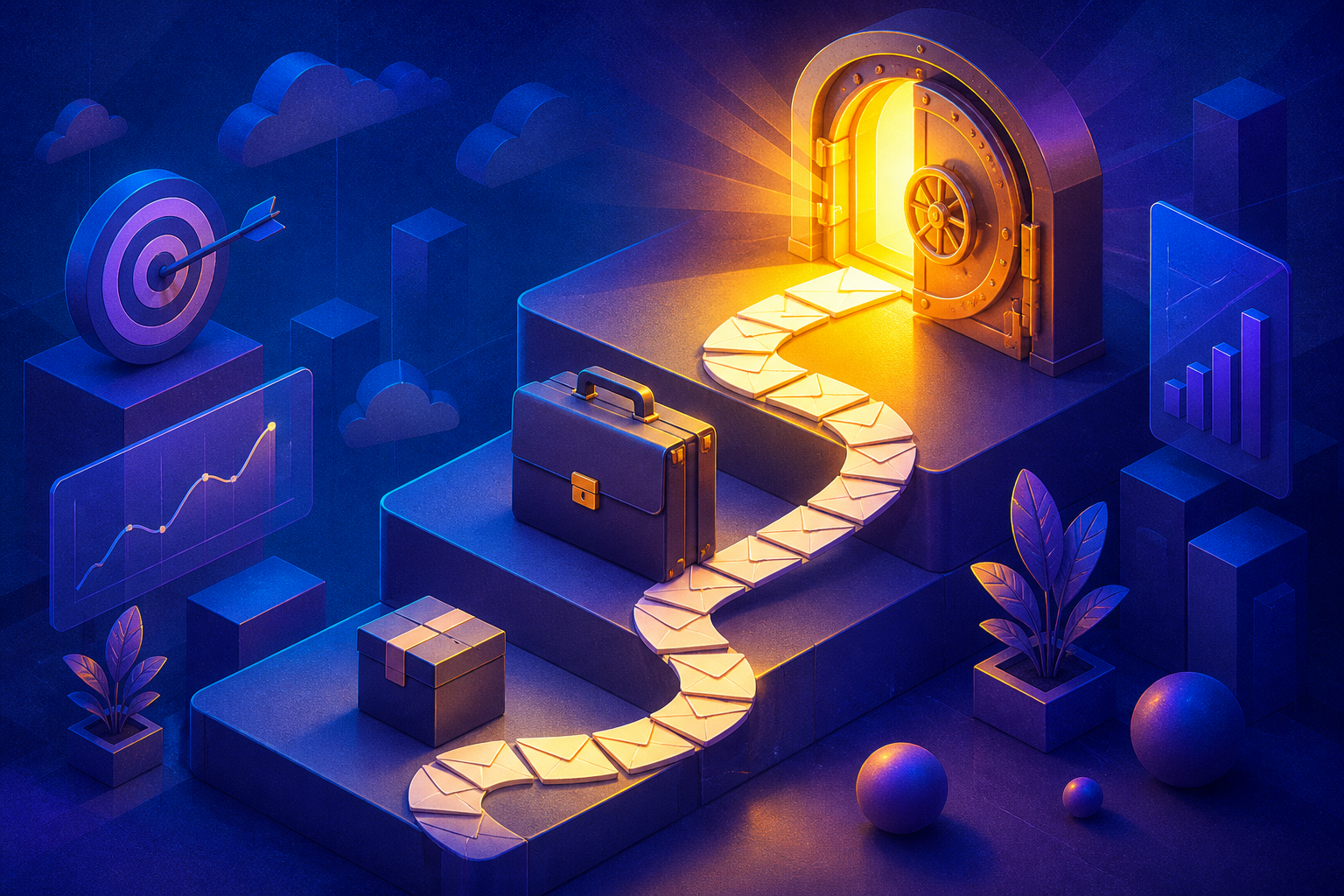
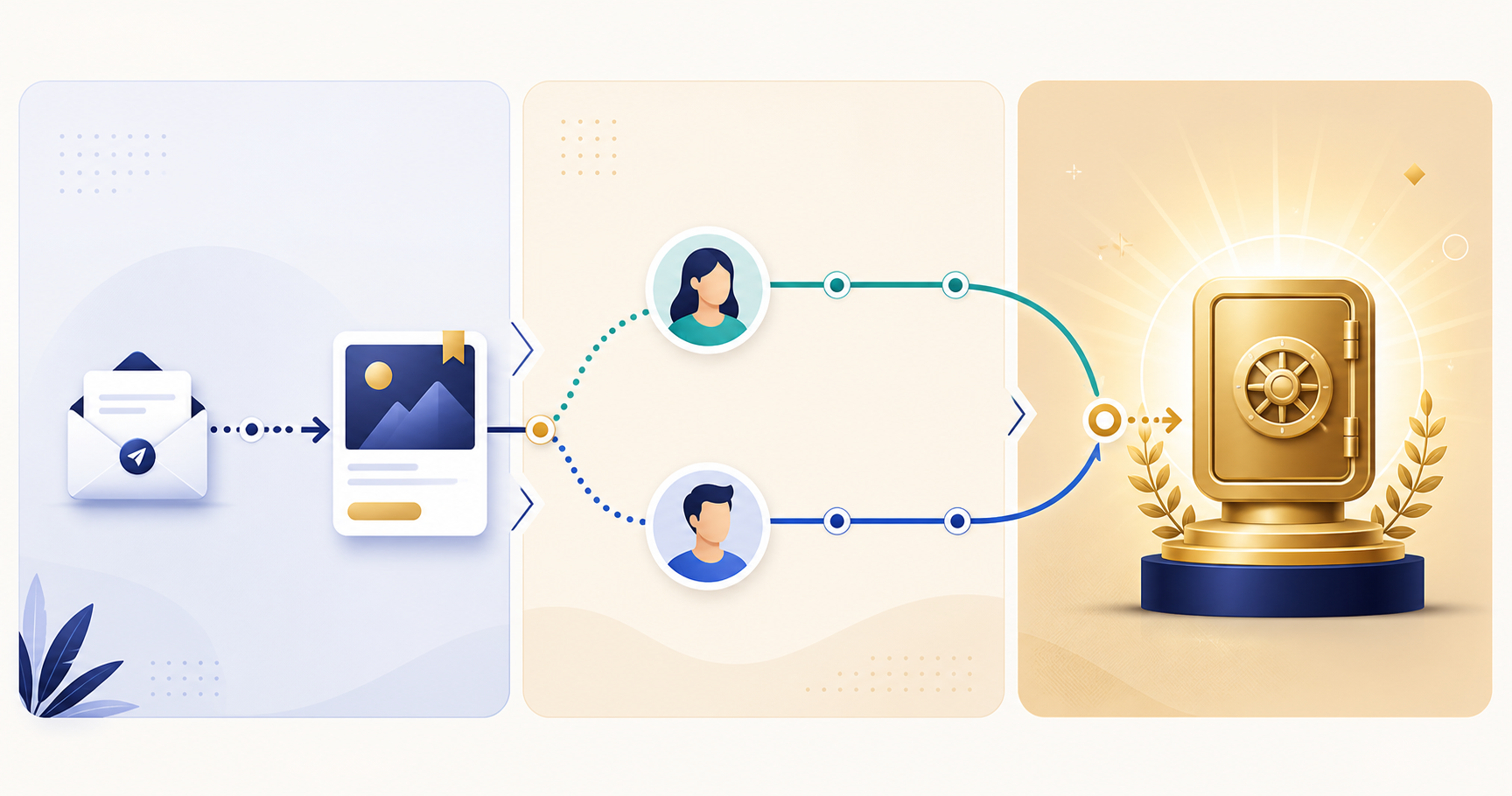
Here's what offer stacking done right looks like: a single subscriber enters your list through a $7 lead magnet funnel, receives a 21-day email sequence, and exits that sequence having been exposed to three progressively priced affiliate offers—one at the $47-97 range, one at $297-497, and one at $1,000+. Your average revenue per subscriber climbs from $1.20 to somewhere between $8 and $22, depending on your niche and traffic quality.
That's the target. Not vague 'passive income.' A measurable lift in revenue per lead (RPL) over a defined window.
Most affiliates never get there because they treat their email sequence like a broadcast channel—blasting the same offer repeatedly until people unsubscribe. Offer stacking is different. It's a deliberate architecture. Each email builds psychological and informational context for the next offer tier, so by the time you ask someone to spend $1,500 on a coaching program or a premium software suite, they've already said yes twice at lower commitment levels.
Why Most Email Sequences Fail at High-Ticket Promotion
What most people get wrong is sequencing logic. They drop a $2,000 offer on day 3, get zero conversions, and conclude 'high-ticket doesn't work in email.' It does work—just not without runway.
Think about how trust actually accumulates. Someone joins your list because they want to solve a specific problem. They don't know you yet. A high-ticket recommendation from a stranger is dead on arrival. But a high-ticket recommendation from someone who's already helped them—who gave them a win at $47, then another at $297—lands completely differently.
The counterintuitive part: your sequence length matters less than your sequence logic. I've seen 10-email sequences outperform 30-email sequences because the shorter one had tighter offer-to-context alignment. Every email either delivers standalone value or moves the prospect one step closer to being ready for the next offer tier. There's no filler.
If your welcome sequence isn't already converting lower-ticket offers reliably, stacking high-ticket on top of it won't save you—it'll just expose the underlying problem faster. Worth reading why your welcome sequence isn't selling affiliate offers before you architect anything more complex.
The Three-Tier Stack: A Framework That Actually Works
Tier 1: The Trust Anchor (Days 1–5)
Your first offer should feel like a no-brainer. We're talking $27-97—something with a low commitment threshold but genuine utility. On clickbank, this might be a digital course in the health or business space. On PartnerStack or Impact, it could be a SaaS tool with a free trial that converts to a paid plan.
The goal here isn't margin. It's a buying event. Someone who spends $47 with you has fundamentally changed their relationship with your recommendations. They're no longer a prospect—they're a customer. And customers convert to higher-ticket offers at 3-5x the rate of cold subscribers, consistently, across almost every niche I've worked in.
Emails 1 through 5 should mix content (actual tactical value) with soft promotion. A ratio of 3:2 works—three value emails, two promotional. Don't pitch in email 1. Ever. That email is entirely about delivering on the promise that got them to subscribe.
Tier 2: The Credibility Bridge (Days 6–14)
By day 6, you've either gotten a Tier 1 conversion or you haven't. Either way, the sequence continues—but now you're introducing a mid-ticket offer, typically $197-597.
This is where most affiliates panic and either abandon the sequence or drop back to pitching the Tier 1 offer again. Don't. The subscribers who didn't buy Tier 1 often aren't price-sensitive—they weren't ready. Continued value delivery moves them forward. The subscribers who did buy Tier 1 are now primed for more.
Your Tier 2 emails need to do heavier lifting contextually. You're not just promoting an offer—you're explaining why the problem your subscriber has requires a more comprehensive solution than what Tier 1 provided. This is the 'gap' email structure: acknowledge what they've learned or implemented, identify the next constraint, position Tier 2 as the answer to that specific constraint.
Behavioral segmentation helps enormously here. If you're on ActiveCampaign or ConvertKit, tagging link-clickers from your Tier 1 emails lets you send a different Tier 2 sequence to buyers versus non-buyers. The non-buyer sequence might revisit Tier 1 with a different angle before escalating. See how behavioral segmentation can rescue abandoned funnel leads for the technical setup on this.
Tier 3: The High-Ticket Close (Days 15–21)
This is where the real money lives—and where the real patience is required. High-ticket in affiliate terms typically means $997 and above. Coaching programs, masterminds, premium software with annual contracts, done-for-you services. Commission rates at this level range from 20-50%, which means a single conversion can pay $200-$2,000+.
By day 15, your subscriber has received consistent value for two weeks. They've been exposed to two lower-commitment offers. They have a formed opinion of you as a source worth listening to. Now you can ask for a bigger decision.
The Tier 3 email structure I've found most effective is a 3-email mini-campaign within the larger sequence: a story email (day 15), a proof/case study email (day 17), and a direct offer email with urgency (day 19-21). The story email isn't about the offer at all—it's about the transformation. What does life look like after someone solves the problem at the deepest level? The proof email shows that transformation is achievable. The close email makes the ask.
Milestones and Timeline: What to Expect and When
| Week | Activity | Metric to Watch |
|---|---|---|
| Week 1 | Tier 1 offer exposure (days 1-5) | Open rate, Tier 1 CTR, conversion rate |
| Week 2 | Tier 2 bridge + segmentation split | Segment open rate delta, Tier 2 clicks |
| Week 3 | Tier 3 mini-campaign | Tier 3 application/sales page visits, conversions |
| Week 4+ | Broadcast + re-engagement | RPL across full 21-day cohort |
Realistically, you won't see your RPL stabilize until you've run at least 200-300 subscribers through the full sequence. Small sample sizes produce misleading numbers. If you're running paid traffic—say, native ads through Taboola or MGID—budget for at least 500 leads before drawing conclusions about sequence performance.
A reasonable benchmark to aim for: Tier 1 conversion rate of 3-8%, Tier 2 conversion rate of 1-3%, Tier 3 conversion rate of 0.3-1.5%. Those ranges are wide because niche, traffic source, and offer quality vary enormously. But if you're hitting the low end of all three, your RPL math still works.
Offer Selection: What Actually Stacks Well
Not every high-ticket offer belongs in a stack. I've made the mistake of promoting a $2,000 program that paid 40% commission—so $800 per sale—only to find the sales page converted at 0.1% from email traffic. The math doesn't work if the offer itself isn't built for warm traffic conversion.
When evaluating high-ticket offers for email sequences, look for:
- Video sales letters or webinar funnels — High-ticket offers that rely on a long-form VSL or live/automated webinar convert significantly better from email than static sales pages. The offer does the heavy lifting of the close.
- Application-based programs — Counterintuitively, offers that require an application before purchase often convert better in email stacks. The application creates commitment and filters for qualified buyers, which keeps refund rates low and affiliate relationships healthy.
- Recurring commission structures — If your Tier 3 offer pays recurring commissions (monthly SaaS, membership programs), the RPL calculation compounds over time. A $97/month tool paying 30% recurring is worth far more than a one-time $500 sale at 40%. Check out recurring commission affiliate programs worth your time for specific programs worth building sequences around.
- Affiliate programs with proven EPC data — ClickBank shows EPC (earnings per click) publicly. JVZoo, WarriorPlus, and Impact.com all have performance data. Don't build a 21-day sequence around an offer with no track record.
The Tier 1 and Tier 2 offers should ideally come from the same ecosystem or solve adjacent problems. A subscriber who buys a $47 SEO course is primed for a $397 link-building tool, which is primed for a $1,500 done-for-you SEO service. The logical chain matters. Randomly stacking offers from different niches destroys trust faster than anything else.
Technical Setup: Tools That Don't Get in the Way
The platform question matters more than people admit. If your ESP can't handle behavioral tagging, conditional branching, and segment-based sending, you can't execute a real stack—you're just sending the same sequence to everyone regardless of behavior.
For most affiliates building their first high-ticket stack, ActiveCampaign or ConvertKit (now Kit) handles the segmentation requirements without requiring a developer. Both support tagging based on link clicks, which is the minimum you need for buyer/non-buyer branching at the Tier 1 stage.
systeme.io is worth mentioning for affiliates who want to host their own lead magnet funnel, manage email, and track affiliate links in one place without paying for five separate tools. It's not as sophisticated as ActiveCampaign for behavioral automation, but it handles basic tagging and is free up to 2,000 contacts—which is a legitimate starting point.
For tracking, use a dedicated affiliate link tracker (ClickMagick or Voluum) rather than relying on your ESP's click data alone. You want conversion attribution at the email level, not just the sequence level. Knowing that email 7 drives 40% of your Tier 2 conversions is the kind of data that lets you optimize intelligently.
Practical Implementation Notes
A few things I've observed running stacked sequences across different niches that don't show up in most tutorials:
The gap between Tier 1 and Tier 2 matters. Going from a $47 offer on day 3 to a $497 offer on day 7 is too fast for most lists. Four days isn't enough time for a buyer to implement anything, get a result, and feel validated in their purchase. When I've extended the Tier 1 window to 5-7 days before introducing Tier 2, open rates on the Tier 2 sequence improve noticeably—because there's been time for positive reinforcement to set in.
Plain text emails outperform HTML for high-ticket closes. This surprises people, but the more personal and less 'designed' your Tier 3 emails look, the better they tend to convert. A well-written plain text email from someone who sounds like a real person beats a polished newsletter template for high-commitment decisions. Save the branded templates for your broadcast content.
Re-engagement matters more than most affiliates think. Subscribers who don't open emails 1-10 aren't necessarily dead leads. A re-engagement branch triggered at day 14 (for non-openers) with a different subject line and a fresh angle on the Tier 1 offer can recover 8-15% of those subscribers back into active engagement. That's meaningful at scale.
Don't ignore post-purchase sequences. If someone buys Tier 1 through your affiliate link, you typically can't see that in your ESP unless you're using a custom tracking setup. But if you're selling your own front-end product and promoting affiliate offers on the backend, your post-purchase sequence is where Tier 2 and Tier 3 should live for buyers. The buying psychology is completely different—and better. More on structuring this in why your post-purchase emails aren't turning buyers into repeat customers.
Common Pitfalls That Kill the Stack
Offer fatigue is real. If every email in your sequence ends with a pitch, subscribers tune out fast—open rates drop, and by day 14 you're talking to 30% of the people who were opening on day 1. The fix is simple but requires discipline: not every email promotes. Some emails just deliver. A 60/40 split (value to promotion) is a reasonable floor.
Mismatched price anchoring is another one. If your Tier 1 offer is $7 and you jump to $1,500 for Tier 3, the psychological gap is too wide for most subscribers. The stack needs to feel like a natural progression, not a bait-and-switch. Either add a Tier 2 that bridges the gap properly, or anchor your Tier 1 higher ($47-97) so the jump to $497 feels reasonable.
And honestly—offer quality. If your Tier 1 product is mediocre, you've poisoned the well for everything that follows. Subscribers who feel burned on a $47 purchase are not coming back for $1,500. Test your Tier 1 offer personally before you build a sequence around it. That's table stakes.

Revenue Model Analysis: What the Numbers Can Realistically Look Like
Let's be clear: results depend on niche, traffic quality, offer quality, and sequence execution. These are illustrative ranges, not guarantees.
A list of 1,000 subscribers run through a properly built 21-day stack might generate:
- Tier 1 (3-6% conversion at $47 avg commission): $141-$282
- Tier 2 (1-2.5% conversion at $150 avg commission): $150-$375
- Tier 3 (0.3-1% conversion at $600 avg commission): $180-$600
Total RPL range: $0.47-$1.26 per subscriber. Compare that to a single-offer sequence where most affiliates are lucky to hit $0.30-0.50 RPL. The stack, even at conservative conversion rates, meaningfully changes the economics—especially when you're paying for traffic.
At $1.00 RPL, a traffic source that delivers leads at $0.80 each (achievable on some native ad placements or with solid SEO) generates a 25% margin per lead. That's a scalable model. Below $0.50 RPL, most paid traffic sources won't pencil out, and you're dependent on free traffic to make the numbers work.
The stack doesn't just increase revenue—it changes what you can afford to pay per lead. That's the actual strategic advantage.
You'll Know It's Working When...
After 200+ subscribers have completed the full 21-day sequence, pull your numbers. Here's what a working stack looks like in the data:
- Open rates hold above 25% through day 14 (not collapsing after the first week)
- You're seeing Tier 2 clicks even from subscribers who didn't convert on Tier 1
- Your Tier 3 emails generate sales page visits—even if conversions are slow to come, traffic to the offer means the sequence is building interest
- RPL is trending toward $0.80+ per subscriber across the cohort
- Unsubscribe rate stays below 0.5% per email on average
If open rates are collapsing after day 5, the content isn't delivering enough value between pitches. If Tier 3 is getting zero traffic, the Tier 2 bridge isn't doing its job. Each failure point tells you exactly where to fix.
The stack is a living system. It gets better with data, not worse. That's what makes it worth building.
This article contains affiliate links. We may earn a commission at no extra cost to you. Full disclosure.
Editorial Team
Senior Digital Marketing Strategist
The Prophet Visionary editorial team covers affiliate marketing, paid traffic, funnels, and digital product strategy with hands-on practitioner experience.
Learn more about our editorial team →Monetize Smarter With Funnels + Email in One Place
Order bumps, upsells, automated email sequences, and your own affiliate program — Systeme.io gives you the full monetization stack without the bloated monthly spend.
See the Monetization StackThis page contains affiliate links — I may earn a commission at no extra cost to you.
Disclaimer: The information on this site is for educational purposes only and does not constitute financial, legal, or business advice. Results vary based on individual effort, market conditions, and other factors. Always do your own due diligence before making business or investment decisions.