How Behavioral Segmentation Rescued Our Abandoned Funnel Leads
I remember sitting in front of my dashboard one afternoon, watching the unsubscribe rate tick up and the open rate slide below 12%, thinking: these people opted in. They raised their hand. What happened?
If you've run any kind of lead funnel — whether it's a free guide on clickbank traffic, a low-ticket tripwire on systeme.io, or a webinar opt-in driven by Taboola native ads — you've probably felt that same quiet dread. The leads come in. Then they go cold. And at some point, you stop even looking at the segment because it just feels like a graveyard.
A lot of us have been through this. You spend real money getting those clicks. You obsess over your opt-in page copy. You celebrate when the list grows. And then... silence. The follow-up sequence you set up in ConvertKit or ActiveCampaign runs its five emails, nobody buys, and the contact just sits there tagged as "inactive" while you move on to the next campaign.
But here's the thing — those leads didn't leave because they hate you. Most of the time, they left because your sequence talked at them instead of responding to them. That's the gap behavioral segmentation is designed to close.
The Moment I Stopped Treating Abandonment as Failure
The shift for me came when I stopped asking "why didn't they buy?" and started asking "what did they actually do before they went quiet?"
That sounds obvious. It wasn't.
Most email sequences — even the ones that are well-written and professionally structured — are built on a linear assumption: person opts in, person gets emails 1 through 7 in order, person either buys or doesn't. The behavior that happens between those emails gets completely ignored. Did they open email 3 but not 4? Did they click the link in email 2 but bounce off the sales page in under 30 seconds? Did they open every email but never click anything?
Each of those patterns tells you something completely different about where that person is mentally. And if you're sending them the same email 5 regardless of which of those paths they took, you're essentially guessing. Expensive guessing.
I'd been running a funnel promoting a digital course through ClickBank — a mid-ticket offer in the online business space. The front end was a free PDF opt-in, traffic coming from a mix of Facebook retargeting and native display. My standard 7-email nurture sequence was pulling maybe 3-4% conversion on warm leads. Not bad. But I had a growing segment of about 1,400 contacts who'd gone completely dark after the first two emails. They hadn't unsubscribed. They just... stopped engaging.
That segment represented real ad spend. I wasn't ready to write it off.

What Behavioral Segmentation Actually Means in Practice
Before I walk through what I did, let me be honest about what this term gets wrong in most blog posts: behavioral segmentation is not just tagging people based on whether they opened an email. That's a start, but it's surface-level.
Real behavioral segmentation — the kind that actually changes your recovery rate — looks at intent signals. What did the contact do, in what order, and where did they stop? The combination matters more than any single action.
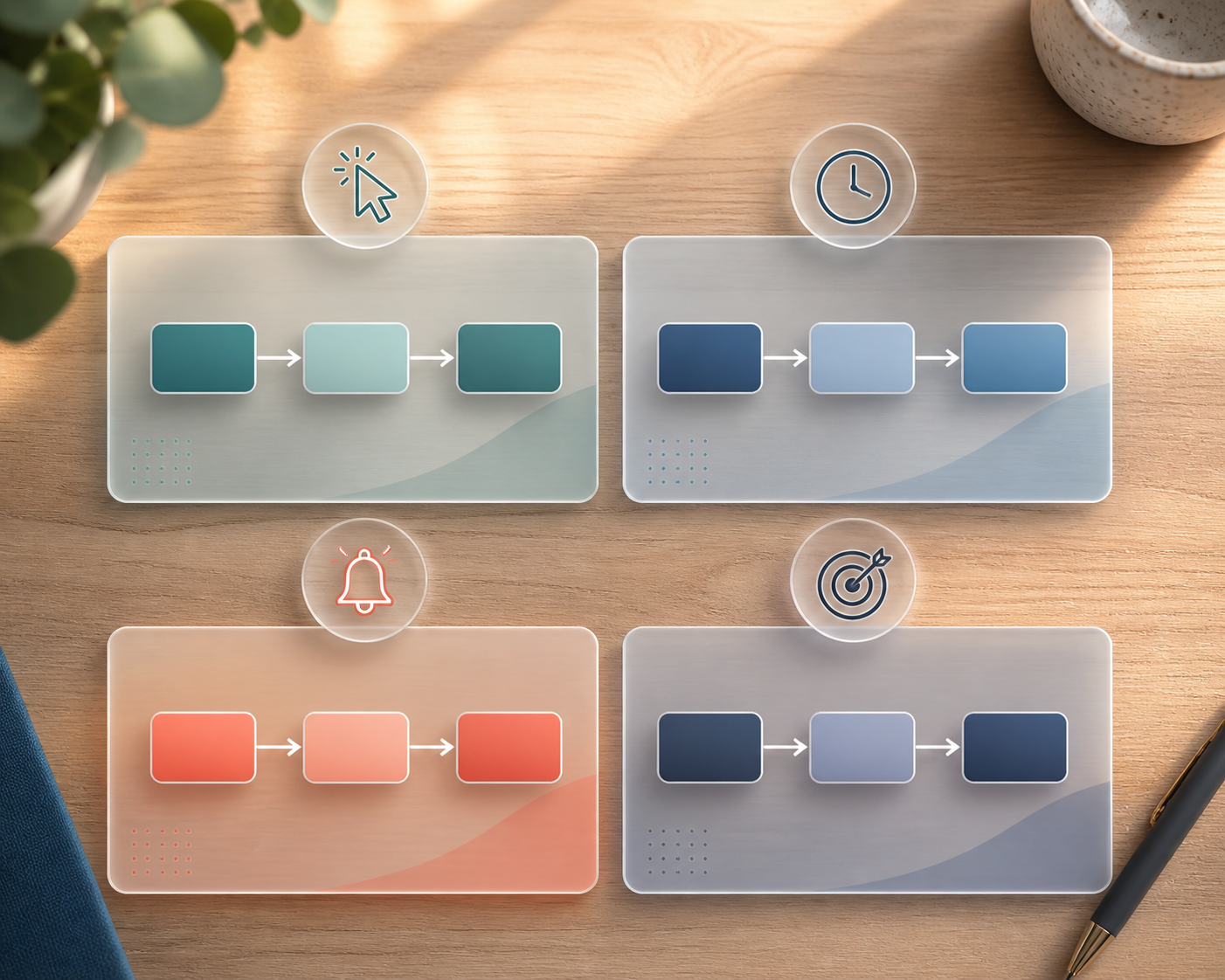
Here are the behavioral clusters I identified in that cold segment of 1,400:
- Openers who never clicked anything — They were reading (or at least opening), but nothing in the emails was compelling enough to pull them to the next step. This is usually a messaging problem, not a relationship problem.
- Clickers who bounced from the sales page fast — These people were interested enough to click, but something on the page killed the momentum. Price, skepticism, poor page load, wrong angle — hard to know exactly, but the intent was there.
- People who clicked the lead magnet download link but nothing else — They got what they came for and felt zero reason to stay engaged. The value exchange stopped at the opt-in.
- Contacts who opened email 1 only — Subject line worked, body didn't. Or they opened on mobile, got distracted, and the sequence never re-engaged them.
Once I had those four clusters mapped out in ConvertKit using tag combinations and link click tracking, I stopped treating them as one abandoned segment and started building four short, targeted re-engagement paths. Three emails each. That's it — no 12-email odyssey. Short, direct, behavior-aware.
This is also where your funnel infrastructure matters. If you're not sure whether your current setup can handle this kind of conditional branching, it's worth reading through this breakdown comparing ClickFunnels and GoHighLevel for affiliate paid traffic — the automation logic differences between platforms are significant when you're building anything beyond a linear drip.
The Email Sequences — What I Actually Wrote
I won't pretend each sequence was a masterpiece. Some of them were genuinely rough first drafts that I refined after seeing open rates. But the structure held.
For Openers Who Never Clicked
The assumption here: they're interested but unconvinced. The sequence opened with a pattern interrupt — not another pitch, but a direct acknowledgment. Something like: "I noticed you've been reading these emails but haven't taken the next step — and honestly, that tells me something. Either the timing's off, or I haven't explained this clearly enough. Let me try again."
That kind of transparency tends to either re-engage people or get them to unsubscribe — and both outcomes are useful. The second email in this path shifted the angle entirely, leading with a different pain point than the original sequence. The third was a soft close with a low-friction offer: a free training video rather than the paid product.
For Clickers Who Bounced From the Sales Page
These are your warmest cold leads. They clicked. They looked. Something stopped them.
The re-engagement email for this group opened with social proof — not manufactured testimonials, but outcome-focused framing. "Here's what people in your position have typically struggled with before making this decision..." The second email addressed price objection directly, not defensively. The third offered a payment plan angle that wasn't visible on the main sales page.
That third email — the payment plan one — consistently outperformed everything else in this cluster. Which tells you something about why people were bouncing in the first place.
For Lead Magnet Downloaders Who Went Dark
Honestly, this was the hardest group to re-engage. The value exchange was complete from their perspective. They got the PDF. Done.
What worked here was connecting the lead magnet content directly to a next step — not a pitch, but a "you read about X in the guide, here's what that looks like in real implementation" email. It re-established relevance. The sequence ended with a question-based email asking what they were working on, which generated actual replies and let me segment further based on responses.
For One-Open Wonders
Short emails. Very short. Subject lines that referenced time passing. "Still thinking about this?" style hooks. No long explanations. These people either weren't ready when they first opted in, or life got in the way. The goal wasn't to sell them — it was to get a click, any click, to re-establish engagement so the deliverability gods would smile on me again.
From the Field: Practical Implementation Notes
A few things I learned building this that most tutorials skip over:
Tag hygiene matters before you start. If your ConvertKit or ActiveCampaign account has been running for more than six months without a consistent tagging convention, you'll spend more time untangling your segmentation logic than writing emails. I had to do a full audit before I could even identify the four clusters above. Not fun, but necessary.
Suppression lists are your friend. Before launching re-engagement sequences, I suppressed anyone who'd been in the list less than 30 days, anyone who'd already purchased, and anyone who'd hard-bounced. Sounds obvious. I've talked to people running re-engagement campaigns who forgot this and torched their sender reputation.
Timing gaps matter more than email count. I added a 3-day gap between emails in the re-engagement paths — longer than my standard sequence. These people had already been in a sequence. Hitting them every day again would feel like harassment. The slightly longer cadence felt more respectful and, I think, improved the tone of the emails because I wasn't writing from a place of urgency.
Plain text outperforms designed templates in re-engagement. Every single time. I've tested this across three different funnels now. A plain-text email that reads like it came from a real person gets significantly higher open rates on cold or cooling segments than a nicely formatted HTML template. The template signals "marketing email." Plain text signals "I wrote this for you."
If your broader email strategy needs a structural foundation, the email automation sequences guide we published covers the core frameworks well — and it's a useful reference for understanding where re-engagement sequences fit into the larger picture.
What I'd Do Differently
A few things, honestly.
I'd build the behavioral segmentation logic into the original sequence from day one, not as a retrofit. Retrofitting is messy. You're working with imperfect tag data, trying to reverse-engineer intent from incomplete signals. If you set up your tracking and tagging architecture before you launch, the data you collect is cleaner and your re-engagement paths can fire automatically rather than requiring a manual campaign build.
I'd also test a re-engagement sequence that starts with something completely free and unexpected — a bonus resource, a short video, something with no ask attached. My sequences above all had an implicit ask baked in fairly early. In hindsight, one path that led purely with value for the first two emails before introducing any offer might have performed better with the colder clusters.
And I'd pay more attention to the reply rate as a metric, not just opens and clicks. Some of the best conversations I had — conversations that led to actual conversions — came from people replying to re-engagement emails. I wasn't tracking that systematically. Now I do.
If you're also thinking about how to structure the offer side of this — what you're actually sending people back toward — this article on why welcome sequences often fail to sell affiliate offers gets at some of the same root problems from a different angle.
The Part Nobody Talks About
Running a re-engagement campaign on a cold segment feels vulnerable in a way that launching a new funnel doesn't. When you're launching something new, you're optimistic. When you're trying to recover people who already ignored you, there's this underlying anxiety — what if they just don't care? What if the list is actually dead?
Some of it will be dead. That's real. You'll send the three-email sequence and 70% of a cluster won't respond at all, and eventually you'll sunset those contacts. That's not failure — that's list hygiene. The 30% who do re-engage are worth the effort, and they're warmer than any new lead you could buy because they already know who you are.
The mental shift I had to make was this: abandonment is not rejection. It's friction. And friction is almost always solvable if you're willing to look at the data honestly and write emails that actually respond to where someone is — not where you wish they were in your funnel.

Where to Go From Here
If you're sitting on a cold segment right now — and most of us are — here's the practical starting point:
- Pull your inactive contacts (no open or click in 60+ days) into a separate view
- Use your ESP's link click data and open data to sort them into behavioral clusters — even two or three rough clusters is enough to start
- Write three emails per cluster, plain text, with subject lines that acknowledge time has passed
- Suppress recent opt-ins, buyers, and hard bounces before you send anything
- Track replies as a conversion event, not just clicks
The whole thing can be built in a weekend if your tag data is clean. And if it's not clean — well, cleaning it up is the actual work, and it's worth doing regardless of this campaign.
Behavioral segmentation isn't some advanced enterprise tactic that requires a six-figure tech stack. I've done versions of this in ConvertKit on a $99/month plan and in Systeme.io on their free tier using basic automation rules. The sophistication is in the thinking, not the software.
The leads in your cold segment raised their hand once. That meant something. It still might.
This article contains affiliate links. We may earn a commission at no extra cost to you. Full disclosure.
Editorial Team
Senior Digital Marketing Strategist
The Prophet Visionary editorial team covers affiliate marketing, paid traffic, funnels, and digital product strategy with hands-on practitioner experience.
Learn more about our editorial team →Your List Is Only as Good as Your Email Platform
AWeber has 25+ years of inbox deliverability, drag-and-drop automation, and AI-powered copywriting built in. Free plan for up to 500 subscribers.
See Why Affiliates Use AWeberThis page contains affiliate links — I may earn a commission at no extra cost to you.
Disclaimer: The information on this site is for educational purposes only and does not constitute financial, legal, or business advice. Results vary based on individual effort, market conditions, and other factors. Always do your own due diligence before making business or investment decisions.