Why Your Post-Purchase Emails Aren't Turning Buyers Into Repeat Customers
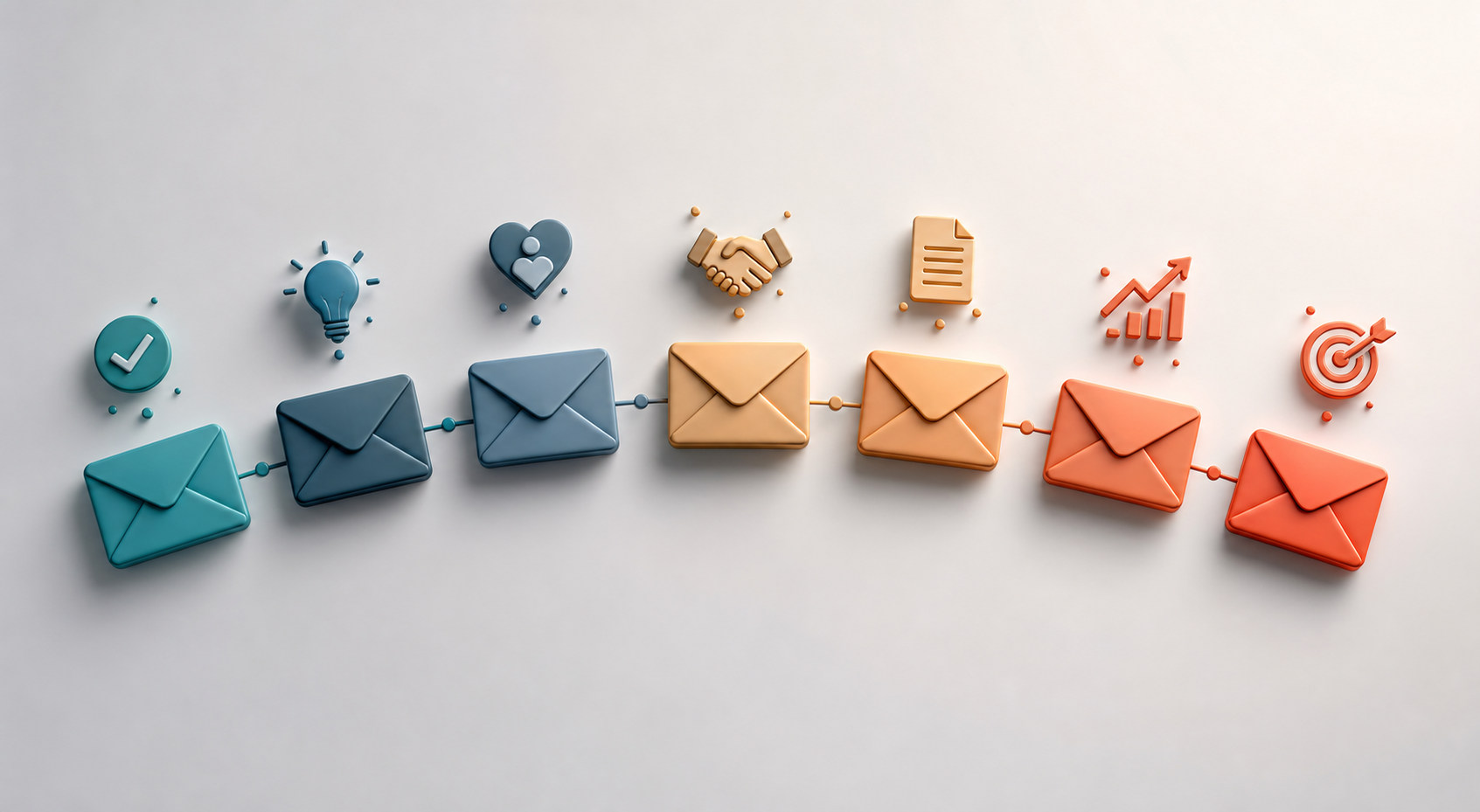
The core answer, right up front: a low-ticket digital product buyer needs a minimum 7-email post-purchase sequence spread across 14–21 days—one that moves from delivery and quick-win activation, through trust-building content, and finally into an ascension offer. Most marketers skip straight to the upsell. That's exactly why buyers disappear. The sequence isn't just about selling more. It's about making the first purchase feel worth it, so the second one feels obvious.
Why Does It Feel Like Low-Ticket Buyers Just Vanish After Buying?
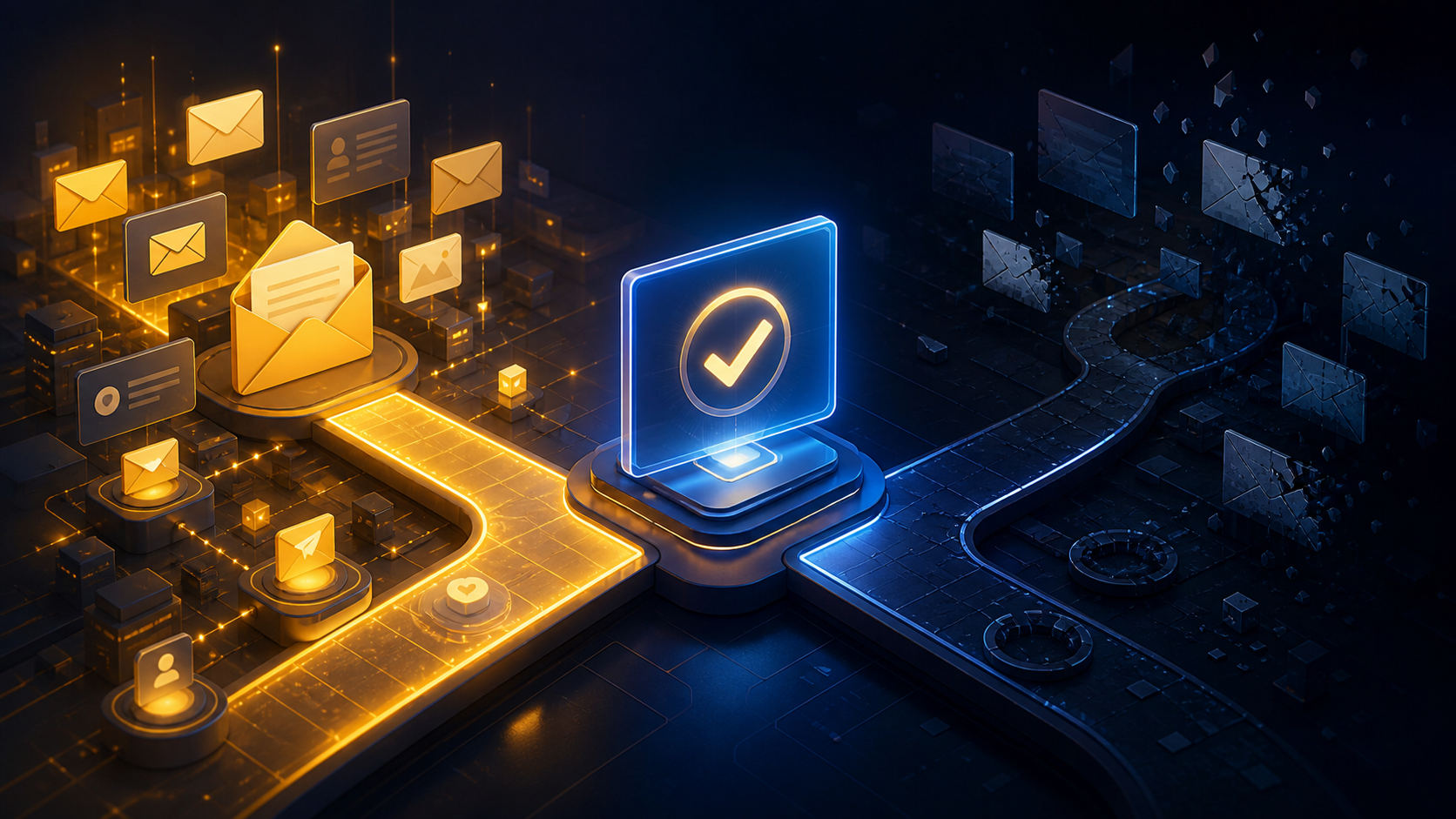
Because for most of them, the purchase was impulsive. A $7, $17, or $27 product doesn't carry the psychological weight of a $497 course. There's no "I need to get my money's worth" pressure. They bought it, maybe downloaded it, maybe didn't—and then life happened. Your email sequence is competing with Netflix, work stress, and fourteen other tabs.
The frustration is valid. You did the hard part. You ran the traffic, optimized the funnel page, maybe spent real money on native ads or Meta campaigns to get that conversion. And then—silence. The buyer doesn't engage, doesn't open, doesn't ascend. What most people get wrong is treating the post-purchase sequence like a formality rather than the actual beginning of the relationship.
Think of it this way: a low-ticket purchase is a first date. Your email sequence is everything that happens after. Ghost them for a week, then show up asking for money? That's why it's not working.
Why Does the Timing of Each Email Actually Matter This Much?
Timing is the difference between feeling helpful and feeling spammy. I've found that the first 48 hours after a low-ticket purchase are disproportionately powerful—open rates are highest, intent is freshest, and the buyer is still in a "yes" mindset. Burn that window with a generic "thanks for your purchase" email and nothing else, and you've wasted your best shot at activation.
Here's a sequence structure that actually holds up in practice:
- Email 1 (Immediate): Delivery + one specific action to take right now. Not "enjoy your product." Tell them exactly what page to open first and what result they should have in 10 minutes.
- Email 2 (Day 1): The "why this matters" email. Reinforce the decision they made. Address the silent doubt that creeps in after any purchase.
- Email 3 (Day 3): Quick win story or use-case. Not a testimonial—a scenario. "Here's how someone used [specific feature] to solve [specific problem]."
- Email 4 (Day 5): Content value drop. A tip, framework, or insight that goes slightly beyond what the product covers. Build perceived expertise here.
- Email 5 (Day 8): Soft mention of the next step—whether that's an upsell, a related affiliate offer, or a higher-ticket product. Frame it as a natural progression, not a pitch.
- Email 6 (Day 12): Re-engagement check. Short email. "Did you get a chance to try [specific thing]?" Two-line emails often outperform long ones at this stage.
- Email 7 (Day 16–21): The real offer. Clear, direct, value-anchored. This is where you ascend them—or hand them off to a long-term nurture list.
The counterintuitive part? Shorter emails in the middle of this sequence frequently outperform long ones. A two-sentence Day 6 email can pull a 40%+ open rate when the list is warm. Don't over-engineer every touchpoint.
Why Isn't a Generic Autoresponder Sequence Getting Results?
Because generic sequences don't reflect how actual buyers behave. If someone bought your $17 Notion productivity template but never opened Email 3, they should not be getting the same Email 4 as someone who clicked every link and visited your upsell page twice. That's not personalization—that's just basic logic. And most default autoresponder setups ignore it completely.
Tools like ConvertKit (now Kit) and systeme.io both allow conditional logic inside sequences. In ConvertKit, you can tag buyers who click a specific link and branch them into a separate automation. Systeme.io—which a lot of low-ticket digital product sellers use because of the free tier—has basic if/then rules that can redirect non-openers into a re-engagement fork after Day 5. It's not complicated to set up. It just requires thinking about your sequence as a decision tree rather than a linear drip.
If you're running a ClickBank product as the vendor, you'll typically integrate your ESP via webhook or Zapier to tag buyers at the point of purchase. That tag is your trigger. Everything downstream depends on it being clean and consistent. If the tag fires inconsistently, your sequence timing breaks—and you'll never know why buyers seem to fall off at random points.
For a deeper look at how behavioral signals can reshape your automation logic, this piece on behavioral segmentation and abandoned funnel leads covers exactly how to set up that branching without overcomplicating your tech stack.
Why Do Most Welcome Sequences Fail to Set Up the Ascension?
The welcome sequence problem is specific and underappreciated. Most welcome sequences are written as onboarding—here's what you bought, here's how to use it, here's our support email. Fine. But they do zero work to position the seller as an authority or to create desire for the next offer in the funnel.
The ascension has to be seeded early. Not pitched early—seeded. There's a difference. In Email 2 or 3, you can mention a challenge that your low-ticket product addresses but doesn't fully solve. You're not selling anything. You're just naming the gap. By the time Email 5 or 7 arrives with an actual offer, the buyer has already been thinking about that gap. The pitch lands differently.
What most people get wrong is waiting until the last email to introduce any concept of "there's more." By then, the reader has mentally categorized you as a one-time transaction. Re-categorizing that relationship mid-sequence is much harder than framing it correctly from Email 2.
If your welcome sequence specifically isn't converting to affiliate offers or upsells, this breakdown of why welcome sequences fail on affiliate promotions is worth reading before you rebuild.
Why Does Subject Line Strategy Change for Post-Purchase Emails?
Because the relationship context is different. Pre-purchase, your subject line is competing for attention from a cold or warm-but-skeptical audience. Post-purchase, you have a trust baseline—they gave you money. That changes what works.
Curiosity-gap subject lines that work well in cold traffic campaigns often feel manipulative in post-purchase sequences. A subject line like "You won't believe what most people miss" reads differently to someone who just bought from you than to someone who opted in from a native ad. They bought because they trusted you enough. Don't squander that by going back to cold-traffic tactics.
What tends to work better post-purchase:
- Direct, conversational lines: "Did you try [specific thing] yet?"
- First-name personalization in the subject (not the body—the subject): still lifts open rates meaningfully on most ESPs
- Low-pressure re-engagement: "Quick question about [product name]"
- Specificity over cleverness: "The page you should open first in [product name]"
Honestly, testing two subject line variants per email is the fastest way to figure out what your specific list responds to. Most ESPs—ConvertKit, ActiveCampaign, even Systeme.io's paid tiers—have A/B subject line testing built in. Use it. Don't assume your audience matches an industry benchmark.
Why Is the Pitch Email So Often Ignored—Even by Engaged Buyers?
Because it doesn't feel earned. This is probably the most common failure point I see in low-ticket post-purchase sequences. The seller delivers the product, sends a few decent follow-ups, and then drops a pitch email that reads like it was written for a different list entirely. The tone shifts. The formatting changes. The email suddenly looks like a sales page.
Buyers notice the gear-change. Even if they don't consciously identify it, they feel the shift from "this person is helping me" to "this person wants something from me." The sequence should make the offer feel like a logical next step the buyer is arriving at themselves—not a wall they ran into.
Structure the pitch email like this: open with a callback to something from an earlier email ("Last week I mentioned the gap that [product] doesn't cover..."), then name the specific problem that gap creates, then present the offer as the solution. No hype. No "limited time" pressure unless there's a genuine reason for it. The pitch should read like a recommendation from someone who knows your situation—not a broadcast.
For more on monetizing the backend of an email list without burning goodwill, this article on backend email monetization covers the full picture, including affiliate offer placement within post-purchase sequences.
Why Do Low-Ticket Buyers Respond Differently Than High-Ticket Buyers?
Volume and intent. A high-ticket buyer has done research, compared options, maybe had a sales call. They're invested before they even purchase. A low-ticket buyer might have made the decision in under 90 seconds from a Facebook ad or a native content piece. The commitment level going in is categorically different.
That means your sequence has to do more work to build the relationship that a high-ticket buyer comes in with pre-built. You're not just delivering a product—you're retroactively justifying the decision and building the trust that should have preceded it. That sounds backwards, but it's just the reality of low-ticket impulse buying.
It also means your sequence has to be more forgiving of low engagement. A high-ticket buyer who doesn't open your first follow-up is a red flag. A low-ticket buyer who doesn't open the first two emails is normal. Don't suppress or unsubscribe them too aggressively early in the sequence. Give the relationship time to breathe before you start cleaning the list.
Why Should You Treat Email 7 as a Fork, Not an Ending?
Because the sequence ending doesn't mean the relationship ends. After your 7-email post-purchase sequence, every buyer should be routed somewhere intentional—not just dropped into a generic broadcast list.
The fork looks like this:
- Buyers who clicked the ascension offer link → move to a separate sales sequence for that offer (3–5 emails, more direct)
- Buyers who opened but didn't click → move to a longer-term nurture sequence with softer, value-first content and periodic offers
- Buyers who stopped opening after Day 5 → trigger a re-engagement sequence before routing to nurture or suppressing
Most ESPs can handle this with tag-based routing. In ConvertKit, you'd use a rule like: "If subscribed to [post-purchase sequence] AND has tag [clicked-ascension-link], add to [ascension sales sequence]." It takes 20 minutes to set up and dramatically changes the downstream revenue picture.
The buyers who don't ascend immediately aren't lost. They're just not ready yet. A well-structured nurture sequence—monthly or bi-weekly, content-heavy, low-pitch—keeps them warm until they are. I've seen buyers convert on an ascension offer 60 or 90 days after the initial purchase, purely because the nurture sequence stayed consistent and non-annoying.

From the Field: Practical Implementation Notes
A few observations from actually building and iterating on these sequences—not theory, just what shows up consistently in practice:
The delivery email is almost always under-optimized. Most people write "Here's your download link" and move on. The delivery email should also tell the buyer exactly what to do first, what result to expect, and what's coming next. Two minutes of extra writing on that email pays off disproportionately.
Plain text emails outperform designed templates in most post-purchase sequences. Not always—some niches and audiences respond to visual polish—but for the majority of low-ticket digital product buyers, a plain conversational email feels more personal and gets better engagement than something that looks like a newsletter. Test it before assuming either way.
Systeme.io's free plan handles up to 2,000 contacts and includes automation rules. For someone just starting with a low-ticket product, it's genuinely functional. The limitations show up when you need advanced segmentation or complex conditional logic—at which point ConvertKit or ActiveCampaign make more sense despite the cost difference.
Re-engagement emails work best when they're short and direct. A two-sentence email asking if everything's okay with the product, with a single link to the support page or a resource, consistently pulls better responses than a long "here's what you might have missed" recap. Buyers who've gone quiet don't want more content. They want to feel like a person remembered them.
Watch your unsubscribe rate by email position, not just overall. If your list consistently unsubscribes at Email 4, that email has a problem—not your list. Most ESPs show per-email unsubscribe data if you dig into the campaign analytics. Use it. It's one of the most actionable diagnostics available.
Still Have Questions?
If you're still working out the front-end mechanics that feed into this sequence—what the offer looks like, how it's priced, or how it connects to an order bump—this piece on order bumps and OTOs covers how the purchase structure itself shapes what your post-purchase sequence needs to accomplish. The email strategy and the funnel design aren't separate problems. They're the same problem from different angles.
And if you want a broader look at how email automation sequences are built for ongoing affiliate promotions—not just post-purchase, but full lifecycle—this roundup of email automation sequences that actually sell is a useful companion read.
The bottom line is this: low-ticket buyers aren't a lost cause. They're an underserved opportunity. Most of your competitors are abandoning them after the thank-you page. A structured, intentional 7-email sequence—timed right, written conversationally, and routed intelligently at the end—turns that abandonment into your advantage.
This article contains affiliate links. We may earn a commission at no extra cost to you. Full disclosure.
Editorial Team
Senior Digital Marketing Strategist
The Prophet Visionary editorial team covers affiliate marketing, paid traffic, funnels, and digital product strategy with hands-on practitioner experience.
Learn more about our editorial team →Your List Is Only as Good as Your Email Platform
AWeber has 25+ years of inbox deliverability, drag-and-drop automation, and AI-powered copywriting built in. Free plan for up to 500 subscribers.
See Why Affiliates Use AWeberThis page contains affiliate links — I may earn a commission at no extra cost to you.
Disclaimer: The information on this site is for educational purposes only and does not constitute financial, legal, or business advice. Results vary based on individual effort, market conditions, and other factors. Always do your own due diligence before making business or investment decisions.