I remember sitting at my desk, staring at my ActiveCampaign dashboard after a product launch, watching a number that made my stomach drop. Hundreds of people had clicked through, hit the sales page, and just... left. Didn't buy. Didn't reply. Didn't even open the next email. They were just gone — like smoke.
That's the moment most people pack it in and call the launch a partial success. Write it off. Move on to the next thing. I almost did too.
But a lot of us have been through this exact scenario — you do everything right, the traffic converts on the opt-in, the sales page looks clean, the offer is solid, and somehow the cart still stays quiet. It's one of the most disorienting feelings in this business. Because it's not a traffic problem. It's not a copywriting problem, necessarily. It's a sequence problem. And more specifically, it's a follow-up problem.
What I want to share here isn't a polished case study with tidy numbers. It's more honest than that — it's the messy, iterative process of figuring out what actually moved people off the fence for a $47 digital product, and what I'd do differently if I had to run it again tomorrow.
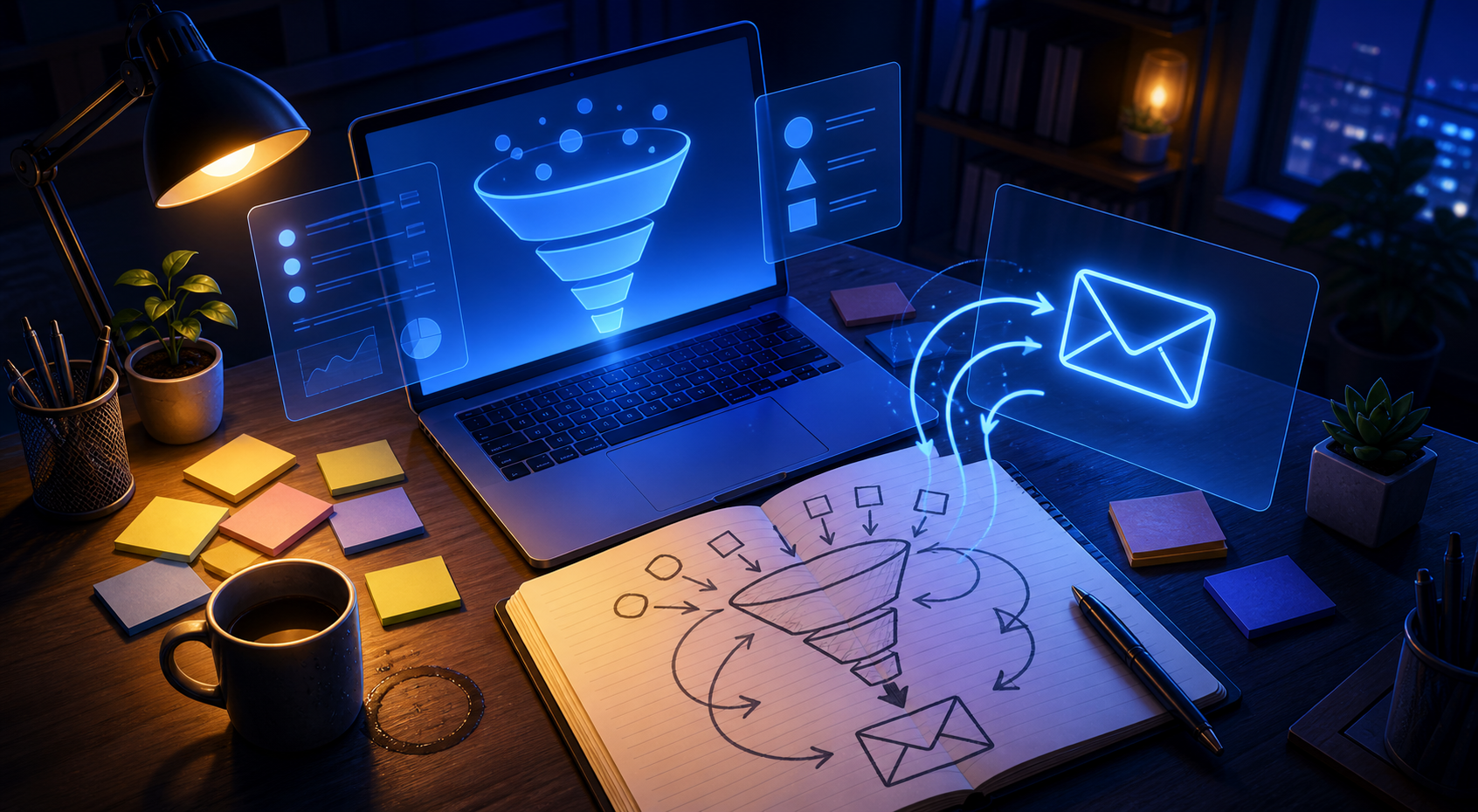
The Setup: A $47 Offer and a Leaky Funnel
The product was a digital training — a focused, practical course in the productivity-for-creators space. Not a massive info product empire. Just a clean $47 offer with a bump and a single upsell. The funnel was built in systeme.io (which, for the price point, is genuinely hard to beat — solid deliverability on the broadcast side, straightforward automation triggers).
Traffic came from a mix of sources: a small facebook retargeting campaign, a newsletter swap with a complementary creator, and some organic email traffic from an existing list. The opt-in rate was decent. The sales page had a reasonable amount of time-on-page. But the conversion rate on launch day was lower than expected — not catastrophic, but enough to make the numbers feel thin.
Here's what I noticed: a significant chunk of the people who hit the checkout page didn't complete the purchase. Some got partway through and bounced. Others opened the sales page email and never clicked. That second group — the ones who engaged but didn't convert — that's who I wanted to talk to.
The counterintuitive part? Those people are often your warmest leads. They're not cold. They're interested. They just needed something the initial sequence didn't give them.
Why the Original Sequence Was Failing Them
Look, I'm not going to pretend the original follow-up sequence was sophisticated. It was three emails: a launch announcement, a benefits-focused pitch, and a last-chance urgency email. Standard stuff. The kind of sequence that works fine when your list is hot and your offer has strong pre-launch momentum.
But for the people who almost bought? Those three emails weren't doing the job. They were pitching. Not listening. Not acknowledging that hesitation is real, that $47 — even though it's not a huge amount — is still a decision people weigh against a dozen other things competing for their attention and budget that week.
If you've ever felt like your email sequence is just shouting into a void, you're probably running a pitch sequence when you need a conversation sequence. There's a real difference, and it matters enormously at this price point.
For a deeper look at why this pattern shows up so often, this breakdown of why welcome sequences fail to sell affiliate offers covers the underlying mechanics really well — a lot of the same principles apply to launch follow-ups.
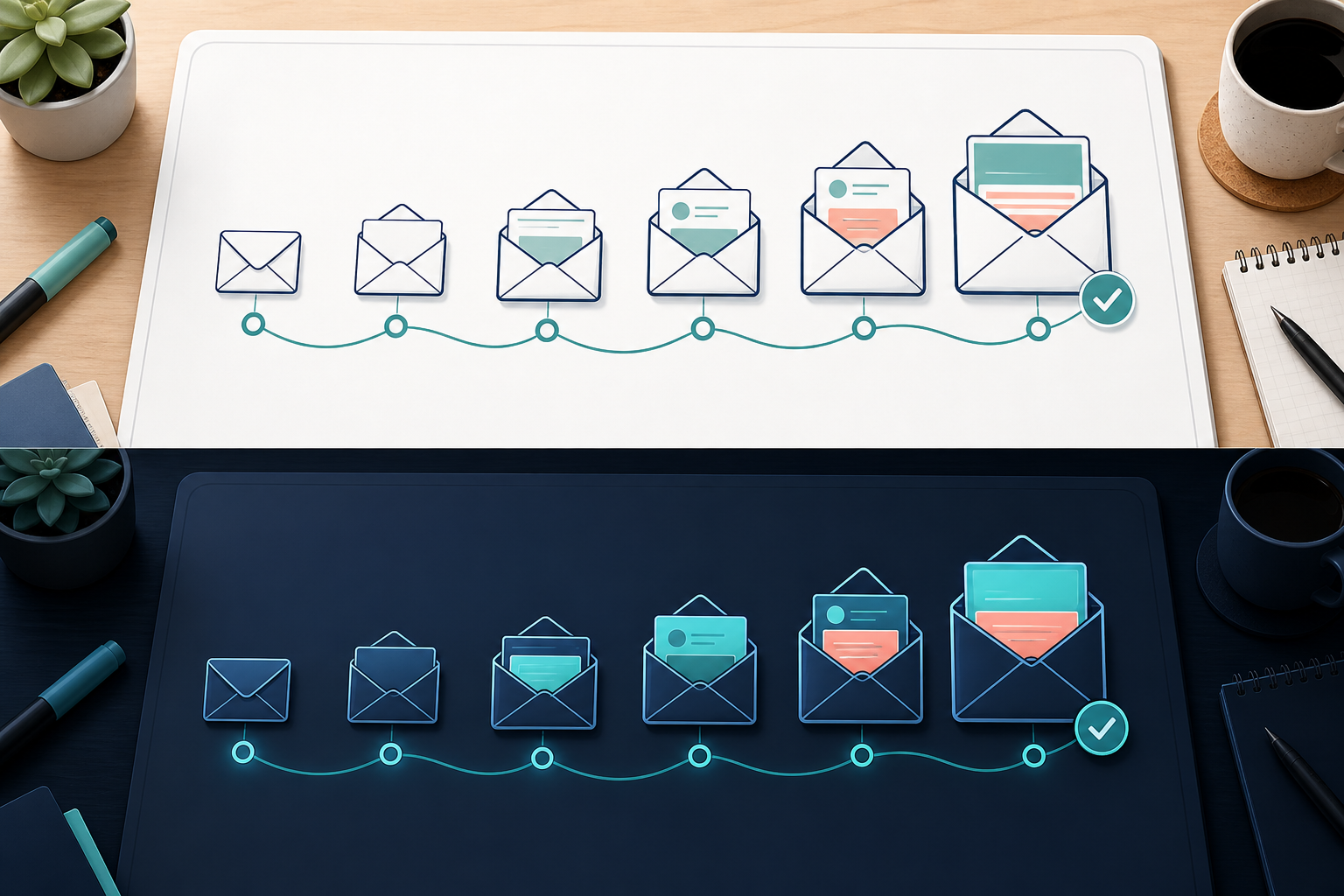
The 6-Email Sequence That Actually Worked
After the initial launch window closed, I rebuilt the follow-up sequence from scratch. Not for everyone — specifically for the segment who had opened at least one launch email but hadn't purchased. Behavioral segmentation. Simple, but critical.
Here's the structure I landed on:
Email 1: The Check-In (Day 1 Post-Launch)
No pitch. Just a short, personal-feeling email that acknowledged the launch had passed but that I wanted to make sure they hadn't missed anything. Subject line was something like: "Did this get buried in your inbox?" Open rates on this one were noticeably higher than the launch emails — because it didn't feel like a sales email. It felt like a person reaching out.
The body was three short paragraphs. Here's what the product is. Here's who it's for. Here's the link if you want to take another look. That's it.
Email 2: The Objection Email (Day 2)
This one I'm most proud of. Instead of pushing benefits, I wrote directly to the most common reasons people don't buy a $47 digital training. "You're not sure you'll actually use it." "You've bought things like this before and they collected digital dust." "Forty-seven dollars isn't nothing right now."
Naming those objections out loud — without being defensive about them — created a weird kind of trust. It sounds counterintuitive. But when you show someone you understand their hesitation, you stop feeling like a salesperson and start feeling like someone who actually gets them.
Email 3: The Story Email (Day 4)
A narrative email. Not a testimonial — I was careful about that, because fabricated social proof is something I won't touch. Instead, I told a story about my own experience with the problem the product solves. First-person, specific, honest about the struggle. No hero moment where everything magically worked. Just a real account of what it felt like to deal with the problem before having a system.
Story emails get forwarded. They get replied to. They do something that bullet-point benefit emails almost never do: they make people feel something.
Email 4: The FAQ Email (Day 5)
Short. Practical. Answered five real questions I'd gotten during the launch — formatted as actual Q&A, not marketing copy dressed up as questions. Things like: "How long does it take to go through?" and "Do I need any specific tools?" This email served double duty — it handled objections and it made the product feel more tangible and real.
Email 5: The Soft Deadline Email (Day 7)
Here's where I introduced a genuine reason to act — not a fake countdown timer, but a real one. I was pulling the bonus material that came with the product at the end of that week. The bonus was good enough that it gave people a legitimate reason to move sooner rather than later.
Manufactured urgency is something readers can smell from a mile away. Real urgency — tied to something that's actually changing — converts much better, and it doesn't erode trust.
Email 6: The Last Call (Day 8)
Short. Almost abrupt. "The bonus comes down tonight. Here's the link if you're in." That's essentially the whole email. At this point, everyone on the list had received enough information to make a decision. The last email wasn't there to persuade — it was there to remind.
From the Field: Practical Implementation Notes
A few things I learned running this that don't always make it into the theoretical breakdowns:
- Segmentation is everything. Sending this sequence to your entire list — including people who never opened a single launch email — is a mistake. You'll burn goodwill and inflate your unsubscribe rate. In ConvertKit or ActiveCampaign, you can tag based on link clicks and open behavior. Use it. Only people who showed some engagement during launch belong in this recovery sequence.
- Subject lines for follow-up sequences need to feel different. Your launch subject lines were probably punchy and benefit-driven. The recovery sequence subject lines should feel more personal, more curious, more like a direct message than a broadcast. Think: "Quick question about [product name]" vs. "Last chance to grab [benefit]."
- Timing gaps matter more than most people realize. I've found that spacing emails out with a day or two between them — rather than stacking them back-to-back — gives people room to actually think. Flooding someone's inbox over 48 hours is a great way to get an unsubscribe, not a purchase.
- Reply-to matters. If your emails come from a no-reply address or a domain that clearly signals mass broadcast, you're already fighting uphill. Send from a real address. Invite replies. Some of the most useful intel I've gotten about why people didn't buy came from actual reply conversations during this sequence.
- Plain text outperforms HTML for recovery sequences. This surprised me early on, but it makes sense. A beautifully designed email template signals "marketing email." A plain-text email signals "person." For a recovery sequence where you're trying to rebuild conversational trust, plain text wins almost every time.
If you're using a platform that makes behavioral tagging and sequence branching easy, that infrastructure matters a lot here. This roundup of email platforms that actually work for affiliate marketers is worth reading if you're still figuring out which tool fits your workflow — deliverability and automation flexibility are both factors in how well a sequence like this performs.
What Worked, What Didn't, and What I'd Change
The objection email (Email 2) and the story email (Email 3) were the workhorses. Those two generated the most replies, the most clicks, and — based on the purchase timestamps I could track — the most conversions. The FAQ email was useful but probably could have been folded into the story email without much loss.
The check-in email (Email 1) had great open rates but lower click rates. Which makes sense — it was designed to re-engage, not convert. But in retrospect, I might have added a softer call to action at the bottom, something like a link to a free resource related to the topic, just to warm people back up before the pitch sequence kicked in.
What I'd do differently: I'd add a branch for people who clicked but still didn't buy after Email 5. That's a micro-segment of highly interested people who just needed one more thing — maybe a payment plan option, maybe a more direct personal outreach. A simple two-email branch for cart-abandoners specifically (not just email-engagers) would have been worth building.
I'd also be more aggressive about behavioral segmentation from the start — tagging based on which specific links people clicked, not just whether they opened. That level of granularity makes the sequence feel genuinely personal rather than just personalized.
The Mindset Shift That Unlocks Better Follow-Up
Here's something I've come to believe pretty firmly: most follow-up sequences are written from a place of anxiety. The launch didn't hit the number. There's pressure to recover. So the emails get pushy, or they get defensive, or they just repeat the pitch louder.
That anxiety is completely understandable. I've felt it every single launch. But it almost always produces worse emails.
The sequences that actually recover abandoned leads are written from a place of genuine curiosity — why didn't this person buy, and what do they actually need to hear? That's a different starting point. And it produces very different emails.
If you're struggling with how long your sequence should actually be, that's often a symptom of not being clear on what each email is supposed to accomplish. Length follows function. Once you know what job each email is doing, the right length becomes obvious.
A lot of us have launched something we believed in, watched it underperform, and felt the creeping doubt that maybe the market just doesn't want what we're selling. Sometimes that's true. But more often, the offer is fine — the follow-up just wasn't doing its job. The leads weren't gone. They were just waiting for a reason to say yes that you hadn't given them yet.

Actionable Takeaways You Can Apply Today
If you're sitting on a list of people who engaged with your launch but didn't buy, here's where to start:
- Segment first. Pull anyone who opened at least one launch email or clicked any link. That's your recovery audience. Don't blast the whole list.
- Lead with empathy, not urgency. Your first email in the recovery sequence should feel like a check-in, not a chase. Acknowledge that life is busy. Make it easy to re-engage.
- Write an objection email. Seriously. Sit down and list every reason someone might hesitate to buy your specific offer at your specific price point. Write directly to those reasons. This is the email most people skip, and it's often the most effective one.
- Use real urgency, not manufactured scarcity. If you don't have a genuine reason to act now, create one — a bonus expiration, a price change, a cohort close date. Make it real.
- Keep Email 6 very short. By the end of the sequence, people know what you're offering. They don't need more information. They need a clean, low-friction reminder and a link.
- Track reply rates, not just open rates. Replies tell you something opens never can — they tell you whether your email felt like a real conversation or just another broadcast.
The truth is, the money in any launch isn't always in the launch itself. It's often in what happens in the 7-10 days after. The leads who didn't buy on Day 1 aren't lost — they're just unconvinced. And unconvinced is something a well-built sequence can fix.
You've already done the hard work of getting them to raise their hand. Don't walk away from that investment because the first sequence didn't close them. Write the follow-up they deserved from the start.