The Abandoned Cart Email Sequence That Saved a $47 Launch
I Almost Wrote Off the Whole Launch
I remember when I first saw the cart abandonment numbers on a $47 digital product launch I was running — a self-paced course on building lead generation funnels. The checkout page was getting traffic. People were adding to cart. And then... nothing. They just left. Somewhere between the order form and the confirmation page, a significant chunk of potential buyers evaporated, and I sat there staring at my ConvertKit dashboard wondering if I'd built something nobody actually wanted.
A lot of us have been through that exact feeling. That sinking, quiet panic when the numbers don't move the way you expected. You start second-guessing the offer, the price point, the copy — everything. Was $47 too much? Too little to seem credible? Did the checkout page look sketchy on mobile? You spiral.
What I didn't realize at the time — and what took me an embarrassingly long while to accept — was that cart abandonment isn't a product problem. It's almost always a follow-up problem. People don't buy in the moment for a hundred different reasons: they got distracted, they wanted to think about it, their kid walked in, their WiFi dropped. The ones who genuinely weren't going to buy? They were never your buyers. But the ones who were on the fence? Those are recoverable. And the email sequence is how you recover them.

The Shared Struggle Nobody Talks About Enough
Here's something the gurus don't post on their Instagram stories: most digital product launches — especially in the $37–$97 range — have cart abandonment rates that would make your stomach drop. We're talking 70–85% in a lot of cases. That's not a failure specific to you. That's the baseline reality of selling online.
But the community wisdom I've gathered from years in performance marketing circles tells a consistent story: the people who recover the most revenue aren't necessarily the ones with the best product or the slickest funnel. They're the ones who built a disciplined, human-feeling follow-up sequence and actually let it run.
Most people either don't build an abandoned cart sequence at all — because it feels complicated or aggressive — or they build one email, send it once, and call it done. Both approaches leave money sitting on the table. Not because of some manipulative pressure tactic, but because buyers sometimes just need a nudge, a reminder, or a simple answer to a question they had but didn't ask.
I've talked to enough people inside affiliate and digital product communities to know this is one of the most emotionally charged parts of launching. You feel like chasing abandoned buyers is desperate. Needy. Like you're begging. That mindset is costing you real revenue — and it's worth examining honestly.
What the Sequence Actually Looked Like
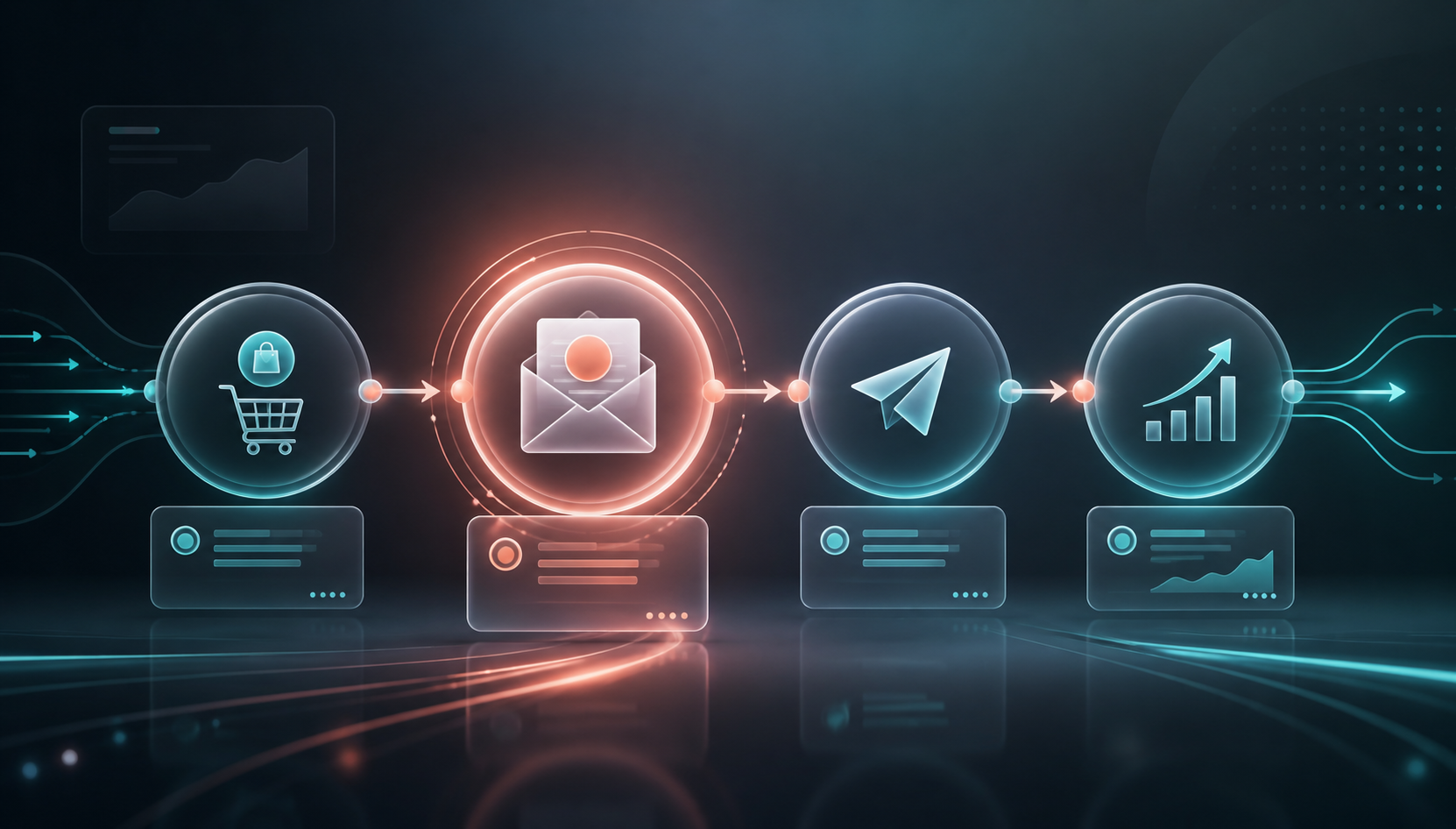
For this particular $47 launch, I was running traffic from a combination of organic email (my own list, built through ConvertKit) and some paid sources. The checkout was built in systeme.io, which has native cart abandonment tagging — meaning anyone who hit the order form but didn't complete got automatically tagged and pushed into a follow-up sequence.
Here's the structure I ran, and I want to be clear: this isn't a template I'm selling you. This is just what I did, what worked, and where I'd tighten things up next time.
Email 1: The Gentle Check-In (Sent at 1 Hour Post-Abandonment)
Short. Conversational. No subject line tricks. Something like: "Hey — did something go wrong?"
The body was three sentences. I acknowledged they'd started checkout, said I wanted to make sure there wasn't a technical issue, and dropped the direct link back to the order page. No pitch. No urgency. Just a human checking in.
This one email alone — and I've seen this pattern hold across multiple launches now — tends to recover a meaningful portion of genuinely interested buyers who actually did hit a technical snag or just got pulled away mid-checkout. Don't underestimate how many people are interrupted mid-purchase and forget to come back.
Email 2: The Value Reminder (Sent at 24 Hours)
This is where I shifted from check-in mode to light re-selling. Not a hard pitch — more of a "here's what's waiting for you inside" email. I picked two or three specific outcomes from the course, wrote them as mini-stories or scenarios, and ended with a single CTA back to the cart.
The subject line for this one leaned into specificity: something that referenced a real problem the buyer was likely trying to solve. Not clickbait. Just relevance.
I also added a brief FAQ section at the bottom addressing the three most common objections I'd heard from people who'd asked about the product before the launch: "Is this for beginners?" / "How long do I have access?" / "Do I need extra tools to implement this?" Answering those questions in the email — without the buyer having to ask — removed friction I didn't even know was there.
Email 3: The Social Proof + Soft Urgency (Sent at 48 Hours)
This one I almost didn't send. It felt like too much. But it's consistently been the email that closes the late-stage fence-sitters.
I included a couple of genuine, unsolicited responses I'd gotten from beta testers — not manufactured testimonials, just real words from real people who'd gone through the material early. I kept it honest. Then I introduced a soft close: the launch pricing was ending in 48 hours, after which the product would either go to full price or be removed from sale temporarily.
That part has to be true, by the way. If you say pricing is going up and it doesn't, you've broken trust with your list. I've watched marketers do this and wonder why their open rates crater over time. Your list remembers.
Email 4: The Last Call (Sent at 72 Hours — Launch Close)
Plain text. Short. Subject line: "Closing tonight."
That's it. One sentence explaining the offer closes, a link, and a genuine note that I'd love to help them if they had questions. No countdown timer GIF. No fake scarcity. Just honest.
What Actually Worked (And What Didn't)
The first email — the check-in — outperformed everything else in terms of direct recovery rate. Which makes sense. It was the least sales-y, and it arrived when the abandonment was freshest.
Email 3 took longer to show results but ended up being a significant contributor once the launch window closed and I could look at the full picture. Social proof, when it's genuine and specific, does something that copy alone can't.
What didn't work as well as I hoped: the FAQ section in Email 2. Not because it was a bad idea — I still think it's a good idea — but because I buried it below a long story section, and based on click behavior, most people weren't scrolling that far. If I ran this again, I'd move the FAQ above the CTA, not below it.
The counterintuitive part? Email 4 — the plain-text "Closing tonight" — had the highest click-through rate of the sequence. People had been warming up across the previous three emails, and by the time the final one landed, they were ready to make a decision. The simplicity of that email respected their intelligence. It didn't try to convince anyone of anything new. It just reminded them the window was closing.
If you're building email automation sequences that actually sell, the lesson here is consistency over complexity. Four well-timed, genuinely human emails will outperform an eight-email sequence stuffed with tricks every single time.
From the Field: Practical Implementation Notes
A few things I'd want anyone implementing this to know before they start:
- Tag-based triggering is non-negotiable. If your checkout platform can't tag cart abandoners automatically, you're going to be doing manual work that doesn't scale. Systeme.io handles this natively. thrivecart does too. If you're on a more basic setup, look at whether your email platform (ConvertKit, ActiveCampaign, MailerLite) has a way to receive a webhook or form submission that fires when someone hits the checkout URL without completing.
- Suppress buyers immediately. This sounds obvious but I've seen it go wrong more than once. Anyone who completes purchase needs to be removed from the abandonment sequence the second their payment processes. Sending a "did something go wrong?" email to someone who just bought is embarrassing and erodes trust fast.
- Timing windows matter more than you think. One hour for the first email is a sweet spot — close enough to feel relevant, far enough that it doesn't feel automated. I've tested 15-minute sends and they feel robotic. I've tested 3-hour sends and they lose the moment. One hour is where I land consistently.
- Plain text vs. HTML. My check-in email and final email are always plain text. Emails 2 and 3 get a minimal HTML template — nothing heavy, just enough structure to make the content scannable. The plain text ones have higher open rates and more replies, which is a signal about how people experience them.
- Don't forget mobile. A large percentage of your abandoners are on their phone. Your checkout page looked fine on desktop and broke something on their iPhone. Your email needs to render cleanly, your CTA button needs to be thumb-friendly, and your order page needs to load fast on mobile. Check all three before the sequence goes live.
One more thing: if you're thinking about how long your email sequence should actually be, four emails for a 72-hour launch window is a reasonable ceiling for a $47 offer. You're not selling a $2,000 coaching program. Over-emailing at this price point does more harm than good — people will unsubscribe or mark you as spam, and you'll damage the list relationship for future launches.
What I'd Do Differently
Honestly? A few things.
I'd add a direct reply option to Email 1 with a specific question: "Was there something about the offer you weren't sure about?" Not just an open inbox — an actual prompt. The replies you get from that question are worth more than any analytics tool because they tell you exactly what objections you failed to address on the sales page. I started doing this on later launches and the qualitative data alone changed how I wrote my next product page.
I'd also test a two-email version of this sequence against the four-email version. There's a real argument that for lower-ticket offers, a two-touch sequence (check-in at 1 hour, close at 48 hours) is less friction and still captures most of the recoverable revenue. I haven't run that split test cleanly yet, but it's on my list.
And — this is the one that stings a little to admit — I'd have set up the abandoned cart sequence before the launch, not two days in when I realized I was bleeding buyers. Set it up in advance. Test the triggers. Send yourself a test purchase that you abandon halfway through. Make sure the sequence fires correctly before your traffic is live. I know. Obvious in hindsight.
If you want to think about what happens after someone does buy — and how to keep that relationship converting — post-purchase emails that actually convert affiliate upsells is a topic worth spending time on. The sale is the beginning of the relationship, not the end of it.

The Bigger Thing I Want You to Take From This
If you're in the middle of a launch right now and watching your cart abandonment numbers climb, I want you to hear this clearly: you're not failing. You're just looking at normal buyer behavior without the infrastructure to respond to it yet.
A lot of us have launched products, watched the checkout page fill with half-completed orders, and concluded that the market didn't want what we built. Sometimes that's true. But more often, the product was fine and the follow-up was missing.
Building an abandoned cart sequence isn't about being pushy. It's about being present. It's about acknowledging that someone showed up, raised their hand, and then got pulled away by life — and that they deserve a reminder that you're still there when they're ready.
Four emails. A week of setup time. A little bit of courage to actually send them. That's the whole thing.
You don't need a complex automation platform with seventeen branches and conditional logic to make this work. You need a checkout tool that can tag abandoners, an email platform that can receive that tag, and the discipline to write emails that sound like a real person wrote them — because they should.
Start there. Adjust based on what you learn. And don't write off a launch until you've actually followed up.
This article contains affiliate links. We may earn a commission at no extra cost to you. Full disclosure.
Editorial Team
Senior Digital Marketing Strategist
The Prophet Visionary editorial team covers affiliate marketing, paid traffic, funnels, and digital product strategy with hands-on practitioner experience.
Learn more about our editorial team →Your List Is Only as Good as Your Email Platform
AWeber has 25+ years of inbox deliverability, drag-and-drop automation, and AI-powered copywriting built in. Free plan for up to 500 subscribers.
See Why Affiliates Use AWeberThis page contains affiliate links — I may earn a commission at no extra cost to you.
Disclaimer: The information on this site is for educational purposes only and does not constitute financial, legal, or business advice. Results vary based on individual effort, market conditions, and other factors. Always do your own due diligence before making business or investment decisions.