Post-Purchase Emails That Actually Convert Affiliate Upsells
I remember the first time I realized I was leaving serious money on the table. Not from bad traffic. Not from a weak offer. From silence.
Someone had just bought through my affiliate link — a mid-ticket digital product on clickbank, something in the productivity niche — and I had nothing planned for what came next. No follow-up. No sequence. Just a thank-you page I didn't even control, and then... nothing. That buyer disappeared into the vendor's ecosystem and I never heard from them again.
That stung. And honestly? A lot of us have been through exactly that moment. You work your tail off to get a conversion, and then you treat the relationship like it's over.
It's not over. It's just starting.
The Post-Purchase Window Nobody Talks About
Here's something that took me embarrassingly long to internalize: the moment someone buys is the highest-trust moment in your entire funnel. They've just handed over their credit card. They believe in the outcome. They're emotionally invested. And if you show up in their inbox right then — with the right message — you're not selling to a cold prospect anymore. You're talking to a believer.
Most affiliate marketers don't have a post-purchase sequence at all. And the ones who do usually just resend the same broadcast emails they send everyone else. That's a missed opportunity on a scale that's hard to overstate.
The counterintuitive part? Buyers don't want to be left alone after they purchase. They want reassurance. They want to feel smart for buying. And they're genuinely open to related offers — if those offers feel like a natural next step, not a cash grab.

What Most People Get Wrong About Upsell Emails
The biggest mistake I see — and I made it myself for longer than I'd like to admit — is treating post-purchase emails like a second sales funnel. You buy a product, and then immediately you're getting pitched something else. No breathing room. No acknowledgment of what you just did. Just: "Hey, since you bought X, you should also buy Y."
That's not a sequence. That's a receipt with a coupon stapled to it.
What works is something more human. The post-purchase window is about three things happening in a specific order:
- Validation — confirming they made the right call
- Activation — helping them get a quick win with what they just bought
- Expansion — introducing a complementary offer once trust is reinforced
Skip validation and activation, go straight to expansion, and your unsubscribe rates will tell you exactly what you did wrong.
A lot of us have rushed this process. I've done it. You're excited, the offer converts, you want to capitalize. But buyers can feel the desperation. They bought once — that doesn't mean they owe you another transaction in the next 48 hours.
Building the Sequence: A Framework That Actually Holds Up
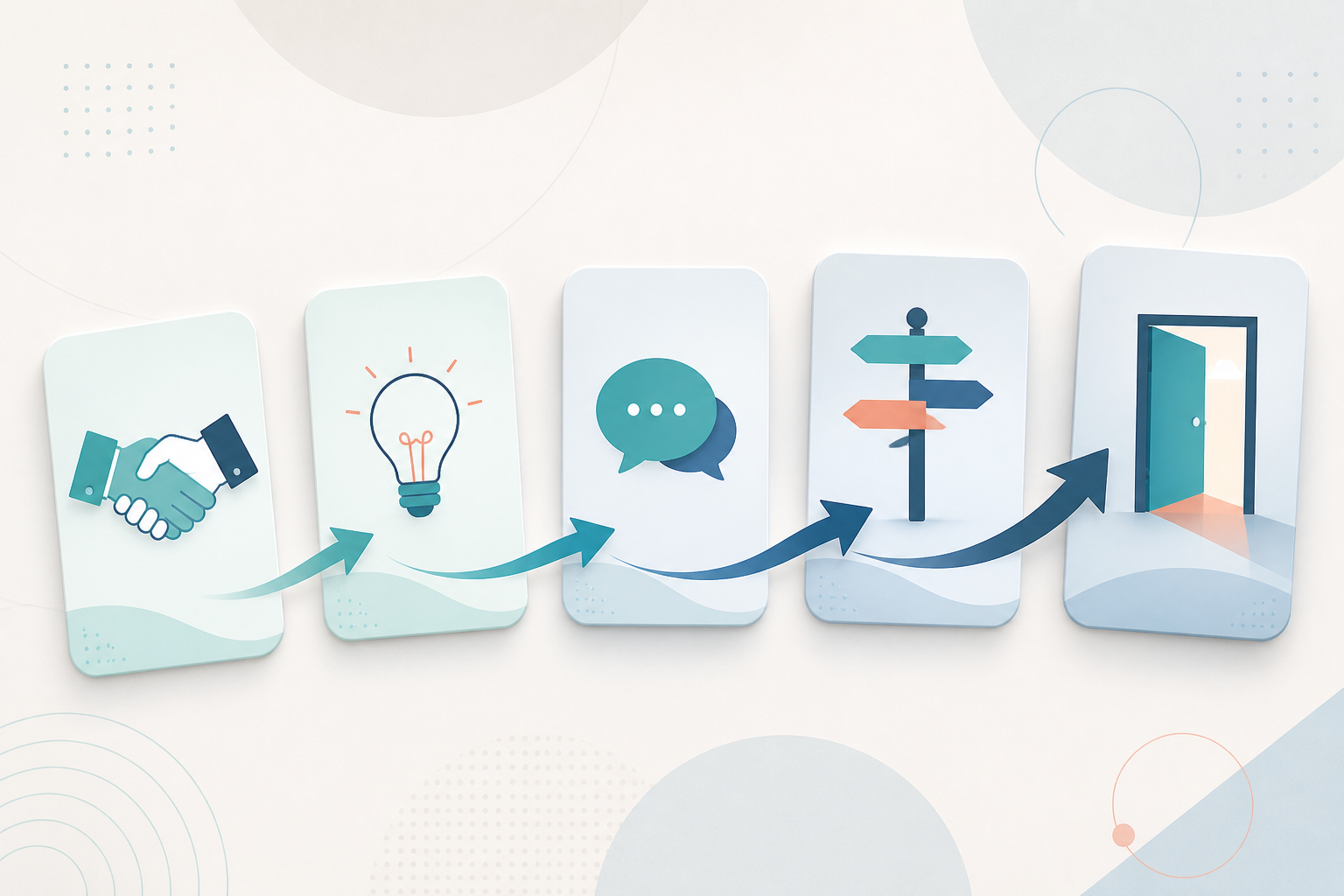
The structure I've landed on — after a lot of trial, error, and some genuinely painful list churn — is a 5-email post-purchase sequence spread over 10-14 days. Not 3 emails in 72 hours. Not a 30-day drip that loses momentum. Ten to fourteen days, with purpose behind every send.
Email 1: The Warm Welcome (Send Immediately)
This one goes out within minutes of purchase confirmation. Not hours. Minutes. The goal isn't to sell anything — it's to show up before the buyer's remorse has a chance to set in.
Acknowledge what they bought. Tell them what to expect. Make them feel like they joined something, not just bought something. If you're running this through ConvertKit or ActiveCampaign, tag the buyer segment and trigger this email off the purchase confirmation webhook. In systeme.io, you can set this up directly inside the funnel workflow with zero code.
One line I've used that consistently gets replies: "You just made a decision that a lot of people think about but never actually follow through on." Simple. Human. True.
Email 2: The First Win Setup (Day 2)
This is where you help them get traction. If the product is a course, point them to the best first module. If it's software, walk them through the one feature that delivers the fastest result. If it's a physical product, give them a tip that makes it work better than they expected.
You're not pitching anything here. You're being useful. That's it.
But — and this matters — you're also establishing yourself as a guide, not just the person who sold them a link. That positioning pays off in email 4 and 5.
Email 3: The Story Email (Day 4-5)
This is where you share something personal. A struggle you had before finding the solution. A mistake you made that the product helped you avoid. Something real.
I know this feels uncomfortable for a lot of affiliate marketers. We're used to thinking of ourselves as traffic sources, not personalities. But your list bought through you. They found you somewhere — a blog, a YouTube channel, a Facebook ad — and they trusted your recommendation. Lean into that. You're not a stranger to them.
No pitch in this email either. Just connection.
Email 4: The Soft Introduce (Day 7-8)
Now you can bring in a complementary offer. Not a hard sell — a mention. Something like: "A lot of people who've gone through [Product X] tell me the next thing they wish they'd had was [Product Y]. Here's why I think that's true for most people in this situation."
Then a single, clean link. No countdown timers. No fake urgency. Just an honest recommendation with context.
This is where offer stacking strategy becomes genuinely powerful — when the second offer feels like a logical upgrade, not a random add-on.
Email 5: The Direct Ask (Day 12-14)
By now, you've delivered value four times. You've been helpful, human, and patient. Email 5 is where you can be direct. Tell them what the offer is, why it matters, and what happens if they don't act on it.
This email can have urgency — but only if it's real. A limited bonus you're offering personally. A genuine enrollment window. Not a fake timer that resets every time they visit the page.
From the Field: Practical Implementation Notes
A few things I've learned that don't make it into most tutorials:
Segment before you sequence. Not every buyer is the same. Someone who came in through a paid traffic cold audience — say, a native ad on Taboola at $0.12 CPC — is in a very different headspace than someone who's been on your list for six months. If your email platform supports it (ConvertKit, ActiveCampaign, and gohighlevel all do this well), tag buyers by traffic source and adjust the tone of your sequence accordingly. Cold traffic buyers need more validation. Warm traffic buyers need less hand-holding and can get to the offer faster.
Watch your send times. Tuesday through Thursday, 9-11am or 1-3pm in your subscriber's timezone, consistently outperforms everything else in my experience. This isn't a universal law — test it — but it's a reliable starting point.
Plain text performs better than you think. For post-purchase sequences specifically, I've found that emails that look like they came from a person — no heavy graphics, no branded headers — get meaningfully higher open and reply rates than polished HTML templates. The buyer just gave you money. They want to feel like a human is following up, not a marketing department.
Deliverability matters more post-purchase than anywhere else. If your emails are hitting promotions tabs or spam folders, your entire sequence is dead on arrival. This is worth solving at the infrastructure level — not just with subject line tricks. If you haven't audited your deliverability setup recently, this breakdown of autoresponders ranked by deliverability is worth your time before you build anything else.
Don't ignore the no-opens. After your sequence runs, pull the subscribers who opened zero emails. They're not lost — they might just be on a platform with aggressive filtering, or they bought impulsively and cooled off. A re-engagement email at day 21, with a subject line that acknowledges the silence ("I probably missed you on this"), can recover a surprising number of those relationships.
What I'd Do Differently
Honestly? I'd have started building buyer-specific sequences years earlier. For too long I treated my entire list as one audience — and that meant my post-purchase messaging was always compromised by the fact that it also had to make sense to people who hadn't bought anything yet.
Segmentation isn't complicated. It just requires intention. And most of the major platforms — ConvertKit, ActiveCampaign, Systeme.io — make it straightforward once you decide to actually do it.
I'd also have been less afraid of the personal emails. Email 3 in the framework above — the story email — used to make me uncomfortable. It felt like oversharing. What I didn't understand was that oversharing, done with purpose, is what separates a list that buys once from a list that buys repeatedly. People don't stay subscribed to a link repository. They stay subscribed to someone they trust.
And I'd have thought harder about what the right upsell actually was before building the sequence. There's a real difference between a complementary offer and an opportunistic one. If you're not sure whether your upsell passes the "does this genuinely help them?" test, it probably doesn't. The sequence will underperform and you'll blame the emails when the real problem is the offer selection.
For more on that — specifically how to sequence offers in a way that builds on each other rather than competing — this piece on high-ticket offer stacking covers the logic in more depth than I can here.
The Emotional Reality Nobody Mentions
Here's the part that doesn't get written about enough: building post-purchase sequences is vulnerable work. You're committing to a relationship with people who trusted you, and you're doing it without knowing how they'll respond.
Some will unsubscribe. Some will reply with harsh feedback. Some will buy again and again and become the kind of subscribers who make you genuinely glad you're doing this work.
A lot of us have felt the sting of building something thoughtfully and watching the open rates disappoint us. That's real. But the answer isn't to stop building — it's to keep refining. The affiliates I've seen build durable income streams aren't the ones with the flashiest funnels. They're the ones who showed up consistently in their buyers' inboxes with something worth reading.
If you're earlier in that journey — still figuring out how to structure the emails before the purchase, let alone after — this guide on welcome sequences that build trust before the pitch is a good place to anchor the front end of your funnel before you optimize the back.
The post-purchase sequence isn't a tactic. It's a philosophy — that the sale is the beginning of the relationship, not the end of it. Build from that belief, and the conversions follow.

This article contains affiliate links. We may earn a commission at no extra cost to you. Full disclosure.
Editorial Team
Senior Digital Marketing Strategist
The Prophet Visionary editorial team covers affiliate marketing, paid traffic, funnels, and digital product strategy with hands-on practitioner experience.
Learn more about our editorial team →Your List Is Only as Good as Your Email Platform
AWeber has 25+ years of inbox deliverability, drag-and-drop automation, and AI-powered copywriting built in. Free plan for up to 500 subscribers.
See Why Affiliates Use AWeberThis page contains affiliate links — I may earn a commission at no extra cost to you.
Disclaimer: The information on this site is for educational purposes only and does not constitute financial, legal, or business advice. Results vary based on individual effort, market conditions, and other factors. Always do your own due diligence before making business or investment decisions.