Offer Stacking for High-Ticket Affiliate Email Sequences
The Outcome You're Actually Chasing
Here's what offer stacking in email sequences is supposed to do: take a subscriber who came in at $0 and walk them—methodically, over days or weeks—toward a $500, $1,000, or $2,000+ purchase. Not through pressure. Through sequenced relevance.
Most affiliate email marketers miss this entirely. They blast a welcome sequence, drop one or two mid-ticket offers, then wonder why their list feels 'burned out' by week three. The truth is, they were never stacking—they were just promoting.
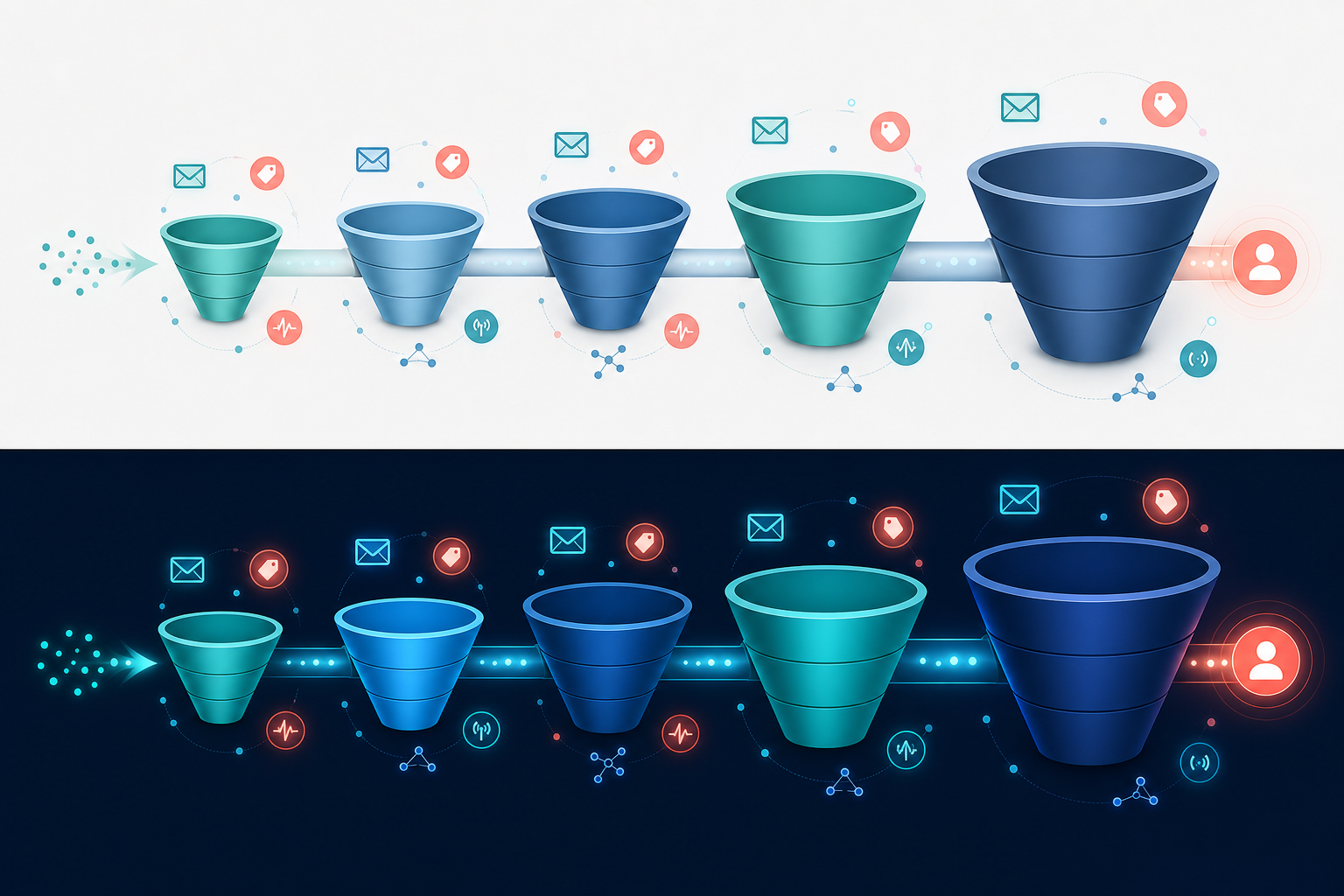
Stacking is different. It's deliberate architecture. Each offer in the sequence serves the next one. A $27 entry product creates the context for a $297 upsell. That $297 creates the emotional and logical runway for a $1,500 mastermind or software suite. Done right, you're not selling harder—you're selling smarter, with each email doing pre-sell work for what comes next.
The specific outcome this framework targets: a 30–45 day email sequence that generates an average order value (AOV) of $400–$900 per converting subscriber, across a mix of entry, mid, and high-ticket affiliate offers. That's a measurable benchmark. Let's map the path to it.

Milestones and Timeline: What to Expect at Each Stage
I've found that most people underestimate how long behavioral trust takes to build in an inbox. Here's a realistic timeline for a properly structured high-ticket stack:
- Days 1–3 (Welcome Phase): No hard selling. One soft-touch offer—a free tool, a $7–$27 tripwire—that filters buyers from browsers. Open rates here should be 35–55% if your lead magnet was strong. Clicks on the tripwire offer? Expect 8–15% CTR on a warm list.
- Days 4–10 (Trust-Building + Entry Offer): Two to three value emails with embedded soft CTAs toward a $47–$197 digital product or course. This is where you're qualifying buyers. If 2–4% of your list converts here, you're on track.
- Days 11–21 (Mid-Ticket Bridge): A 3–5 email mini-campaign around a $297–$497 offer—typically a software subscription, coaching program, or advanced course. Buyers from the entry phase are your warmest targets. Segment them. Email them separately with a slightly more direct pitch. Expect 1–2% conversion from your full list, 4–6% from proven buyers.
- Days 22–45 (High-Ticket Ascension): This is where the real revenue lives. A $997–$2,500 offer—think ClickBank's Platinum-tier products, high-commission software like GoHighLevel (which pays 40% recurring), or premium masterminds. Conversion rates here are lower, 0.3–0.8% of cold subscribers, but the commission per sale ($300–$1,000+) changes the math entirely.
By day 45, a list of 1,000 subscribers running this sequence could reasonably generate $4,000–$12,000 in total commissions—depending on niche, list quality, and offer alignment. That's not a guarantee. That's a range based on what the numbers look like when the architecture is sound.
The Stacking Framework: How to Build It Email by Email
Step 1: Choose Offers That Form a Logical Progression
This is where most affiliate marketers blow it. They pick offers based on commission rate, not offer continuity. A subscriber who came in for a free guide on email copywriting doesn't want a random $997 crypto course three weeks later. The stack has to make narrative sense.
A clean example in the make-money-online (MMO) space: a free lead magnet on list building → a $37 email swipe file pack (tripwire) → a $197 email marketing course → a $497 ConvertKit or ActiveCampaign training program → a $1,497 affiliate marketing mastermind. Every rung connects. The subscriber never feels whiplash.
For health and wellness: a free meal plan → a $27 recipe book → a $197 metabolic coaching program → a $497 supplement protocol course → a $1,200 online fitness coaching offer. Same logic. Same ladder.
Step 2: Write Emails That Pre-Sell the Next Rung
The counterintuitive part of offer stacking is that your best sales copy isn't in the pitch email—it's in the email before it. The pre-sell email plants the seed. It introduces the problem the next offer solves, tells a story, maybe shares a case study. Then the pitch email closes.
A two-email structure I keep coming back to: Email A is a "here's a problem you might not know you have" story email. No direct offer. Just education and mild tension. Email B is the solution reveal with a CTA. This pattern consistently outperforms single-pitch emails in my experience, especially for offers above $300.
For high-ticket offers specifically—anything above $500—I'd recommend a 3-email mini-sequence: problem agitation → case study or proof → pitch with urgency. Spread across three days. Don't compress it. High-ticket buyers need more runway. You can read more about sequencing depth in how long your affiliate email follow-up sequence should actually be—the answer might surprise you.
Step 3: Segment Aggressively Based on Behavior
If you're not segmenting by click behavior and purchase behavior, you're leaving serious money on the table. Here's the minimum viable segmentation setup:
- Non-openers (7+ days): Drop them into a re-engagement sequence. Don't keep pitching cold contacts your high-ticket offers.
- Clickers who didn't buy: These are hot. Send a follow-up with a different angle—a FAQ email, an objection-handling email, or a limited-time bonus.
- Buyers (any tier): Immediately tag them and move them to the next rung of the stack. Don't keep emailing them about an offer they already purchased.
Platforms like ActiveCampaign, ConvertKit (now Kit), and Drip handle this with tag-based automation. If you're on a tighter budget, Systeme.io does basic behavioral tagging and is surprisingly capable for a $27/month plan. See email platforms that actually work for affiliate marketers for a full breakdown of what each handles well.
Step 4: Introduce High-Ticket Offers With a Soft Anchor
Don't just drop a $1,500 offer cold. Anchor it. Mention it casually in an earlier email—"I've been going through a program that's changed how I think about [X]... I'll share more next week"—then reveal it properly later. This primes the subscriber psychologically. By the time the pitch arrives, it doesn't feel like a pitch. It feels like a follow-up to something they were already curious about.
A Real-World Scenario: 45 Days, One List, Four Offers
Let's walk through a concrete scenario. Imagine an affiliate in the business software niche. Their lead magnet is a free "Agency Starter Toolkit" PDF. They've built a list of 2,000 subscribers over 90 days using Meta lead ads at roughly $1.80 per lead.
Offer Stack:
- Day 1–2: $37 agency proposal template pack (tripwire) — 9% conversion rate = 180 buyers, $6,660 gross
- Day 5–10: $197 agency pricing course — 3% of full list + 8% of tripwire buyers = ~74 conversions, $14,578 gross
- Day 14–21: $497 GoHighLevel affiliate training program — 1.5% of full list = 30 conversions, $14,910 gross
- Day 28–45: $1,497 agency mastermind (high-ticket) — 0.5% of full list = 10 conversions, $14,970 gross
Total gross commissions across 45 days: approximately $51,118 from a 2,000-person list. Commission rates vary—some of these are 30–50% affiliate cuts, some are lower. But the point stands: the stack compounds. The mastermind alone, from 10 conversions, nearly matches what the entry offer generated from 180.
That's offer stacking math. And it's why the high-ticket tail of your sequence matters more than the front-end volume. If you want to see how a recovery-focused sequence can resurrect dead leads in a similar framework, this case study on abandoned funnel leads is worth reading.
Pitfalls That Kill the Stack Before It Pays Off
A few things I've watched derail otherwise solid stacks:
Promoting too many offers simultaneously. Pick one offer per phase. If you're promoting three $200 products in the same week, your subscriber doesn't know what to focus on and converts on none of them. Focus creates urgency.
Skipping the mid-ticket rung. Some affiliates try to jump from a $37 tripwire directly to a $1,500 offer. It almost never works. The mid-ticket offer ($197–$497) is the trust bridge. It converts browsers into proven buyers and psychologically prepares them for a larger investment.
Using the same copy angle for every offer. Your entry offer should sell on curiosity and quick wins. Your mid-ticket offer should sell on transformation and depth. Your high-ticket offer should sell on identity, community, and long-term ROI. Different emotional triggers. Different copy frameworks.
Not cleaning your list before the high-ticket push. By day 28, anyone who hasn't opened a single email in three weeks should be suppressed from your high-ticket sequence. You're wasting sends—and potentially deliverability—on dead contacts. This is non-negotiable.
Practical Implementation Notes
From actually building these sequences—not just theorizing about them—here are the workflow details that matter:
Automation setup: Build your stack in phases, not all at once. Get your welcome + tripwire sequence live first. Test it for two weeks. Then layer in the mid-ticket mini-campaign. This way you're optimizing based on real data, not assumptions. I've seen people build 45-email sequences before getting a single subscriber, then have to rebuild everything because the entry offer flopped.
Email cadence: For high-ticket offers, daily emails during the 3-day pitch window are fine—and often necessary. Outside of pitch windows, 3–4 emails per week is the sweet spot for staying top-of-mind without burning the list. Drop below 2/week and you lose momentum. Go above 5/week outside of launches and unsubscribes spike.
Subject line strategy for high-ticket emails: Curiosity-driven subject lines consistently outperform benefit-driven ones at the high-ticket stage. "The $1,500 mistake most agency owners make" beats "Join our mastermind and grow your agency." People click on tension. They buy on trust you've already built.
Tracking: Use UTM parameters on every CTA link. ClickBank's affiliate dashboard, Impact, and PartnerStack all support this. You need to know which email in your sequence is generating the most high-ticket clicks—because that's where you double down. Blind optimization is just guessing.
Tools I'd use for this today: ActiveCampaign for the automation logic (behavioral triggers, conditional sequences), ClickBank or Impact for the actual offer inventory, and clickfunnels or GoHighLevel for the bridge pages between email CTAs and affiliate offers. Bridge pages—short pre-sell pages that warm the click before hitting the affiliate's sales page—consistently lift high-ticket conversion rates by 15–30% in my experience.

Revenue Model Analysis: What the Numbers Actually Look Like
Let's be honest about ranges. Offer stacking isn't a get-rich-quick mechanism—it's a revenue architecture decision. Here's what realistic performance looks like across different list sizes and niches:
| List Size | Niche | Expected 45-Day Stack Revenue Range |
|---|---|---|
| 500 subscribers | MMO / Business | $2,000–$8,000 |
| 1,000 subscribers | Health & Wellness | $3,500–$12,000 |
| 2,500 subscribers | SaaS / Agency | $15,000–$45,000 |
| 5,000 subscribers | Finance / Investing | $25,000–$80,000 |
These ranges reflect variable factors: list quality, lead source (paid vs. organic), offer alignment, and how well the sequence is written. A 5,000-person list built from junk solo ads will underperform a 1,000-person list built from targeted Facebook leads every single time. Size is a vanity metric. Buyer intent is the real variable.
The finance and investing niche skews highest because high-ticket offers in that space—trading courses, advisory subscriptions, premium newsletters—carry both high commission rates (sometimes 50–75%) and high price points. SaaS and agency niches benefit from recurring commissions, which compound over time even if initial conversion rates are lower.
How This Fits With Other Monetization Methods
Offer stacking isn't a standalone strategy—it's a layer on top of your broader monetization architecture. If you're also running broadcast campaigns, product launches, or paid traffic to cold offers, the stack serves as your always-on revenue engine while launches create spikes.
Think of it this way: your broadcast emails to the full list handle timely promotions and new offer announcements. Your automated stack handles everyone who just joined. Both run simultaneously. The stack never sleeps. A subscriber who joins at 2am on a Tuesday immediately enters the sequence and starts moving through the offer ladder—no manual work required.
This is also why the stack pairs naturally with behavioral trigger automation—when you layer purchase signals and click behavior on top of a time-based sequence, you get a genuinely responsive system that adjusts based on what subscribers actually do, not just how long they've been on your list.
You'll Know It's Working When...
A few signals that your stack is performing the way it should:
- Your AOV climbs above $300 per converting subscriber by day 30. Below that, your mid-ticket bridge is probably weak.
- Buyers from your entry offer are converting on your mid-ticket offer at 4%+. If it's below 2%, your bridge email isn't doing its job.
- You're seeing high-ticket conversions before day 45—meaning the pre-sell emails are working and subscribers aren't waiting to be pushed.
- Your unsubscribe rate stays below 0.5% per email during the high-ticket phase. If it spikes above 1%, you're pitching too hard or the offer doesn't match subscriber expectations.
- Your email-to-revenue attribution shows the pre-sell email (not the pitch email) driving the most assisted conversions. That's when you know the architecture is actually working—because the sale is happening before the sale.
That last one is the real sign of a mature stack. When the pitch email almost feels redundant because the subscriber already decided—that's when you've built something worth scaling.
This article contains affiliate links. We may earn a commission at no extra cost to you. Full disclosure.
Editorial Team
Senior Digital Marketing Strategist
The Prophet Visionary editorial team covers affiliate marketing, paid traffic, funnels, and digital product strategy with hands-on practitioner experience.
Learn more about our editorial team →Monetize Smarter With Funnels + Email in One Place
Order bumps, upsells, automated email sequences, and your own affiliate program — Systeme.io gives you the full monetization stack without the bloated monthly spend.
See the Monetization StackThis page contains affiliate links — I may earn a commission at no extra cost to you.
Disclaimer: The information on this site is for educational purposes only and does not constitute financial, legal, or business advice. Results vary based on individual effort, market conditions, and other factors. Always do your own due diligence before making business or investment decisions.