Email List Building for Affiliates: From Zero to Converting Subscribers
Most affiliates think they need a massive email list to make serious money. Wrong. I've seen marketers with 50,000 subscribers barely scraping by, while others with 3,000 highly-engaged readers pull in six figures annually.
The difference? How you build that list—and what you do with it once people subscribe.
After watching countless affiliates crash and burn with generic "make money online" lists, I've learned that successful email marketing comes down to three core principles: hyper-targeted lead magnets, ruthless segmentation, and value-first nurturing sequences. Everything else is just noise.
The Foundation: Lead Magnets That Actually Convert
Your lead magnet isn't just a freebie—it's a filter. The wrong one attracts freebie seekers who'll never buy anything. The right one pre-qualifies prospects who are already primed to purchase.
I've found that problem-solving lead magnets outperform generic "ultimate guides" by 3:1 in most niches. Instead of "The Complete Guide to Weight Loss," try "The 7-Day Meal Prep System That Eliminates Decision Fatigue." See the difference? One promises everything (and delivers overwhelm), the other solves a specific pain point.
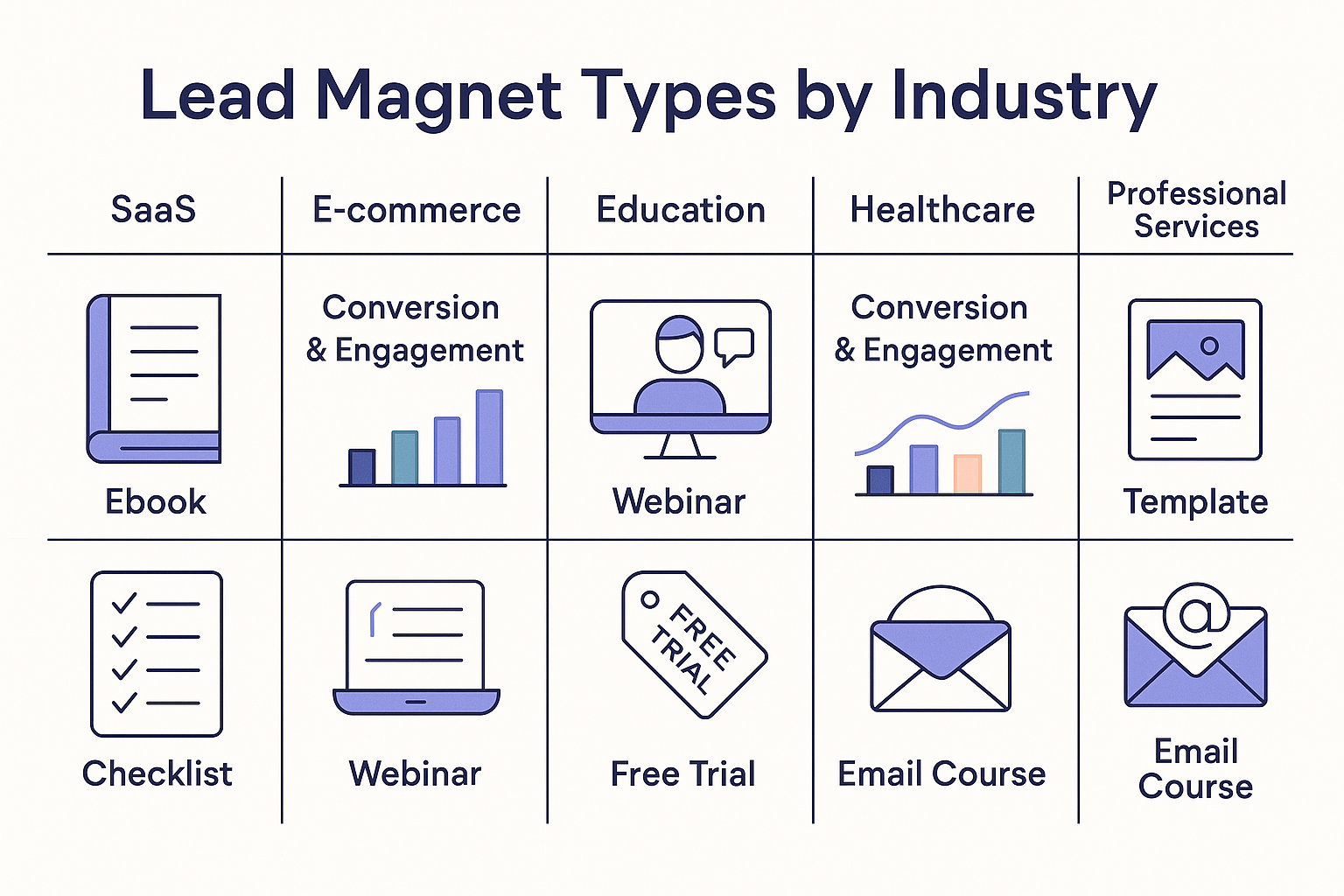
High-Converting Lead Magnet Formats by Niche
For affiliate marketers in the business/finance space, calculators and tools crush it. A simple ROI calculator or budget planner generates leads that convert at 15-25% higher rates than PDF downloads. The reason? People who use calculators are actively evaluating purchases.
In health and fitness, challenge-based lead magnets work incredibly well. A "21-Day Sugar Detox Challenge" with daily emails creates engagement patterns that make subscribers expect—and welcome—your messages. Plus, challenges naturally segment your list between participants (high engagement) and observers (lower intent).
Tech and software affiliates should focus on templates and swipe files. Marketing email templates, social media calendars, or even simple checklists perform better than lengthy tutorials because they provide immediate utility.
Traffic Sources That Build Quality Lists (Not Just Big Ones)
Here's what nobody tells you about list building: the traffic source determines list quality more than your opt-in rate. A 35% opt-in rate from TikTok traffic often produces lower lifetime value than a 12% rate from Google organic.
Facebook and Instagram ads remain the most scalable option for most affiliates, but the targeting has gotten trickier post-iOS 14.5. I'm seeing better results with interest stacking (combining 3-4 narrow interests) rather than broad targeting, especially in competitive niches like make money online or weight loss.
The Underutilized Goldmine: Native Advertising
Taboola and Outbrain traffic converts differently than social media—it's more intent-driven but requires different creative approaches. Your "curiosity gap" headlines that work on Facebook often fall flat on native platforms, where educational angles perform better.
Say you're promoting a trading course as an affiliate. On Facebook, "The $5 Trade That Changed Everything" might work. On Outbrain, try "Why Most Day Traders Lose Money (And How to Avoid Their Mistakes)." The native audience is already in content consumption mode—meet them there.
Pinterest remains criminally underused by affiliates, especially in evergreen niches. A single well-optimized pin can drive opt-ins for months. The key is treating Pinterest like a search engine, not social media. Focus on keyword-rich descriptions and seasonal content planning.
Email Platform Selection: Beyond the Obvious Choices
ConvertKit and Mailchimp dominate the conversation, but they're not always the best choice for affiliates. The real question is: what do you need your email platform to do?
If you're running complex funnels with multiple products, ActiveCampaign's automation capabilities justify the higher cost. But if you're just starting out, Systeme.io offers funnel building, email marketing, and affiliate program management in one platform—perfect for product creators who want to recruit affiliates.
The Compliance Factor
Platform policies matter more in 2026 than ever before. Mailchimp has gotten stricter about affiliate marketing, while ConvertKit remains affiliate-friendly but requires disclosure compliance. AWeber falls somewhere in between but offers better deliverability in my experience.
For international affiliates, Sendinblue (now Brevo) handles GDPR compliance better than most US-based platforms. The interface isn't as polished, but the legal protection is worth the trade-off if you're targeting European audiences.
Segmentation Strategies That Maximize Affiliate Commissions
Generic broadcast emails are leaving money on the table. Smart segmentation can double your affiliate earnings without increasing list size.
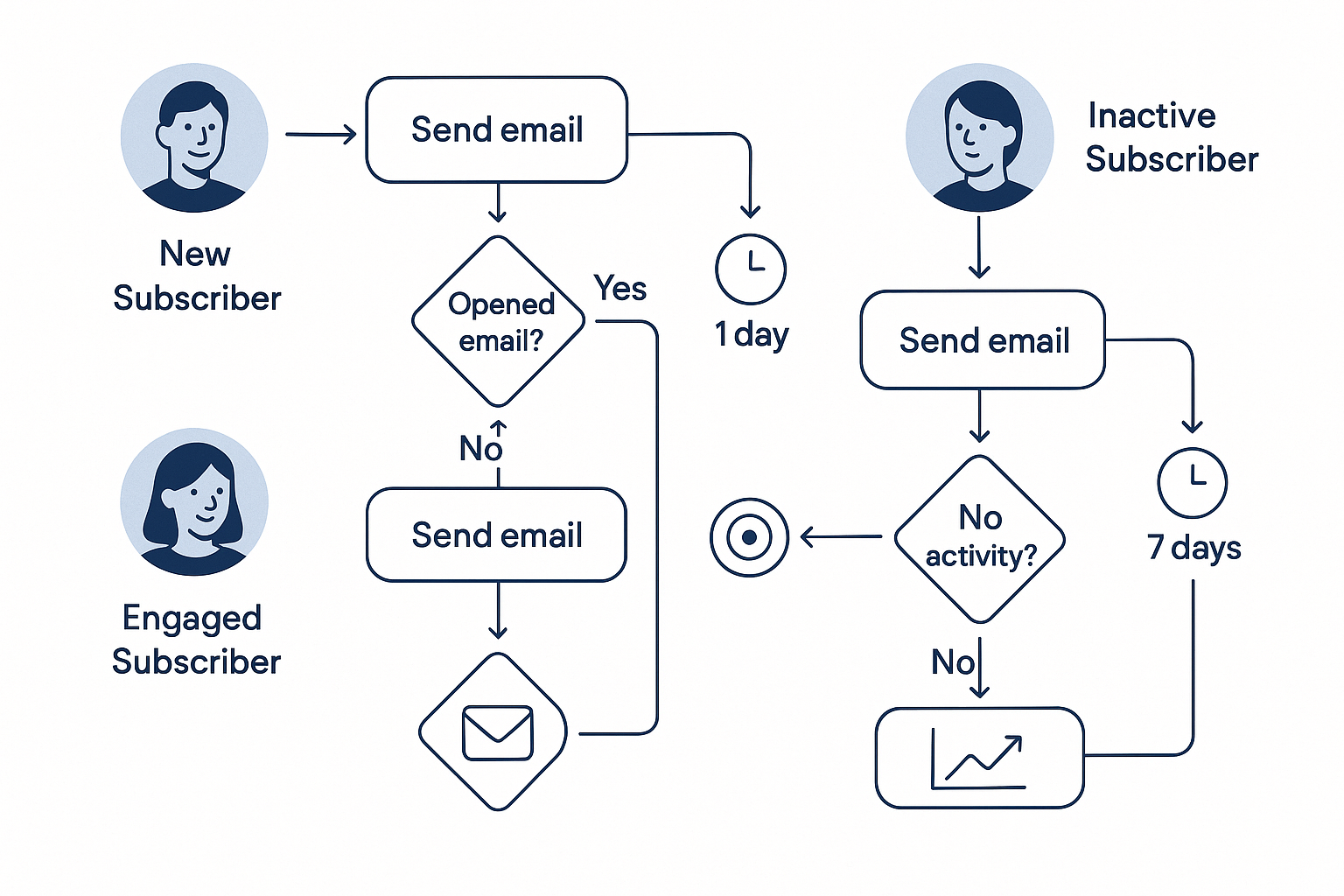
The most effective segmentation starts at opt-in. Instead of a single lead magnet, create 3-4 variations that appeal to different buyer personas. Someone who downloads "Beginner's Trading Guide" gets different email sequences than someone who grabs "Advanced Options Strategies."
Behavioral segmentation beats demographic data every time. Track who clicks affiliate links but doesn't purchase—these are your warm prospects who need different messaging than cold subscribers. Create a segment for link-clickers and hit them with social proof and urgency-based campaigns.
The Purchase History Goldmine
If you're a product creator with an affiliate program, segment your customers by purchase behavior. Customers who bought your $47 course are prime candidates for $197 coaching programs—either yours or affiliate offers in related niches.
But here's the counterintuitive part: recent purchasers often convert better on complementary affiliate offers than your own higher-ticket products. Someone who just bought a Facebook ads course might be more receptive to a recommended analytics tool than your advanced advertising mastermind.
Email Sequences That Sell Without Selling
The best affiliate emails don't feel like affiliate emails. They feel like recommendations from a knowledgeable friend who happens to know about useful products.
My go-to sequence for new subscribers starts with pure value for the first three emails. No affiliate links, no pitches—just helpful content that establishes authority. Email four introduces the first soft recommendation, usually as a "by the way" mention rather than the main focus.
The Problem-Agitation-Solution Framework (With a Twist)
Traditional PAS formulas feel manipulative in 2026. Instead, try Problem-Empathy-Solution. Acknowledge the problem, show you understand the frustration (not just the surface issue), then present the solution as something that worked for you or someone you know.
For example: "I spent three years trying every productivity system out there. Notion, Todoist, even going back to paper planners. Nothing stuck until I discovered this simple framework..." The personal angle makes the eventual affiliate recommendation feel authentic rather than calculated.
Timing matters too. Monday emails about productivity tools convert better than Friday sends. Thursday works well for weekend course launches. Weekend emails perform surprisingly well for entertainment and hobby-related affiliates.
Measuring What Matters: Beyond Open Rates
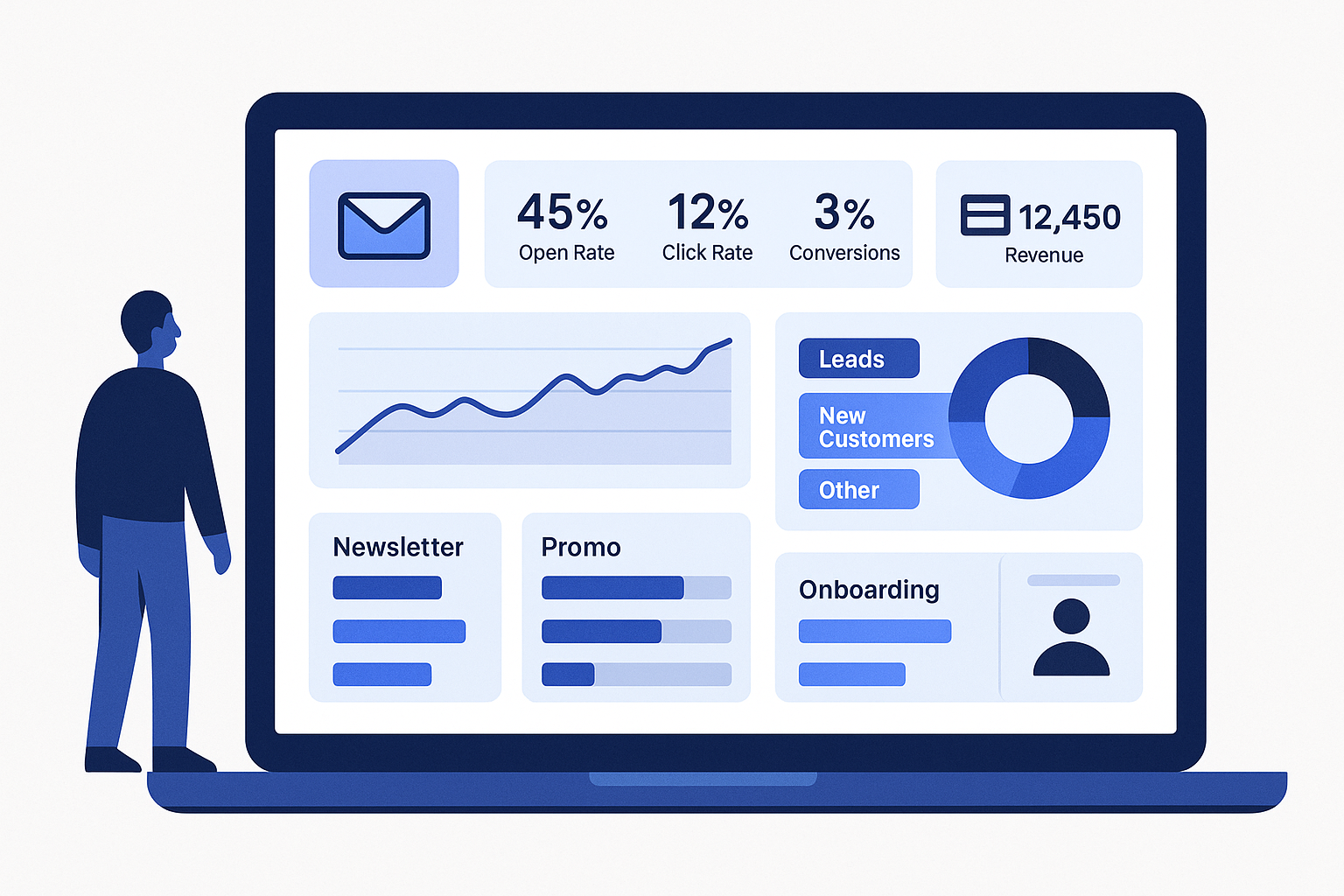
Open rates are vanity metrics. Click-through rates tell part of the story. But revenue per subscriber is the number that pays your bills.
Track lifetime value by traffic source and lead magnet. You'll discover that some opt-in offers attract buyers while others collect tire-kickers. Double down on what works, kill what doesn't.
The most successful affiliates I know track "email-to-sale" conversion rates for each major promotion. If your travel credit card email gets a 15% click rate but only 0.5% of clickers actually apply, you've got a messaging problem—or you're promoting to the wrong segment.
The 2026 Metrics That Matter
With iOS privacy changes and email client updates, traditional metrics are less reliable. Focus on engagement depth rather than surface-level opens. Replies, forwards, and time spent reading (where available) indicate true subscriber interest.
Gmail's new inbox categories affect delivery and engagement patterns differently across niches. Finance and business emails often land in "Updates" while health and lifestyle content stays in Primary. Test your campaigns across different email clients—what works in Apple Mail might flop in Outlook.
The future of email marketing isn't about bigger lists or better subject lines. It's about building genuine relationships with people who trust your recommendations. As AI-generated content floods inboxes, authentic voices will command premium attention—and higher affiliate commissions.
Smart affiliates are already adapting by focusing on micro-communities rather than mass audiences. A thousand engaged subscribers in a specific sub-niche often outperform ten thousand general interest subscribers. The tools and tactics will keep evolving, but the fundamentals of trust-based marketing remain constant.
Related reading: Best Email Autoresponders for Affiliate Marketers (Ranked by Deliverability)
Frequently Asked Questions (Updated 2026)
Does iOS 18 Mail Privacy Protection make email list building pointless for affiliates?
No—but it does make vanity metric-chasing pointless. iOS 18's expanded Mail Privacy Protection (MPP), which now affects a majority of Apple Mail users, inflates open rates by pre-loading tracking pixels regardless of whether a subscriber actually opened your email. This means open rates are no longer a reliable signal of list health or engagement.
What this means practically for affiliate list builders in 2026: shift your primary engagement KPIs to clicks, click-to-open ratios (for non-Apple clients), and downstream conversions. Segment your list based on click behavior and purchase history rather than opens. ESPs like ActiveCampaign, Klaviyo, and ConvertKit have all released MPP-adjusted engagement scoring—make sure you're using it. A well-built, click-engaged list of 3,000 subscribers is still worth far more than a 20,000-person list optimized for open rates that no longer mean anything.
What's the best lead magnet format for affiliate list building in 2026?
The highest-converting lead magnet formats for affiliates in 2026 depend heavily on niche, but three formats are consistently outperforming traditional PDF guides across categories:
- AI prompt packs and workflow templates — Especially effective for tech, SaaS, and productivity niches. A curated set of ChatGPT or Claude prompts tied to a tool you're promoting pre-qualifies buyers who are already using AI in their workflow.
- Interactive quiz funnels — Quiz-based opt-ins (built with tools like Interact or ScoreApp) pass rich segmentation data directly into your ESP, allowing you to trigger highly personalized follow-up sequences from day one. Opt-in rates of 40–60% on quiz landing pages are common in competitive niches.
- Micro-tools and calculators — ROI calculators, budget planners, and niche-specific assessment tools continue to attract high-intent subscribers because people who use them are actively in decision-making mode. These convert downstream at 15–25% higher rates than passive content downloads.
Whatever format you choose, the lead magnet should solve one specific, urgent problem—not promise a comprehensive education. Specificity is what separates a list-building asset from a list-building liability.
How many emails should be in an affiliate welcome sequence in 2026?
The old "7-email welcome sequence" rule of thumb has been refined significantly as subscriber attention spans and inbox competition have evolved. In 2026, the most effective affiliate welcome sequences tend to follow a 3-phase structure rather than a fixed email count:
- Immediate value delivery (emails 1–2, days 0–1): Deliver the lead magnet, confirm expectations, and introduce your unique angle. Keep these short and high-utility.
- Authority and trust building (emails 3–5, days 2–7): Share your best content, a relevant case study or story, and one soft mention of a paid resource. No hard selling yet.
- Offer introduction (emails 6–8, days 8–14): Introduce your primary affiliate offer with context, social proof, and a clear call to action. Use behavioral triggers—if they clicked a link in phase two, accelerate them to the offer faster.
The total length should be driven by your niche's buying cycle, not an arbitrary number. For high-ticket offers (over $500), longer sequences of 10–14 emails are appropriate. For impulse-buy products under $50, a tighter 5–7 email sequence with faster offer introduction converts better. For a deeper breakdown, see How Long Should Your Affiliate Email Sequence Actually Be?
This article contains affiliate links. We may earn a commission at no extra cost to you. Full disclosure.
Editorial Team
Senior Digital Marketing Strategist
The Prophet Visionary editorial team covers affiliate marketing, paid traffic, funnels, and digital product strategy with hands-on practitioner experience.
Learn more about our editorial team →Your List Is Only as Good as Your Email Platform
AWeber has 25+ years of inbox deliverability, drag-and-drop automation, and AI-powered copywriting built in. Free plan for up to 500 subscribers.
See Why Affiliates Use AWeberThis page contains affiliate links — I may earn a commission at no extra cost to you.
Disclaimer: The information on this site is for educational purposes only and does not constitute financial, legal, or business advice. Results vary based on individual effort, market conditions, and other factors. Always do your own due diligence before making business or investment decisions.