Why Your Welcome Sequence Isn't Converting Affiliate Offers
You spent three weeks building it. You sweated over the subject lines, second-guessed every CTA, and finally hit publish on your welcome sequence. Subscribers are coming in. Opens look decent. And then... silence. A trickle of clicks. Zero affiliate sales.
That feeling is genuinely demoralizing—and it's more common than anyone in this industry wants to admit. The frustrating part isn't that welcome sequences don't work. They absolutely do. The frustrating part is that most of the advice floating around was written by people who've never actually run affiliate traffic at scale, promoting real digital products with real commission structures on ClickBank or Digistore24.
This guide is for you if you've done the work and it's still not converting. We're going to diagnose exactly where your sequence is breaking down—and fix it, step by step.
The Real Reason Your Welcome Sequence Is Failing
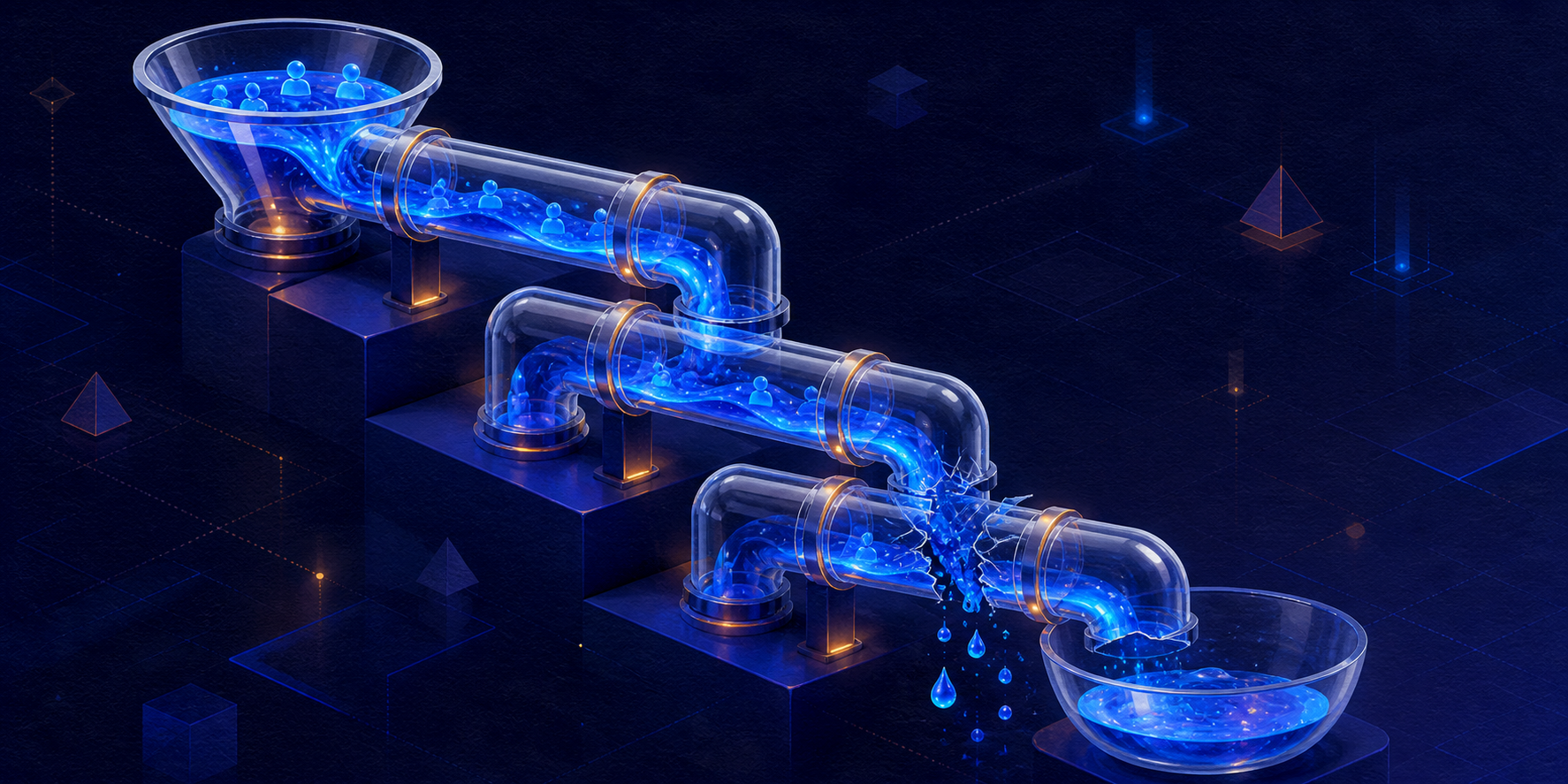
Here's the diagnosis most people don't want to hear: your welcome sequence isn't failing because of your copy. It's failing because of your structure. Specifically, the sequence is probably doing one of three things wrong—sometimes all three at once.
First, it's selling too early. Second, it's not establishing enough trust before it pitches. Third—and this is the one nobody talks about—it's treating a digital product affiliate offer the same way you'd treat a newsletter or a physical product funnel. Those are fundamentally different buying contexts.
A subscriber who just opted in for a free guide on passive income is not ready to hear about a $197 course in email number two. They just met you. They don't trust you yet. Pushing the offer that fast is the equivalent of asking someone to marry you on the first date. Technically possible. Almost never a good idea.
Step 1 — Fix Your Day-Zero Email First
The welcome email—the one that fires immediately after someone opts in—is the most-opened email you will ever send to that subscriber. Open rates of 60-80% are normal here. Most affiliates waste this with a generic "Thanks for signing up, here's your freebie" message.
What should it actually do? Three things, in this order:
- Deliver the promised lead magnet — obviously, but do it fast. Any friction here destroys trust immediately.
- Set expectations — tell them exactly what's coming over the next few days and why it matters to them specifically.
- Establish your credibility — not with a bio paragraph, but with a single sentence that signals you've been where they are. "I wasted eight months promoting the wrong offers before I figured out what actually moves the needle" lands harder than any credential.
What you should not do in email one: pitch anything. Not a soft pitch. Not a "by the way, check this out" P.S. Nothing. You haven't earned it yet.
Pro tip: In ConvertKit or ActiveCampaign, tag subscribers at opt-in with the lead magnet topic. This lets you branch your sequence later based on what they actually care about—which is how you stop sending everyone the same generic sequence and start sending relevant ones.
Step 2 — Emails Two and Three Are About Them, Not the Offer
This is where most affiliate welcome sequences completely fall apart. After the welcome email, people jump straight into product promotion mode. The subscriber barely knows you, and suddenly every email is about why this course or software changed everything.
Emails two and three need to do the heavy lifting of positioning—not selling. Think of these as the emails that make your eventual pitch feel inevitable rather than intrusive.
Email two should address the core problem your affiliate offer solves—but from the subscriber's perspective, not the product's. If you're promoting a digital product about email list building on ClickBank, email two might be about the specific mindset shift required to stop chasing social media followers and start owning your audience. No product mention. Just genuine insight that makes them think "this person actually gets it."
Email three goes deeper. This is where you can introduce a framework, a counterintuitive truth, or a story that reframes how they think about the problem. The best email threes I've written have generated more replies than any promotional email—because they hit a nerve. Replies are gold. They tell your ESP that this is a real relationship, not spam, which protects your deliverability long-term.
If you're unsure how long this nurture phase should actually run before you introduce the offer, this breakdown on affiliate email sequence length gives you a solid framework for making that call based on your offer's price point and traffic source.
Step 3 — Structure the Actual Pitch Email Correctly
Email four (or five, depending on your sequence length) is where the offer comes in. And this is where I see a completely different set of mistakes.
The most common one: leading with the product name. "Check out [Product Name] — it's the best course on X." That's not a pitch. That's a catalog listing. Nobody buys from catalog listings.
A pitch email that actually converts leads with a transition from the previous emails' theme. Something like: "Yesterday I talked about why most people fail at X. Today I want to show you the exact resource I'd point someone to if they were starting from scratch." Now the product feels like a natural answer to a problem you've already built up—not a random advertisement dropped into their inbox.
Structure your pitch email like this:
- Bridge from previous content — connect it to what you've already been talking about
- Specific problem statement — name the exact pain point the product addresses
- Your honest take — what you actually think about it, including any caveats (this builds trust, not doubt)
- Single clear CTA — one link, one action, one ask. Not three different options.
Pro tip: Don't link to the vendor's homepage. Link to your bridge page or pre-sell page. Cold affiliate links in email kill conversions. A bridge page that pre-sells and warms the click dramatically improves your conversion rate on the other side.
Step 4 — Build a Follow-Up Sequence, Not Just a Welcome Sequence
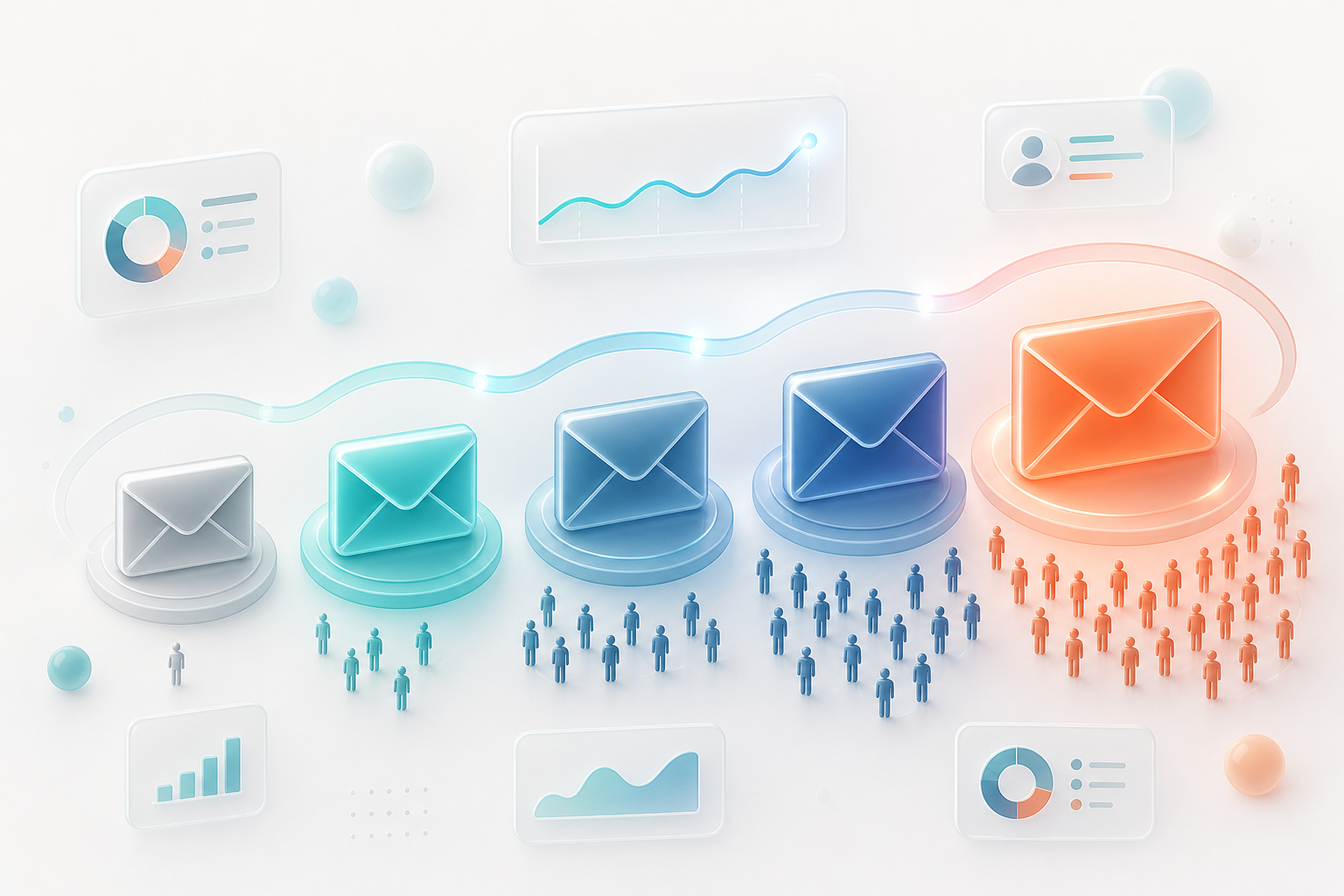
Here's something most guides skip entirely: your welcome sequence and your follow-up sequence are two different things. The welcome sequence gets people from opt-in to first exposure to your offer. The follow-up sequence handles everyone who didn't buy.
And honestly? Most of your buyers won't come from the welcome sequence at all. They'll come from the follow-up—the emails that go out days 7 through 21, after the initial sequence has run. This is where you handle objections, share social proof (without fabricating it), present different angles on the same offer, and occasionally introduce a secondary offer for subscribers who clearly aren't responding to the primary one.
If you're promoting a mid-ticket digital product—say, a $97-$197 course—a 5-email welcome sequence plus a 7-10 email follow-up sequence is a reasonable minimum. For higher-ticket offers, you need more nurture. Sequencing high-ticket affiliate offers through email requires a fundamentally different pacing strategy than what works for lower-priced products.
Step 5 — Segment Based on Behavior, Not Just Demographics
This is the step that separates mediocre welcome sequences from ones that actually scale. Behavioral segmentation means your automation responds to what subscribers do, not just who they are.
In practice, this looks like:
- If someone clicks your affiliate link in email four but doesn't buy → they go into a "clicked but didn't convert" sequence that handles objections and offers a different angle
- If someone opens every email but never clicks → they get a re-engagement email with a softer CTA, maybe a free resource that deepens trust
- If someone doesn't open the first three emails → they get a subject line test variant before you give up on them
ActiveCampaign handles this kind of conditional logic well. So does ConvertKit (now Kit) with its visual automation builder. Systeme.io is worth considering if you're earlier stage and budget-conscious—it's more limited on the conditional branching side, but it's functional for a basic welcome-to-pitch flow. For a proper comparison of what these tools actually support for affiliate use cases, this breakdown of email platforms for affiliate marketers covers deliverability and automation depth side by side.
Step 6 — Stop Ignoring Your Subject Lines
I know. Everyone says this. But the reason your sequence isn't converting might be embarrassingly simple: people aren't opening the emails.
A 20% open rate sounds okay until you realize 80% of your subscribers never saw your pitch. Subject lines for affiliate welcome sequences need to do something specific—they need to create curiosity without being deceptive. "Re: your free guide" worked in 2019. It will get you flagged now. "Why most [niche] advice backfires" is better. "The thing nobody tells you about [core problem]" is better still.
Test two subject lines on every email in your sequence. Split your list 50/50 on day one, pick the winner after 4 hours, and send that version to everyone else. Every major ESP supports this. Almost nobody does it consistently. The ones who do tend to have significantly better open rates over time—not because any single test is magic, but because the compounding effect of dozens of small improvements adds up fast.
Practical Implementation Notes — From the Field
A few things I've observed running these sequences across different traffic sources and offer types that don't fit neatly into a numbered list:
Traffic source changes everything. A subscriber who came from a Facebook ad for a free checklist on affiliate marketing is in a completely different headspace than someone who found your opt-in organically through a blog post. The organic subscriber is usually more research-minded and needs less trust-building. The paid traffic subscriber often needs more hand-holding in the early emails because they opted in impulsively. Adjust your sequence pacing accordingly.
Deliverability is upstream of everything. If your emails are landing in Gmail's Promotions tab—or worse, spam—none of this matters. Warm your domain properly before scaling. Use a subdomain for marketing emails. Authenticate with SPF, DKIM, and DMARC. These aren't optional steps you can skip and fix later.
The "from" name matters more than most people think. Emails from a person's name consistently outperform emails from a brand name in affiliate contexts. "Sarah from ProphetVisionary" will typically outperform "ProphetVisionary" in both opens and replies. Test this on your list—but my experience is that it almost always favors the personal name.
Don't promote more than one offer per sequence. I see this constantly—affiliates stacking three different ClickBank products into a single welcome sequence because they want to maximize monetization. What actually happens is that the subscriber gets confused, your clicks get diluted, and you end up with mediocre results across all three offers instead of strong results on one. Pick your primary offer. Build the sequence around it. Add secondary offers only after someone has clearly not responded to the primary one.
Troubleshooting: What to Check When Nothing Is Working
If you've built a structurally sound sequence and you're still not seeing conversions, run through this checklist before you blow up the whole thing:
- Is the offer actually converting for other affiliates? Check the vendor's affiliate page for stats. A low EPC across the board means the offer itself is the problem, not your sequence.
- Is your bridge page doing its job? Pull your click-through rate from email to bridge page, and then from bridge page to vendor page. If the first number is fine but the second is low, your bridge page needs work—not your email.
- Are your emails actually being delivered? Use Mail-Tester or GlockApps to check your spam score. You'd be surprised how often this is the culprit.
- Is your lead magnet attracting the right people? A freebie that's too broad attracts tire-kickers. A freebie that's tightly matched to your offer attracts buyers. If your opt-in rates are high but conversion rates are terrible, this is usually why.

Your 10-Minute Action Plan — Start Right Now
Don't sit on this. Here's what you can do in the next ten minutes to start fixing your welcome sequence:
Minutes 1-2: Pull up your current welcome sequence in your ESP. Count the emails. Note which one first mentions your affiliate offer. If it's email one or two, that's your first problem—flag it.
Minutes 3-4: Check your open rates on emails three through five. If they're dropping below 20%, your subject lines are failing. Write three alternative subject lines for your worst-performing email right now. Don't overthink it—just do it.
Minutes 5-6: Look at your click-through rate on the pitch email. If people are opening but not clicking, your CTA is the issue—or you have too many links. Strip the pitch email down to one link and one ask.
Minutes 7-8: Check whether you have any behavioral automation after the welcome sequence ends. If subscribers who clicked but didn't buy are just falling into your general broadcast list with no follow-up, set up a simple "clicked, didn't convert" tag and plan a 3-email objection-handling sequence for that segment. You don't have to write it right now—just create the tag and the automation trigger.
Minutes 9-10: Go to your ESP's deliverability report or run your sending domain through a quick spam check. If anything looks off, that's your priority before anything else.
That's it. Ten minutes of honest diagnosis will tell you more about why your sequence isn't converting than another week of reading about email marketing theory. The sequence you have right now probably isn't broken beyond repair—it's just structured for the wrong outcome. Fix the structure, and the results follow.
This article contains affiliate links. We may earn a commission at no extra cost to you. Full disclosure.
Editorial Team
Senior Digital Marketing Strategist
The Prophet Visionary editorial team covers affiliate marketing, paid traffic, funnels, and digital product strategy with hands-on practitioner experience.
Learn more about our editorial team →Your List Is Only as Good as Your Email Platform
AWeber has 25+ years of inbox deliverability, drag-and-drop automation, and AI-powered copywriting built in. Free plan for up to 500 subscribers.
See Why Affiliates Use AWeberThis page contains affiliate links — I may earn a commission at no extra cost to you.
Disclaimer: The information on this site is for educational purposes only and does not constitute financial, legal, or business advice. Results vary based on individual effort, market conditions, and other factors. Always do your own due diligence before making business or investment decisions.