How to Sequence High-Ticket Affiliate Offers in Email Funnels
The Outcome You're Actually After
Here's what most affiliate marketers want but rarely articulate clearly: a single email list that generates consistent revenue from multiple high-ticket offers without burning out subscribers or cannibalizing conversions. The specific outcome we're building toward is a sequenced offer stack that moves a cold opt-in through a logical value ascension—ideally generating $200–$800+ in affiliate commissions per subscriber over a 30–60 day window, depending on your niche and traffic quality.
That's not a fantasy number. It's what happens when you stop treating your email funnel like a broadcast channel and start treating it like a structured sales sequence with deliberate offer placement.
The difference between affiliates who earn $2 EPC and those earning $18+ EPC on the same offer isn't the offer. It's sequencing. It's knowing which offer goes first, which one follows as a trust-builder, and which one you hold back until the subscriber has already bought once and is psychologically primed for a bigger commitment.

Why Most Affiliate Stacks Fail Before They Start
What most people get wrong is leading with the high-ticket offer. I've seen affiliates drop a $2,000 mastermind pitch in email three of a welcome sequence and wonder why their unsubscribe rate spiked. It's not that the offer is bad. It's that the subscriber hasn't been sold you yet—let alone a four-figure commitment.
The other failure mode is the opposite: being so gentle with the sequence that you never actually ask for the sale. Twelve nurture emails, zero conversions. That's not relationship building—that's procrastination dressed up as strategy.
The truth is, high-ticket affiliate sequencing requires a specific architecture. You need entry offers, trust-building offers, and ascension offers. And they need to appear in the right order, spaced correctly, with the right framing at each stage.
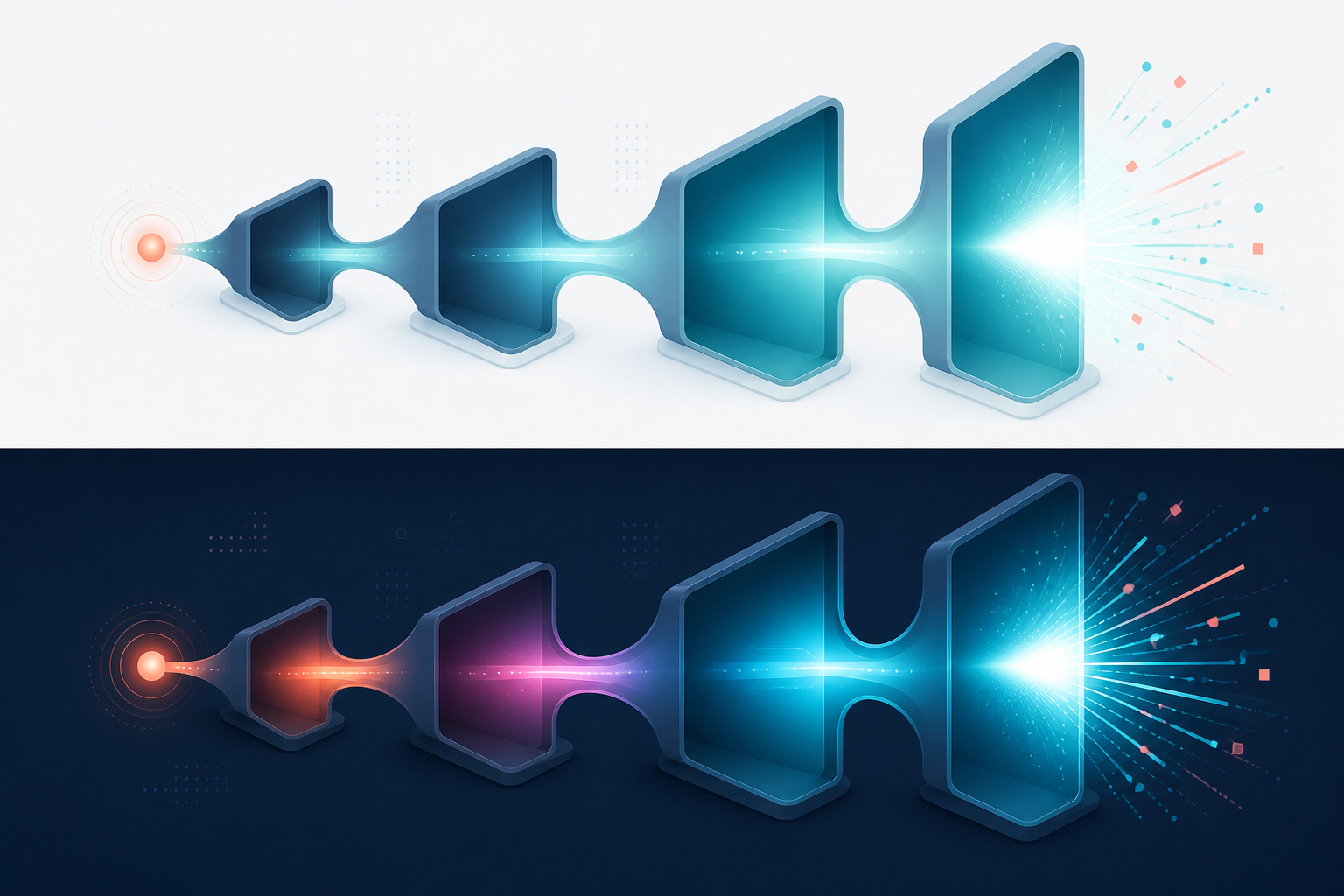
The Four-Phase Stack Framework
Phase 1: The Trust Anchor (Days 1–7)
Your first offer should never be your biggest. In my experience, the ideal entry offer sits between $27–$97. Something the subscriber can buy impulsively, get immediate value from, and associate with you as the person who recommended it. On ClickBank, this might be a solid info product in your niche. On platforms like digistore24 or Impact, it could be a software tool with a low-cost trial or a self-liquidating front-end.
The goal of Phase 1 isn't revenue. It's buyer conversion. Once someone buys anything through your link—even a $37 product—their psychological relationship with you shifts permanently. They're no longer a subscriber. They're a customer. And customers convert on subsequent offers at 3–5x the rate of non-buyers.
Run 3–4 emails in this phase. The first two deliver value and context (why this problem matters, what the solution landscape looks like). Email three is your soft pitch. Email four is a direct call to action with urgency. Building that trust before the pitch is what separates a sequence that converts from one that just collects open rates.
Phase 2: The Mid-Ticket Bridge (Days 8–18)
After the entry offer window closes—whether they bought or not—you pivot. Don't keep hammering the same $37 product. Move to a mid-ticket offer: $197–$497 range. This is where most affiliate stacks fall apart because people skip this phase entirely. They go from a $47 product straight to a $1,997 mastermind. That's too large a jump.
The mid-ticket bridge does two things simultaneously. For buyers from Phase 1, it's a natural next step—they got value, they want more. For non-buyers, it reframes the conversation. Sometimes a higher-priced offer with more obvious transformation actually converts the people who passed on the entry offer. Different price points attract different buyer psychology.
Run 4–5 emails here. Include a case study or walkthrough in email one of this phase. Email two handles objections. Emails three and four push the offer directly. Email five is a last-call.
Phase 3: The High-Ticket Ascension (Days 19–35)
This is where the real affiliate commissions live. High-ticket offers—$997 to $5,000+—typically pay 20–40% commissions, which means a single conversion can generate $200–$2,000 in affiliate revenue. But they require a subscriber who's been warmed up, who's seen you deliver value, and ideally who's already bought something.
The sequencing here is different. You're not selling the product—you're selling the transformation and the person's belief that they can achieve it. Your emails in this phase should be longer, more narrative-driven, and more personal. Story-based selling works exceptionally well for high-ticket.
I'd run 5–7 emails across this phase, including at least one "here's what happens if you don't act" email and one that directly addresses the most common objection to the offer (usually price or time commitment).
Phase 4: The Continuity Lock-In (Days 36–60)
This phase is underused by probably 90% of affiliates. After the high-ticket push, most people just... stop. Or they go back to broadcasting random content. What you should be doing is transitioning to a continuity or recurring offer—a membership, a software subscription, a coaching retainer with monthly billing.
Continuity commissions are the closest thing to passive income in affiliate marketing. A $97/month membership that pays 30% recurring means each conversion generates $29.10/month, every month, for as long as they stay subscribed. Stack 50 of those and you're looking at $1,455/month from a single funnel's continuity layer.
This phase requires 3–4 emails maximum. It should feel like a natural recommendation, not a hard sell. "Now that you've [achieved X], here's how to maintain and build on it" is the frame that works.
Milestones and Timeline
If you're starting from a fresh list build—say, running paid traffic to a lead magnet on something like Facebook or native ads—here's a realistic timeline:
- Week 1: Welcome sequence active, first entry offer in market. Target: 2–5% buyer conversion rate on entry offer.
- Week 2–3: Mid-ticket sequence running. Target: 1–2% conversion rate. First high-ticket email goes out at end of Week 3.
- Week 4–5: High-ticket push in full swing. Target: 0.3–0.8% conversion rate (this is realistic for most high-ticket offers without phone sales).
- Week 6–8: Continuity offer introduced. Target: 3–6% of remaining active subscribers convert to recurring.
- Day 60: Evaluate your EPC (earnings per click) across the full sequence. A well-built stack should be producing $4–$15+ EPC on paid traffic, depending on niche competitiveness.
These aren't guarantees—list quality, niche, and offer selection matter enormously. But they're the benchmarks I'd use to diagnose whether a sequence is working or needs adjustment.
Offer Selection: What Actually Stacks Well
Not every combination of offers stacks cleanly. The offers in your sequence need to share a common transformation thread. A subscriber who opted in for "how to grow a YouTube channel" should see offers that follow that path: maybe a video editing course ($47) → a YouTube SEO tool subscription ($97/mo) → a high-ticket video agency coaching program ($2,000+) → a premium creators' mastermind ($197/mo recurring).
What kills stacks is thematic drift. If you pivot from YouTube growth to general business coaching to crypto investing inside 60 days, you'll see engagement crater. Subscribers opted in for a specific promise. Honor that thread throughout the entire sequence.
For sourcing offers: ClickBank and Digistore24 for info products, ShareASale and Impact for SaaS tools, and direct affiliate programs (many high-ticket coaches and course creators run their own programs outside networks) for the $1,000+ tier. Stacking high-ticket offers inside email sequences requires you to be selective—two or three great offers outperform ten mediocre ones every time.
The Spacing Problem Nobody Talks About
Email frequency inside a high-ticket sequence is genuinely tricky. Too many emails and you burn the list. Too few and subscribers go cold between phases, and your open rates tank by the time you hit the high-ticket pitch.
What's worked best in my experience: daily emails during active promotion windows (3–5 days per offer), then drop to every 2–3 days between phases. The between-phase emails should be pure value—a tutorial, a resource recommendation, a story that builds authority—with no direct pitch. These "bridge" emails maintain engagement without exhausting goodwill.
And yes, the question of how long your sequence should actually be matters here. Sixty days is a reasonable outer boundary for a structured stack before you transition to a broadcast list. Beyond that, the sequence-based approach loses its structural advantage.
Tools That Support This Architecture
You need an ESP that handles tagging and conditional sequences—not just linear drip campaigns. ConvertKit (now Kit) handles this well with its visual automation builder. ActiveCampaign is more powerful but has a steeper learning curve. Systeme.io is worth considering if you're budget-conscious and running simpler stacks—it's surprisingly capable for the price point.
For tracking which offers are converting at which phase, you need link tracking at minimum. Pretty Links or ClickMagick both work. ClickMagick is better if you're running paid traffic simultaneously, because you can tie email clicks back to ad spend and get true attribution across the funnel.
Practical Implementation Notes
A few things I've observed that don't make it into most guides:
First, segment your buyers immediately. The moment someone buys an entry offer, they should be tagged and pulled into a separate track. Continuing to send non-buyer emails to buyers is a fast way to annoy your best customers. Most ESPs support this with purchase trigger tags if you're using a cart like ThriveCart or SamCart, or through webhook integrations with ClickBank.
Second, the high-ticket pitch emails almost always outperform when they're sent Tuesday through Thursday, between 9–11am in the subscriber's local timezone. This isn't superstition—it's a pattern I've seen consistently across multiple niches. Your mileage will vary, but if you're not split-testing send times on your high-ticket emails specifically, you're leaving conversions on the table.
Third, don't ignore the non-openers. After each offer window closes, run a re-engagement mini-sequence (2 emails) specifically to people who didn't open the pitch emails. Subject line approach: curiosity-based, not offer-based. Something like "Did you see this?" or "Wanted to follow up personally" tends to recover 8–15% of non-openers and give them another shot at the offer.
Fourth—and this is counterintuitive—sometimes your entry offer converts better when it's introduced in email four or five, not email two. If your lead magnet is strong enough to hold attention, letting subscribers consume it fully before pitching anything increases buyer intent. Test it. The data will tell you which approach fits your audience.

You'll Know It's Working When...
There are specific signals that tell you the stack is functioning as designed—and they're not just about revenue.
- Your open rates hold above 25% through Day 30 (most lists see significant decay by Day 14 if the content isn't earning attention).
- Your click-to-open rate on high-ticket pitch emails is above 8%—meaning the people who open are actually engaging with the offer.
- You see buyer tag conversions happening across multiple phases, not just the entry offer. If only Phase 1 is converting, your bridge emails between phases aren't doing their job.
- Your unsubscribe rate stays below 0.5% per email during active promotion windows. Above that, something is wrong—either the offer is misaligned, the frequency is too high, or the framing isn't matching subscriber expectations.
- By Day 45, your EPC (measured as total commissions divided by total clicks into the funnel from your traffic source) is trending upward, not flat. A rising EPC over time means the sequence is compounding trust correctly.
Where This Fits in Your Broader Monetization Model
Offer stack sequencing isn't a standalone strategy—it's the monetization layer that sits on top of your traffic and lead generation systems. If you're running paid traffic (Meta, Google, or native like Taboola or MGID), the sequence is what converts your CPL into positive ROI. If you're building organic through content or SEO, the sequence is what turns a slow-burn audience into a revenue engine.
The honest reality is that most affiliate marketers are leaving 60–70% of their list's monetization potential untapped because they're not sequencing deliberately. They're promoting one offer at a time, reactively, without a structured ascension path. The stack framework described here isn't complicated—but it does require upfront planning and a willingness to write more emails than feels comfortable.
Do that work. Build the sequence once, optimize it over 90 days of data, and then it runs—generating commissions from new subscribers every day while you focus on traffic. That's the actual leverage point in affiliate email marketing, and it starts with sequencing your offers in the right order.
This article contains affiliate links. We may earn a commission at no extra cost to you. Full disclosure.
Editorial Team
Senior Digital Marketing Strategist
The Prophet Visionary editorial team covers affiliate marketing, paid traffic, funnels, and digital product strategy with hands-on practitioner experience.
Learn more about our editorial team →Monetize Smarter With Funnels + Email in One Place
Order bumps, upsells, automated email sequences, and your own affiliate program — Systeme.io gives you the full monetization stack without the bloated monthly spend.
See the Monetization StackThis page contains affiliate links — I may earn a commission at no extra cost to you.
Disclaimer: The information on this site is for educational purposes only and does not constitute financial, legal, or business advice. Results vary based on individual effort, market conditions, and other factors. Always do your own due diligence before making business or investment decisions.