Modern Affiliate Funnels: What Actually Works in 2026
The affiliate funnel game has changed more in the past two years than in the previous decade combined. What worked in 2022—direct linking to bridge pages with basic email captures—now gets you banned faster than you can say "Facebook compliance review."
I've been watching affiliates cling to outdated funnel strategies while their campaigns hemorrhage money. The truth is, modern affiliate funnels require a completely different approach. Privacy updates, platform restrictions, and increasingly sophisticated audiences have forced the smartest affiliates to rebuild their entire conversion architecture.
Here's what actually works now.
The Death of the Traditional Bridge Page
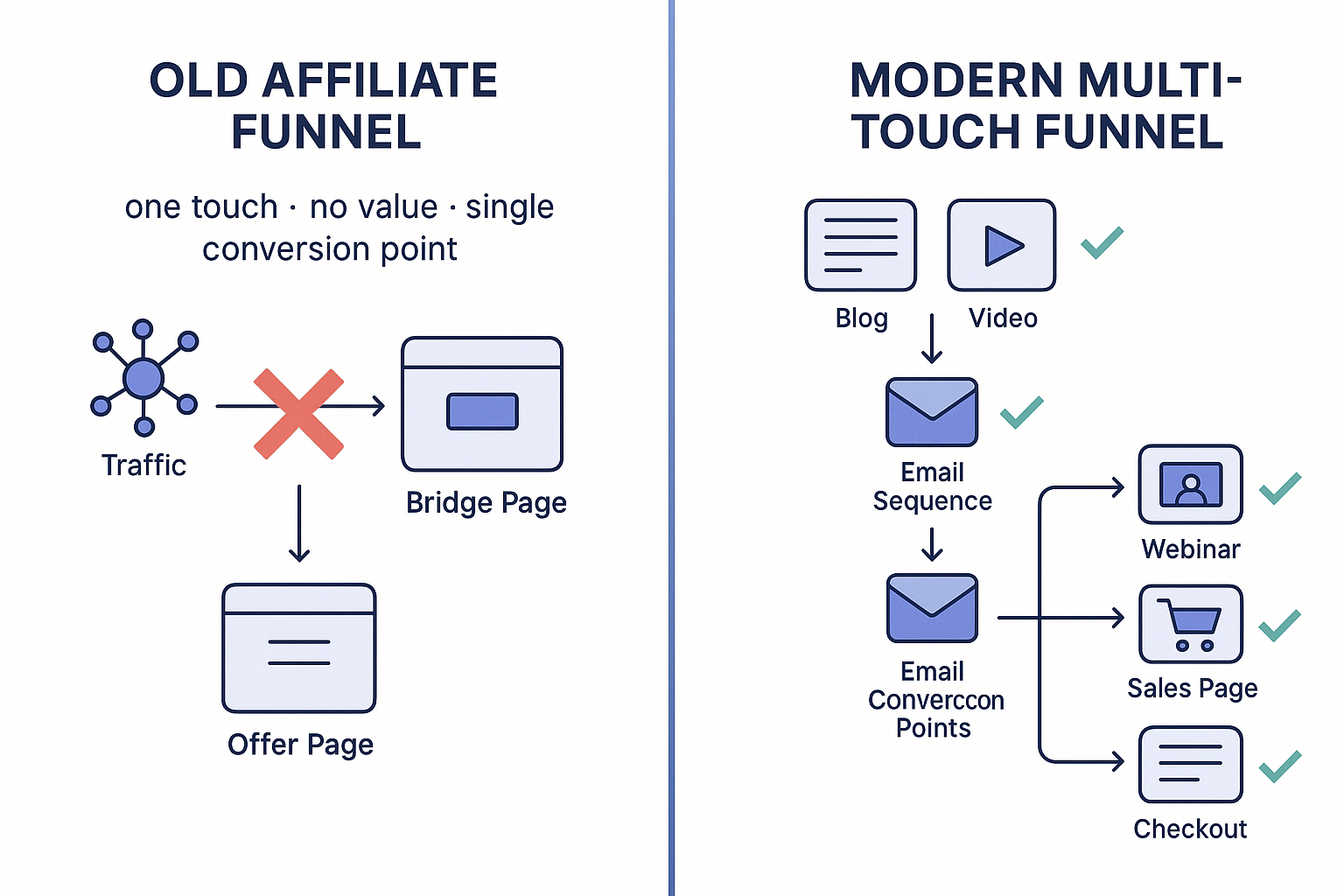
Remember when you could throw up a single bridge page, capture some emails, and redirect to your affiliate offer? Those days are gone.
Apple's iOS updates killed most pixel tracking. Google's Enhanced Conversions demand first-party data collection. Facebook's algorithm punishes anything that looks remotely like a "traditional" affiliate funnel. The platforms have essentially declared war on the old playbook.
But here's the counterintuitive part—this shift has actually created opportunities for affiliates willing to adapt. The lazy marketers running cookie-cutter funnels are getting filtered out, leaving more profitable traffic for those of us building sophisticated conversion systems.
What Replaced the Bridge Page
Smart affiliates now use what I call "value-first funnels." Instead of immediately pitching an offer, you lead with genuine value—a free report, video training, or tool that actually helps your audience.
Say you're promoting a weight loss offer on ClickBank. Rather than a bridge page promising "miracle results," you'd create a free 7-day meal planning guide. Users get immediate value, you capture first-party data legitimately, and you've earned the right to pitch your affiliate offer through a nurture sequence.
This approach takes more work upfront, but the conversion rates speak for themselves. I'm seeing affiliates report 40-60% higher lifetime values compared to traditional bridge page funnels.
Multi-Touch Attribution in a Privacy-First World
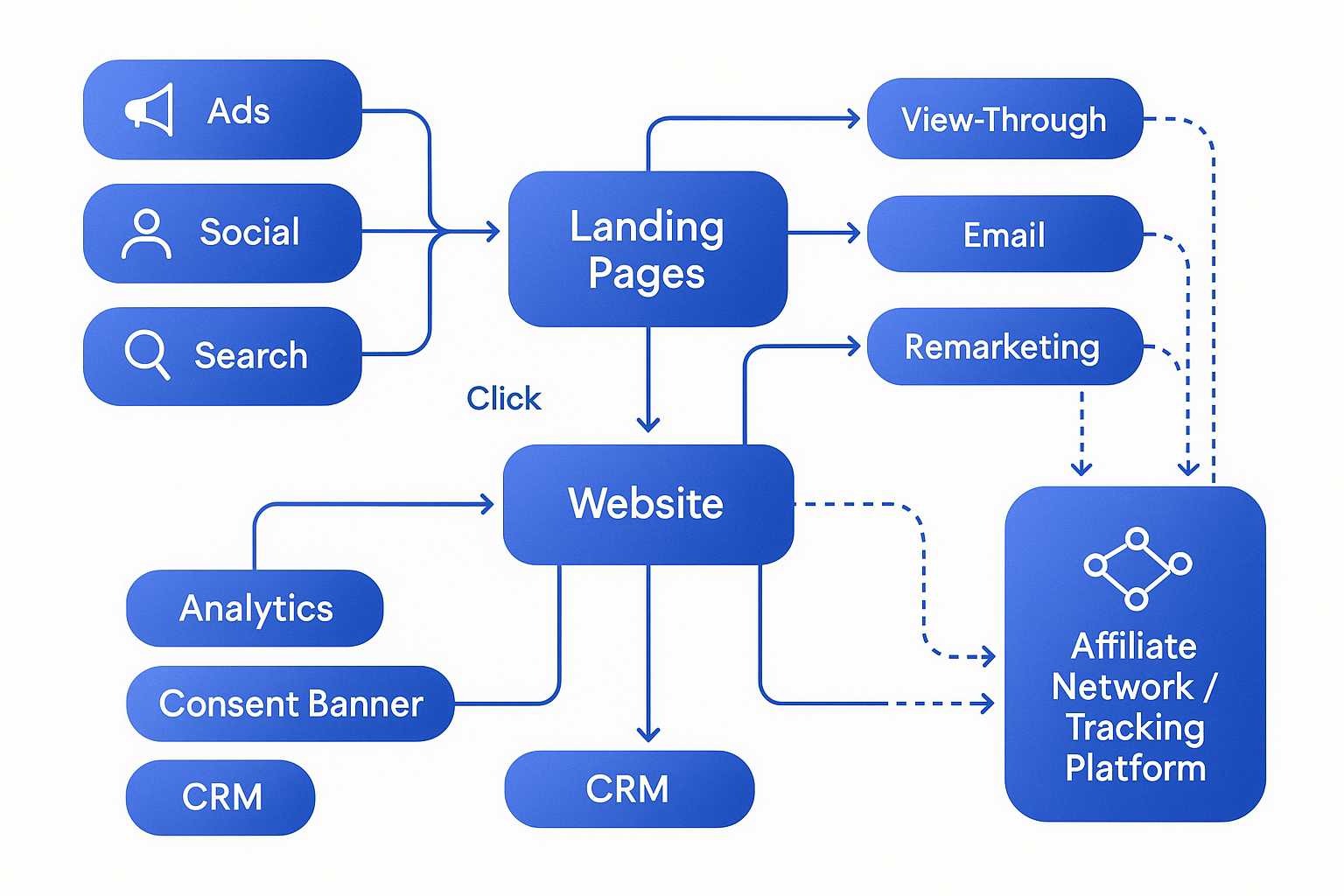
The biggest challenge facing affiliate marketers isn't traffic costs or competition—it's attribution. When iOS 14.5 dropped, most affiliates watched their tracking accuracy plummet overnight.
The solution isn't trying to recreate pixel-perfect tracking (impossible now). It's building funnels that work even when you can only see 60-70% of your conversions.
First-Party Data Collection Strategies
Modern affiliate funnels are obsessed with first-party data because it's the only reliable way to track and optimize. This means:
- Progressive profiling through multi-step opt-ins
- Survey funnels that segment users while collecting data
- SMS capture (yes, even for affiliate offers)
- Social media retargeting through engagement
The key is making data collection feel natural. A quiz titled "What's Your Productivity Type?" works better than "Enter Your Email for Our Newsletter." People will give you detailed information if they're getting personalized value in return.
I've found that affiliates using quiz funnels see 300-400% higher engagement rates compared to standard opt-in pages. The data quality is also significantly better because users are pre-qualifying themselves.
Server-Side Tracking Implementation
If you're still relying purely on client-side tracking, you're flying blind. Server-side tracking through platforms like Postback or custom webhook setups gives you the attribution accuracy you need to optimize campaigns.
This isn't just for the big players anymore. Tools like Systeme.io and ClickFunnels now offer server-side integration options that work with most affiliate networks. The setup takes a weekend, but it's the difference between guessing at your ROI and actually knowing it.
Platform-Specific Funnel Optimization
What most people get wrong is thinking one funnel can work across all traffic sources. Each platform has different user behaviors, compliance requirements, and optimization algorithms.
Native Advertising Funnels
Traffic from Taboola, Outbrain, and MGID requires a completely different funnel approach than social media traffic. Native users are in "content consumption mode"—they expect editorial-style experiences.
Your funnel needs to feel like a natural extension of the content they were already consuming. This means longer-form sales letters, multiple proof points, and addressing skepticism head-on. I've seen affiliates increase conversions by 80% simply by matching their funnel's tone to the native platform's editorial style.
Social Media Compliance Funnels
Facebook and TikTok have gotten ruthless about affiliate compliance. The platforms are using AI to detect affiliate funnels and will ban accounts for policy violations that would have been overlooked two years ago.
The workaround isn't trying to hide your affiliate intent—it's building funnels that provide genuine value regardless of whether someone buys your affiliate offer. Think of your affiliate promotion as one component of a broader value ecosystem rather than the sole purpose of your funnel.
Successful social media affiliate funnels now look more like mini-courses or coaching programs that happen to recommend relevant products. The affiliate commissions become secondary revenue to the primary value you're providing.
Advanced Conversion Optimization Techniques
The fundamentals of conversion optimization haven't changed, but the execution has become far more sophisticated. Modern affiliate funnels require testing approaches that account for longer attribution windows and multiple touchpoints.
Behavioral Trigger Sequences
Instead of time-based email sequences, top affiliates are using behavioral triggers to move prospects through their funnels. Someone who watches 50% of your training video gets a different follow-up than someone who only watched 10%.
Tools like ConvertKit and ActiveCampaign make this easier than ever, but most affiliates aren't taking advantage. They're still sending the same sequence to everyone regardless of engagement level.
The difference in conversion rates is dramatic. Behavioral sequences typically convert 2-3x higher than time-based sequences because you're responding to demonstrated interest rather than arbitrary timing.
Dynamic Content Personalization
Modern funnels adapt to user behavior in real-time. If someone indicates they're interested in weight loss but specifically mentions being a busy parent, your funnel should emphasize time-efficient solutions rather than generic benefits.
This level of personalization used to require custom development. Now platforms like Unbounce and even WordPress plugins can handle dynamic content swapping based on URL parameters, form responses, or previous behaviors.
The AI Integration Factor
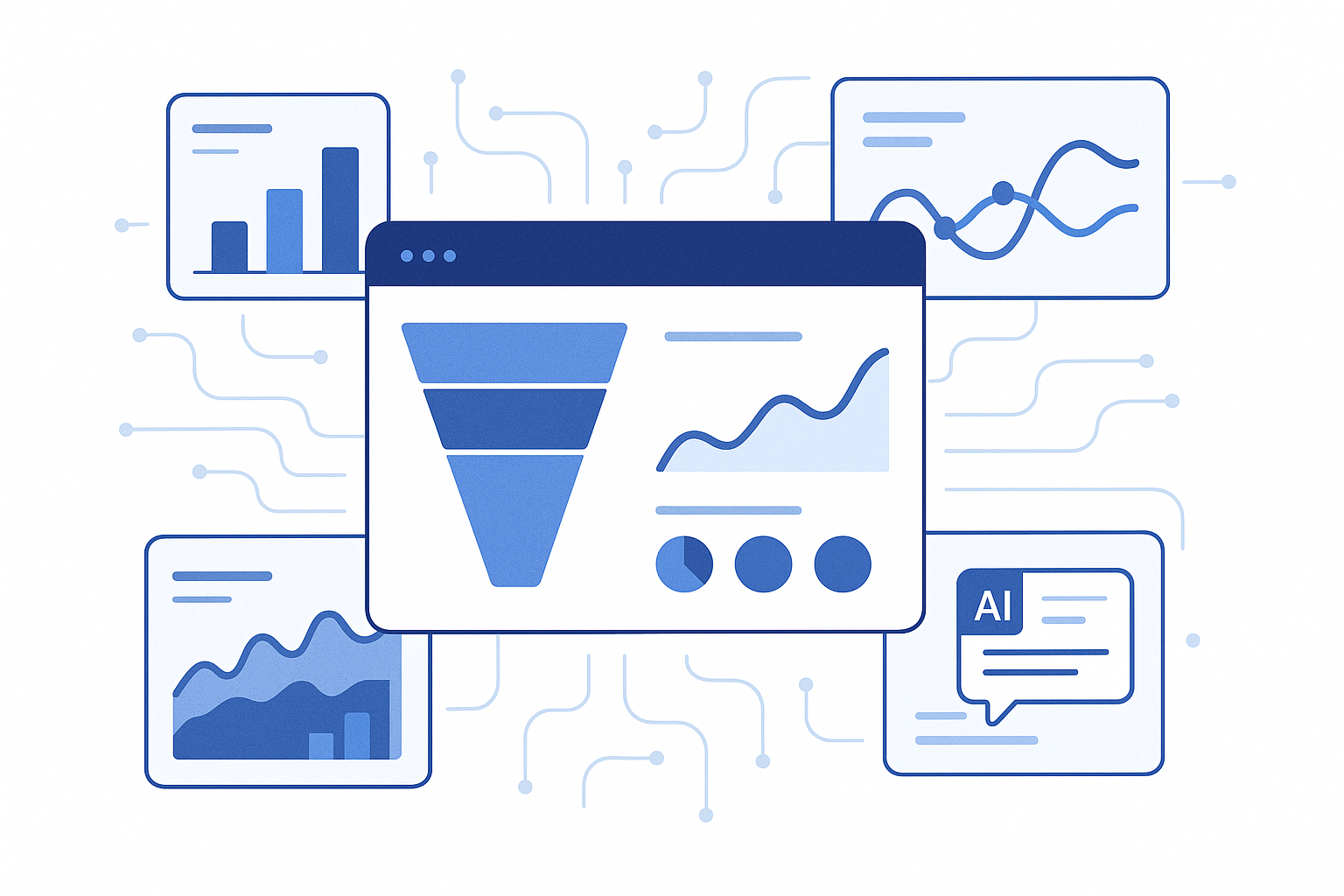
Artificial intelligence isn't just changing how we create content—it's revolutionizing how affiliate funnels operate and optimize themselves.
Smart affiliates are using AI for dynamic ad copy generation, personalized email sequences, and even real-time funnel optimization. But the real opportunity isn't in replacing human strategy—it's in augmenting decision-making with data-driven insights.
Predictive Audience Modeling
AI tools can now analyze your highest-converting visitors and identify similar prospects before they even enter your funnel. This means you can optimize your traffic sourcing and initial funnel experience based on predictive rather than reactive data.
The platforms themselves are moving in this direction. Google's Performance Max campaigns and Facebook's Advantage+ are essentially AI-driven funnel optimization at the traffic source level. Affiliates who understand how to work with these systems rather than against them have a massive competitive advantage.
What's Coming Next
The affiliate funnel landscape will continue evolving rapidly through 2026 and beyond. Privacy regulations are getting stricter, not looser. Platform algorithms are becoming more sophisticated at detecting and penalizing low-quality affiliate funnels.
But opportunity always exists for marketers willing to adapt. The affiliates who survive and thrive will be those who focus on building genuine value for their audiences rather than trying to game systems or exploit loopholes.
The future belongs to affiliate funnels that would still be valuable even if the affiliate component disappeared entirely. That's not just good business—it's the only sustainable approach in an increasingly regulated and competitive landscape.
The question isn't whether affiliate marketing will survive these changes. It's whether your funnels will evolve fast enough to stay profitable while everyone else is still fighting yesterday's battles.
Related reading: Bridge Page Compliance: Compliant vs. Non-Compliant Approaches
Related reading: Designing a Low-Ticket Front-End Offer That Actually Converts
Frequently Asked Questions (Updated 2026)
Do AI-built affiliate funnels actually convert, or do they look generic?
This is one of the most common questions we're seeing in 2026, and the honest answer is: it depends entirely on how you use AI in the build process. AI tools like Claude, Jasper, and the copy generation features now built into GoHighLevel and ClickFunnels 2.0 can produce funnel copy, email sequences, and VSL scripts at a speed that was unimaginable two years ago. But "fast" and "converting" are not the same thing.
The funnels that convert are the ones where AI is used to accelerate production of strategically sound frameworks—not to replace the strategy itself. Affiliates who dump a product URL into an AI tool and ask for a "complete funnel" are getting generic output that audiences increasingly recognize and scroll past. Affiliates who use AI to iterate on hooks, test headline variants, and personalize email sequences based on segmentation data are seeing real lifts.
The most effective pattern we're seeing in 2026: human-defined funnel architecture and offer positioning, AI-assisted copy drafting, human editing pass for voice and specificity, then AI-powered A/B testing to optimize. That hybrid workflow produces funnels that feel personal and convert like direct response—without the six-week build time.
What funnel software is actually worth paying for in 2026 for affiliate marketers?
The funnel software market has consolidated significantly. Here's the honest breakdown for affiliate-specific use cases in 2026:
- GoHighLevel has become the dominant choice for affiliates who also manage their own email list and want everything under one roof—funnels, CRM, email, SMS, and now a native affiliate tracking module. The learning curve is real, but the consolidation of tools saves meaningful money at scale.
- ClickFunnels 2.0 remains strong for affiliates who want a more guided, template-driven experience and are primarily focused on funnel conversion rather than backend CRM functionality. Its ecosystem of done-for-you templates for common affiliate verticals is still best-in-class.
- Systeme.io continues to punch above its weight for affiliates on tighter budgets, with a genuinely capable free tier and solid email integration.
- Unbounce and Instapage are better suited for paid traffic landing page testing than full funnel builds, but remain useful for affiliates running high-volume split tests on cold traffic entry points.
For a detailed side-by-side comparison focused specifically on paid traffic affiliate use cases, see our full breakdown: ClickFunnels vs GoHighLevel: Which Wins for Affiliate Paid Traffic?
How do you build an affiliate email list that actually makes money beyond the initial offer?
Most affiliates treat their email list as a broadcast channel for new offers and wonder why their open rates crater after the first 90 days. The affiliates generating consistent backend revenue in 2026 think about their list completely differently—as a relationship asset that compounds over time.
The key structural shift is moving from "promotion sequences" to "content-led nurture with embedded monetization." This means your subscribers are getting genuinely useful content—tutorials, case studies, tool breakdowns, honest reviews—on a consistent cadence, with affiliate offers woven in contextually rather than blasted as standalone promotions.
Segmentation is the other major lever. Affiliates using behavioral triggers (which links subscribers clicked, which lead magnets they downloaded, which offers they showed interest in but didn't buy) to send targeted follow-up sequences consistently outperform those sending the same email to their entire list. Most modern email platforms—ActiveCampaign, Klaviyo, and the email module inside GoHighLevel—support this kind of behavioral automation without requiring custom development.
For a full tactical breakdown of backend monetization strategies that are working right now, see: Backend Email Monetization: What Actually Works for Affiliate Lists.
This article contains affiliate links. We may earn a commission at no extra cost to you. Full disclosure.
Editorial Team
Senior Digital Marketing Strategist
The Prophet Visionary editorial team covers affiliate marketing, paid traffic, funnels, and digital product strategy with hands-on practitioner experience.
Learn more about our editorial team →Build High-Converting Funnels Without 5 Different Tools
Systeme.io gives you a drag-and-drop funnel builder, email automation, upsells, order bumps, and analytics — all in one platform starting at $0/month.
See the Funnel BuilderThis page contains affiliate links — I may earn a commission at no extra cost to you.
Disclaimer: The information on this site is for educational purposes only and does not constitute financial, legal, or business advice. Results vary based on individual effort, market conditions, and other factors. Always do your own due diligence before making business or investment decisions.