Why Your Native Ad Bridge Page Isn't Converting (And the Fix)
You've watched the spend tick up. $50. $120. $300. The clicks are coming in, the dashboard says the traffic is "engaged," and your affiliate network shows a big fat zero. Or maybe two sales, which is somehow worse because it keeps you hopeful.
I've been there more times than I'd like to admit. And I'll tell you what I wish someone had told me early on: the problem is almost never the traffic source. It's the gap between a cold click and a buying decision, and most people try to jump that gap in a single leap.
The Real Bottleneck: Cold Traffic Doesn't Know It Has a Problem
Think about who clicks a native ad. They were reading an article about knee pain, or credit scores, or a celebrity's net worth. You interrupted them. They didn't search for anything. They have no intent, only mild curiosity.
Now you send that person straight to a ClickBank sales page with a 22-minute video and a countdown timer. Of course it dies.
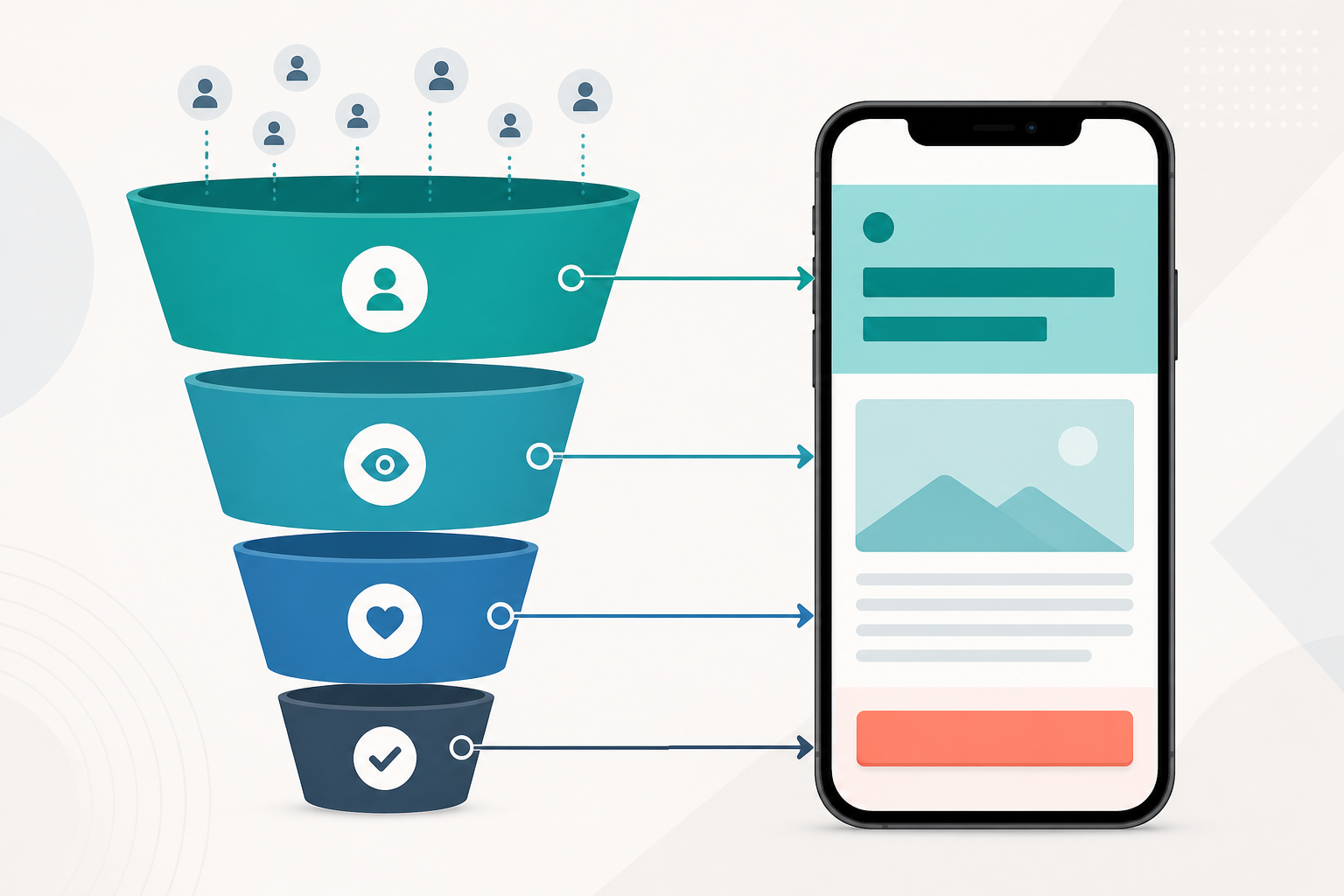
A bridge page (pre-sell page, advertorial, whatever you want to call it) does one job: it moves a curious stranger from "huh, interesting" to "I want to see that offer." It doesn't close. It warms. What most people get wrong is treating it like a mini sales page. It's closer to a short, honest magazine article with one purpose.

Step 1: Match the Ad, the Angle, and the Bridge (Why It Fails When They Don't)
Why it's failing for you: Your ad promises one thing and your page delivers another. Message mismatch is the quiet killer. Someone clicks "The 4-Minute Habit Dermatologists Hate" and lands on a page with a generic product headline. Bounce.
The fix: Write the bridge page headline as the direct continuation of the ad headline. Same promise, same vocabulary, same emotional temperature. If the ad was curiosity-driven, the page opens with a story. If it was problem-driven, open with the problem in the reader's own words.
Common mistake: Running one bridge page for six different ad angles. You can't read the data when you do that. One angle, one bridge, at least at the start.
Pro tip: Screenshot your top ad and paste it at the top of your page doc while you write. Sounds silly. Keeps you honest.
Step 2: Pick an Offer That Can Survive a Bridge
Some offers simply don't work on cold native. If the product needs a long education cycle, or the payout is too thin to cover a $0.08-0.15 CPC on something like NewsBreak after your bridge-page drop-off, the math won't save you. I'd rather you know that now than after $400.
Look for offers with a clear, single problem, a decent EPC, and a landing page that doesn't contradict your bridge. If you're weighing higher payouts, my piece on picking high-ticket affiliate offers that actually convert on paid traffic covers the criteria I use.
Step 3: Build the Page Structure (Where Most Bridges Quietly Break)
Why it's failing for you: It reads like an ad. Native platforms and readers both smell that instantly.
Here's the skeleton I keep coming back to:
- Headline: continues the ad's promise, no hype stacking.
- Opening (80-120 words): a relatable scenario or confession. Not a pitch.
- The problem, named: describe what they're feeling better than they could.
- The turning point: a different way of looking at the problem (this is your angle).
- The mechanism, lightly: why the offer's approach differs, without making claims you can't back up.
- One CTA: a button or link that says something like "See how it works," repeated two or three times.
Keep the whole thing between 400 and 800 words. Longer isn't better on cold traffic. Shorter than 300 and you haven't warmed anyone.
Pro tip: Write at a 6th-7th grade reading level. Not because your audience is slow—because they're on a phone, on a couch, half-distracted.
Step 4: Keep It Honest (Compliance Isn't Optional)
Look, fake news-style advertorials with invented doctors and fabricated "as seen on" logos get accounts banned. They also mislead people. Taboola and Outbrain both review landing pages, and policies have only tightened.
Skip fake testimonials, fake urgency, and unsubstantiated health or income claims. Add a clear disclosure and basic privacy and terms links in the footer. Honestly, it costs you almost nothing in conversion and saves you an account. Always check the current ad policy of your specific platform before launching, and check the offer's own rules on what affiliates may say.
Step 5: Build It Fast, on Something You Can Edit Fast
You don't need a custom-coded site. You need speed of iteration. Systeme.io, clickfunnels, GoHighLevel, or even a clean WordPress page with a lightweight theme will do. Whichever you choose, load time on mobile should be under about 2.5 seconds, because cold native traffic is overwhelmingly mobile and impatient.
If you're still deciding on a builder, I compared them in ClickFunnels vs GoHighLevel for affiliate funnels. Visit each tool's site for current features and pricing.
Step 6: Track the Right Numbers (So You Know What's Actually Broken)
Why it's failing for you: You're staring at the wrong metric. Overall ROI on day two tells you nothing.
Track these in order:
- Ad CTR: is the creative earning clicks at all?
- Bridge-to-offer click-through rate: this is the bridge page's real report card. In my experience, somewhere in the 20-40% range is healthy, though it varies a lot by vertical.
- Offer conversion rate: if people reach the offer and don't buy, the bridge may be over-promising or the offer is weak.
- EPC vs. CPC: the only comparison that decides profit.
Use a tracker like Voluum or RedTrack, or the network's own postback setup, so you can see sources and widgets, not just totals. Native traffic lives and dies by widget-level optimization.
Step 7: Test One Variable at a Time
The counterintuitive part: your first bridge page will probably be mediocre, and that's fine. The mistake is rewriting everything when it underperforms. Change the headline. Wait for data. Change the opening. Wait. I usually want at least 100-200 bridge clicks before judging a single change, and more if the numbers are close.
Real-World Implementation Notes
Here's roughly how a first launch tends to go when I set one up from scratch. I'm describing a workflow, not promising an outcome.
- Day 1: pick the offer, collect its approved assets, write the bridge draft, and build the page. Set up tracking and test the click path on two phones.
- Day 2: launch 3-4 ad creatives on one angle with a modest daily budget. Blacklist nothing yet; you need data.
- Days 3-5: look at widget and placement data. Cut obvious losers, those with plenty of clicks and zero bridge-to-offer movement.
- Days 6-10: revise the bridge headline or opening based on what the data suggests. Launch a second variant.
- Week 2+: if EPC is near CPC, optimize bids by widget. If it's nowhere close, rethink the angle or offer rather than throwing more budget at it.
One observation: scroll behavior often tells me more than conversion data early on. If most visitors never get past the first screen, the opening is the culprit. Heatmap tools like Microsoft Clarity are free and good enough.
And if you're capturing emails on the bridge before the offer (a legitimate play for some verticals), the follow-up matters a great deal. See why your welcome sequence isn't converting affiliate offers for what usually goes wrong there.
Troubleshooting: Why Isn't This Working for ME?
| Symptom | Likely cause | What to try |
|---|---|---|
| Lots of ad clicks, few bridge clicks to offer | Weak opening or message mismatch | Rewrite the first 100 words; align the headline with the ad |
| Good bridge CTR, no sales | Offer page disconnect or poor offer | Match tone and promise; test a different offer |
| High bounce on mobile | Slow load or cluttered layout | Compress images, cut scripts, simplify |
| Ad disapproved | Policy-violating claims or visuals | Read the platform's current policy; soften claims |
| Some widgets profit, most don't | Normal native behavior | Bid up the winners, blacklist the rest |
Sometimes, honestly, the answer is that the offer or angle just doesn't work on cold native. Killing a campaign early is a skill. It isn't failure.

Your 10-Minute Action Plan
Don't close this tab and forget it. Do this right now, with whatever campaign is bleeding you:
- Minutes 1-2: Open your best-performing ad and your current landing page side by side. Ask: does the page's headline continue the ad's promise? If not, rewrite the headline.
- Minutes 3-4: Check your tracker for bridge-to-offer click-through. Write the number down. If you aren't tracking it, that's your first fix.
- Minutes 5-7: Rewrite the first 100 words of your bridge as a short, relatable scenario instead of a pitch. No product mention yet.
- Minutes 8-9: Load the page on your phone over mobile data. If it takes more than three seconds or the button isn't visible without hunting, note exactly what to cut.
- Minute 10: Duplicate the page, apply the new headline and opening, and split traffic. Then leave it alone until you have 100+ clicks.
That's it. No magic. A bridge page works when it respects the reader's skepticism, and it gets better through steady, boring testing. Fix one thing today. Then another tomorrow.
If your traffic does start converting into leads, email automation sequences that sell affiliate offers is a sensible next read for squeezing more from every click you've already paid for.
This article contains affiliate links. We may earn a commission at no extra cost to you. Full disclosure.
Editorial Team
Senior Digital Marketing Strategist
The Prophet Visionary editorial team covers affiliate marketing, paid traffic, funnels, and digital product strategy with hands-on practitioner experience.
Learn more about our editorial team →Your Traffic Is Only as Good as Your Follow-Up
You're paying for clicks — but are you capturing emails and automating sequences? AWeber makes it dead simple to turn paid traffic into a monetized email list.
See How AWeber WorksThis page contains affiliate links — I may earn a commission at no extra cost to you.
Disclaimer: The information on this site is for educational purposes only and does not constitute financial, legal, or business advice. Results vary based on individual effort, market conditions, and other factors. Always do your own due diligence before making business or investment decisions.