Digital Product Pricing FAQ: New Creators' Complete Guide 2026
Pricing your first digital product feels like walking a tightrope blindfolded. Too high, and nobody buys. Too low, and you devalue your work while leaving money on the table.
I've watched countless creators struggle with this exact dilemma—and honestly, most get it wrong from the start. The good news? The mistakes are predictable, which means they're avoidable.
Here are the most common pricing questions I get from new digital product creators, along with the answers that actually matter in 2026.
Getting Started: Foundation Questions
Q: Should I start with a low price to "test the market"?
This is probably the biggest mistake I see new creators make. Starting artificially low doesn't test anything meaningful—it just trains your audience to expect cheap prices.
What you should test instead: different value propositions at reasonable price points. If your course solves a $500 problem, don't price it at $47 "to see if people want it." Price it at $297 and test whether your messaging resonates. If it doesn't convert, the issue isn't price—it's positioning.
The exception? When you're building social proof and testimonials for a brand-new concept. Even then, I'd rather see you give away 10 free copies to ideal customers than sell 100 copies at a throwaway price.
Q: How do I price against competitors?
Competitive pricing is important, but most creators approach it backwards. They find similar products, average the prices, and land somewhere in the middle.
Here's what works better: map your competitors by value delivered, not just topic similarity. A basic PDF guide and a comprehensive video course with templates shouldn't be priced the same—even if they're both about "email marketing."
I've found the sweet spot is usually 20-30% above your closest competitor if you're offering genuinely more value. Below that, you're competing on price. Above that, you need significantly differentiated positioning.
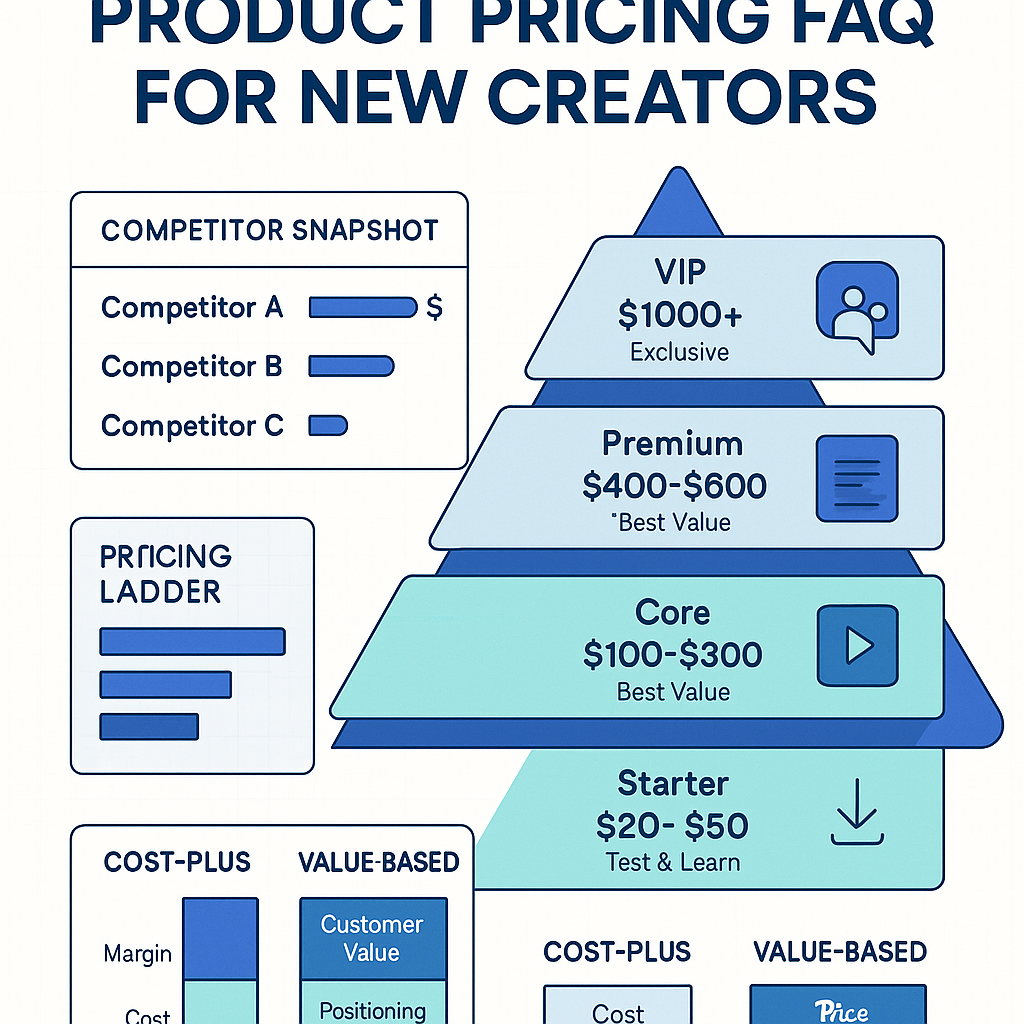
Q: What's the difference between cost-plus and value-based pricing?
Cost-plus pricing adds a markup to your costs. For digital products, this is mostly useless—your main costs are time and knowledge, which are hard to quantify.
Value-based pricing focuses on the outcome your product delivers. If your productivity system saves someone 10 hours per week, what's that worth? If your sales training helps someone close an extra $5,000 in monthly revenue, how much should they pay for that skill?
The counterintuitive part: value-based pricing often results in higher prices than what feels "comfortable" to new creators. That discomfort is usually a good sign—you're probably onto something.
Pricing Models and Strategies
Q: Should I offer payment plans?
Payment plans can increase conversions by 15-40%, but they come with complexity. You'll need to handle failed payments, partial refunds, and access management.
My rule: offer payment plans for products priced above $200. Below that, the administrative overhead isn't worth it. For products above $500, payment plans become almost mandatory.
The structure that works best? Two payments of 55% each (so $550 becomes 2x $302.50). The slight premium covers your risk and processing complexity. ThriveCart and SamCart both handle this automatically, which removes most of the technical headaches.
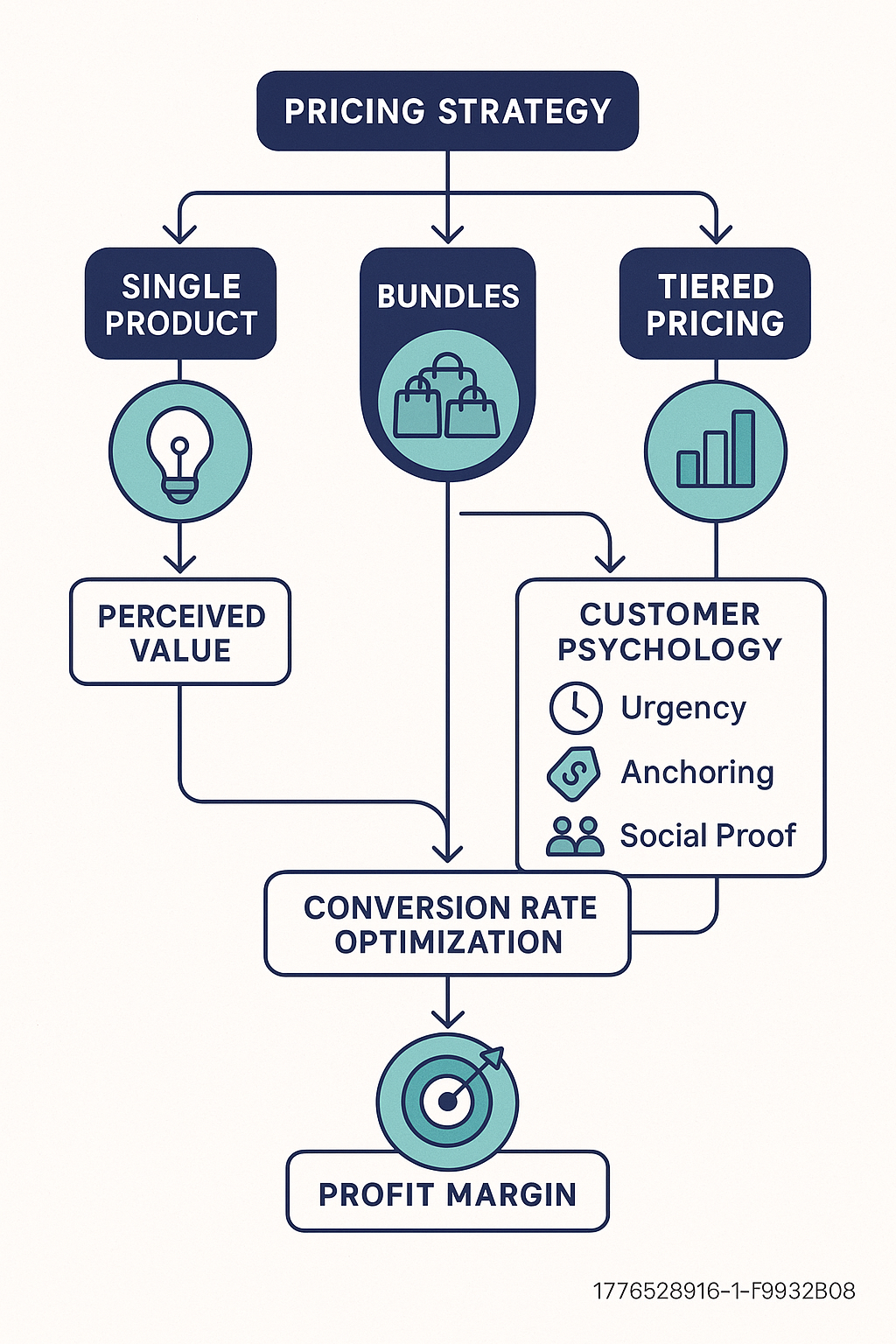
Q: When should I use tiered pricing?
Tiered pricing works when you can create meaningful value differences between tiers—not just "more stuff" differences.
Good tier differentiation:
- Basic: Self-study course ($197)
- Premium: Course + live Q&A sessions ($497)
- VIP: Everything + 1-on-1 implementation call ($997)
Bad tier differentiation:
- Basic: 5 modules ($97)
- Premium: 10 modules ($197)
- VIP: 15 modules ($297)
The second example just dilutes your core product. If modules 6-15 add value, include them in the base product and price accordingly.
Q: How do I price bundles vs individual products?
Bundle pricing should offer a 20-30% discount compared to buying individually. Less than 20%, and there's no compelling reason to buy the bundle. More than 30%, and you're training customers to wait for bundles.
But here's what most people get wrong: they create bundles by throwing together random products. Effective bundles solve a complete workflow or transformation. Your email marketing course + your copywriting templates + your automation setup guide = a complete "email marketing mastery" solution.
Platform and Technical Considerations
Q: Do different platforms affect what I can charge?
Absolutely. Platform positioning creates pricing expectations before customers even see your sales page.
Udemy and Skillshare train customers to expect $20-50 courses. ClickBank skews toward $47-197 info products. Kajabi and Teachable users typically expect $200-2000 courses.
This isn't just perception—it affects conversion rates. I've seen identical courses convert at 2% on Udemy ($29) and 8% as a standalone product ($297). The higher-priced version actually converted better because the positioning attracted more committed buyers.
Q: Should I offer affiliate commissions, and how does that affect pricing?
Affiliate programs can 2-3x your reach, but they require margin planning. If you want to offer 50% commissions (standard for digital products), your pricing needs to account for that.
Work backwards: if your target profit per sale is $100, and you're paying 50% affiliate commissions, you need to price at minimum $200. Add in payment processing (3%), refunds (5-10%), and platform fees (2-5%), and you're looking at $230-250 minimum pricing.
Commission structure planning should happen before you finalize pricing, not after.
Psychology and Market Response
Q: What if nobody buys at my chosen price?
Low sales at launch doesn't automatically mean your price is wrong. I've seen creators panic and slash prices after 48 hours—terrible mistake.
First, check your traffic quality. Are you getting your ideal customers, or just random visitors? Second, examine your conversion path. Is the issue price sensitivity, or unclear value proposition?
The diagnostic: if people are visiting your sales page but not buying, test messaging before price. If people aren't even clicking to your sales page, test your marketing angles.
Q: How do I handle price objections?
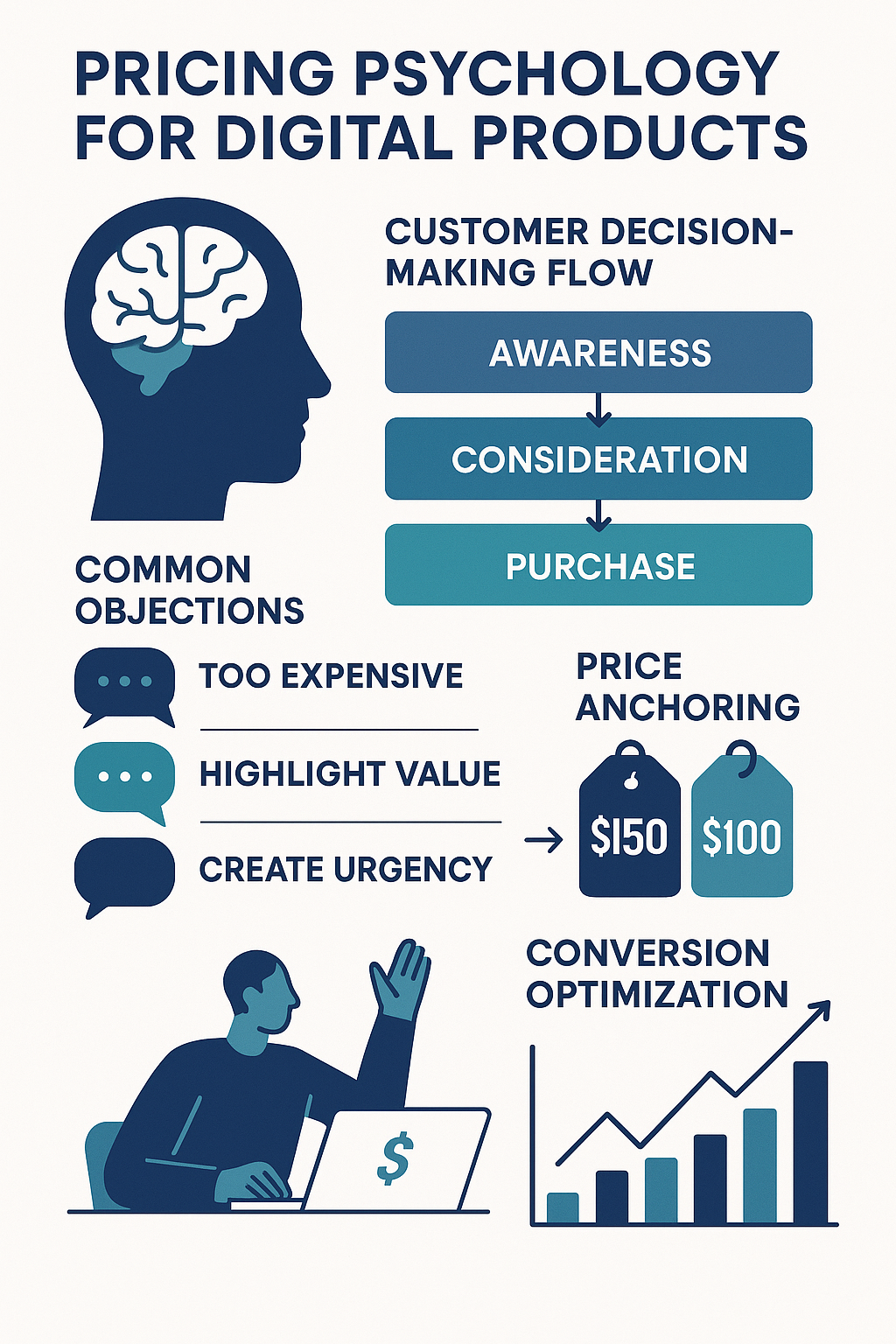
Price objections usually aren't about money—they're about perceived value or trust. "It's too expensive" often means "I don't believe it will work for me."
The solution isn't lower prices; it's better objection handling in your sales copy. Address the real concerns: Will this work for my situation? What if I don't have time to implement? What if I'm not tech-savvy enough?
Social proof becomes crucial here. Case studies from customers who had similar concerns and succeeded anyway will do more for conversions than any price reduction.
Q: When should I raise or lower prices?
Raise prices when: you're converting above 5% consistently, you're getting positive feedback about value, or you've added significant content/features.
Lower prices when: you've tested messaging extensively and conversions remain below 1%, competitors with similar value propositions are significantly cheaper, or market conditions have fundamentally shifted.
But here's the thing—most pricing problems aren't actually pricing problems. They're positioning, traffic quality, or sales copy problems wearing a pricing mask.
From the Field: Real Implementation Notes
After working with dozens of digital product creators, I've noticed some patterns that don't make it into the typical pricing advice.
First, seasonal pricing fluctuations are real but predictable. January sees 20-30% higher conversions for business/productivity products as people commit to New Year changes. November-December see lower conversions but higher average order values as people spend holiday budgets.
Second, the "charm pricing" effect ($97 vs $100) matters less for digital products than physical goods. Your audience is making considered purchases, not impulse buys. Round numbers actually test better for higher-priced items ($500 vs $497).
Third, launching with "early bird" pricing works, but the discount should expire based on date, not sales volume. "50% off for the first 100 customers" creates artificial urgency. "50% off until Friday" creates real urgency.
The most successful creators I work with treat pricing as a hypothesis, not a permanent decision. They test, measure, and adjust based on data—not gut feelings or competitor copying.
Advanced Pricing Considerations
Q: How do I price for global markets?
Currency conversion is the obvious consideration, but purchasing power parity matters more. $297 might be reasonable for US customers but prohibitive in many international markets.
Some creators use geo-based pricing, offering the same product at different price points based on location. ClickFunnels 2.0 and similar platforms can handle this automatically.
The simpler approach: create region-specific bonuses that justify different pricing. Your core course stays the same price, but customers in lower-purchasing-power regions get additional local case studies or translated materials.
Q: Should I offer refunds, and how does that affect pricing?
Refund policies directly impact conversion rates and pricing strategy. A 30-day money-back guarantee typically increases conversions by 10-20%, which often more than compensates for the 5-8% refund rate on digital products.
But longer isn't always better. 60-90 day guarantees don't significantly improve conversions over 30 days, but they do increase refund rates as people forget they purchased or change priorities.
Factor your expected refund rate into pricing calculations. If you're targeting $200 profit per sale and expecting 7% refunds, price accordingly.
Q: How do I price limited-time offers vs evergreen products?
Limited-time offers can command 20-40% premiums over evergreen pricing, but only if the scarcity is genuine. Fake countdown timers and "limited spots" for digital products destroy trust.
Real scarcity that justifies premium pricing: live cohorts, time-sensitive bonuses, or seasonal relevance. Your Black Friday marketing course should cost more in October than in February.
For evergreen products, focus on value-based pricing without artificial urgency. Let the transformation potential drive the purchase decision.
Still Have Questions?
Pricing strategy evolves as your business grows. What works for your first product might not work for your tenth. The key is building systems that let you test and adjust without starting from scratch each time.
Remember: there's no "perfect" price, only prices that align with your positioning, audience, and business goals. Start with solid fundamentals, test methodically, and adjust based on real data—not fears or assumptions.
The creators who succeed long-term treat pricing as one component of their overall value proposition, not the make-or-break factor. Get the value right first. The pricing will follow.
This article contains affiliate links. We may earn a commission at no extra cost to you. Full disclosure.
Editorial Team
Senior Digital Marketing Strategist
The Prophet Visionary editorial team covers affiliate marketing, paid traffic, funnels, and digital product strategy with hands-on practitioner experience.
Learn more about our editorial team →Need One Platform to Run Your Entire Affiliate Business?
Funnels, email sequences, course hosting, affiliate management — Systeme.io replaces your entire tool stack at a fraction of the cost. Free plan included.
See How Systeme.io WorksThis page contains affiliate links — I may earn a commission at no extra cost to you.
Disclaimer: The information on this site is for educational purposes only and does not constitute financial, legal, or business advice. Results vary based on individual effort, market conditions, and other factors. Always do your own due diligence before making business or investment decisions.