Affiliate Marketing FAQ: Honest Answers for Beginners
affiliate marketing is confusing at the start because almost everything you read online contradicts something else you just read. One source says you need a website. Another says you don't. One guru swears by email lists; another is running six figures off TikTok organic. Here's the core truth: affiliate marketing is a performance-based model where you earn a commission by sending buyers to someone else's product—and the confusion exists because there are genuinely dozens of ways to do it. The right path depends on your budget, traffic source, and how much time you can realistically invest. This FAQ exists to cut through that noise.

Why Does Everyone Seem to Define Affiliate Marketing Differently?
Because they're describing different models that all technically fall under the same umbrella. There's content-based affiliate marketing—think review blogs and YouTube channels monetized through Amazon Associates or ShareASale. There's email-first affiliate marketing, where the whole business is a list and a sequence of offers. Then there's paid traffic affiliate marketing, where you're buying clicks on Taboola, Outbrain, or Facebook and routing them through a bridge page to a ClickBank or Digistore24 offer.
All of these are "affiliate marketing." None of them work exactly the same way. What most people get wrong is assuming they need to master all of them simultaneously. Pick one traffic source, one offer category, one funnel structure—and go deep before going wide.
Why Do I Need a "Funnel"? Can't I Just Share My Affiliate Link?
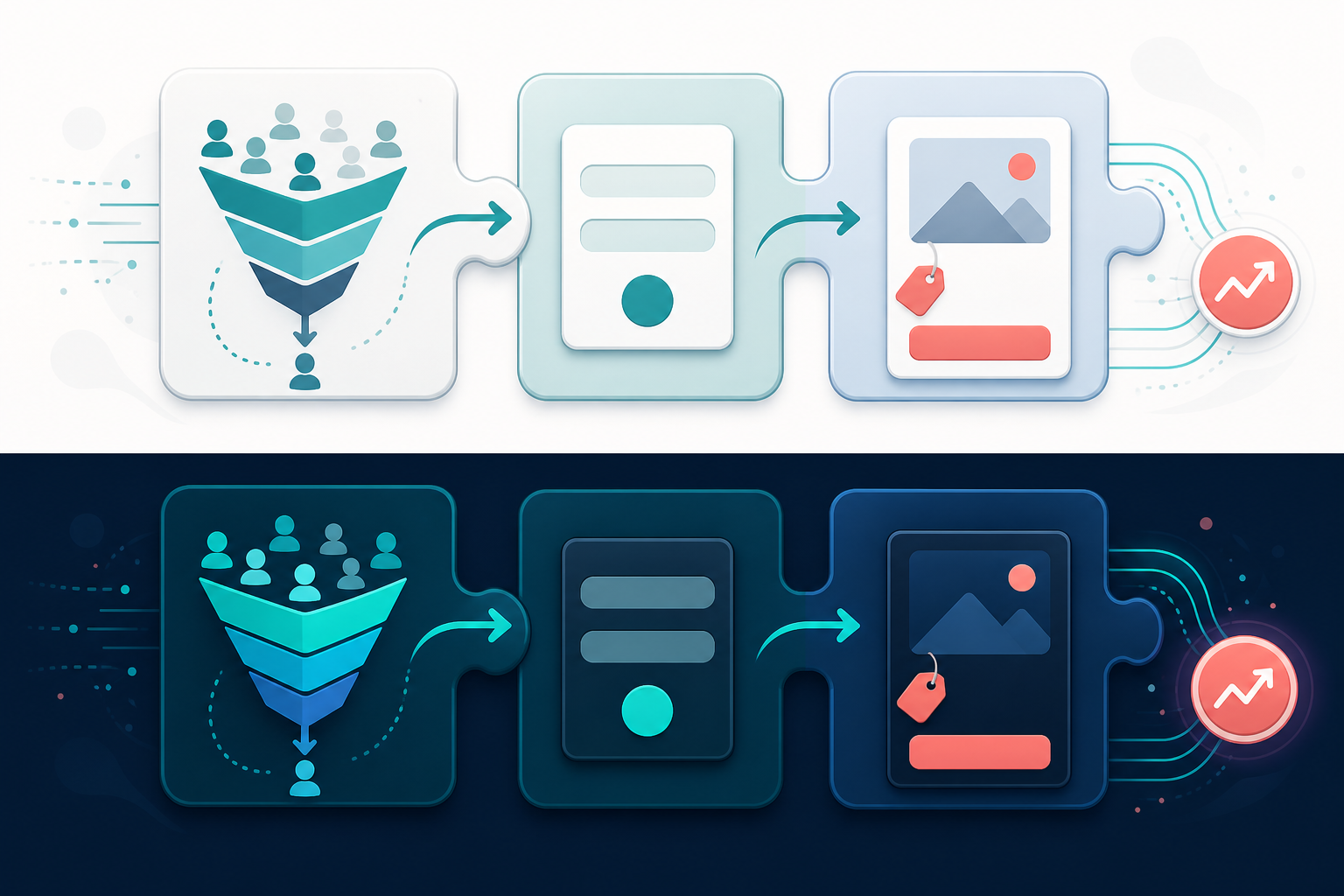
Technically, yes. Practically, you'll bleed money or time doing it that way. Raw affiliate links—especially on paid traffic—get flagged by ad platforms. Facebook, Google, and most native ad networks don't want you sending cold traffic directly to a vendor's sales page. You need something in between: a bridge page, a pre-sell page, a quiz, or a lead capture. That middle layer is your funnel.
More importantly, when you send traffic directly to an offer, you own nothing. If the vendor pulls the product, changes the commission structure, or the offer stops converting, you have zero asset. A funnel—especially one that captures emails—means you're building something that compounds. A list of 2,000 engaged subscribers is worth more than a single affiliate campaign that ran hot for three weeks and then died.
If you're not sure where your bridge page is falling short, this breakdown of why affiliate bridge pages fail to convert is worth reading before you spend another dollar on traffic.
Why Is It So Hard to Get Approved by Affiliate Networks?
Honestly? Because affiliate fraud is rampant and networks are protecting their advertisers. ClickBank is relatively open—you can get started without a track record. But networks like CJ Affiliate, Impact, or individual SaaS programs often want to see an established website, a content history, and sometimes even traffic numbers before they'll approve you.
The workaround isn't to fake anything—it's to start with programs that have lower barriers (ClickBank, Digistore24, JVZoo, or direct vendor programs on Systeme.io), build a real presence, and then apply to the more selective networks once you have something to show. A simple content site with 15-20 articles and three months of indexing is usually enough to get most mid-tier programs to say yes.
What About Programs That Require a Purchase First?
Some programs—particularly MLM-adjacent or "business opportunity" offers—require you to be a paying customer before you can promote. This is a red flag in many cases, not a rule. Legitimate affiliate programs don't require you to buy the product first. If a program insists on this, read the compensation structure carefully before committing any money.
Why Aren't My Affiliate Links Getting Clicks?
This is almost always a traffic quality or trust problem—not a link problem. If you're placing affiliate links on a site that gets no organic traffic, in an email list that barely opens, or in social posts with no engaged following, the links themselves aren't the issue. You don't have an audience yet, or the audience you have doesn't trust your recommendations.
The fix isn't to post more links. It's to build context around the recommendation. What problem does this product solve? Why are you specifically recommending it over alternatives? Have you used it? Even a single honest paragraph of personal context outperforms five generic "check this out" posts. If you're leaning into email as your primary channel, these affiliate email marketing questions have some direct answers on structuring recommendations that actually get clicks.
Why Do Some Affiliates Make a Lot While Others Make Nothing?
The gap is almost never about secret tactics or insider access. It's about three compounding advantages: traffic volume, conversion infrastructure, and offer selection. Someone making serious commissions has usually solved all three. They have a reliable, scalable traffic source. They have a funnel that converts cold visitors into warm buyers (or at least email subscribers). And they've chosen offers with real market demand, decent EPCs (earnings per click), and commission structures that justify the cost of acquisition.
Beginners usually get stuck because they're missing one or two of these. Great offer, no traffic. Decent traffic, no funnel. Funnel built, wrong offer for the audience. The counterintuitive part is that fixing one element often doesn't move the needle until the others are in place too. This is why the "overnight success" stories are almost always misleading—what looks like an overnight result is usually six months of invisible setup work.
Why Does Everyone Keep Talking About "Building a List"?
Because it's the one asset in affiliate marketing you actually own. Your organic rankings can drop. Your ad account can get banned. Your social following can get shadowbanned or the algorithm can change overnight. Your email list—if you've built it correctly—stays yours.
The practical mechanics: you offer something free (a lead magnet, a quiz result, a short PDF guide) in exchange for an email address. That subscriber goes into a sequence—typically a 3-email welcome series that delivers the freebie, establishes your voice, and introduces a relevant affiliate offer. Tools like ConvertKit, ActiveCampaign, or the free tier of Systeme.io handle the automation. If you're trying to figure out what a lead magnet should even look like for an affiliate context, this guide on lead magnet conversion problems covers the common mistakes in detail.
The list is also what separates one-time commissions from recurring revenue. When you have 5,000 subscribers who trust your recommendations, you can introduce a new offer and generate commissions within 24 hours of sending an email. That kind of leverage doesn't exist when you're starting from zero traffic every single time.
Why Is Paid Traffic So Risky for Beginners?
It's not risky because it's complicated. It's risky because the feedback loop is expensive. On organic content, a bad article costs you time. On paid traffic, a bad campaign costs you real money—sometimes hundreds of dollars before you realize the angle isn't working. That said, paid traffic is also the fastest way to get data and scale what's working.
If you're going to start with paid traffic, native ad networks tend to be more forgiving for affiliate offers than Facebook or Google. Platforms like Taboola and Outbrain are built for this kind of promotion. CPCs can range from $0.08–0.15 on smaller networks like NewsBreak up to $0.40–0.80 on premium Taboola placements depending on the vertical. The key is starting with a small daily budget ($20–30/day), testing multiple headlines and images, and not scaling until you've confirmed a positive ROAS on a small sample.
Compliance is also a real issue on paid traffic. Your bridge page needs to meet platform standards—no fake scarcity, no misleading claims, no "you've been selected" language. Getting this wrong doesn't just cost you the campaign; it can get your ad account banned permanently.
Why Does Niche Selection Feel So Overwhelming?
Because there's too much advice telling you to "follow your passion" and not enough telling you to follow the money—and then reconciling those two things. The truth is, niche selection matters less than most beginners think, and more than most gurus admit. It matters less because execution almost always beats niche selection. It matters more because some niches (health, wealth, relationships) have proven buyer intent and high commission products, while others are crowded with low-commission physical products and thin margins.
In my experience, the best beginner niche is one where: (a) there are affiliate programs paying $30+ per sale or 30%+ recurring commissions, (b) you can write or talk about the topic without wanting to quit after two weeks, and (c) there's a clear problem the audience is trying to solve. That third point is underrated. People buy solutions to problems, not content about topics.
Why Do People Say You Need a Website When Others Are Doing Fine Without One?
Both are true, depending on the model. If you're running paid traffic to a bridge page and capturing emails, you technically don't need a traditional content site. If you're building organic SEO traffic, you absolutely need one. If you're going the social media route—YouTube, TikTok, Instagram—you can survive without a site for a while, but you'll eventually want somewhere to send people that you control.
A website also adds credibility. When you're applying to better affiliate programs, trying to get sponsored, or building a brand that compounds over time, having a real domain with real content signals that you're serious. Systeme.io lets you build simple sites and funnels for free. WordPress with a basic theme and hosting runs about $5–10/month. There's no good reason to skip it if you're treating this as a real business.
From the Field: What Actually Works in the Early Stages
After watching a lot of beginners stumble through the same early mistakes, here's what I've found consistently separates the ones who make their first commission within 60–90 days from those who are still "setting things up" six months later:
- They pick one traffic source and commit to it. Not three. One. Whether that's Pinterest, SEO, native ads, or YouTube Shorts—they go deep on one channel until they understand it.
- They choose offers with real proof of market demand. ClickBank's marketplace shows gravity scores. A gravity of 30–80 is a good starting range—high enough to confirm people are buying, low enough that you're not fighting 500 other affiliates for the same audience.
- They build a simple two-step funnel first. Lead capture page → thank you page with the affiliate offer. That's it. Not a 12-step funnel with upsells and downsells. That comes later.
- They don't wait for perfection. The bridge page doesn't need to be beautiful. The email sequence doesn't need to be seven emails. A three-email welcome sequence that delivers value and makes one clear offer is enough to start.
- They track everything from day one. Even if it's just a simple UTM parameter and a Google Sheet. You can't improve what you can't measure.
One thing I'd add: the emotional part of this is real. The first few weeks feel like you're shouting into a void. That's normal. Affiliate marketing has a longer feedback loop than people expect, and the impatience that sets in around week three is where most beginners quit—right before things start clicking.

Why Is Compliance Suddenly Such a Big Deal?
Because the FTC has updated its guidance, ad platforms have tightened their review processes, and consumers have gotten better at recognizing manipulative marketing. This isn't a bureaucratic nuisance—it's a reflection of the fact that a lot of affiliate marketing over the past decade was genuinely misleading. Fake news-style advertorials, fabricated testimonials, fake countdown timers. The industry is cleaning up, and if you're starting now, you actually have an advantage: you can build the right way from the start.
Practically, compliance means: disclose your affiliate relationship (the site handles this automatically), don't make income claims you can't substantiate, don't use fake urgency or scarcity, and make sure your pre-sell content is honest about what the product is and what it does. If you're running paid traffic, your bridge page needs to align with whatever ad creative drove the click. Bait-and-switch angles—where the ad promises one thing and the page delivers another—are both against platform rules and genuinely bad marketing.
Still Have Questions?
This covers the most common confusion points I see from people who are just starting out—but affiliate marketing has a lot of moving parts, and the questions don't stop after the first commission. If you're thinking about how to structure your first offer or product alongside affiliate promotions, the monetization stacking guide gets into how to combine your own products with affiliate income in a way that makes both work harder.
The short version of everything above: pick a niche with proven buyer demand, choose one traffic source, build a simple funnel that captures emails, promote offers that solve real problems, and stay compliant. That's not a secret formula—it's just the work, done consistently, without shortcuts.
This article contains affiliate links. We may earn a commission at no extra cost to you. Full disclosure.
Editorial Team
Senior Digital Marketing Strategist
The Prophet Visionary editorial team covers affiliate marketing, paid traffic, funnels, and digital product strategy with hands-on practitioner experience.
Learn more about our editorial team →The Right Platform Simplifies Your Entire Stack
Fewer tools means fewer tracking gaps, simpler compliance, and cleaner data. Systeme.io consolidates funnels, email, courses, and affiliates so your analytics actually make sense.
See the Simplified StackThis page contains affiliate links — I may earn a commission at no extra cost to you.
Disclaimer: The information on this site is for educational purposes only and does not constitute financial, legal, or business advice. Results vary based on individual effort, market conditions, and other factors. Always do your own due diligence before making business or investment decisions.