Native Advertising FAQ for Performance Marketers: 2026 Guide
Native advertising remains one of the most misunderstood channels in performance marketing. After running thousands of native campaigns across Taboola, Outbrain, and emerging platforms, I've noticed the same questions come up repeatedly.
Here's what performance marketers actually need to know—not the surface-level fluff you'll find elsewhere.
Getting Started: Native Advertising Basics
What exactly counts as native advertising in 2026?
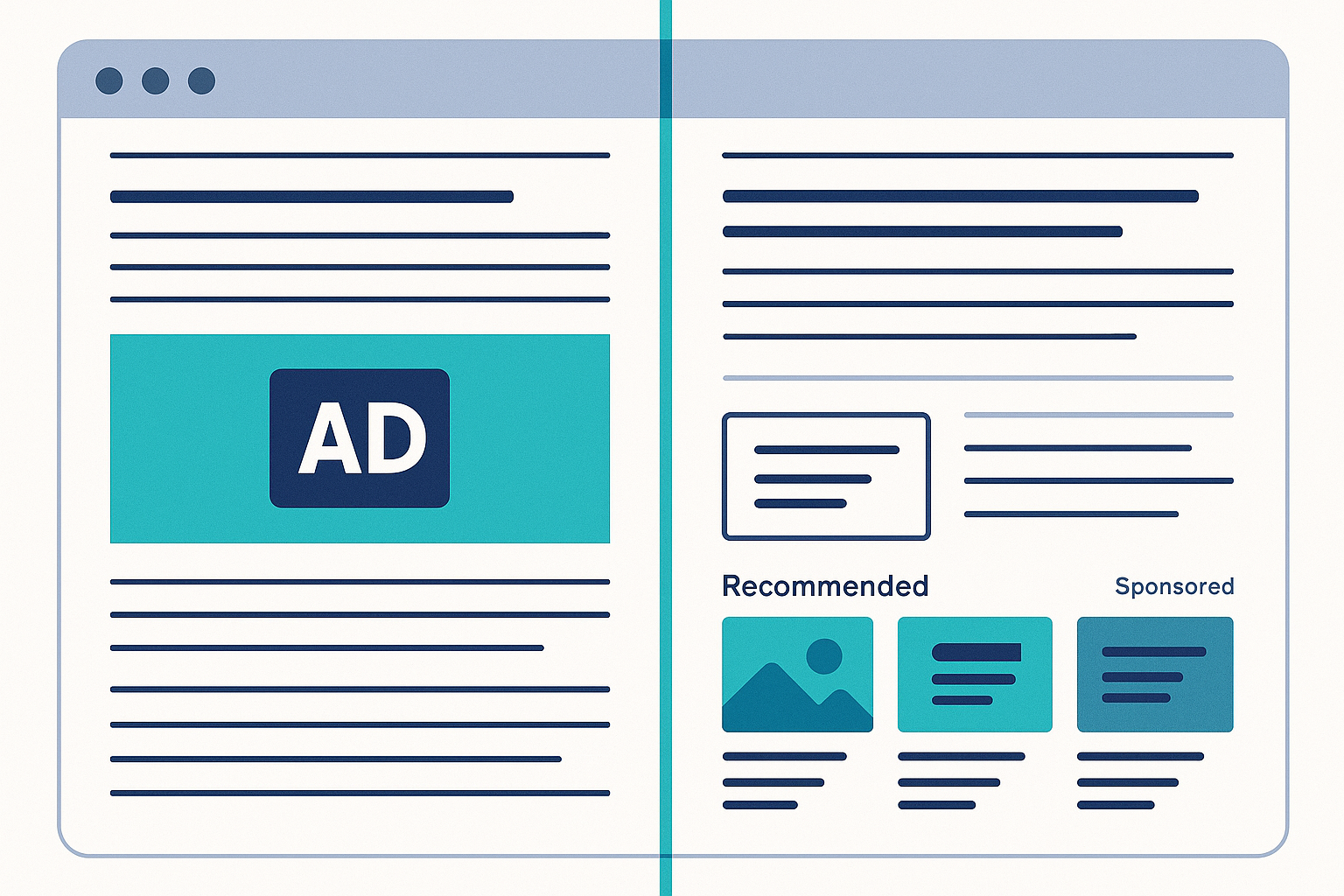
Native advertising is promotional content that matches the platform's editorial format and user experience. Think sponsored articles on CNN, recommended content widgets on news sites, or in-feed promoted posts on social platforms.
But here's what most people get wrong: native isn't just about blending in. The best native campaigns I've run actually stand out while maintaining editorial quality. A compelling headline on Taboola that promises genuine value will outperform generic "blend-in" content every time.
The key differentiator? Native advertising doesn't interrupt the user experience—it enhances it by providing relevant, valuable content at the right moment.
How is native different from display or social ads?
Display advertising screams "I'm an ad" with banner formats and obvious promotional messaging. Social ads live within platform-specific formats but often feel promotional.
Native advertising mimics editorial content. When someone clicks your native ad, they should feel like they're reading an article or consuming content—not being sold to immediately. The sales process happens deeper in your funnel, typically on a pre-sell page or advertorial.
I've found conversion rates 2-3x higher with native compared to display for information products, primarily because the traffic quality is superior. People are in a "learning mindset" rather than banner-blind mode.
Platform Selection & Strategy
Which native ad platforms should performance marketers prioritize?
Taboola and Outbrain dominate premium publisher traffic, but don't sleep on emerging platforms. I've been testing NewsBreak, Yahoo Gemini (now part of Verizon Media), and Revcontent with solid results.
For beginners, start with Taboola. Their interface is cleaner, approval process is more straightforward, and you can typically get campaigns running within 24-48 hours. Taboola vs Outbrain 2026: Which Native Ad Platform Wins for Affiliates breaks down the detailed comparison.
Outbrain has higher-intent traffic but stricter editorial guidelines. Revcontent offers cheaper traffic but requires more aggressive optimization. The truth is, you'll eventually need to test multiple platforms—traffic sources dry up, and diversification protects your campaigns.
What's the minimum budget needed to test native advertising effectively?
Don't believe anyone who says you can test native ads with $50/day. That's nonsense.
For meaningful data, budget at least $100-200 per day per campaign for 7-14 days. Native advertising requires volume to optimize properly—you need enough clicks to identify winning creatives, audiences, and publisher placements.
I typically recommend $500-1000 total test budgets for new offers. Split this across 2-3 ad variations and let the data guide optimization decisions. Anything less and you're making decisions on statistical noise.
Creative & Content Strategy
What makes native ad creatives convert in 2026?
Curiosity-driven headlines that promise specific outcomes without revealing the method. "How This 67-Year-Old Retired Early Using One Simple Strategy" outperforms "Make Money Online with affiliate marketing" every single time.
The image matters more than most marketers realize. I've seen identical headlines with different images produce 300% CTR differences. Use real people, avoid obvious stock photos, and test emotional expressions—surprise, concern, and mild skepticism work particularly well.
But here's the counterintuitive part: your creative shouldn't sell your actual product. It should sell the click to your pre-sell page. Save the conversion optimization for your landing page.
How do I create compliant native ad content?
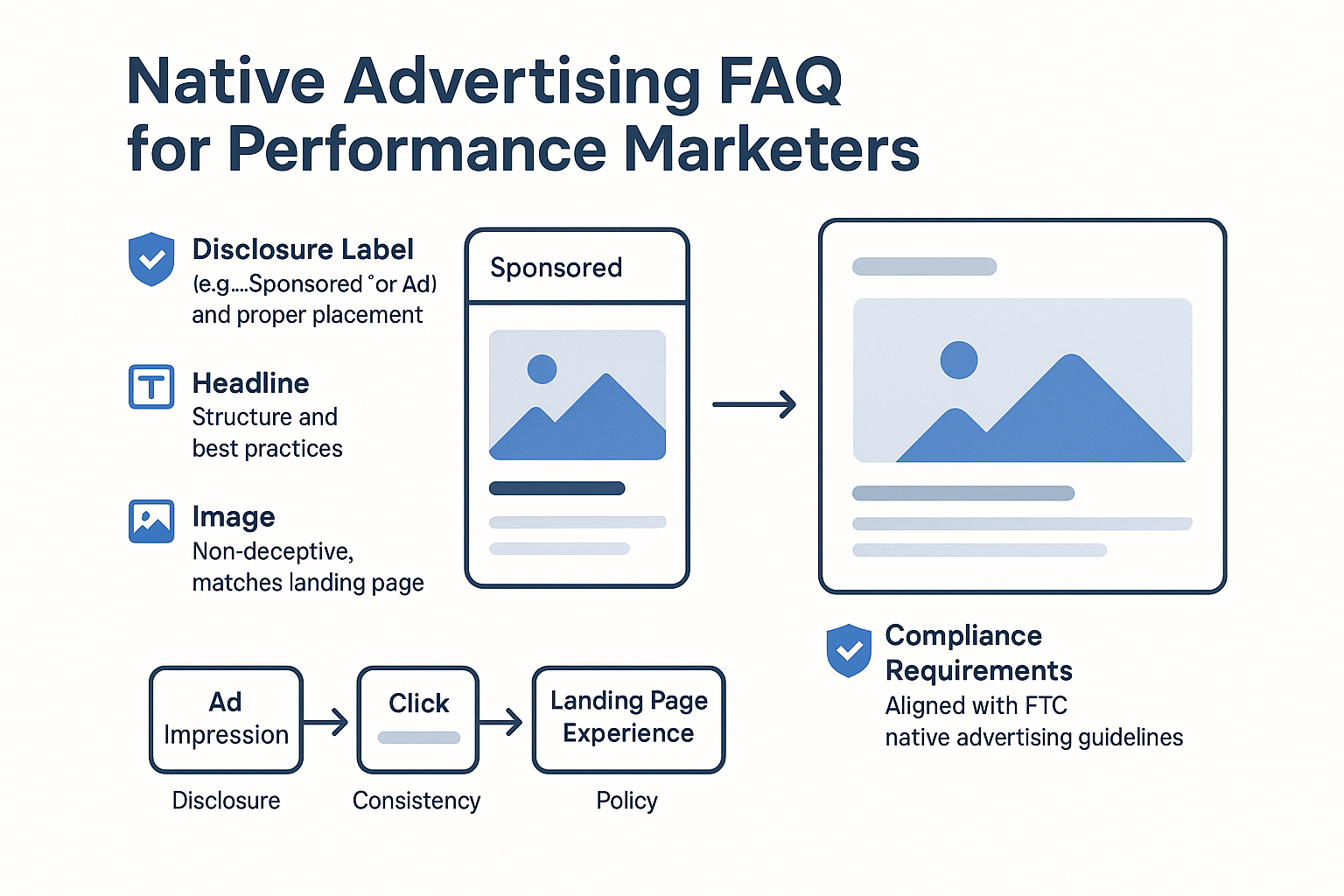
Compliance starts with understanding FTC guidelines and platform-specific policies. Every native ad must include clear disclosure—"Sponsored," "Advertisement," or "Promoted Content" labels are mandatory.
For affiliate offers, your pre-sell page needs additional disclosures about affiliate relationships and income claims. I've found that transparency actually improves conversions—people appreciate honesty about promotional content when it provides genuine value.
The bigger compliance risk isn't disclosure—it's making unsubstantiated claims. Avoid income promises, health claims without FDA approval, and "guaranteed results" language. Focus on educational content that naturally leads to your offer.
Tracking & Attribution Challenges
How do I properly track native advertising campaigns?
Native advertising tracking requires a different approach than search or social campaigns. The customer journey is typically longer, involving multiple touchpoints before conversion.
I recommend using dedicated tracking platforms like Voluum or RedTrack rather than relying solely on platform pixels. Voluum Tracker Review: Native Ad Affiliate's Real Performance Test covers the setup process in detail.
Set up proper UTM parameters for every campaign, and don't forget about view-through attribution. Someone might see your native ad, not click immediately, but convert later through direct traffic or branded search. Most platforms offer 1-day and 7-day view-through attribution windows.
What attribution models work best for native campaigns?
First-click attribution typically undervalues native advertising since it's often an awareness or consideration channel. Last-click attribution overcredits bottom-funnel channels like search.
I've found time-decay attribution models provide the most accurate picture for native campaigns. This gives more credit to touchpoints closer to conversion while still recognizing native's role in the customer journey.
For affiliate marketers, track beyond the initial conversion. Set up proper attribution systems to measure lifetime value, especially for subscription offers or courses with multiple upsells.
Optimization & Scaling
How do I optimize native campaigns for profitability?
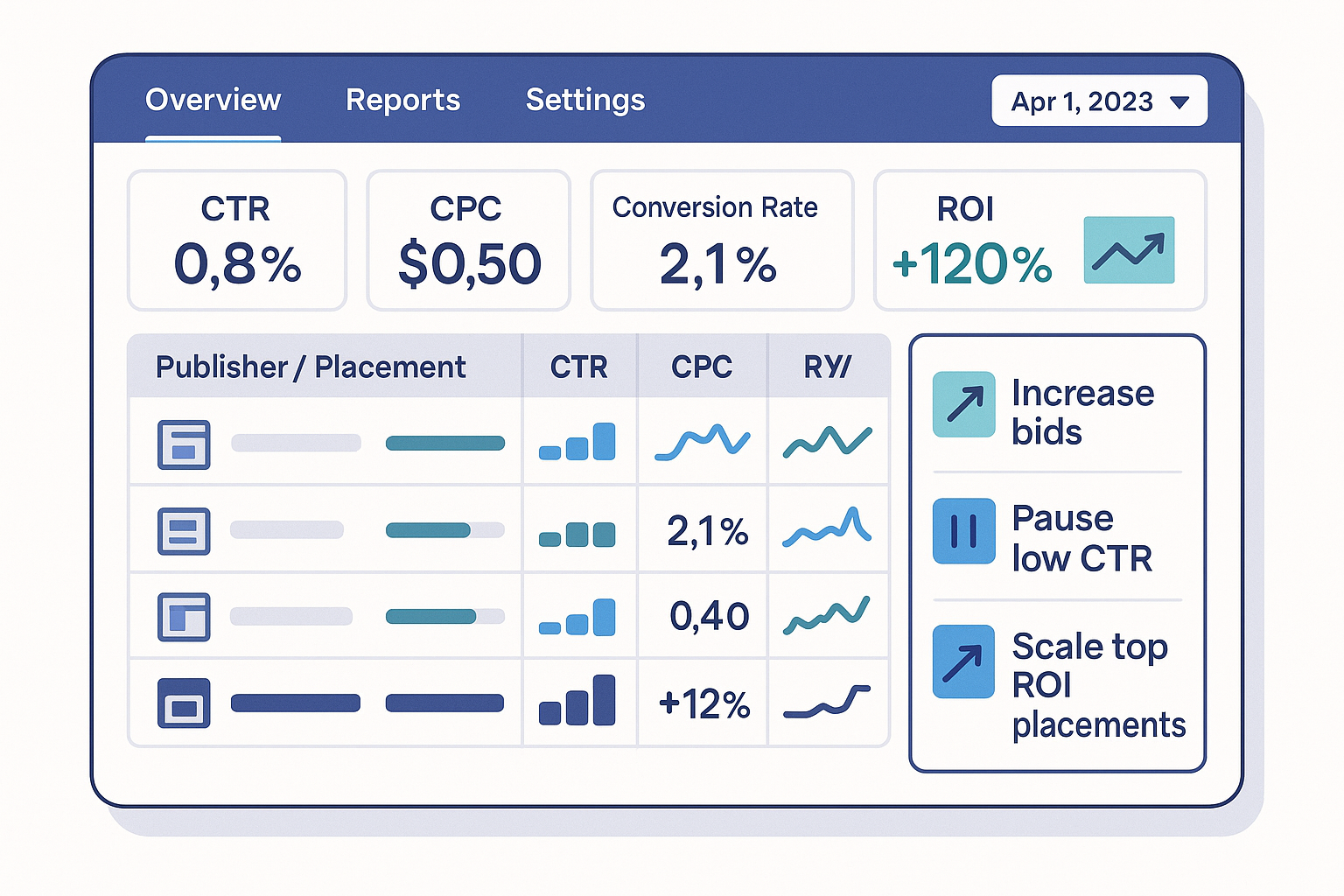
Start with publisher-level optimization. Native platforms show your ads across hundreds of websites—some convert, others don't. After 48-72 hours, pause publishers with high spend and zero conversions.
Creative rotation is crucial but misunderstood. Don't pause "losing" creatives too quickly—native advertising has natural fluctuations. I typically let creatives run for at least 500 clicks before making elimination decisions.
Audience targeting on native platforms is less precise than social media, so focus on contextual targeting. Your weight loss offer will perform better on health and fitness websites than general news sites, regardless of demographic targeting.
When and how should I scale winning native campaigns?
Scale gradually with native advertising. Doubling budgets overnight often kills profitable campaigns due to auction dynamics and publisher inventory limitations.
Increase budgets by 20-30% every 2-3 days while maintaining profitability. If performance drops, scale back and identify the issue—often it's creative fatigue or expanded placement targeting.
Horizontal scaling works better than vertical scaling with native. Instead of massively increasing one campaign's budget, duplicate winning campaigns across different platforms or test similar angles with new creatives.
Advanced Strategy Questions
How do I handle iOS 14.5+ privacy changes with native advertising?
Native advertising platforms were less impacted by iOS privacy changes compared to social media platforms, but tracking accuracy still decreased. The solution isn't perfect tracking—it's better attribution modeling and first-party data collection.
Focus on building email lists from your native traffic. Email marketing platforms like ConvertKit become more valuable when paid traffic attribution becomes fuzzy.
Server-side tracking helps recover some lost data. Most major native platforms now support server-side conversion tracking, though setup requires technical knowledge or developer assistance.
What's the role of native advertising in a full-funnel strategy?
Native advertising excels at top and middle-funnel activities—awareness, education, and consideration. It's not typically your best bottom-funnel conversion channel.
I structure native campaigns as traffic sources for comprehensive funnels. Native ad → educational content → email capture → nurture sequence → conversion. This approach provides better lifetime value than direct-response native campaigns.
Retargeting native traffic through other channels often produces the highest ROI. Someone who engaged with your native content but didn't convert immediately becomes a high-value retargeting audience for social or search campaigns.
Real-World Implementation Notes
Here's what I've learned from managing native campaigns across different verticals:
News consumption patterns matter. Finance and business content performs better Monday-Thursday. Health and lifestyle content peaks on weekends. Schedule your campaigns accordingly rather than running 24/7.
Seasonal trends are dramatic. Weight loss campaigns explode in January and April but struggle in November-December. Investment content peaks during market volatility. Plan your content calendar around these predictable patterns.
Publisher relationships matter more than you think. Some publishers consistently deliver better traffic quality for specific offers. I maintain spreadsheets tracking publisher performance across different campaigns—this data becomes incredibly valuable for future launches.
Creative testing never ends. What works today might fail next month as audiences become familiar with angles. I typically refresh creatives every 2-3 weeks, even for profitable campaigns. Better to proactively test than reactively fix declining performance.
Common Pitfalls and Solutions
What are the biggest mistakes performance marketers make with native advertising?
Treating native ads like Google Ads is the #1 mistake. Native requires editorial thinking, not keyword thinking. Your headlines should read like magazine covers, not search ads.
Another common error: sending native traffic directly to sales pages. The traffic isn't ready to buy immediately—they clicked expecting content. Bridge pages or advertorials that educate before selling consistently outperform direct-linking approaches.
Budget allocation mistakes kill campaigns early. Don't spread $100/day across 10 campaigns. Focus that budget on 2-3 campaigns for statistically significant results.
How do I avoid getting my native ads disapproved?
Read platform policies carefully—they're stricter than Google Ads but more permissive than Facebook. Each platform has specific restrictions around health claims, income opportunities, and sensitive topics.
Pre-approval helps for affiliate offers. Submit your landing pages and creatives for review before launching campaigns. Most platforms offer expedited review for established advertisers.
Keep backup creatives ready. Native platforms sometimes disapprove previously approved ads without clear explanations. Having approved alternatives prevents campaign disruptions.
Still have questions about native advertising strategy? The landscape shifts quickly, and platform-specific tactics evolve constantly. Focus on the fundamentals—quality content, proper tracking, and gradual optimization—and you'll adapt successfully to whatever changes come next.
This article contains affiliate links. We may earn a commission at no extra cost to you. Full disclosure.
Editorial Team
Senior Digital Marketing Strategist
The Prophet Visionary editorial team covers affiliate marketing, paid traffic, funnels, and digital product strategy with hands-on practitioner experience.
Learn more about our editorial team →The Right Platform Simplifies Your Entire Stack
Fewer tools means fewer tracking gaps, simpler compliance, and cleaner data. Systeme.io consolidates funnels, email, courses, and affiliates so your analytics actually make sense.
See the Simplified StackThis page contains affiliate links — I may earn a commission at no extra cost to you.
Disclaimer: The information on this site is for educational purposes only and does not constitute financial, legal, or business advice. Results vary based on individual effort, market conditions, and other factors. Always do your own due diligence before making business or investment decisions.