Affiliate Tracking & Attribution Questions Answered: 2026 Guide
I've been tracking affiliate campaigns since 2019, and the questions I get about attribution haven't changed much—but the tools and methods sure have. Most affiliates still mess up the fundamentals while chasing complex attribution models they don't need.
Here's what I've learned answering hundreds of tracking questions from affiliates making their first $1,000 to those scaling past seven figures.
Campaign Setup & Basic Tracking
What's the difference between server-side and client-side tracking?
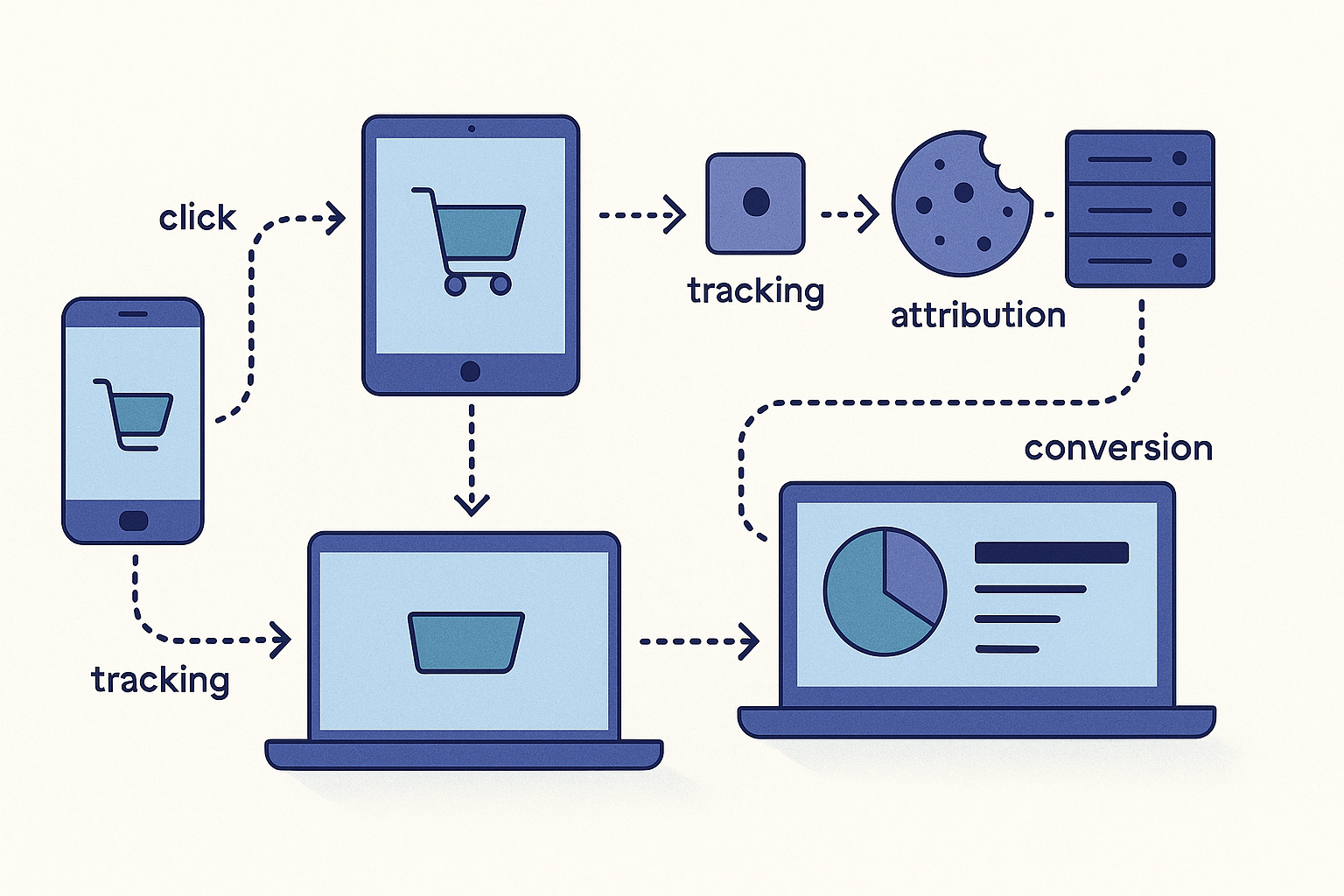
Client-side tracking runs in the user's browser using JavaScript pixels and cookies. Server-side tracking processes data on your servers before sending it to analytics platforms. I've found client-side easier to set up but server-side more reliable—especially with iOS privacy updates killing cookie accuracy.
The practical difference? Client-side tracking gets blocked by ad blockers about 25-30% of the time in my testing. Server-side costs more to implement but captures 90%+ of conversions. Most affiliates should start client-side, then upgrade to server-side once they're spending $10K+ monthly on traffic.
How do I track conversions across multiple devices?
Cross-device tracking is honestly still a mess in 2026. The most reliable method I use: email capture with deterministic matching. When someone enters their email on both devices, you can connect the dots.
Facebook's Conversions API helps with cross-device attribution for their traffic, but it's not perfect. Google's Enhanced Conversions works similarly. The truth is, you'll lose 15-20% attribution on cross-device conversions no matter what you do. Plan your ROAS targets accordingly.
Should I use UTM parameters or tracking platform tokens?
Both. UTM parameters work great for Google Analytics and give you backup data if your main tracker fails. But dedicated tracking platforms like Voluum or RedTrack offer way more granular data with their token systems.
My setup: UTM parameters for high-level campaign tracking, tracking platform tokens for optimization. The extra data layer from dedicated trackers pays for itself when you're split-testing ad creatives and landing pages.
Attribution Models & Revenue Tracking
Which attribution model should I use for affiliate campaigns?
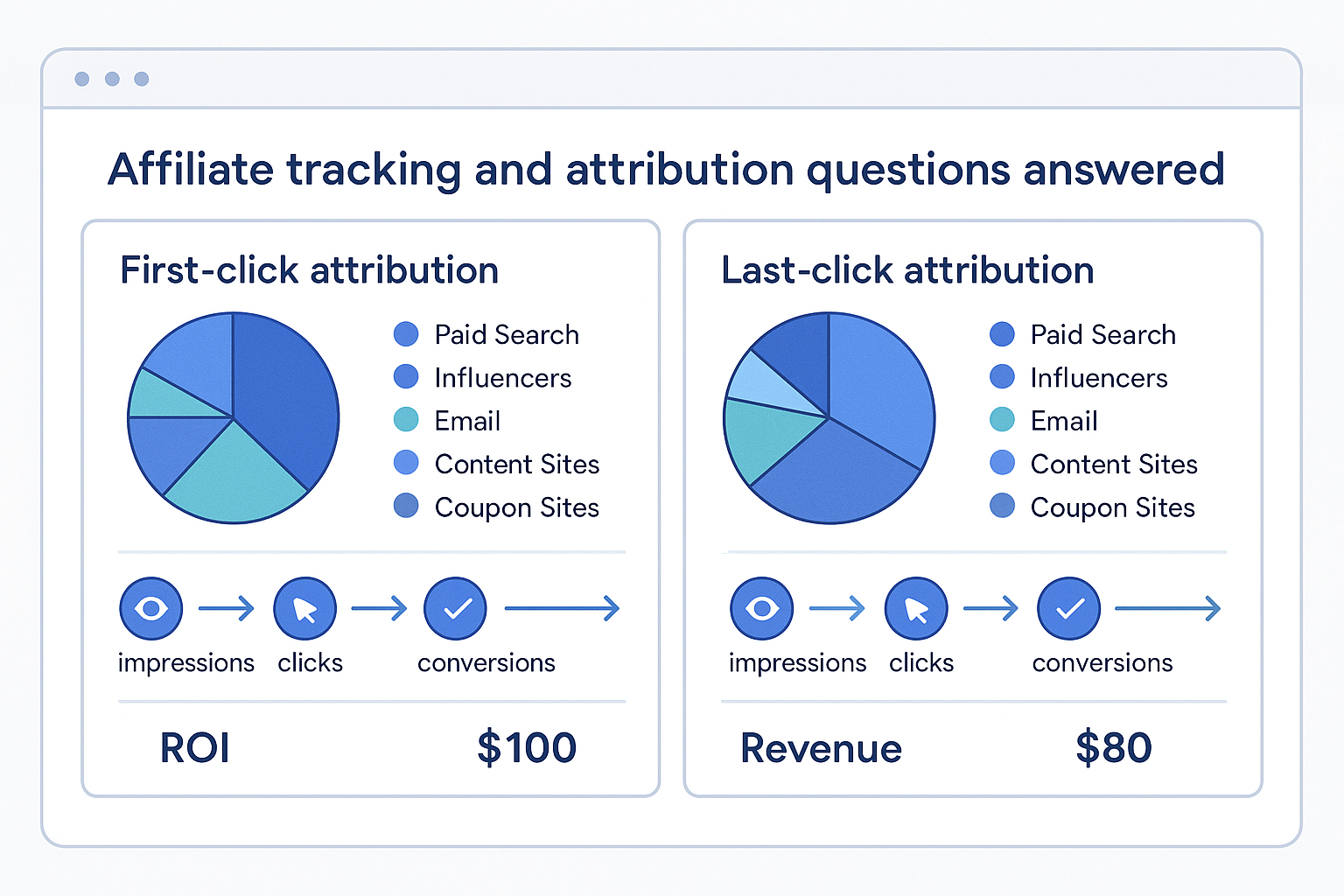
First-click attribution for top-of-funnel campaigns, last-click for bottom-funnel. But here's what most people get wrong—they pick one model and stick with it for everything.
I use first-click when running awareness campaigns on platforms like Taboola or Outbrain. Last-click for search campaigns where people are ready to buy. For email sequences, I track both first-click (original traffic source) and last-click (email campaign) to see the full customer journey.
How do I handle commission splits with sub-affiliates?
Track sub-affiliate IDs as separate parameters in your URLs. Most affiliate networks support sub-ID tracking—ClickBank allows up to 5 sub-IDs, ShareASale supports sub-affiliate tracking through their API.
The workflow I use: Create unique tracking links for each sub-affiliate using your main affiliate ID + their sub-ID. Set up automated commission splits in your payment system. Document everything because sub-affiliates will ask for detailed reports.
What's the best way to track lifetime value for recurring commissions?
Connect your affiliate network's postback URLs to a customer database that tracks recurring payments. Most networks send postback data for initial conversions but not recurring commissions—you'll need to pull that data via API calls.
I set up monthly automated reports pulling commission data from networks like ClickBank and JVZoo, then match it to original traffic sources. It's tedious but essential for calculating true customer LTV and optimizing traffic sources accordingly.
Technical Implementation Questions
How do I set up postback URLs correctly?
Most affiliate networks provide postback URL templates, but the setup varies wildly. For ClickBank, you'll add the postback in your account settings using their transaction variables. For networks like MaxBounty or PeerFly, you'll configure it in the offer settings.
The critical part: test your postbacks with small traffic before scaling. I've seen affiliates lose thousands in attribution because their postback URLs had a single character wrong. Use the network's testing tools or send test conversions to verify data flow.
What tracking parameters should I always include?
At minimum: traffic source, campaign name, ad group/creative ID, and keyword (for search traffic). I also include device type, geographic location, and time stamps for deeper analysis.
My standard URL structure: offer-url.com?source={source}&campaign={campaign}&creative={creative}&keyword={keyword}&device={device}&geo={geo}
The extra parameters help when you're scaling successful campaigns to new geos or optimizing creative performance across different devices.
Compliance & Privacy Considerations
How do GDPR and privacy laws affect affiliate tracking?
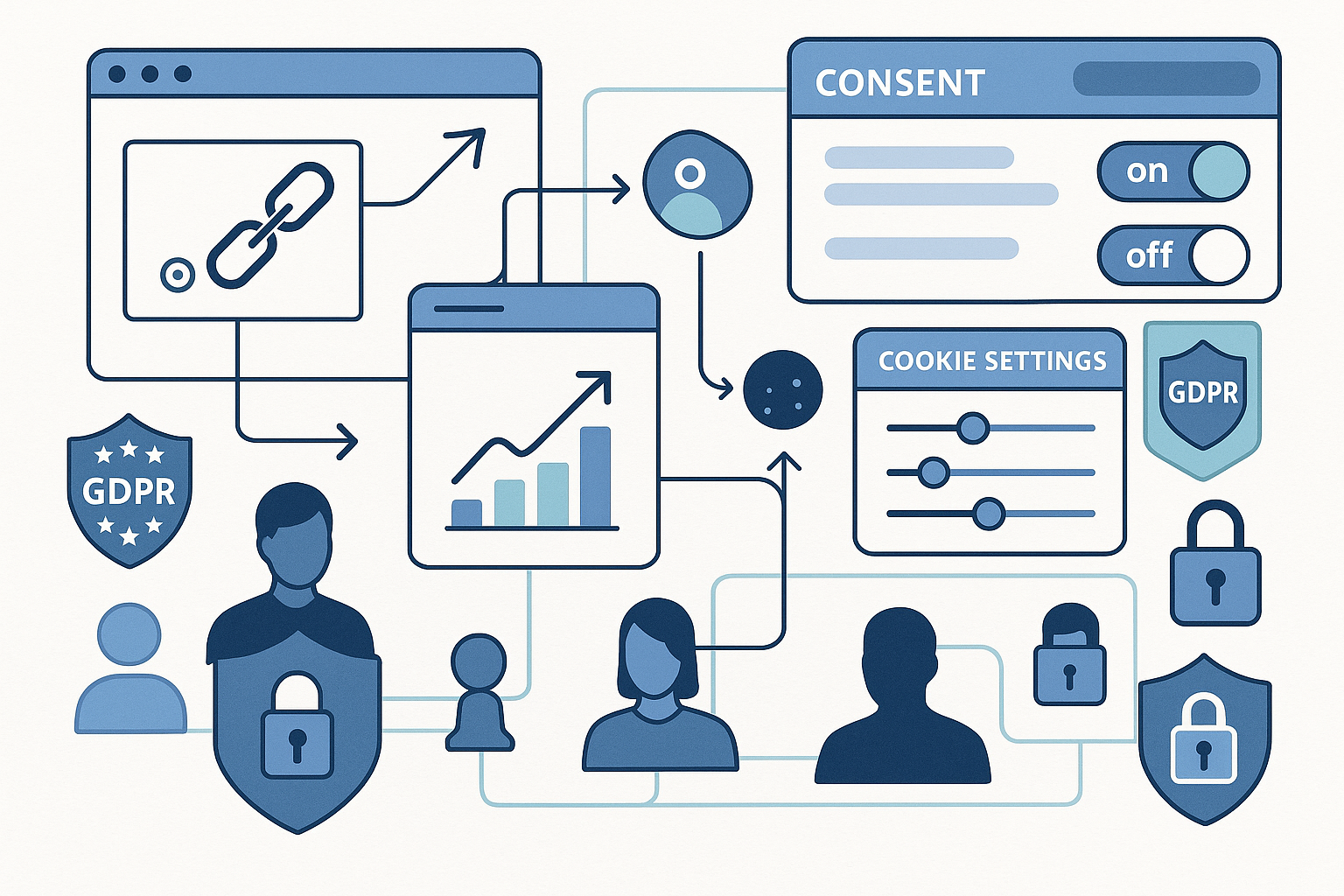
You need explicit consent for tracking cookies in GDPR regions, which impacts attribution accuracy. I've seen conversion tracking drop 20-30% in European traffic after implementing proper consent management.
The practical approach: Use first-party cookies when possible, implement consent management platforms for EU traffic, and switch to server-side tracking for better compliance. Most tracking platforms now offer GDPR-compliant configurations—just enable them.
What data can I legally collect from affiliate traffic?
Basic analytics data (page views, clicks, conversions) is generally fine. Personal information like emails or phone numbers requires explicit consent. IP addresses fall into a gray area—some jurisdictions consider them personal data.
I stick to non-personal tracking data unless I'm building an email list with proper opt-ins. Better safe than sorry with privacy regulations changing constantly.
How do I handle tracking for email marketing compliance?
Include tracking pixels in emails but make them compliant with CAN-SPAM and GDPR. Most email platforms like ConvertKit or GetResponse handle compliance automatically, but you're responsible for affiliate link tracking.
Use branded tracking domains instead of direct affiliate links in emails. It looks more professional and gives you better data on email performance versus other traffic sources.
Platform-Specific Tracking Challenges
How do I track iOS traffic with App Tracking Transparency?
iOS 14.5+ broke traditional pixel tracking for users who opt out of tracking. I've adapted by focusing on first-party data collection and using SKAdNetwork for iOS app traffic.
For web traffic from iOS devices, server-side tracking helps but isn't perfect. The reality? You'll lose attribution on 40-50% of iOS traffic. Factor this into your bidding strategies and focus on Android traffic if your offers convert better there.
What's the best way to track TikTok and Instagram traffic?
Both platforms limit external tracking, so focus on UTM parameters and bridge pages that capture emails before sending traffic to offers. TikTok's attribution window is shorter than Facebook's, so optimize for immediate conversions.
I use platform-specific landing pages with clear tracking to see which social platforms drive quality traffic. Instagram tends to convert better for lifestyle offers, TikTok for impulse purchases.
Practical Implementation Notes
After setting up tracking for hundreds of campaigns, here's what actually matters in practice:
Start simple. Use basic UTM tracking and one dedicated tracking platform. Don't overcomplicate attribution models until you're spending serious money on traffic.
Test everything twice. I've lost more money from broken tracking than failed campaigns. Send test conversions through your entire funnel before launching traffic.
Build redundancy. Use multiple tracking methods so you don't lose all data if one system fails. Google Analytics + dedicated tracker + affiliate network reporting gives you three data sources to compare.
Focus on trends, not perfect numbers. Attribution will never be 100% accurate. Look for directional trends in your data rather than obsessing over exact conversion counts.
The biggest mistake I see? Affiliates spending weeks perfecting tracking setups instead of testing offers and traffic sources. Get basic tracking working, then optimize as you scale.
Advanced Attribution Strategies
How do I implement multi-touch attribution for complex funnels?
Multi-touch attribution requires tracking every touchpoint in your funnel—from initial ad click through email sequences to final conversion. I use custom tracking parameters that persist across multiple pages and follow users through email automation.
The setup: Assign unique visitor IDs that track across sessions, log every interaction with timestamps, then use attribution modeling to assign conversion credit. Tools like Google Analytics 4 offer basic multi-touch attribution, but serious affiliates need dedicated platforms.
Is it worth the complexity? Only if you're running sophisticated funnels with multiple traffic sources and long conversion cycles. Most direct-response affiliate campaigns work fine with last-click attribution.
What's the best way to track affiliate recruitment and team performance?
Create hierarchical tracking structures that separate your direct traffic from recruited affiliates. Use sub-affiliate IDs for team members and track their performance independently.
I set up separate tracking domains for team members so their traffic doesn't interfere with my optimization data. Each affiliate gets custom tracking links with their sub-ID embedded, making commission calculations and performance analysis straightforward.
The key insight: building affiliate teams requires different tracking approaches than solo campaigns. Plan your attribution structure before recruiting to avoid data chaos later.
Still Have Questions?
Tracking and attribution get complex fast, but the fundamentals haven't changed much. Focus on reliable data collection, test your setups thoroughly, and don't let perfect attribution prevent you from launching profitable campaigns.
The truth is, most successful affiliates use relatively simple tracking setups. They spend more time testing offers and optimizing traffic sources than building complex attribution models.
What matters most? Consistent data that helps you make scaling decisions. Whether you're using simple funnel setups or complex multi-channel campaigns, reliable tracking beats perfect tracking every time.
This article contains affiliate links. We may earn a commission at no extra cost to you. Full disclosure.
Editorial Team
Senior Digital Marketing Strategist
The Prophet Visionary editorial team covers affiliate marketing, paid traffic, funnels, and digital product strategy with hands-on practitioner experience.
Learn more about our editorial team →The Right Platform Simplifies Your Entire Stack
Fewer tools means fewer tracking gaps, simpler compliance, and cleaner data. Systeme.io consolidates funnels, email, courses, and affiliates so your analytics actually make sense.
See the Simplified StackThis page contains affiliate links — I may earn a commission at no extra cost to you.
Disclaimer: The information on this site is for educational purposes only and does not constitute financial, legal, or business advice. Results vary based on individual effort, market conditions, and other factors. Always do your own due diligence before making business or investment decisions.