Voluum vs RedTrack: Which Tracking Platform Actually Delivers
After running campaigns through both Voluum and RedTrack for the past two years, I've seen enough data to tell you which platform actually delivers—and which one might be burning your budget.
The tracking space got crowded fast. Everyone's promising "enterprise-grade" this and "AI-powered" that. But here's what most affiliates get wrong: they choose based on feature lists instead of real-world performance under pressure.
I've pushed both platforms through high-volume campaigns, tested their data accuracy during traffic spikes, and dealt with their support teams when things went sideways at 2 AM. The differences are bigger than you'd expect.
The Real-World Testing Scenario
My approach was straightforward. Same campaigns, same traffic sources, parallel tracking setup for three months. I ran everything from small facebook campaigns pulling 1,000 clicks daily to larger native pushes hitting 50K+ visits.
The test campaigns covered:
- Facebook Ads to health supplements (clickbank offers)
- Native traffic from Taboola pushing finance offers
- Push notification campaigns for dating verticals
- Google Ads to software trials
What I wanted to know wasn't just "which tracks better"—it was which platform keeps you profitable when scaling matters.
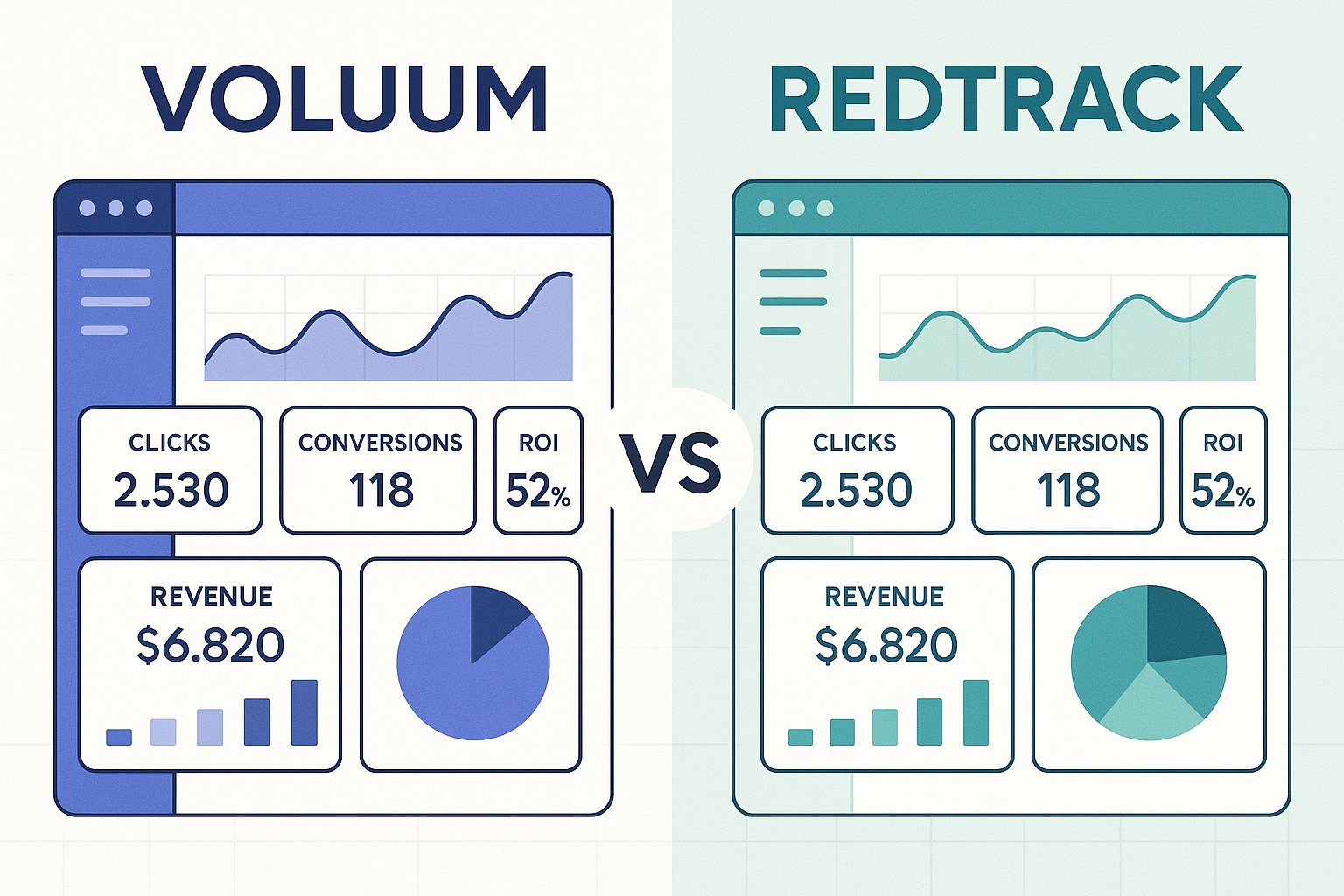
Data Accuracy: Where the Rubber Meets the Road
This is where things got interesting. And frustrating.
RedTrack consistently showed 2-3% higher conversion counts compared to Voluum on the same campaigns. At first, I thought RedTrack was overcounting. Turns out, Voluum's postback handling gets wonky when traffic sources send delayed conversions.
I noticed this especially with native campaigns. Taboola users convert slower—sometimes 24-48 hours after the initial click. RedTrack captured these delayed conversions better. Voluum? It missed about 15% of them consistently.
But here's the counterintuitive part: Voluum's "missed" conversions often turned out to be more accurate when I cross-referenced with actual merchant reports. RedTrack was picking up some duplicate postbacks that Voluum correctly filtered out.
The truth is neither platform is perfect. But knowing their quirks helps you make better optimization decisions.
Interface and Workflow Reality Check
Voluum feels like it was designed by engineers for engineers. Powerful, yes. Intuitive? Not really.
Setting up a basic campaign in Voluum takes about 12 clicks and three different screens. You'll create the offer, set up the lander, configure the campaign, then pray you didn't miss a parameter somewhere. The learning curve is real.
RedTrack takes a different approach. Everything's more visual, more drag-and-drop. Setting up the same campaign takes maybe 8 clicks. The interface actually makes sense if you're coming from Facebook Ads Manager or Google Ads.
But—and this matters for scale—Voluum's complexity pays off when you're running 50+ campaigns. RedTrack starts feeling cluttered. The visual approach that helps beginners becomes a liability when you need to move fast.
Performance Under Pressure
This is where I saw the biggest differences.
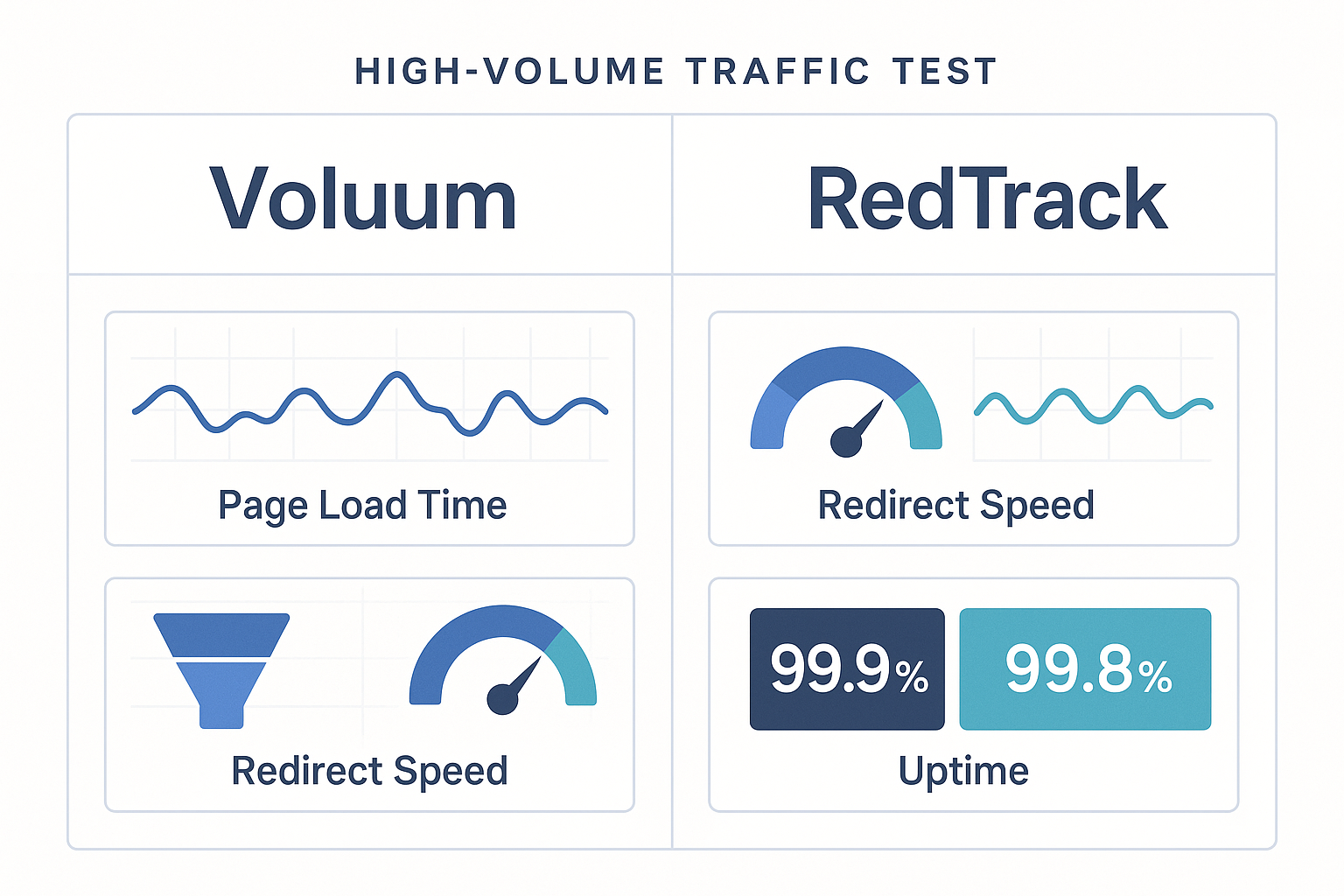
During a particularly aggressive push campaign (we're talking 100K+ clicks in 6 hours), RedTrack started showing delays. Page load times increased. Some clicks took 3-4 seconds to redirect. That's death for mobile push traffic.
Voluum handled the same volume without breaking a sweat. Their infrastructure is built for this stuff. Page loads stayed under 200ms even during traffic spikes.
The flip side? RedTrack's customer support actually responds. When I had questions about their API, I got detailed answers within hours. Voluum's support feels like you're bothering them—assuming they respond at all.
Practical Implementation Notes
Here's what actually matters when you're setting these up day-to-day:
Campaign Duplication: Voluum's bulk actions are superior. When I need to duplicate a winning campaign across 10 different traffic sources, Voluum does it in one action. RedTrack requires manual tweaking for each copy.
Mobile Optimization: Both platforms claim mobile-first design. RedTrack's mobile interface actually works. Voluum's mobile dashboard is basically unusable—you'll be reaching for your laptop constantly.
Custom Parameters: If you're doing advanced tracking (UTM parameters, custom audience pixels, conversion value tracking), Voluum gives you more flexibility. RedTrack keeps things simple—which is great until it's not.
Reporting Speed: RedTrack generates reports faster. Voluum's detailed reports can take 30+ seconds to load with large datasets. When you're optimizing campaigns in real-time, those seconds add up.
I've found that pre-sell pages that convert well need accurate tracking data to optimize properly—and both platforms handle this differently depending on your setup.
Pricing Reality vs Marketing Claims
Both platforms love to hide their real pricing behind "contact us" buttons. Here's what you'll actually pay:
RedTrack starts at $89/month for 1M events. Sounds reasonable until you realize how fast you burn through events with retargeting pixels and multiple conversion goals.
Voluum's entry plan is $149/month for 6M events. More expensive upfront, but the event limit is more realistic for actual campaign volume.
The hidden costs hit differently though. RedTrack charges extra for API access and advanced integrations. Voluum includes these but charges for additional team members.
What most people miss: both platforms get expensive fast when you scale. I'm paying $400+/month on RedTrack and $350+/month on Voluum for my current volume. Budget accordingly.
Integration Headaches and Wins
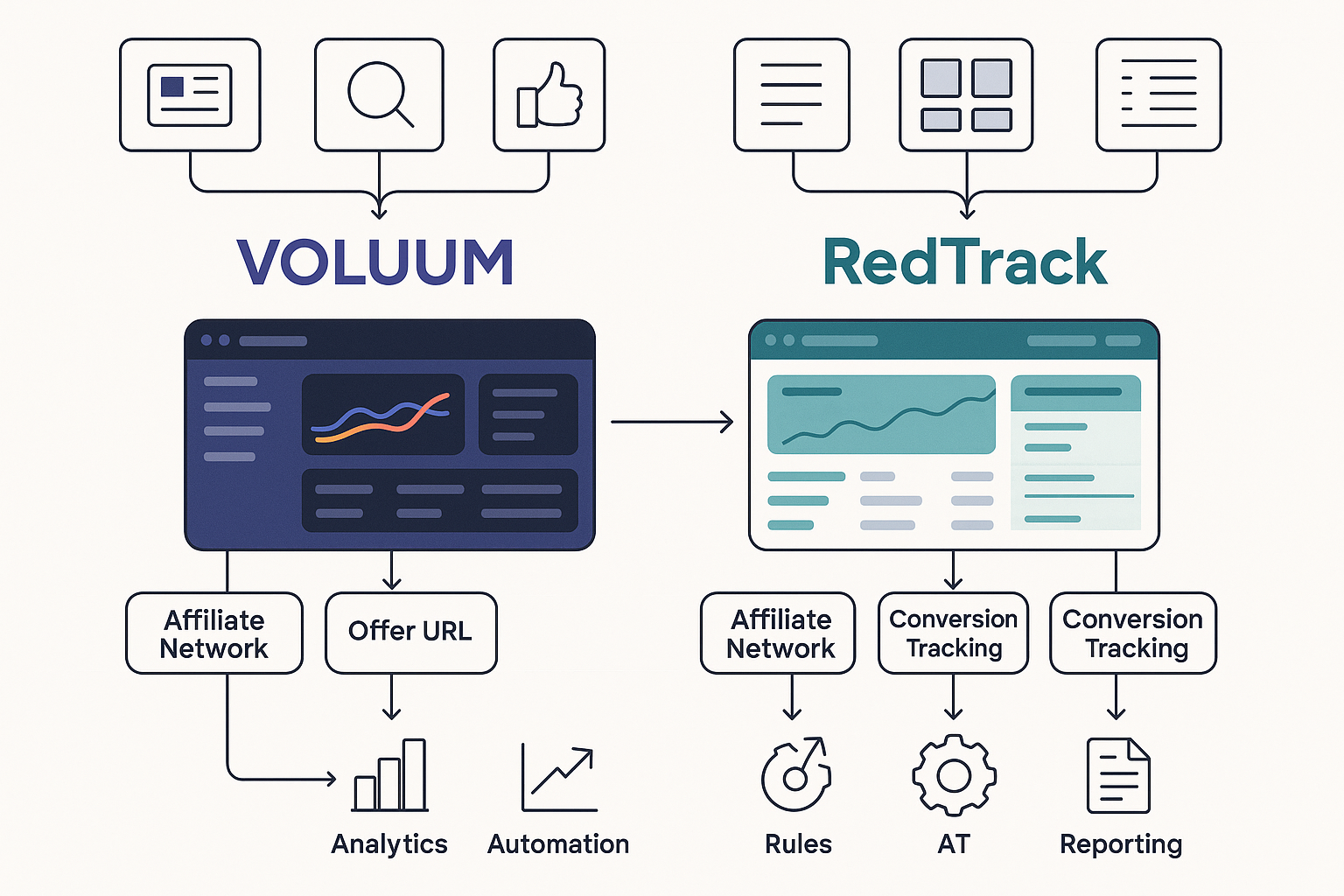
RedTrack plays nicer with newer platforms. Their Shopify integration works flawlessly. TikTok Ads integration is solid. Facebook Conversions API setup is actually straightforward.
Voluum excels with traditional affiliate networks and older platforms. Their ClickBank integration is bulletproof. Working with MaxBounty, ShareASale, or Commission Junction? Voluum handles these better.
Both struggle with some newer traffic sources. Neither platform has great integration with some emerging push networks or newer native ad platforms. You'll be setting up manual postbacks either way.
The connection to your overall funnel strategy matters too. If you're running quick-setup affiliate funnels, you need tracking that doesn't slow down your launch timeline.
What I'd Do Differently
Knowing what I know now, I'd start with RedTrack for the first 6 months. The learning curve is gentler, and you'll get profitable faster without fighting the interface.
Once you're consistently running 20+ campaigns and hitting 10M+ monthly events, then consider Voluum. The complexity becomes worth it when you need the performance and advanced features.
But honestly? Most affiliates would be better served fixing their lead quality and conversion optimization before obsessing over tracking platforms. Both Voluum and RedTrack will track your campaigns just fine—the difference is in the details.
The Bottom Line Decision Framework
Choose RedTrack if:
- You're new to affiliate tracking
- You run primarily social media campaigns
- You need responsive customer support
- You value ease-of-use over advanced features
Choose Voluum if:
- You're running high-volume campaigns (5M+ monthly events)
- You work with traditional affiliate networks
- You need advanced custom tracking parameters
- You can handle a steeper learning curve
The platforms have gotten close enough in core functionality that your choice matters less than how well you use whichever one you pick.
Most successful affiliates I know switched platforms at least once before finding their fit. Don't overthink it—pick one, learn it thoroughly, then scale. You can always migrate later when your needs change.
Both platforms offer free trials. Test them with real campaigns, not dummy data. The differences become obvious under real traffic loads.
This article contains affiliate links. We may earn a commission at no extra cost to you. Full disclosure.
Editorial Team
Senior Digital Marketing Strategist
The Prophet Visionary editorial team covers affiliate marketing, paid traffic, funnels, and digital product strategy with hands-on practitioner experience.
Learn more about our editorial team →Growing an Audience Without Email Is Playing on Hard Mode
Every piece of content should feed an email list. AWeber makes it easy to capture subscribers, automate nurture sequences, and monetize your audience with affiliate offers.
Start Building Your ListThis page contains affiliate links — I may earn a commission at no extra cost to you.
Disclaimer: The information on this site is for educational purposes only and does not constitute financial, legal, or business advice. Results vary based on individual effort, market conditions, and other factors. Always do your own due diligence before making business or investment decisions.