Why Your Post-Opt-In Email Sequence Isn't Converting (And How to Fix It)
You did everything right. You built the lead magnet, set up the opt-in page, paid for traffic—or ground out the organic content—and people are actually subscribing. And then... nothing. A handful of clicks on your first email, maybe one or two nibbles, and then silence. Your follow-up sequence just sits there, technically running, technically sending, while your Stripe dashboard looks like a flatline.
I've been there. And I've watched dozens of affiliate marketers make the exact same set of mistakes, convinced the problem is their niche, their offer, their price point—when the real issue is structural. The sequence itself is broken in ways that aren't obvious until you know what to look for.
This isn't going to be a pep talk. You don't need motivation. You need a working system. So here's an honest, practitioner-level breakdown of why your post-opt-in upsell sequence is underperforming, and exactly what to do about it.
The Real Bottleneck Nobody Talks About
Most email marketing advice treats the follow-up sequence like a writing problem. Better subject lines. More compelling copy. Stronger CTAs. And sure, those things matter. But in my experience, the failure happens upstream—before a single word of email copy gets read.
The actual bottleneck is usually one of three things: a trust gap between the lead magnet and the offer, a timing mismatch in the sequence, or a deliverability problem that means your emails aren't even reaching the inbox. Fix those three things and your conversion rates will move—sometimes dramatically—without touching a word of your copy.
Let's work through each failure point systematically.
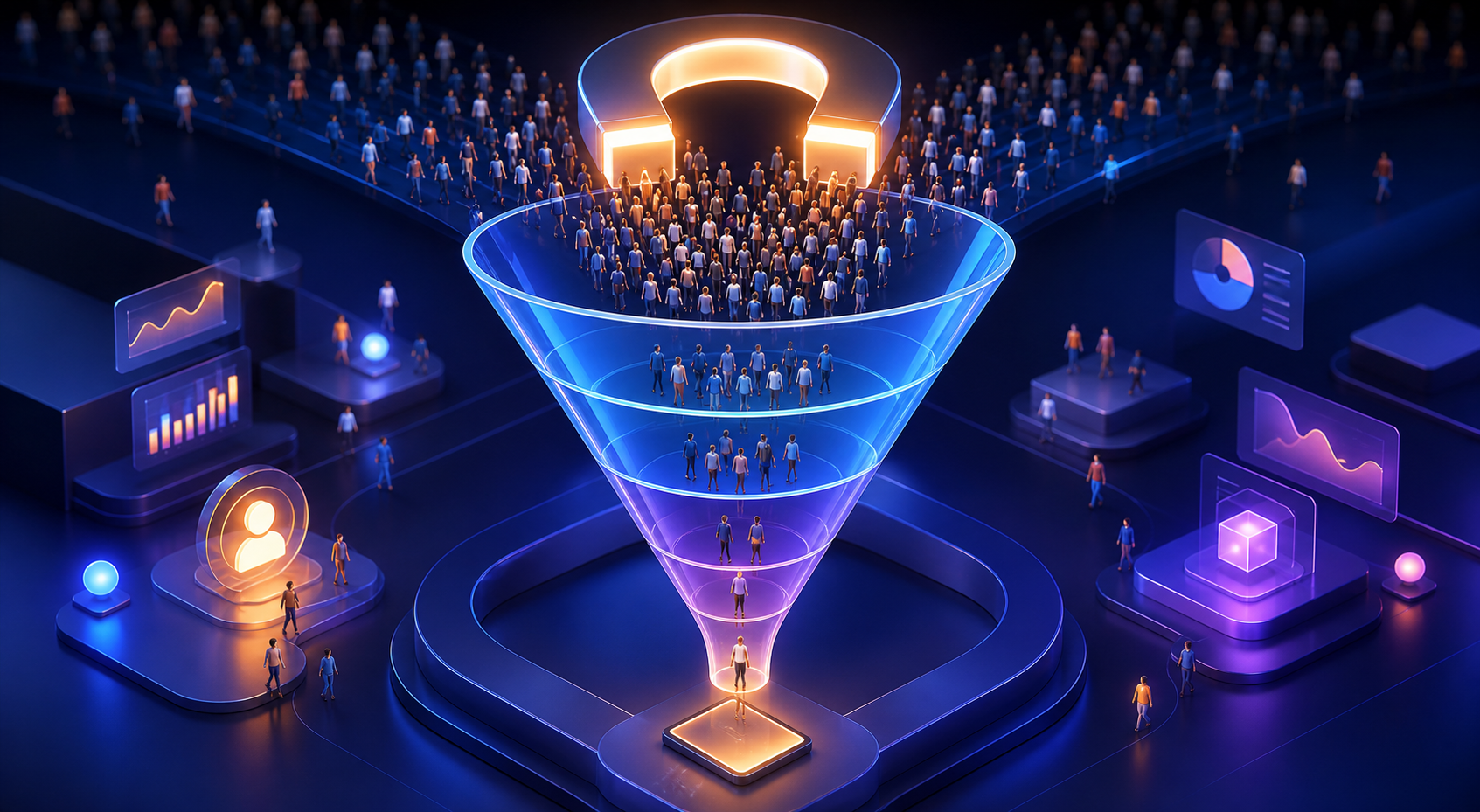
Step 1: Audit the Gap Between Your Lead Magnet and Your First Upsell
Here's where most sequences die before they even start. Someone opts in for your free PDF on, say, "5 Ways to Drive Traffic Without Paid Ads"—and then email two is pitching them a $97 course on building a full affiliate business. That's a massive conceptual leap, and subscribers feel it even if they can't articulate it.
The lead magnet creates an implicit promise about who you are and what you're going to help them do. Your upsell needs to be the obvious next step from that promise—not a left turn.
What most people get wrong: They choose their lead magnet based on what's easy to create, then try to retrofit their existing offer into the sequence. The logic runs backwards. Your lead magnet should be engineered to create appetite for the specific paid product you're selling.
Practical fix: Write out, in plain language, the single most painful problem your lead magnet solves. Then ask—does my upsell solve the problem that naturally emerges after someone solves that first problem? If not, you either need a different lead magnet or a different first upsell.
A useful diagnostic: if you can't describe the relationship between your lead magnet and your paid offer in one sentence, your subscriber definitely can't feel it.
Step 2: Stop Sending a "Welcome Sequence" and Start Sending an Orientation Sequence
The welcome sequence is one of the most misunderstood concepts in email marketing. People treat it like a formality—introduce yourself, deliver the freebie, say something nice. But those first three to five emails are the highest-leverage real estate you have. Open rates on day-one emails routinely run 40-60% on a warm list. By day seven, you're lucky to see 20%.
You're wasting your best attention on pleasantries.
What an orientation sequence does differently: it immediately establishes a worldview. It tells your subscriber not just who you are, but how to think about their problem—in a way that makes your paid solution feel inevitable. This is sometimes called "pre-framing," and it's one of the most effective things you can do in email without being remotely manipulative.
For a digital product upsell, your first three emails should accomplish this:
- Email 1: Deliver the lead magnet, set expectations for what's coming, and plant one curiosity hook about a problem the freebie doesn't fully solve.
- Email 2: Go deeper on that problem. Share a perspective or insight that reframes how they're thinking about it. This is where you build authority—not by listing credentials, but by demonstrating that you understand their situation better than they do.
- Email 3: Bridge to the paid offer. Not a hard pitch—a story or case study that makes them think "wait, that's exactly my situation."
If you want a deeper look at how this structure plays out across different sequence lengths, this breakdown on how long your affiliate email follow-up sequence should actually be is worth reading before you finalize your architecture.
Step 3: The Upsell Email Itself Is Probably Too Vague
I've reviewed a lot of upsell emails from marketers who were genuinely frustrated with their results. The most common issue isn't bad writing—it's vagueness. The email talks about transformation and results and breakthroughs without ever getting specific about the mechanism.
Subscribers have been burned before. They've bought digital products that overpromised. Vague benefit statements don't reassure them—they trigger skepticism.
What works instead: specificity about the method, not just the outcome. Don't say "learn how to build passive income." Say "inside, there's a module specifically on building an affiliate bridge page that pre-sells without feeling salesy—most of my students get their first click-through within 48 hours of setting it up." That's a claim they can picture. It's falsifiable. It sounds like something a real person wrote about a real thing.
The counterintuitive part is that more specific claims often feel less hype-y, not more. When you say "this will change your life," people roll their eyes. When you say "this walks you through the exact Systeme.io funnel setup I use for sub-$10 leads," they lean in.
Step 4: Your Sequence Timing Is Probably Wrong
Default email platform settings are not optimized for conversion. They're optimized for not annoying people—which is a different goal entirely.
Sending one email every three days after the initial opt-in is almost always too slow. You're letting the relationship go cold between touches. The subscriber who was excited enough to opt in on Monday has mostly forgotten about you by Thursday. By the time your pitch email lands on day nine, you're basically a stranger again.
My general framework for a post-opt-in digital product upsell sequence:
- Day 0: Immediate delivery email (automated, triggered on opt-in)
- Day 1: The insight/reframe email
- Day 2: The story/social proof email
- Day 3: The soft pitch
- Day 5: The objection-handling email (address the #1 reason they haven't bought)
- Day 7: The direct close with a clear deadline or reason to act now
Six emails over seven days. That's it. After that, transition them into your regular broadcast list and stop running them through the upsell sequence. Continuing to pitch past day seven to non-buyers usually just produces unsubscribes.
For sequences involving higher-ticket offers or more complex stacking strategies, the architecture gets more nuanced—offer stacking for high-ticket affiliate email sequences covers that territory in detail.

Step 5: Deliverability Might Be Silently Killing Your Numbers
This one stings because it's invisible. You think your open rate is 18% because your subject lines are mediocre. But what if 30% of your emails are going to spam before they ever get a chance to be opened?
Deliverability problems are endemic to affiliate marketing because the major ESPs—Mailchimp, ActiveCampaign, even ConvertKit to some extent—have increasingly aggressive spam filters for anything that smells like affiliate content. Certain words, certain link patterns, certain sending behaviors will quietly tank your inbox placement without a single bounce or complaint to warn you.
Things that hurt deliverability in upsell sequences specifically:
- Using URL shorteners or redirect links in early emails (before you've established sender reputation with that subscriber)
- Sending from a free Gmail or Hotmail address rather than a branded domain
- Not warming up new sending domains before launching sequences to large lists
- Including too many links in a single email—especially in the first one or two
If you haven't done a deliverability audit recently, it's worth testing your sequences through a tool like GlockApps or Mail-Tester before assuming your copy is the problem. And if you're not sure which platform actually delivers for affiliate-style content, this ranked breakdown of email autoresponders for affiliate marketers covers deliverability performance specifically.
Step 6: You're Missing Behavioral Triggers
A static sequence—every subscriber gets the same emails in the same order—is better than nothing. But it leaves significant money on the table.
The subscribers who clicked your upsell link but didn't buy are your hottest prospects. They're interested. Something stopped them—price, hesitation, distraction, a phone call. A static sequence treats them exactly the same as someone who never opened the pitch email at all. That's a missed opportunity.
Basic behavioral branching that most email platforms support:
- Clicked but didn't buy: Trigger a follow-up within 24 hours that addresses the most common objection (usually price or "is this right for me?"). This single automation can meaningfully move your conversion rate.
- Opened but didn't click: Send a different angle on the offer—same product, different framing. Maybe the first email led with time savings; try leading with income potential or community.
- Didn't open at all: Resend with a different subject line after 48 hours. Most platforms allow this. Do it once—not three times.
ConvertKit and ActiveCampaign both handle this kind of conditional logic reasonably well. Systeme.io is more limited but workable for simpler if/then branches. GoHighLevel gives you the most granular control if you're willing to invest time in the setup.
Practical Implementation Notes: From the Field
A few observations from actually running these sequences—not theory, just what I've noticed:
The email that consistently outperforms every other in a 6-email upsell sequence is the objection-handling email. Not the pitch. Not the close. The one where you anticipate exactly why they haven't bought yet and address it directly. When that email lands right—when it reads like you're inside their head—you'll see reply rates spike and purchase notifications follow within hours.
Day 3 is almost always the worst day to pitch. Subscribers are still warming up to you. Day 3 pitches feel premature and transactional. If you're going to send a soft pitch, day 3 works. Save the direct offer for day 5 or 6 when you've built enough trust to earn it.
Plain text emails frequently outperform heavily designed HTML templates in upsell sequences—particularly in the early emails. This seems counterintuitive. But plain text feels personal. It reads like a message from a person, not a broadcast from a brand. I've tested this across multiple niches and the pattern holds more often than not.
Also: your subject lines in the follow-up sequence matter more than your subject lines in cold outreach. These subscribers opted in because something you offered was interesting to them. A subject line that references the lead magnet topic directly—"the part I couldn't fit in the free guide"—will outperform generic curiosity bait almost every time.
Troubleshooting: When the Sequence Still Isn't Working
You've tightened the timing, improved the copy, checked deliverability—and the numbers still aren't moving. Here's where to look:
Traffic quality: Freebie-seekers who opted in for a $0 lead magnet through a broad interest audience will convert at a fraction of the rate of subscribers who opted in because they were actively looking for a solution. Check where your leads are coming from. If you're running traffic through broad interest targeting on Facebook or using content-network clicks at $0.08 CPC, the list quality might simply be too low to convert at meaningful rates regardless of sequence quality.
Offer-market fit: Sometimes the sequence is fine and the offer is the problem. If you're promoting a digital product on ClickBank or elsewhere that has a high refund rate or weak sales page, your emails can only do so much. The sequence gets people to the door—the offer has to close them.
Price anchoring: If your upsell feels expensive relative to what subscribers expect from someone they just met, you need more anchoring before the pitch. Add a value-stacking email that makes the price feel like a steal—not through hype, but by breaking down what the components would cost separately.

Your 10-Minute Action Plan (Start Right Now)
Stop optimizing in your head. Here's what to actually do in the next ten minutes:
- Minutes 1-2: Open your current sequence and write down the single biggest conceptual gap between your lead magnet and your first paid offer. If you can't describe the connection clearly, that's your first fix.
- Minutes 3-4: Check your sequence timing. Are you waiting more than 24 hours between emails 1 and 2? Close that gap. Resequence so the first three emails land within 72 hours of opt-in.
- Minutes 5-6: Identify your objection-handling email. If you don't have one, that's the email you're writing today. Ask yourself: what's the single most common reason someone would hesitate to buy this offer? Write that email around answering that question honestly.
- Minutes 7-8: Run your most recent broadcast through Mail-Tester.com (free) and check your spam score. If it's below 8/10, you have a deliverability problem that's suppressing your opens before copy even matters.
- Minutes 9-10: Set up one behavioral trigger—even a basic one. If someone clicks your upsell link and doesn't purchase within 24 hours, they should get a follow-up email automatically. Most platforms support this. If yours doesn't, it might be time to look at alternatives.
That's it. Ten minutes, five concrete actions. None of them require rewriting your entire sequence from scratch. Most failing email sequences don't need a rebuild—they need targeted fixes in the right places.
The sequence works when the logic is right. Get the logic right first, then polish the words.
This article contains affiliate links. We may earn a commission at no extra cost to you. Full disclosure.
Editorial Team
Senior Digital Marketing Strategist
The Prophet Visionary editorial team covers affiliate marketing, paid traffic, funnels, and digital product strategy with hands-on practitioner experience.
Learn more about our editorial team →Your List Is Only as Good as Your Email Platform
AWeber has 25+ years of inbox deliverability, drag-and-drop automation, and AI-powered copywriting built in. Free plan for up to 500 subscribers.
See Why Affiliates Use AWeberThis page contains affiliate links — I may earn a commission at no extra cost to you.
Disclaimer: The information on this site is for educational purposes only and does not constitute financial, legal, or business advice. Results vary based on individual effort, market conditions, and other factors. Always do your own due diligence before making business or investment decisions.