How to Build a Profitable Affiliate Community on Skool & Discord
Building an affiliate community isn't just about throwing people into a Discord server or Skool group and hoping for the best. I've watched too many marketers create ghost towns—communities with thousands of members but zero engagement and even less revenue.
The truth is, most affiliate communities fail because they focus on gathering people instead of creating genuine value. But here's what I've found after building multiple six-figure affiliate communities: the platform matters less than your strategy.
Both Skool and Discord offer unique advantages for affiliate marketers, but each requires a different approach to community building and monetization.
Why Community-Driven Affiliate Marketing Works in 2026
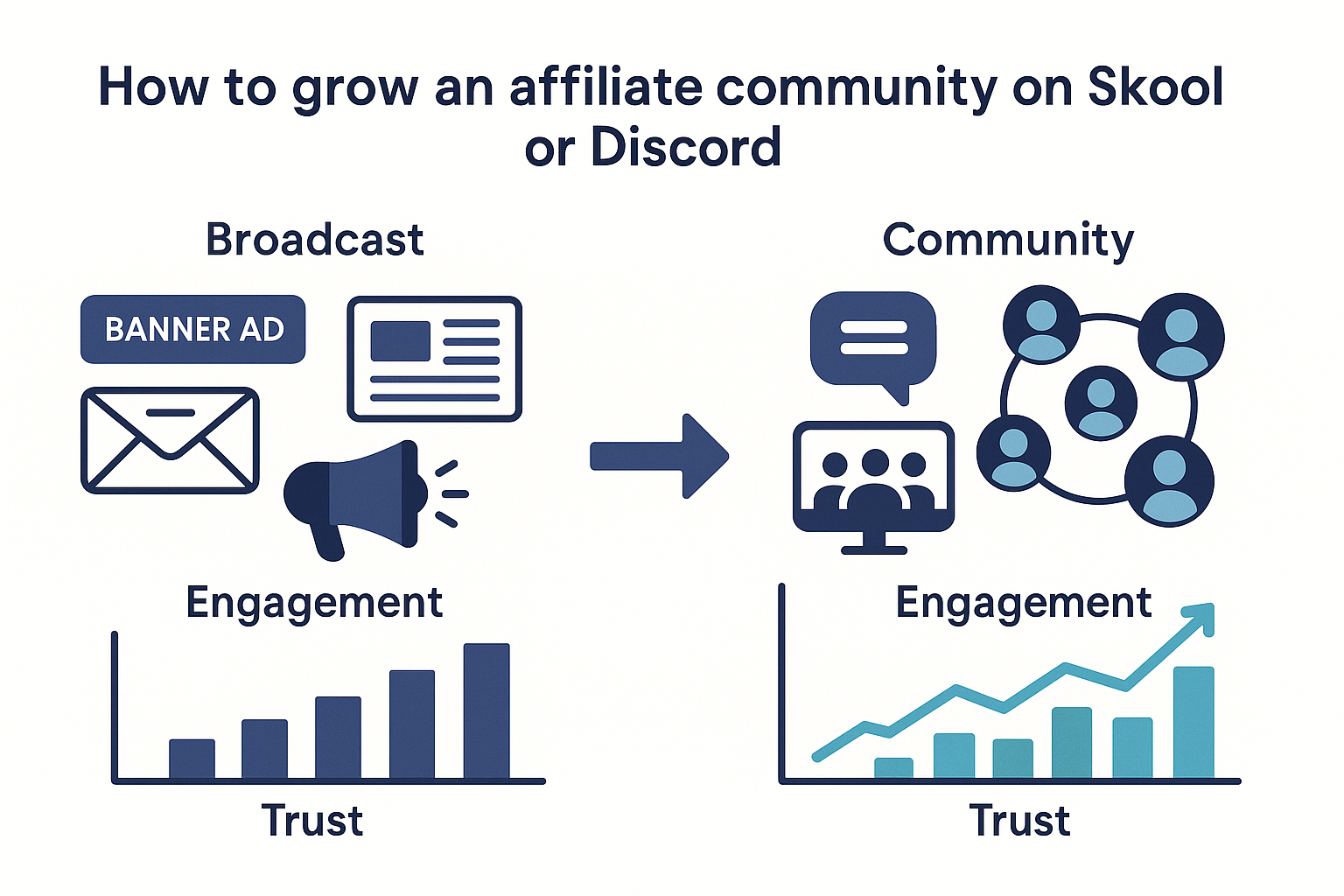
Direct affiliate promotion is getting harder. Ad costs are rising, email deliverability is tightening, and audiences are more skeptical than ever. Communities solve these problems by creating trust at scale.
When someone gets genuine value from your community—whether it's insider tips, networking opportunities, or exclusive training—they become infinitely more likely to trust your affiliate recommendations. It's not about selling to them; it's about serving them first.
The counterintuitive part? The less you promote, the more you earn. My highest-converting affiliate offers come through casual mentions in community discussions, not through dedicated promotional posts.
Step 1: Choose Your Platform Based on Your Audience Type
Don't pick a platform because it's trendy. Pick it because it matches how your audience naturally communicates.
Skool works best for:
- Professional development communities (business, marketing, finance)
- Course-style content delivery
- Communities where members pay for access
- Audiences who prefer structured, organized discussions
Discord excels with:
- Real-time conversations and quick questions
- Gaming, crypto, and tech-savvy audiences
- International communities (better mobile experience globally)
- Communities built around live events or streams
I've found that Skool members typically have higher lifetime values but Discord communities grow faster organically. Your choice should align with your monetization timeline—Skool for immediate revenue, Discord for rapid growth.
The Platform-Specific Monetization Reality
Skool's built-in payment processing makes direct community monetization seamless. You can charge $27-297/month for access and the platform handles everything. Discord requires external payment systems, but the trade-off is more flexibility in how you structure your community.
Step 2: Design Your Community Architecture for Affiliate Success
Most communities fail because they're organized like forums from 2005. Your community structure should guide members through a journey that naturally leads to affiliate conversions.
Essential Channel/Room Structure:
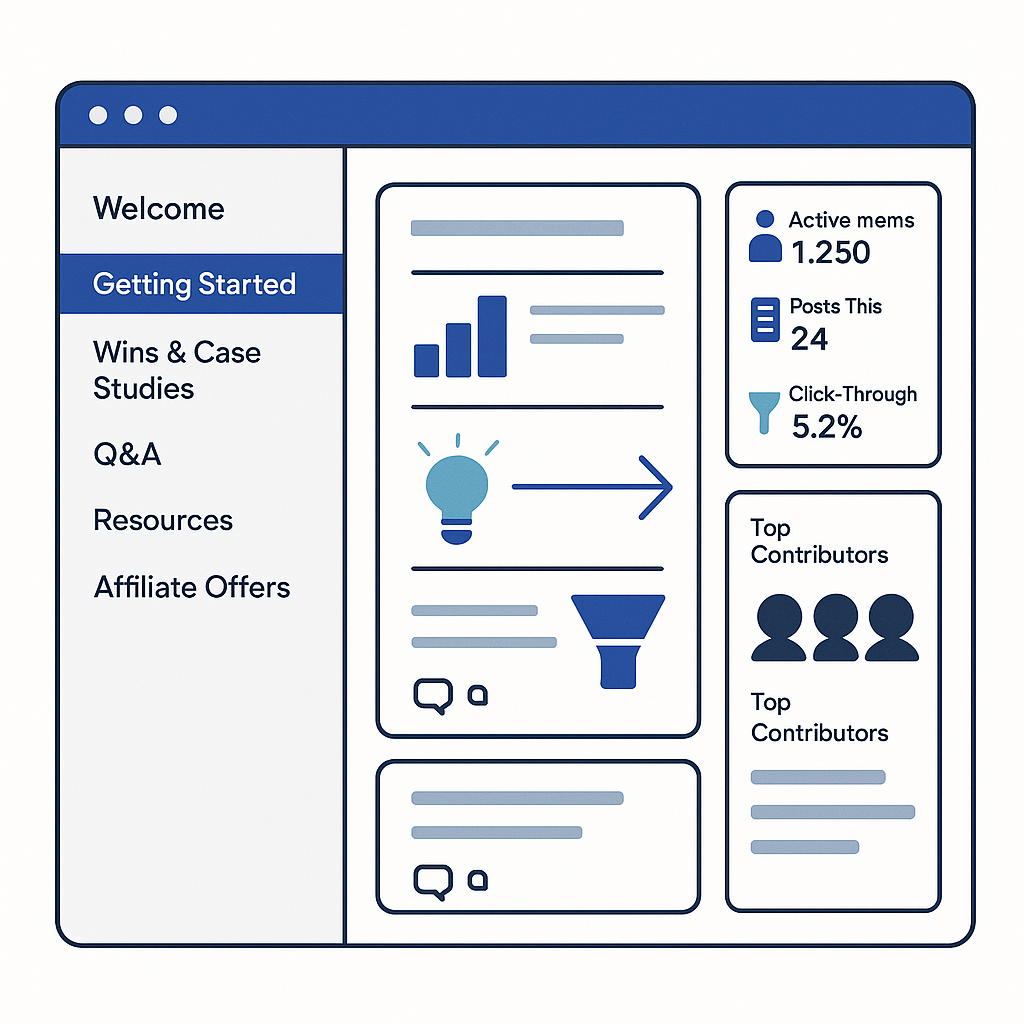
- Welcome & Rules - Set expectations and community guidelines
- Introductions - Let members share their goals and experience level
- Quick Wins - Daily tips and actionable advice
- Tool Reviews - Where affiliate recommendations happen naturally
- Success Stories - Social proof that builds trust in your recommendations
- Q&A/Help Desk - Direct support that builds relationships
But here's the thing most people miss: create scarcity within abundance. Have public channels for general discussion, but reserve your best content for paid tiers or VIP sections.
In Discord, use role-based permissions. In Skool, use the course feature to gate premium content. This creates natural upgrade paths that increase your per-member revenue.
Step 3: Create Content That Sells Without Selling
Your community content should be 80% pure value, 15% soft recommendations, and 5% direct affiliate promotion. This ratio builds trust while maintaining monetization opportunities.
Content types that convert:
- Weekly tool breakdowns - Deep dives into specific platforms with honest pros/cons
- Case study walkthroughs - Show real campaigns using tools you're affiliated with
- "What I'm using this month" - Personal tool stack updates
- Problem-solution threads - Address specific challenges with tool recommendations
The key is context. Don't just recommend Systeme.io in isolation. Share how you're using it for a specific campaign, what results you're seeing, and why it solved a particular problem.
Step 4: Build Engagement Systems That Scale
Engagement doesn't happen by accident. You need systems that encourage participation even when you're not actively online.
Daily Engagement Triggers:
- Morning question prompts - "What's your biggest traffic challenge this week?"
- Tool Tuesday discussions - Weekly focus on specific platforms or tools
- Friday wins - Members share weekly victories
- Weekend case study reviews - Analyze successful campaigns as a group
I've found that gamification works, but only if it's subtle. Discord bots like Carl-bot can track participation and award roles. Skool has built-in leaderboards that naturally encourage engagement.
The mistake most community builders make? They try to be everywhere at once. Pick 2-3 consistent touchpoints and execute them flawlessly rather than attempting daily content across every channel.
Step 5: Implement Strategic Affiliate Integration
This is where community building becomes profitable. Your affiliate promotions should feel like natural extensions of your community's value proposition.
High-Converting Integration Methods:
- Live tool demos - Screen share sessions showing actual usage
- Comparison discussions - "ConvertKit vs GetResponse" threads with member input
- Exclusive discount negotiations - Reach out to affiliate programs for community-only deals
- Success story features - Highlight members using tools you recommend
Here's what works: position yourself as the community's "tool scout." You test new platforms, negotiate deals, and report back with honest assessments. This gives you a natural reason to discuss affiliate tools without seeming pushy.
For example, when discussing email marketing, naturally reference your experience with different email platforms and how they perform for affiliate campaigns.
Step 6: Monetize Beyond Direct Affiliate Commissions
Smart community builders create multiple revenue streams. Affiliate commissions are just the beginning.
Additional Revenue Opportunities:
- Paid community tiers - $47-197/month for advanced access
- Tool stack consultations - One-on-one sessions recommending specific tools
- Group coaching programs - Teaching your affiliate strategies while promoting tools
- Sponsored content - Companies pay for featured discussions about their platforms
The beauty of community monetization is recurring revenue. A member who pays $97/month for six months generates more value than most individual affiliate sales.
Real-World Implementation Notes
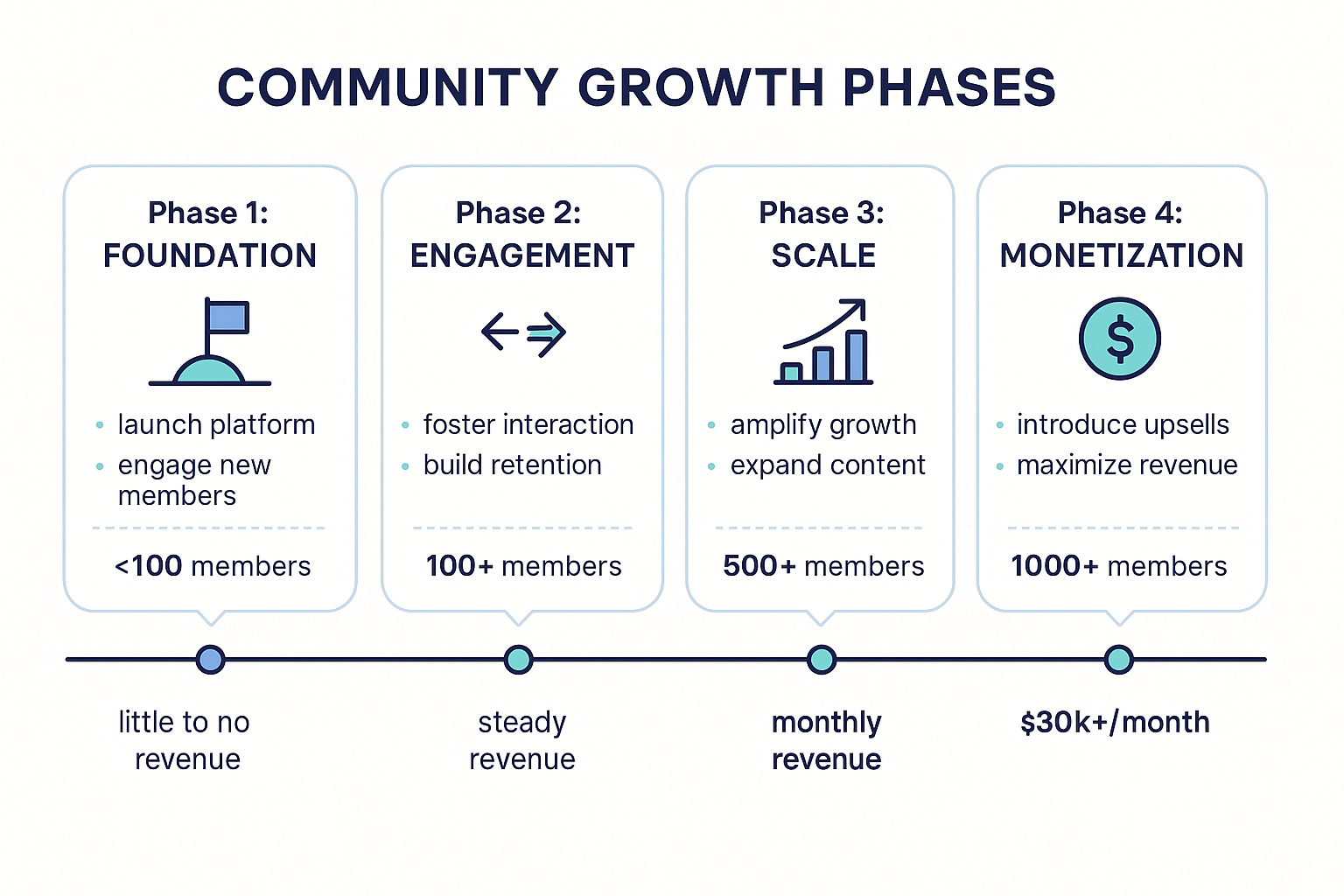
After launching 12 affiliate communities over the past three years, here's the timeline that actually works:
Week 1-2: Foundation
Set up your community structure and create 10-15 pieces of foundational content. Don't launch publicly yet.
Week 3-4: Soft Launch
Invite 20-30 people from your existing network. Focus on engagement, not growth. You want active discussions before opening the floodgates.
Month 2: Content Systems
Establish your regular content calendar. This is when you start introducing affiliate tools naturally through case studies and discussions.
Month 3: Monetization
Launch paid tiers or begin strategic affiliate promotions. By now, you should have trust and engagement patterns established.
The biggest mistake I see? Rushing to monetize. Give your community 60-90 days to develop its own culture before heavy affiliate promotion.
Platform-Specific Growth Tactics
Skool Growth Strategies
Skool's discovery algorithm favors active communities. Post consistently in the first 30 days to boost your community's visibility in their marketplace.
Use the course feature strategically. Create a free mini-course that showcases affiliate tools as part of the curriculum. This positions tools as educational resources rather than sales pitches.
Cross-promote with other Skool communities in similar niches. The platform encourages collaboration more than competition.
Discord Scaling Methods
Discord growth is all about word-of-mouth and integration with other platforms. Connect your Discord to your YouTube, podcast, or blog. Make it the "next step" for engaged audience members.
Use Discord's partnership program once you hit 500 members. The vanity URL and server boost features significantly improve retention.
Bot integration is crucial on Discord. Set up MEE6 or Dyno for moderation, Carl-bot for engagement tracking, and consider custom bots for affiliate link management.
Troubleshooting Common Community Challenges
Low Engagement:
Usually means your content isn't specific enough. Instead of "What's your biggest marketing challenge?" ask "What's the one traffic source you're struggling to scale past $500/day?"
Members Leaving After Joining:
Your onboarding is broken. Create a structured welcome sequence that gets new members participating within 24 hours.
Affiliate Links Getting Ignored:
You're promoting too early or without enough context. Build relationships first, then recommend tools as solutions to specific problems members are discussing.
Platform Migration Anxiety:
Don't overthink this. Start where your audience is most active today. You can always migrate or maintain presences on multiple platforms as you grow.
Measuring Success Beyond Vanity Metrics
Member count means nothing if those members aren't converting. Track these metrics instead:
- Daily active members - What percentage of your community participates weekly?
- Affiliate click-through rates - Are your tool recommendations getting tested?
- Member lifetime value - Including affiliate commissions, paid tiers, and other monetization
- Retention by join date - Are newer members staying as long as early adopters?
I've found that a community of 500 highly engaged members consistently outperforms communities of 5,000 passive lurkers in terms of affiliate revenue.
The goal isn't to build the biggest community. It's to build the most valuable one—for both you and your members. When you nail that balance, affiliate commissions become a natural byproduct of genuine value creation.
Focus on solving real problems, recommend tools that actually work, and let your community's success stories become your most powerful marketing asset.
This article contains affiliate links. We may earn a commission at no extra cost to you. Full disclosure.
Editorial Team
Senior Digital Marketing Strategist
The Prophet Visionary editorial team covers affiliate marketing, paid traffic, funnels, and digital product strategy with hands-on practitioner experience.
Learn more about our editorial team →Your Traffic Is Only as Good as Your Follow-Up
You're paying for clicks — but are you capturing emails and automating sequences? AWeber makes it dead simple to turn paid traffic into a monetized email list.
See How AWeber WorksThis page contains affiliate links — I may earn a commission at no extra cost to you.
Disclaimer: The information on this site is for educational purposes only and does not constitute financial, legal, or business advice. Results vary based on individual effort, market conditions, and other factors. Always do your own due diligence before making business or investment decisions.