How a Pre-Sell Bridge Page Cut My Native Ads CPA by 38%
I remember staring at a Taboola dashboard at 1 a.m., watching a campaign bleed. Clicks were coming in. Cheap ones, even. And the affiliate network's conversion column sat there like a flat line on a hospital monitor.
If you've run cold native traffic straight to an offer page, you know that feeling. A lot of us have been through it, and almost nobody talks about it honestly, because the screenshots people post are the wins. Not the 3 a.m. spreadsheet where you're trying to figure out whether the offer is broken, the traffic is broken, or you are.
This is the story of how I got CPA down by roughly 38% on one native campaign by adding a pre-sell bridge page. One caveat before anything else: that number is from my campaign, one offer, one traffic mix, one stretch of testing. Treat it as a direction, not a promise. I'm not going to hand you revenue screenshots or pretend your account will behave the same way.
The Shared Struggle: Cold Traffic Doesn't Owe You Anything
Here's the setup. A health-adjacent offer on ClickBank, the kind with a long-form video sales page, running on native placements. CPCs were landing around $0.08–0.15 on the cheaper sources. Sounds great on paper.
But cold native traffic isn't searching for anything. Nobody typed a problem into a box. They were reading a headline about something else entirely, saw my thumbnail, and clicked out of curiosity. Then I dropped them onto a sales page that assumed they already wanted to buy.
That mismatch is the whole problem. I've found that most people blame the offer first. Then the creative. Then the network. Rarely the gap between the ad and the page.
I'd been there for weeks, tweaking headlines and swapping thumbnails, convinced the next small change would fix it. It didn't. (It almost never does.)

What the Community Keeps Telling Each Other
When I finally posted about it in a private affiliate group, the replies were almost embarrassingly consistent. Half a dozen people said some version of the same thing: you're skipping the warm-up.
One person described their ad as a stranger tapping someone on the shoulder, and the landing page as immediately asking for their credit card. Blunt, but accurate.
The wisdom floating around went like this:
- Cold native visitors need context before they need a pitch.
- The ad's promise and the page's first screen must feel like the same conversation.
- A bridge page isn't there to sell. It's there to qualify and warm.
- Some of the clicks you pay for will never convert, and a good bridge helps them leave early (cheaply) rather than late.
That last point took me a while to accept. A bridge page that lowers your click-through rate to the offer can still lower your CPA, because the people who do click through are better. I'd been obsessing over the wrong number.
If you want a deeper diagnosis of why these pages stall, I wrote up the common failure points in Why Your Native Ad Bridge Page Isn't Converting (And the Fix).
The Approach I Took
I built a short, single-scroll article-style page. Not a landing page in the funnel-builder sense. More like a mini editorial that picked up exactly where the ad left off.
The structure
- Headline that mirrors the ad. If the ad said one thing, the page opened with the same idea, same vocabulary.
- A relatable problem section. Two or three short paragraphs describing the situation the reader was probably in. No hype.
- The "why most fixes fail" angle. This set up the offer's mechanism as a logical next step instead of a miracle.
- A soft introduction of the product. Plain language, one honest limitation mentioned.
- One button. Neutral copy along the lines of "See how it works."
I built it in systeme.io because I wanted something fast and cheap to iterate on. Honestly, any builder works. If you're weighing heavier platforms, I covered the tradeoffs in ClickFunnels vs GoHighLevel: Which Wins for Affiliate Funnels?, but for a bridge page you don't need much horsepower. Page speed matters far more than features.
What Worked, What Didn't
Let me be straight about the order of events, because it wasn't a clean upward line.
First version: worse. I wrote it too long, and it read like a sales page wearing a trench coat. Click-through to the offer dropped hard and CPA didn't improve at all.
Second version: better, not great. I cut it by about a third and removed every claim I couldn't comfortably defend. The numbers moved a little.
Third version: the one that held. The change that mattered wasn't copy polish. It was message match. I rewrote the opening so the first sentence echoed the ad's curiosity hook almost word for word, then answered it within a few lines.
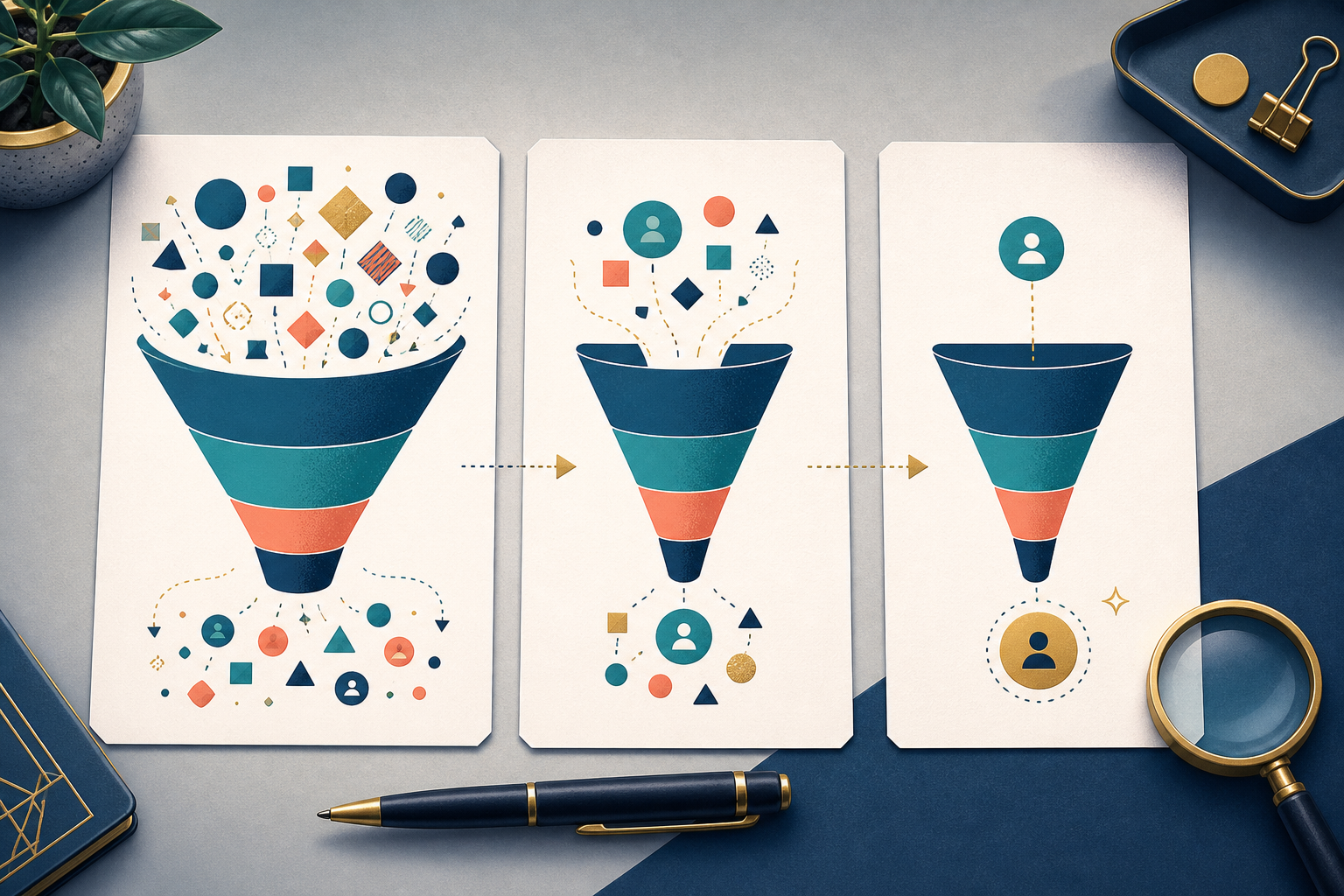
That version, over a comparable testing window, brought blended CPA down by around 38% against the direct-to-offer control. I'm giving you the figure because it's what I observed, but sample sizes in native are always a bit shaky, so I'd call it "meaningfully better" rather than gospel.
Real-World Implementation Notes
This is the part I wish someone had handed me at the start. A few things from the field:
- Test the bridge against a direct control, always. Split traffic at the campaign level, same sources, same bids, same creatives. Otherwise you're comparing apples to Tuesday.
- Track bridge-to-offer click rate separately. If it's very high, your bridge probably isn't qualifying anyone. If it's tiny, it's probably too skeptical or too long.
- Watch placement-level data. Some sources responded to the bridge strongly. Others didn't care. I cut two placements entirely once I saw they converted the same either way.
- Keep load time under a couple of seconds on mobile. Most native traffic is mobile, and I've seen pretty page designs lose to ugly fast ones.
- Don't over-warm. Past a certain length, readers get impatient and the bridge becomes its own drop-off point.
- Check the network's compliance rules. Some advertisers and native platforms restrict claims on health-type content. Read the policies before you build.
One more thing. If you're capturing emails on the bridge instead of (or alongside) sending straight to the offer, your follow-up matters enormously. I'd point you to Why Your Welcome Sequence Isn't Converting Affiliate Offers before you wire anything up.
The Counterintuitive Part
The bridge page made my traffic look worse by the metrics I used to love. Fewer people hit the offer. My top-of-funnel numbers looked weaker.
But CPA is what pays the bills, not click-through rate. The visitors who made it past the bridge had already read a short argument for why this product might fit them. They arrived with fewer questions and less suspicion.
I know. It feels backwards to deliberately add friction. For a long time I resisted it for exactly that reason.
What I'd Do Differently
Plenty, actually.
- I'd have built the bridge in week one instead of week five. I burned budget tweaking thumbnails when the real leak was the page.
- I'd write three short bridge variants at the start, not one long one that I then edited into shape.
- I'd set a clear kill rule before launching: a spend threshold per variant, decided in advance, so I wasn't negotiating with myself at midnight.
- I'd pick the offer more carefully. A bridge can't rescue a weak product. If you're selecting what to promote, How to Pick High-Ticket Affiliate Offers That Actually Convert on Paid Traffic covers the criteria I now use.
And I'd be kinder to myself about the wasted spend. Everyone pays tuition. That budget was my education.
Practical Takeaways You Can Use This Week
- Open your ad and your landing page side by side. Does the first screen feel like a continuation? If not, fix that before anything else.
- Build a short bridge, 300 to 500 words, one clear call to action.
- Split test it against direct traffic with identical settings.
- Judge by CPA and cost per sale, not click-through rate.
- Cut placements that don't respond to the bridge.
- Iterate on message match before you touch design.

A Note for the Person Feeling Stuck
If you're in the middle of a campaign that isn't working, I want you to hear this: it doesn't mean you're bad at this. Cold traffic is brutal, and the people who look like they've got it figured out have usually just failed in private for longer.
I still have campaigns that flop. Last month I killed one after two days. That's the job.
What changed for me wasn't talent. It was learning to treat each failed test as information instead of a verdict. A pre-sell bridge page was one piece of that puzzle, not the whole thing, and your piece might be something else entirely.
So go look at your ad-to-page gap tonight. Fix one thing. Test it honestly. And if it doesn't work, come tell the rest of us, because chances are we've been there too.
This article contains affiliate links. We may earn a commission at no extra cost to you. Full disclosure.
Editorial Team
Senior Digital Marketing Strategist
The Prophet Visionary editorial team covers affiliate marketing, paid traffic, funnels, and digital product strategy with hands-on practitioner experience.
Learn more about our editorial team →Your Traffic Is Only as Good as Your Follow-Up
You're paying for clicks — but are you capturing emails and automating sequences? AWeber makes it dead simple to turn paid traffic into a monetized email list.
See How AWeber WorksThis page contains affiliate links — I may earn a commission at no extra cost to you.
Disclaimer: The information on this site is for educational purposes only and does not constitute financial, legal, or business advice. Results vary based on individual effort, market conditions, and other factors. Always do your own due diligence before making business or investment decisions.