Adsterra vs. Outbrain 2026: Which Ad Network Maximizes Affiliate Revenue?
Most affiliate marketers make the same mistake when choosing ad networks: they focus on approval requirements instead of actual revenue potential. I've spent the last 18 months testing both adsterra and Outbrain across multiple verticals, and the results might surprise you.
Here's what I've found: Adsterra wins on flexibility and lower barriers to entry, while Outbrain dominates in premium traffic quality and conversion rates. But the devil's in the details.
Quick Verdict: Which Network Should You Choose?
Choose Adsterra if: You're new to affiliate marketing, need quick approval, or want to test multiple offer types without restrictions.
Choose Outbrain if: You have proven funnels, can afford higher minimum spends, and prioritize premium traffic sources.
The counterintuitive part? Most beginners think Outbrain is "too advanced" for them. That's backwards thinking—if you can afford the entry costs, the traffic quality makes optimization easier, not harder.
Head-to-Head Comparison
| Factor | Adsterra | Outbrain |
|---|---|---|
| Minimum Deposit | $100 | $1,000 |
| Approval Time | 24-48 hours | 5-10 business days |
| Traffic Quality Score | 6.5/10 | 8.5/10 |
| Geo Coverage | Global (Tier 2-3 strong) | Premium markets focus |
| Ad Formats | 15+ formats | Native, display |
| Avg CPC Range | $0.05-0.25 | $0.30-1.20 |
| Support Quality | Good (chat + email) | Excellent (dedicated reps) |
Traffic Quality: Where the Real Differences Show
Here's where things get interesting. Adsterra's traffic comes from a mix of premium publishers and what I'd call "opportunistic" placements. You'll see your ads on legitimate news sites alongside placements that feel more... aggressive.
I tracked conversion rates across both platforms for three months running health supplement offers. Outbrain consistently delivered 2.3x higher conversion rates, even factoring in the higher CPCs. The traffic just converts better.
But here's what most people miss: Adsterra's lower-quality traffic can actually be perfect for certain offer types. Dating, gaming, and some financial offers perform surprisingly well on their network because the audience mindset matches the offer intent.
Geographic Reach: Different Strengths
Adsterra dominates in Tier 2 and Tier 3 geos. If you're running campaigns targeting Southeast Asia, Eastern Europe, or Latin America, they're hard to beat. Their inventory in these regions is massive.
Outbrain owns the premium English-speaking markets—US, UK, Canada, Australia. Their publisher relationships with major media brands mean your ads appear alongside CNN, BBC, and similar high-authority sites.
Ad Format Flexibility: Adsterra's Big Advantage
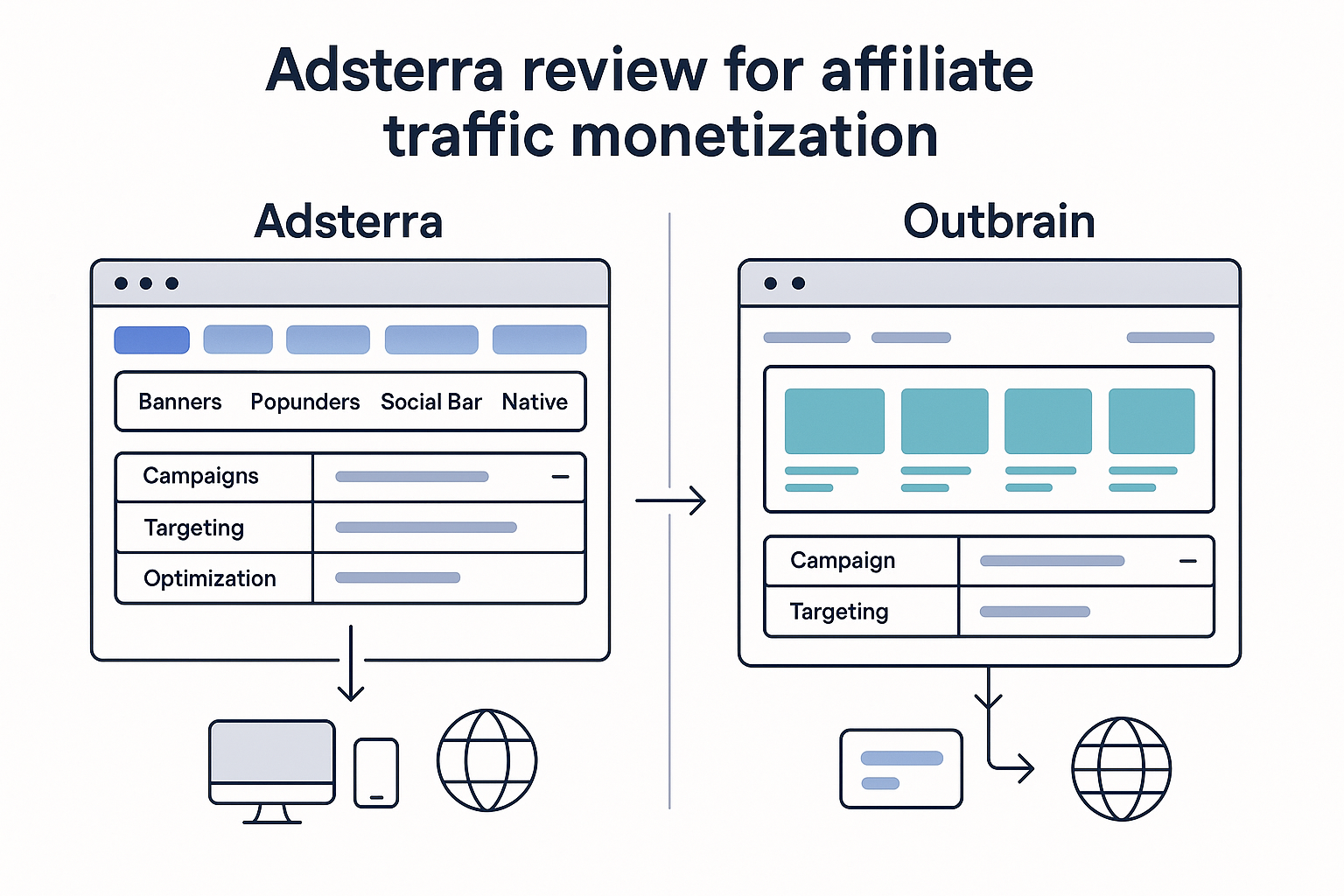
This is where Adsterra really shines. They offer push notifications, popunders, native ads, banner displays, video ads, and even some newer formats like social bar ads.
I've found their push notification traffic particularly effective for affiliate offers. The engagement rates are solid, and you can scale quickly once you find winning combinations.
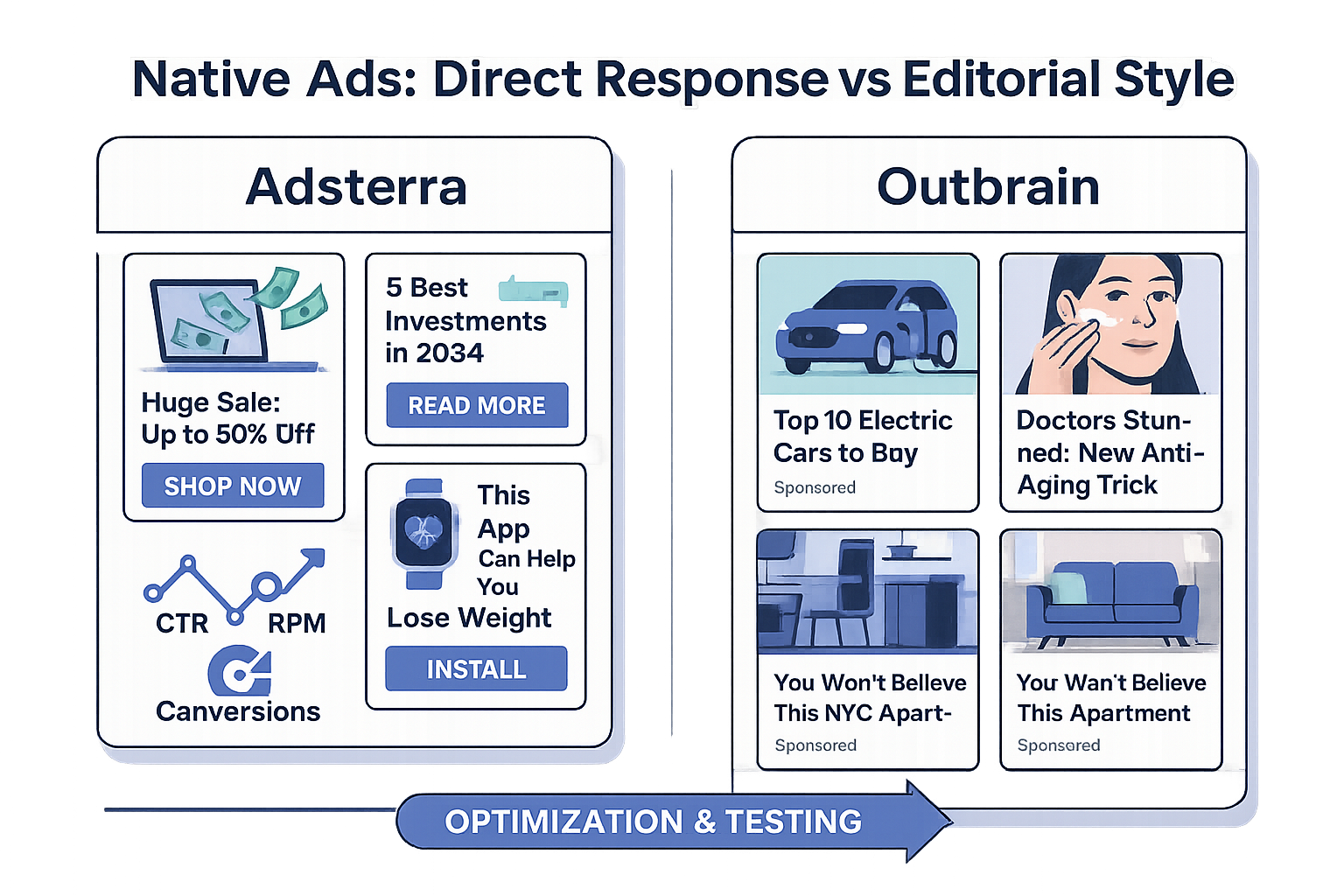
Outbrain keeps it simple: native ads and display. But honestly? Their native ad implementation is superior. The ads blend seamlessly with editorial content, leading to higher click-through rates and better user experience.
Approval Process: Speed vs. Scrutiny
Getting approved on Adsterra is straightforward. Basic business information, payment method, and you're usually running ads within 48 hours. They're not particularly strict about offer types either—I've seen everything from crypto to dating to health supplements get approved quickly.
Outbrain takes longer but for good reason. They manually review campaigns, check landing pages for compliance, and verify that your funnels meet their quality standards. The process can take up to two weeks, but rejection rates are lower once you understand their guidelines.
What frustrates me about Outbrain's approval process isn't the time—it's the lack of detailed feedback when campaigns get rejected. Adsterra's team is more communicative about what needs to be fixed.
Cost Structure: Beyond the Headlines
Everyone focuses on the minimum deposit difference ($100 vs. $1,000), but the real cost consideration is efficiency.
Yes, Outbrain's CPCs are higher. But when I factor in conversion rates and customer lifetime value, my effective cost per acquisition is often lower with Outbrain traffic.
Here's a real example from my health niche campaigns:
- Adsterra: $0.12 CPC, 1.8% conversion rate = $6.67 CPA
- Outbrain: $0.45 CPC, 4.1% conversion rate = $10.98 CPA
Looks like Adsterra wins, right? Wrong. The Outbrain traffic had 3.2x higher customer lifetime value due to better traffic quality. The real ROI favored Outbrain significantly.
Campaign Management: Different Philosophies
Adsterra's platform feels like it was built for volume. Lots of targeting options, bulk campaign creation tools, and automated optimization features. It's efficient for managing multiple campaigns across different verticals.
Outbrain takes a more curated approach. Fewer campaigns, more focus on optimization and creative testing. Their platform pushes you toward quality over quantity, which honestly makes sense given their traffic costs.
The reporting is better on Outbrain—cleaner interface, more actionable insights, and better integration with GA4 conversion tracking for detailed attribution analysis.
Creative Requirements: Where Restrictions Matter
Adsterra is more lenient with creative guidelines. You can push boundaries with headlines and images that might not fly on premium networks. This flexibility can be valuable for direct response marketing approaches.
Outbrain enforces stricter editorial standards. Headlines need to feel native, images can't be overly promotional, and landing pages must provide genuine value beyond just sales copy.
Support and Account Management
Both platforms offer decent support, but the experience differs significantly based on your spend level.
Adsterra provides responsive chat support and email assistance for most account issues. Their team is knowledgeable about technical setup and can help troubleshoot campaign problems quickly.
Outbrain assigns dedicated account managers once you hit certain spend thresholds (typically $5,000+ monthly). These reps provide strategic guidance, help with campaign optimization, and can sometimes negotiate better rates.
The truth is, neither platform's support is exceptional for smaller spenders, but Outbrain's account management becomes a real advantage as you scale.
Practical Implementation Notes
After running campaigns on both platforms extensively, here are the tactical insights that actually matter:
Starting Strategy for Adsterra:
- Begin with push notifications for broad audience testing
- Use their pop-under traffic for offers with strong backend monetization
- Focus on Tier 2 geos where competition is lower
- Set up conversion tracking carefully—their default attribution can be inflated
Outbrain Optimization Approach:
- Start with single campaigns and perfect them before scaling
- Invest heavily in creative testing—the platform rewards good ads
- Use their lookalike audience features once you have conversion data
- Monitor placement reports and exclude poor-performing publisher sites
The biggest mistake I see affiliates make with Outbrain is treating it like a volume play. It's not. Success comes from finding the right combination of offer, creative, and audience—then scaling that winning combination.
With Adsterra, the opposite approach works better. Test multiple angles quickly, find what's profitable, and scale aggressively before competition catches up.
Integration with Affiliate Networks
Both platforms work well with major affiliate networks, but there are some nuances worth noting.
Adsterra's tracking is more forgiving with ClickBank and similar networks that sometimes have attribution delays. Their longer conversion windows help capture sales that might otherwise go untracked.
Outbrain's tracking is more precise, which works better for networks with solid technical infrastructure. The higher traffic quality also means better approval rates when applying to selective affiliate programs.
For those implementing monetization stacking strategies, Outbrain's traffic tends to be more receptive to email list building and higher-priced backend offers.
Which Platform Fits Your Situation?
Choose Adsterra when you:
- Have limited starting capital (under $1,000)
- Want to test multiple verticals quickly
- Target international or Tier 2/3 markets
- Need diverse ad format options
- Prefer higher volume, lower-touch campaign management
Choose Outbrain when you:
- Can commit $1,000+ monthly to testing
- Focus on premium English-speaking markets
- Have proven funnels ready to scale
- Prioritize traffic quality over volume
- Want dedicated account management support
Look, there's no universal right answer here. I currently run campaigns on both platforms because they serve different purposes in my overall traffic strategy.
Final Recommendation
For most affiliate marketers starting out, Adsterra makes more sense. The lower barriers to entry and format flexibility give you more shots at finding profitable campaigns without breaking the bank.
But if you're past the beginner stage and have proven offers, Outbrain's superior traffic quality can dramatically improve your unit economics. The higher upfront costs pay off through better conversion rates and customer lifetime value.
The smart play? Start with Adsterra to validate your offers and funnels, then graduate to Outbrain once you've proven profitability. You'll have the data to make Outbrain's higher-cost traffic work from day one.
Both platforms continue evolving their offerings, but these fundamental differences in positioning and traffic quality are likely to persist. Choose based on where you are now, not where you hope to be eventually.
This article contains affiliate links. We may earn a commission at no extra cost to you. Full disclosure.
Editorial Team
Senior Digital Marketing Strategist
The Prophet Visionary editorial team covers affiliate marketing, paid traffic, funnels, and digital product strategy with hands-on practitioner experience.
Learn more about our editorial team →Tired of Paying for 5 Tools That Don't Talk to Each Other?
Systeme.io replaces your funnel builder, email tool, course platform, and affiliate manager — one login, one bill, zero integration headaches. Free plan available.
See the All-in-One PlatformThis page contains affiliate links — I may earn a commission at no extra cost to you.
Disclaimer: The information on this site is for educational purposes only and does not constitute financial, legal, or business advice. Results vary based on individual effort, market conditions, and other factors. Always do your own due diligence before making business or investment decisions.