The Quiz Bridge Page That Cut My Cold Native CPA by 38%
I remember the exact feeling. Three in the morning, laptop glow, a Taboola dashboard bleeding red, and a clickbank offer that I was sure would work because the sales page looked great. It didn't. The clicks were there. The sales weren't.
If you've run cold native traffic to an affiliate offer, you probably know that particular flavor of dread.
The Struggle a Lot of Us Have Been Through
A lot of us have been through this: you read that native ads are cheap, you see CPCs in the $0.05-0.15 range on NewsBreak or Taboola, and you think the math is obviously in your favor. Then you send that traffic straight to a vendor page and discover that cheap clicks are cheap for a reason.
Cold readers aren't shopping. They're scrolling an article feed, bored, maybe waiting for a kettle to boil. They clicked because your headline poked a curiosity itch—not because they wanted to buy a supplement, a course, or a software subscription.
Honestly, I blamed everything except the real problem. The creative. The network. The offer. The vendor's checkout. I rotated headlines for two weeks like that would fix a mismatch in intent.
It wouldn't. And if that's where you are right now, you're not bad at this. You're probably just missing a step between the click and the pitch.
The 38% Result, and What It Does and Doesn't Mean
Here's the headline: after adding a bridge page with a short pre-sell quiz, my cold-traffic cost per acquisition on one native campaign dropped by about 38%. I'm not going to hand you revenue screenshots or promise you'll see the same thing. Your vertical, your offer, your traffic source, your creative—all of it moves the number.
What I can tell you is why it moved for me, and what I'd do again.

Why a Quiz? (And Why Not Just a Long Pre-Sell Article)
I'd already tried the classic advertorial bridge. It helped a little. But what most people get wrong about pre-sell pages is assuming that more reading equals more warmth. On a phone, from a native feed, nobody reads 900 words from a stranger.
A quiz flips the dynamic. Instead of me talking at them, they're answering. Three or four taps. Each one is a tiny commitment, and each one makes the final offer feel like their result rather than my pitch.
The counterintuitive part: adding a step increased the conversions I cared about. More friction up front, less waste downstream. If you want the broader theory behind this, I wrote up the mechanics in why your native ad clicks never pay and the bridge page fix.
The Setup I Actually Built
Nothing fancy. I built it in systeme.io because I wanted something quick and cheap to iterate on (if you're weighing builders, I compared them in ClickFunnels or Systeme.io: which bridge page builder wins).
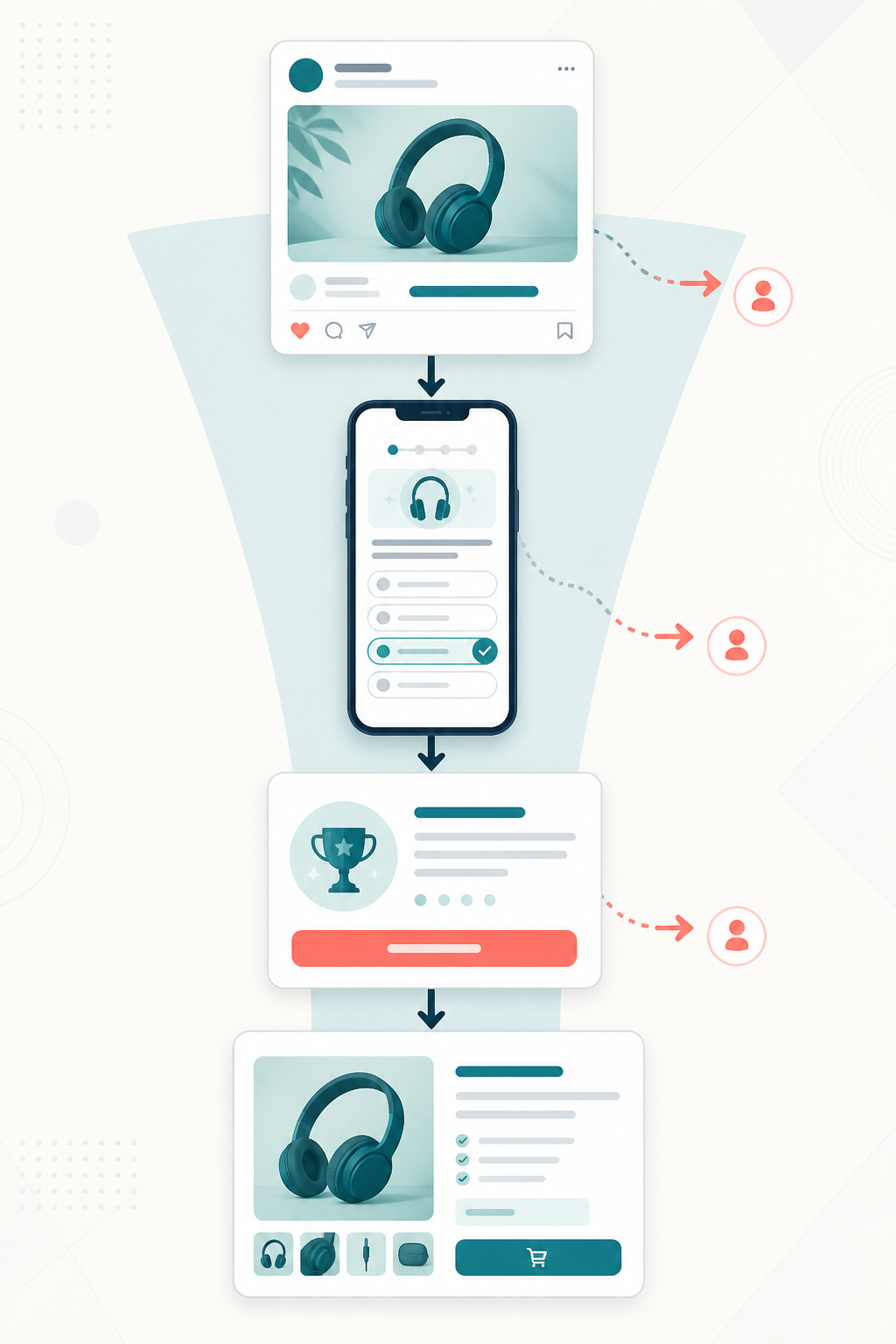
- Ad: a curiosity-led native headline that matched the quiz topic, not the vendor's claims.
- Bridge page: one headline, one line of context, a four-question quiz, one question per screen.
- Result screen: a short, personalized-feeling summary based on their answers, with a single button to the offer.
- Offer page: the vendor's page, untouched (I can't control it anyway).
The quiz questions
I kept them easy to answer and relevant to the offer. Question one was a low-stakes problem identifier. Question two asked how long they'd dealt with it. Question three asked what they'd already tried. Question four asked what outcome mattered most.
That third question did a lot of work. People who've tried other things and failed are far warmer than people who haven't tried anything.
What Didn't Work
Let me be straight about the flops, because that's the part nobody posts.
- Seven questions. Drop-off was brutal. Four was my sweet spot; three might be better for some verticals.
- Asking for email first. I tested a gate before results. It killed the flow on cold traffic. Cold readers don't hand over emails to strangers they met ninety seconds ago.
- Clever result copy. Overwritten, hypey result screens felt like a trick. Plain and specific beat clever every time.
- Mismatched ad promise. When the ad said one thing and the quiz opened with another, bounce rates jumped. Message match matters more than anything on the page.
Real-World Implementation Notes
This is the workflow I'd hand a friend, in the order I'd do it.
- Start with one traffic source and one offer. Don't test on three networks at once. You won't know what moved.
- Write the ad and the quiz opener together. Same language, same promise, same angle.
- Build the quiz at four questions. One per screen, big tap targets, no scrolling on mobile.
- Track each step. Quiz start, quiz completion, outbound click, and conversion. Without step-level data you'll just guess where it leaks.
- Let it run to a meaningful sample before touching anything. I made the mistake of editing after 40 clicks. Noise.
- Change one variable at a time. Headline, then question order, then result copy.
One more observation: the biggest leak for me wasn't the quiz. It was the click from the result screen to the offer. Making the button copy specific to the result ('See what fits your answers') beat generic wording by a noticeable margin in my tests.
The Compliance Piece (Please Don't Skip It)
Quizzes can drift into deceptive territory fast. Don't imply the quiz is a medical or financial assessment if it isn't. Don't fake 'analyzing your answers' loaders that pretend to be something they're not. Native networks review landing pages, and a bridge that over-promises is a good way to lose an account. Disclose the affiliate relationship where required, and keep claims inside what the vendor allows.
What I'd Do Differently
- Capture email later, not never. After the result screen, an optional opt-in would've let me build a list from warm leads. I'd pair it with a decent welcome sequence and be careful about which platform I picked—some will ban affiliates quickly.
- Test a lower-priced entry offer. Cold traffic often prefers a small first purchase. I'd look at a sub-$27 tripwire before pushing anything bigger.
- Set the kill rules before launching. I let a losing variant run too long because I was emotionally attached to it.
- Document everything. My notes were a mess. Future me was annoyed.
Quick Takeaways
| Decision | What worked for me |
|---|---|
| Quiz length | Four questions, one per screen |
| Email gate | Skip it on cold traffic |
| Message match | Ad and quiz opener share one promise |
| Result button | Specific to the answers, not generic |
| Testing | One variable at a time, real sample size |
If your page isn't converting even with a bridge, the problem may be elsewhere; I covered common causes in why your native ad bridge page isn't converting.
If You're Still in the Red
I want to say this plainly. Most affiliates I know have burned through test budgets that made them question everything. That's not failure—it's tuition. The ones who stick around aren't smarter; they just keep tightening one thing at a time and write down what they learn.
So if tonight's dashboard looks ugly, don't torch the whole campaign. Look at the gap between the click and the pitch. Build something small that earns a little trust. Then test it honestly.

You're not alone in this. Keep going.
This article contains affiliate links. We may earn a commission at no extra cost to you. Full disclosure.
Editorial Team
Senior Digital Marketing Strategist
The Prophet Visionary editorial team covers affiliate marketing, paid traffic, funnels, and digital product strategy with hands-on practitioner experience.
Learn more about our editorial team →Build High-Converting Funnels Without 5 Different Tools
Systeme.io gives you a drag-and-drop funnel builder, email automation, upsells, order bumps, and analytics — all in one platform starting at $0/month.
See the Funnel BuilderThis page contains affiliate links — I may earn a commission at no extra cost to you.
Disclaimer: The information on this site is for educational purposes only and does not constitute financial, legal, or business advice. Results vary based on individual effort, market conditions, and other factors. Always do your own due diligence before making business or investment decisions.