Most reviews of these two platforms start with feature tables and pricing grids. I'm going to start somewhere different: with what breaks, what frustrates, and what quietly kills your affiliate conversions before you even realize it.
Because here's the thing—both GoHighLevel and clickfunnels are sold aggressively to affiliate marketers. Both have loud communities. Both have affiliates pushing them hard. That doesn't mean either one is right for your specific situation, and it definitely doesn't mean the friction points get talked about honestly.
I've spent time inside both platforms, building funnels for digital product promotions across ClickBank, Digistore24, and direct offer partnerships. What follows is what I actually found—not what the sales pages say.
What Fails First (And Why It Matters)
Start with the failures. Always.
GoHighLevel's affiliate tracking is genuinely messy if you're not the product owner. GHL was built for agencies managing client businesses—local service providers, coaches, SaaS resellers. The platform's native affiliate module (available on the $497/month plan and above) is designed for people running their own affiliate program, not for someone promoting third-party digital products on ClickBank or Warrior Plus. If you're a pure affiliate—meaning you send traffic, collect leads, and redirect to someone else's checkout—GHL's affiliate infrastructure does almost nothing useful for you out of the box.
The funnel builder is also slower to work with than most people admit. The drag-and-drop interface has improved since 2024, but it still lags behind clickfunnels 2.0 in raw build speed. Expect to spend real time troubleshooting mobile responsiveness issues, especially on opt-in pages with custom CSS.
ClickFunnels has its own failure modes. The 2.0 rebuild—launched to much fanfare—introduced a bloated CRM layer that most affiliate marketers don't need and can't easily ignore. The platform's email deliverability has historically been a concern; several communities have documented open rates 15–20% lower than sending the same sequences through dedicated ESPs like ActiveCampaign or ConvertKit. If your backend affiliate revenue depends on a tight email welcome sequence converting within the first 72 hours, that deliverability gap is not a rounding error.
ClickFunnels' page builder is faster and more intuitive—genuinely. But the platform has a long history of pricing changes, feature locks behind higher tiers, and support that's inconsistent at best. That's not FUD; it's documented across their own community forums.
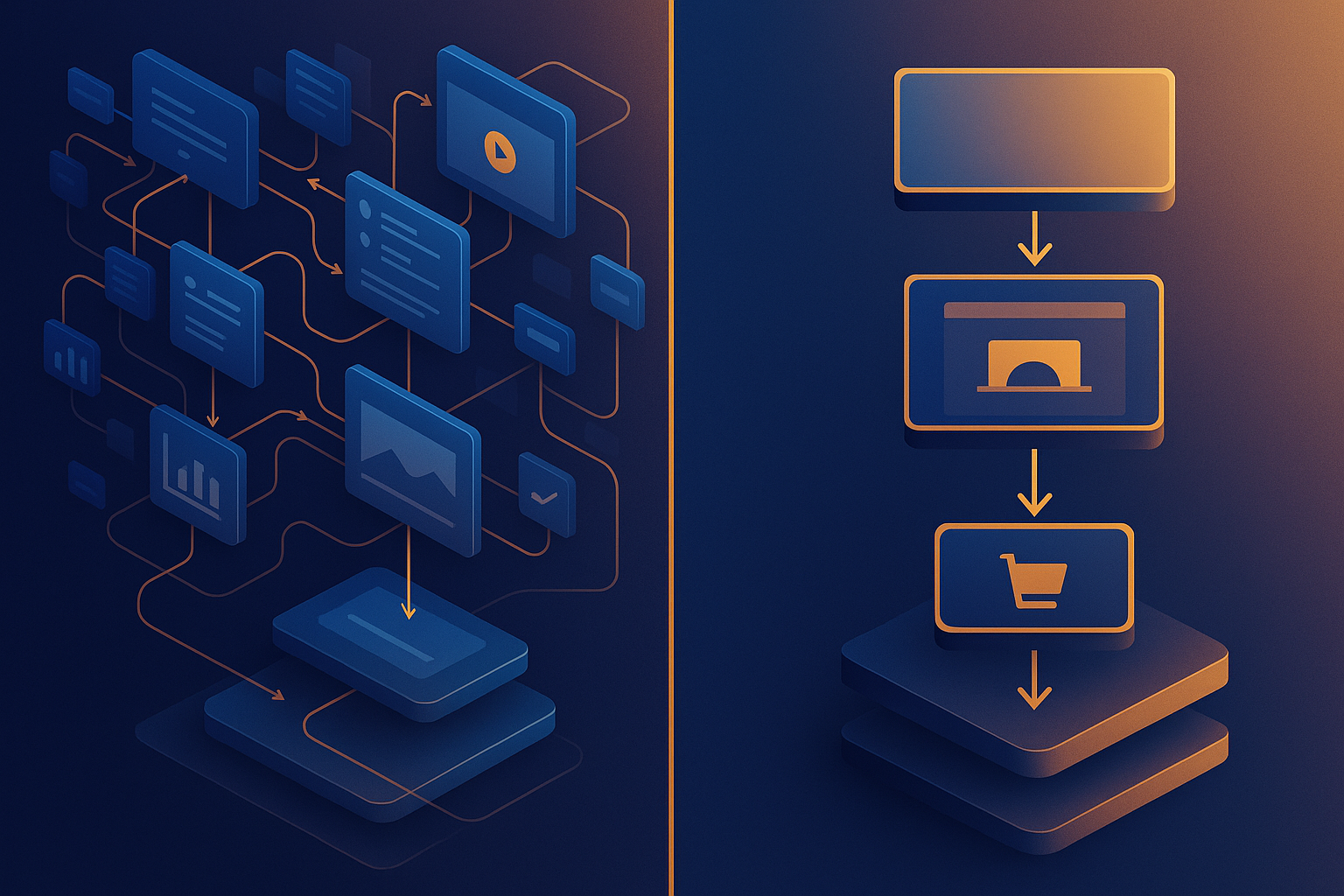
Who Each Platform Is Actually Built For
This is where most comparisons go wrong—they treat both tools as interchangeable funnel builders. They're not.
GoHighLevel is built for agencies and business owners who want an all-in-one platform to manage clients, automate follow-ups via SMS and email, run reputation management, and white-label the whole thing. The SaaS reseller model is GHL's real value proposition. If you're an affiliate marketer who also runs a small agency, or if you're building out a personal brand with coaching upsells behind your digital product promotions, GHL can make sense. The automation depth—multi-channel sequences combining email, SMS, voicemail drops, and Facebook Messenger—is genuinely impressive and hard to replicate cheaply elsewhere.
But if you're a straight affiliate driving paid traffic from Meta, Google, or native networks to a bridge page, collecting emails, and pushing people toward a ClickBank offer? GHL is overkill in the wrong direction. You're paying for features you won't use while fighting a UI that wasn't designed with your workflow in mind.
ClickFunnels is built for direct response marketers selling their own products or promoting offers through a classic funnel structure. The optin → bridge → offer flow is native to how the platform thinks. For affiliates promoting digital products—courses, software, coaching programs—CF's funnel templates are closer to ready-to-use than anything GHL ships with.
The counterintuitive part: ClickFunnels' best use case for affiliates isn't the funnel builder. It's the community and ecosystem. The template library, the Funnel Hackers community, and the sheer volume of documented split-test data shared publicly give you a head start that GHL's community simply doesn't match for affiliate-specific use cases.
Honest Pros and Cons—No Sugarcoating
GoHighLevel
- Pro: Multi-channel automation (email + SMS + voicemail) in one platform—genuinely powerful for nurture sequences on higher-ticket digital products ($497+)
- Pro: White-label SaaS reselling creates a secondary revenue stream if you want to sell the platform itself as an affiliate
- Pro: Unlimited contacts on all plans—no per-subscriber pricing that punishes list growth
- Pro: Built-in calendar, booking, and pipeline tools useful if you're blending affiliate promotions with coaching or consulting
- Pro: The $97/month starter plan is competitive if you're replacing multiple tools (email platform + calendar + basic CRM)
- Con: Native affiliate tracking is designed for product owners, not affiliate promoters—you'll still need ClickMagick or Voluum for clean attribution
- Con: Steeper learning curve; expect 2–3 weeks before you're building efficiently
- Con: Funnel page builder is slower and less polished than CF 2.0 for pure landing page work
- Con: Support quality is inconsistent—heavily dependent on which reseller or sub-account structure you're under
ClickFunnels 2.0
- Pro: Fastest funnel-building experience for affiliate bridge pages and opt-in flows
- Pro: Large template library with direct-response DNA baked in
- Pro: Native A/B testing on landing pages without third-party tools
- Pro: Strong community with real split-test data and affiliate-specific use case documentation
- Pro: Checkout and order bump functionality works well for affiliates who also sell their own front-end products
- Con: Email deliverability is a documented weak point—serious affiliate email marketers should route sequences through a dedicated ESP regardless
- Con: Pricing has increased significantly; the $297/month plan is the functional baseline for most serious affiliate setups
- Con: CRM layer in 2.0 adds complexity without adding much for pure affiliates
- Con: History of pricing restructures makes long-term cost planning unreliable
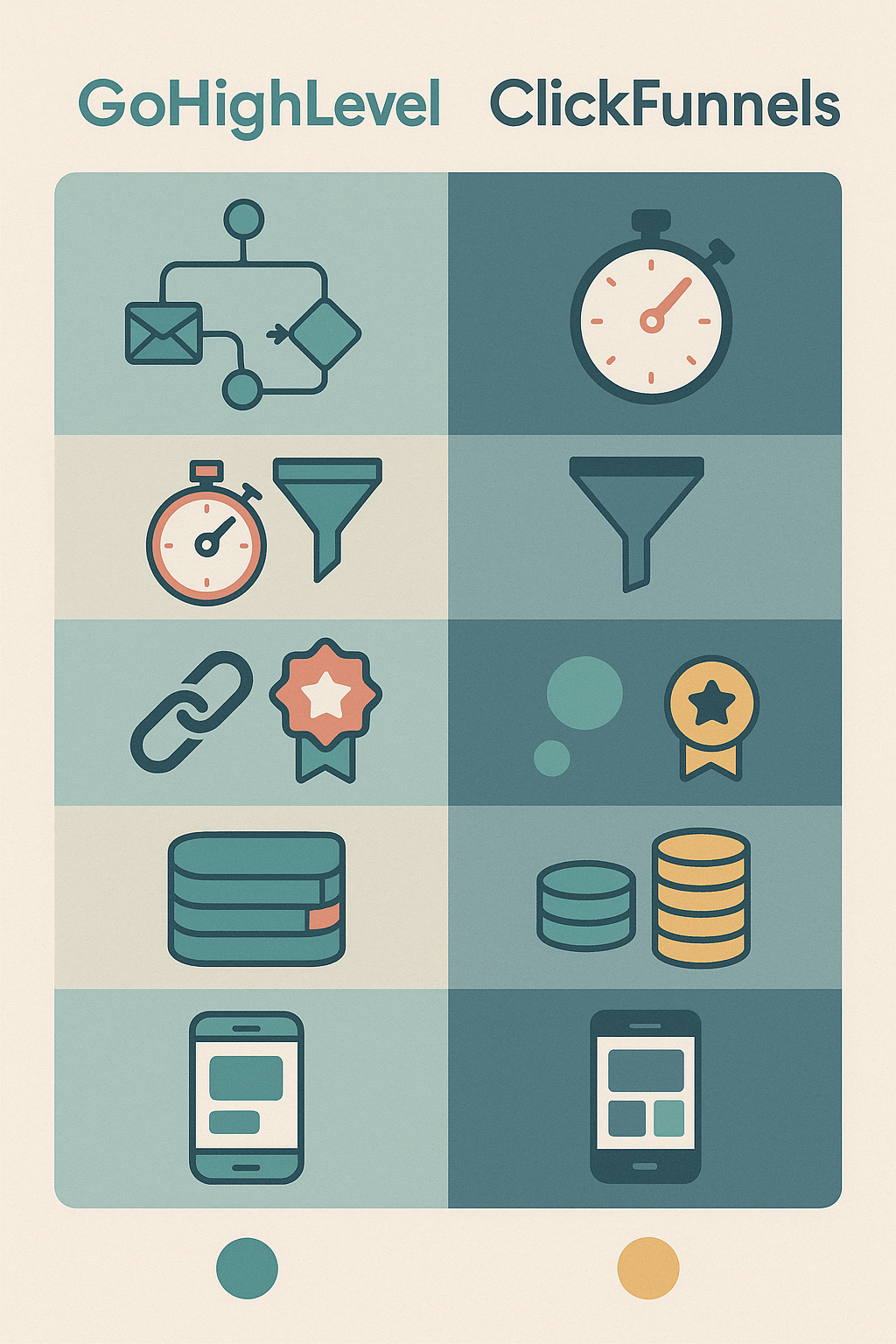
Pricing: What You're Actually Paying
| Platform | Entry Plan | Functional Affiliate Plan | What's Missing at Entry |
|---|---|---|---|
| GoHighLevel | $97/month (Starter) | $297/month (Unlimited) | SaaS mode, white-label, some automation triggers |
| ClickFunnels 2.0 | $97/month (Basic) | $297/month (Pro) | A/B testing, affiliate program management, additional workspaces |
Honest assessment: both platforms converge at $297/month for a fully functional affiliate setup. The $97 tiers are viable for testing but limiting in practice. Factor in that you'll likely still need a dedicated email platform—email platforms built for affiliate deliverability like ActiveCampaign or GetResponse run $50–150/month on top of either tool—and your all-in cost is closer to $350–450/month regardless of which you choose.
Systeme.io deserves a mention here. At $0/month for up to 2,000 contacts with funnel building included, it's a legitimate alternative for affiliates early in the game. It won't match either platform on depth, but for someone running a single ClickBank offer on a $30/day Meta budget, it covers the basics without the overhead.
Alternatives Worth Considering
Systeme.io — Best for lean operations. Free tier is genuinely usable. Lacks the polish of either platform but handles opt-in funnels, basic email sequences, and affiliate link management without charging $297/month for the privilege.
Kartra — Closer to ClickFunnels in DNA but with better native email deliverability and a more coherent product suite. Worth evaluating if you're selling your own digital products alongside affiliate promotions. Pricing starts at $119/month.
ThriveCart + dedicated ESP — If your primary need is checkout optimization and post-purchase upsell sequences, ThriveCart's one-time fee ($495 lifetime) paired with ConvertKit or ActiveCampaign often outperforms either platform for pure digital product affiliate setups. Less sexy, more functional.
Practical Implementation Notes
What I've found in practice: the platform choice matters less than most people think, and the workflow around it matters more than almost anyone admits.
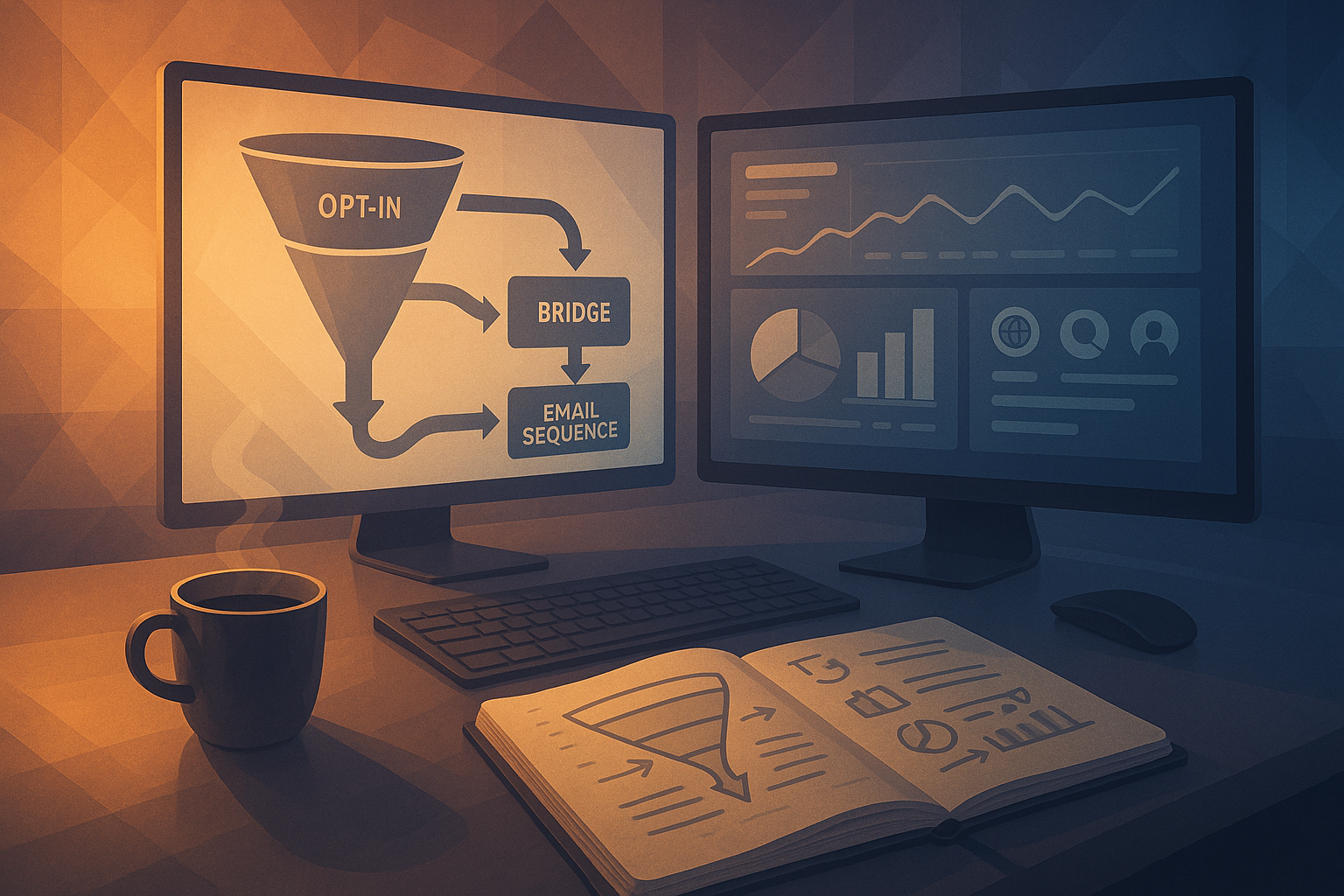
A typical affiliate funnel for a $47–$197 digital product looks like this regardless of platform: paid traffic (Meta, Google, or native at $0.08–0.15 CPC on NewsBreak for certain niches) → opt-in page → thank you/bridge page → email sequence → offer. The platform is just the container. What kills conversions is almost always the email sequence timing, the bridge page copy, or mismatched traffic intent—not whether you built the opt-in page in GHL or CF.
That said, here's where platform choice actually shows up in results:
If you're running a 5–7 email nurture sequence after opt-in (which you should be—a 3-email welcome sequence alone leaves significant backend revenue on the table), ClickFunnels' native email deliverability issues can measurably hurt you. I'd route email through a dedicated ESP either way, but CF makes this integration slightly more awkward than GHL does with its native Mailgun/SendGrid integration options.
For affiliates promoting high-ticket affiliate offers in the $997–$2,997 range, GoHighLevel's multi-touch follow-up sequences—combining email with SMS and even ringless voicemail—can meaningfully improve contact rates for leads who've opted in but haven't converted. At those price points, the extra touchpoints justify the platform complexity. At $47 products, they don't.
One more thing people don't talk about: GHL's learning curve has a real opportunity cost. If you're a solo affiliate operator, spending three weeks learning a new platform is three weeks you're not testing traffic or optimizing offers. ClickFunnels' faster build time has real value for operators who need to move fast and iterate. Speed of testing beats feature depth when you're working alone.
Also worth noting—if your affiliate strategy involves significant email list segmentation to match offers to subscriber behavior, neither platform's native email tools are where you want to manage that complexity. Both work better as funnel builders feeding into a dedicated ESP that handles segmentation logic properly.
The Measured Verdict
If you're a pure affiliate marketer promoting digital products—no agency clients, no coaching backend, no SaaS ambitions—ClickFunnels 2.0 is the more sensible starting point. The funnel-building experience is faster, the template library is more relevant to your use case, and the community gives you real data to work from. Just don't rely on its native email for anything you care about.
If you're building a personal brand that blends affiliate promotions with coaching, consulting, or your own digital products—and you're willing to invest the learning time—GoHighLevel's automation depth starts to justify itself, particularly for higher-ticket offers where multi-channel follow-up moves the needle. The SaaS reseller angle also creates a real income diversification opportunity that ClickFunnels doesn't offer in the same way.
The truth is, neither tool is a magic conversion engine. Both require you to know your offer, your traffic source, and your email sequence before the platform choice matters much. Get those right first. Then pick the tool that fits how you actually work—not the one with the loudest affiliate program pushing it this month.
For a deeper look at how these platforms perform specifically when paid traffic is in the mix, the paid traffic affiliate comparison covers attribution, tracking integrations, and what breaks under real ad spend pressure.