How to Price & Bundle Digital Info Products for Maximum Affiliate Appeal
Most product creators approach pricing backwards. They calculate their costs, add a markup, and hope affiliates will promote it. That's exactly why 73% of digital info products never attract quality affiliate partners.
I've watched countless product launches fail—not because the content was bad, but because the pricing and bundling strategy made it impossible for affiliates to profit consistently. The math just didn't work.
Here's what most people get wrong: they think about their profit first, affiliate commissions second. Smart creators flip this completely.
The Affiliate-First Pricing Framework
Start with your affiliate's economics, then work backward. This isn't just being nice—it's strategic survival in a crowded marketplace.
Your affiliates need three things to promote aggressively:
- Minimum 40-50% commission rates (60%+ for info products)
- Average order values that justify their traffic costs
- Upsell opportunities that compound their earnings
But here's the counterintuitive part. Higher prices often create better affiliate appeal than lower ones.
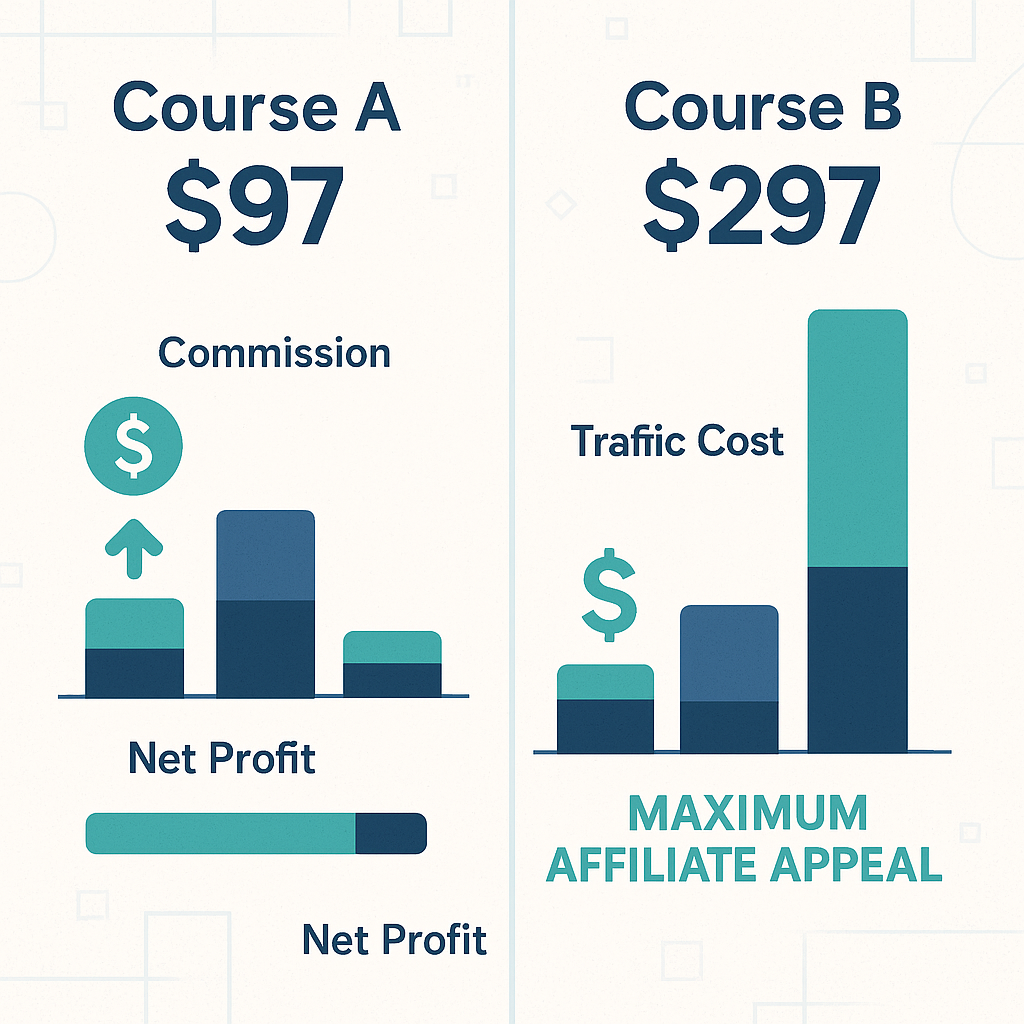
Take two hypothetical courses: Course A at $97 with 50% commissions ($48.50 per sale) versus Course B at $297 with 50% commissions ($148.50 per sale). The affiliate promoting Course B can spend 3x more on traffic acquisition and still maintain the same profit margins.
This is why products in the $197-$497 range dominate ClickBank vs Digistore24 top performer lists. The economics just work better for everyone involved.
The Psychology of Bundle Positioning
Single products are hard to sell. Bundles create perceived value and justify higher price points—but only if structured correctly.
I've found the most effective bundle architecture follows this pattern:
Core Product + Implementation Tools + Done-With-You Elements
Don't just throw random bonuses together. Each bundle component should address a specific objection or implementation barrier.
For example, if you're selling a Facebook ads course ($297), your bundle might include:
- Core training modules (main product)
- Ad template library (implementation tool)
- Monthly group coaching calls (done-with-you element)
- Campaign audit checklist (implementation tool)
The key insight: each additional component should cost you almost nothing to deliver but add significant perceived value. Digital templates, checklists, and recorded content scale infinitely.
The Decoy Effect in Action
Smart bundling uses pricing psychology to guide purchase decisions. Offer three tiers:
| Product | Price | Components |
|---|---|---|
| Basic Course | $197 | Core training only |
| Complete System | $297 | Core training + templates + bonuses |
| VIP Package | $497 | Everything + 1-on-1 calls + advanced modules |
The middle option becomes the obvious choice. Most customers (60-70% in my experience) will choose the $297 tier because it feels like the best value.
Your affiliates love this because they're earning $148.50 per conversion instead of $98.50, and customers feel smart about their purchase decision.
Commission Structure Strategy
Flat percentage commissions are amateur hour. Sophisticated product creators use tiered structures that reward performance and create competitive dynamics among affiliates.
Here's a structure that works consistently:
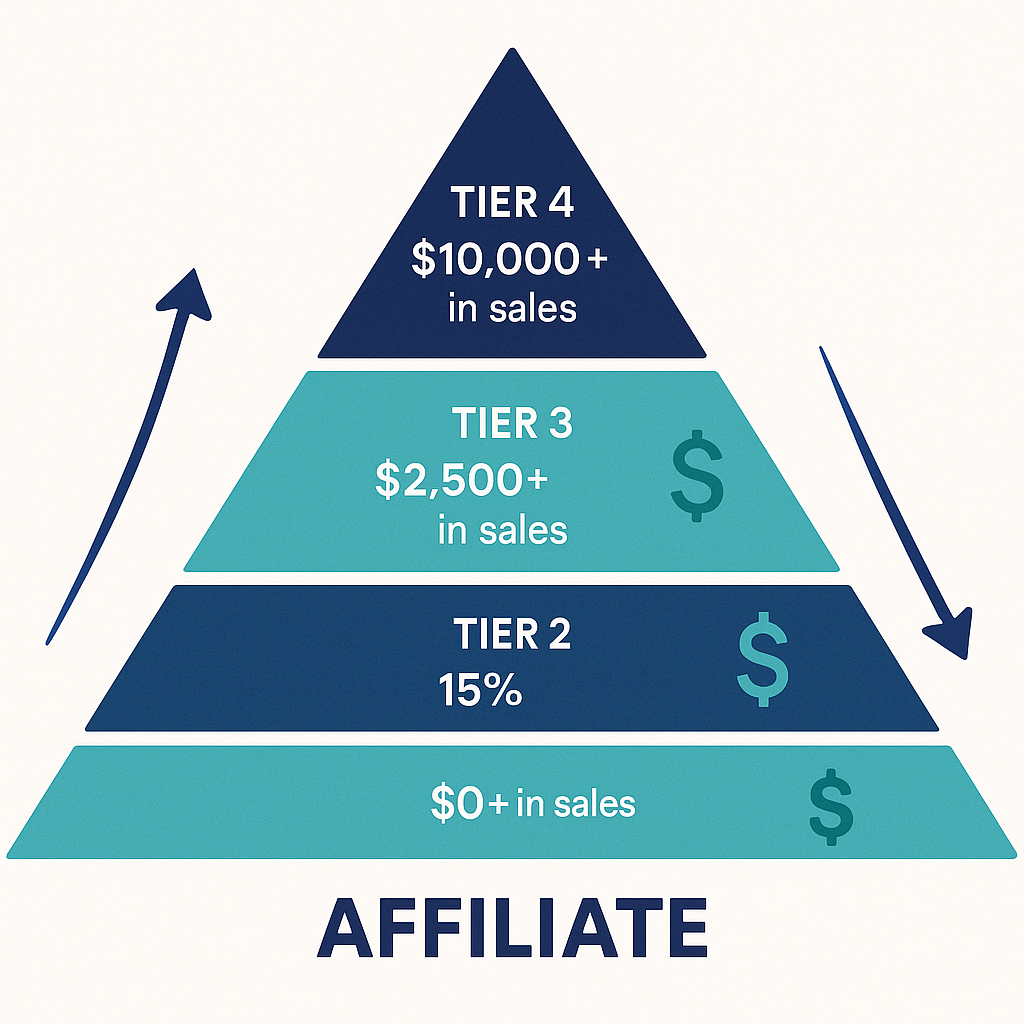
- Standard affiliates: 50% commission
- 25+ sales in 30 days: 55% commission
- 50+ sales in 30 days: 60% commission
- 100+ sales in 30 days: 65% commission + special bonuses
This creates a gamification element that top affiliates can't resist. They'll push harder to hit the next tier, which means more sales for you.
The truth is, giving your best affiliates 65% still leaves you with $103.95 per sale on a $297 product. If that doesn't cover your costs and desired profit, your business model needs work.
Upsell Sequencing for Affiliate Success
Your front-end offer is just the beginning. The real money—for you and your affiliates—lives in the funnel backend.
I've seen affiliates make 2-3x their front-end commissions from properly structured upsell sequences. But most creators botch this completely by offering random, disconnected products.
Your upsell sequence should follow natural progression:
Front-end: Core training ($297)
Upsell 1: Done-for-you implementation ($197)
Upsell 2: Advanced strategies course ($497)
Upsell 3: 1-on-1 coaching or mastermind ($997-$2997)
Each step solves the next logical problem your customer faces. Someone who just learned Facebook ads will need ad templates (upsell 1), then advanced scaling strategies (upsell 2), then personal guidance (upsell 3).
This is where platforms like ClickFunnels 2.0 or systeme.io become crucial for tracking affiliate commissions across the entire funnel sequence.
The Downsell Safety Net
Not everyone will buy your $497 upsell. That's fine—catch them with a downsell at $97.
This might be a lite version of your advanced course or a payment plan for the full version. The goal is maximizing customer lifetime value while keeping your affiliates profitable on every click they send.
Seasonal and Launch Pricing Tactics
Static pricing is leaving money on the table. Smart creators use calendar-based pricing strategies that create urgency and boost affiliate enthusiasm.
Launch sequences work particularly well:
- Early bird pricing: $197 (first 72 hours)
- Standard pricing: $297 (days 4-7)
- Final call pricing: $397 (last 24 hours)
Your affiliates love this because early converters are easier to sell, but late buyers generate higher commissions. Everyone wins.
But here's what most people miss: communicate these pricing changes to your affiliate team in advance. Give them email templates and promotional materials for each phase.
The affiliates who feel supported and informed will promote harder and more consistently.
Platform-Specific Considerations
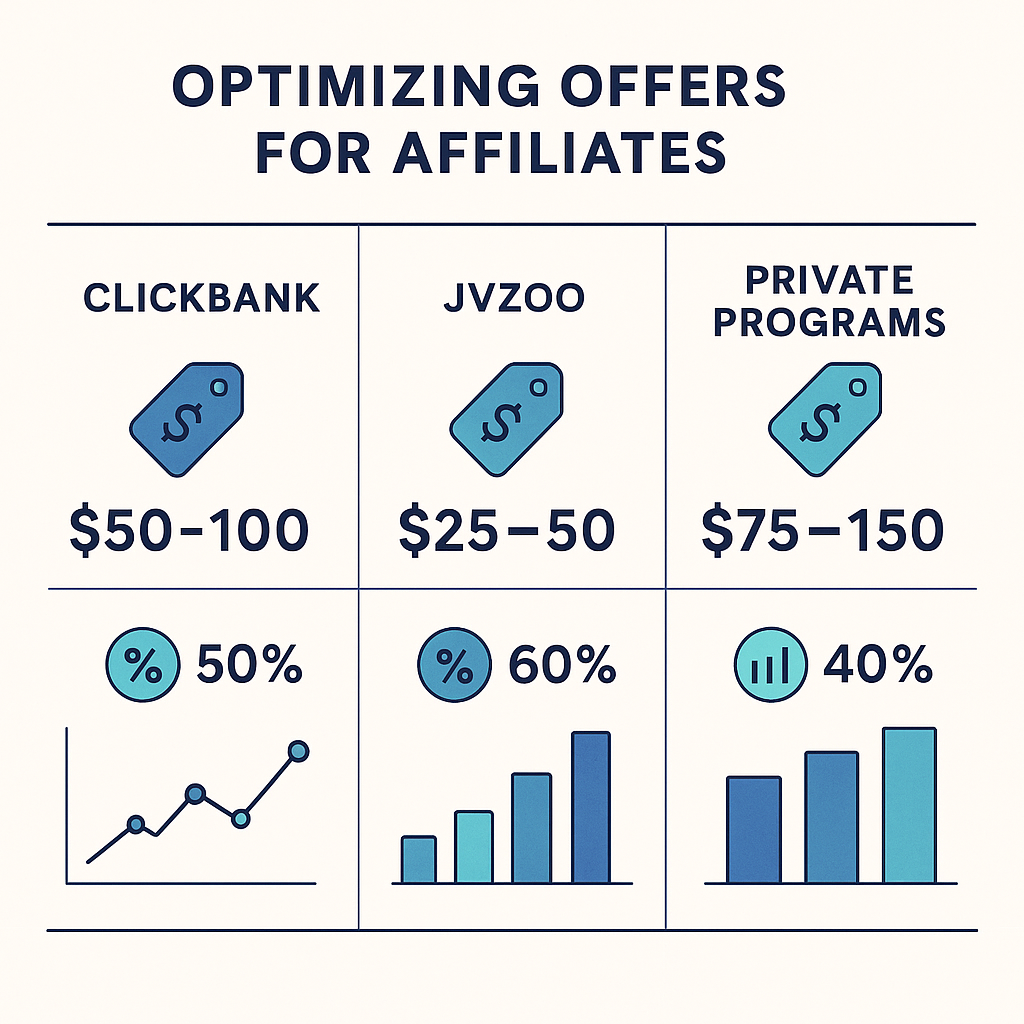
Different affiliate platforms have different economics and audience expectations. What works on clickbank might flop on JVZoo or your private affiliate program.
ClickBank: Higher price points ($197-$497) with aggressive upsells perform best. The audience expects substantial, comprehensive training programs.
JVZoo: Lower entry points ($37-$97) with multiple upsells work well. Think tool-focused products rather than pure education.
Private programs: You have more flexibility but need to provide better affiliate support and resources.
I've found that commission structure and payout strategy varies significantly across platforms based on their fee structures and payout schedules.
Common Pricing Pitfalls That Kill Affiliate Interest
I've seen these mistakes destroy otherwise solid product launches:
The Race to the Bottom: Competing on price rarely works in info products. If your course is $47, affiliates can't afford quality traffic. You end up with bottom-feeder affiliates using spammy tactics that damage your brand.
Complicated Commission Structures: If your affiliate needs a calculator to understand their earnings, you've lost them. Keep it simple and transparent.
Ignoring Refund Impact: A 15% refund rate on a $297 product means your effective commission is really 42.5%, not 50%. Factor this into your pricing from the start.
No Backend Revenue Sharing: If affiliates only get paid on the front-end sale, they have no incentive to send quality traffic. Share backend revenue to align incentives.
Practical Implementation Notes
Here's how this actually works when you're setting up your pricing structure:
Start by researching your competition on ClickBank and similar platforms. Look at the top performers in your niche and note their pricing, commission rates, and upsell sequences.
Use tools like SimilarWeb or SEMrush to estimate their traffic costs. If they're spending $50-$100 per conversion on Facebook ads, your commission needs to support that plus their desired profit margin.
Test your pricing with a small group of trusted affiliates before launching publicly. I typically recruit 5-10 affiliates for a soft launch to validate the economics and gather feedback.
Set up proper tracking using platforms like Voluum or RedTrack so you can monitor conversion rates at each price point and upsell step. This data becomes crucial for optimizing your funnel performance.
Create affiliate resource packages that include email swipes, banner ads, and promotional calendars. The easier you make it for affiliates to promote effectively, the more they'll push your offers.
Monitor your affiliate leaderboards weekly. If the same affiliates consistently outperform others, reach out to understand their traffic sources and promotional strategies. This insight helps you optimize your pricing for their methods.
Revenue Model Analysis
Let's look at realistic numbers for a well-structured digital product funnel:
Front-end product: $297 at 50% commission = $148.50 per affiliate
Average upsell value: $200 additional per customer
Backend commission: $100 per affiliate
Total affiliate earnings: $248.50 per front-end conversion
This allows affiliates to spend $150-$200 on traffic acquisition while maintaining healthy margins. Compare this to a $97 product with no backend—affiliates can only spend $30-$40 on traffic, severely limiting their promotional options.
The higher-priced structure also attracts better affiliates. Someone earning $248 per conversion can afford to create quality content, run professional ad campaigns, and build sustainable promotional systems.
Your revenue model becomes more predictable too. Instead of needing 1000 sales at $48.50 profit each, you need 400 sales at $121 profit each (after affiliate commissions). Fewer transactions, higher value, better customer relationships.
Integration with Broader Marketing Strategy
Your pricing and bundling strategy shouldn't exist in isolation. It needs to align with your content marketing, paid traffic campaigns, and email sequences.
If you're teaching affiliates to run native ads for ClickBank offers profitably, your pricing needs to support those traffic costs and conversion rates.
Consider how your bundles integrate with email marketing platforms like ConvertKit vs GetResponse for affiliate email sequences. Higher-priced customers often have better email engagement rates, making backend promotions more effective.
The goal is creating a complete ecosystem where every component reinforces the others. Your pricing attracts quality affiliates, who drive quality traffic, who become engaged customers, who buy more backend products, which generates more affiliate commissions, which attracts more quality affiliates.
That's the flywheel effect that separates successful product creators from the ones still struggling to get affiliate attention.
Remember: you're not just pricing a product—you're designing an economic system that incentivizes the behaviors you want from both affiliates and customers. Get this right, and everything else becomes significantly easier.
This article contains affiliate links. We may earn a commission at no extra cost to you. Full disclosure.
Editorial Team
Senior Digital Marketing Strategist
The Prophet Visionary editorial team covers affiliate marketing, paid traffic, funnels, and digital product strategy with hands-on practitioner experience.
Learn more about our editorial team →Monetize Smarter With Funnels + Email in One Place
Order bumps, upsells, automated email sequences, and your own affiliate program — Systeme.io gives you the full monetization stack without the bloated monthly spend.
See the Monetization StackThis page contains affiliate links — I may earn a commission at no extra cost to you.
Disclaimer: The information on this site is for educational purposes only and does not constitute financial, legal, or business advice. Results vary based on individual effort, market conditions, and other factors. Always do your own due diligence before making business or investment decisions.